7 Easy Van Living DIY Projects to Personalize Your Space
The van life movement has exploded in 2025, with millions of people trading traditional homes for the freedom of the open road. However, living in a compact space doesn’t mean sacrificing personality or comfort. 7 Easy Van Living DIY Projects to Personalize Your Space can transform a basic vehicle into a cozy, functional home that reflects your unique style and meets your specific needs.
Disclosure: This post contains affiliate links. As an Amazon Associate, we earn from qualifying purchases, and at no extra cost to you.
Whether you’re a weekend warrior or a full-time nomad, customizing your van interior creates a sense of belonging and maximizes every square inch of your mobile sanctuary. These projects range from simple storage solutions to creative comfort upgrades, all designed with the novice DIY enthusiast in mind.
Key Takeaways
- Simple storage solutions like magnetic organizers and floating shelves maximize space without complex installations
- Comfort upgrades such as custom cushions and lighting systems significantly improve daily living quality
- Multi-functional furniture pieces serve dual purposes while maintaining the van’s mobility and weight limits
- Budget-friendly materials from hardware stores can create professional-looking results with basic tools
- Personalization projects help transform sterile van interiors into warm, inviting living spaces
Essential Planning for Your Van Living DIY Projects
Before diving into specific 7 Easy Van Living DIY Projects to Personalize Your Space, proper planning ensures successful outcomes and prevents costly mistakes. Van conversions require careful consideration of weight distribution, electrical systems, and structural integrity.
Understanding Your Van’s Limitations
Every van has specific weight limits and structural constraints that affect DIY project choices. Payload capacity determines how much weight you can add through furniture, storage, and personal belongings. Most cargo vans handle 3,000-4,000 pounds of additional weight, but this includes everything from water tanks to clothing.
Electrical considerations play a crucial role in lighting and appliance projects. Understanding your van’s 12V system, battery capacity, and power consumption helps prevent electrical overload and ensures reliable operation during off-grid adventures.
Gathering the Right Tools and Materials
Successful van DIY projects require basic tools that work well in confined spaces. Essential items include:
- Cordless drill with various bits
- Circular saw or jigsaw for cutting materials
- Level for ensuring straight installations
- Measuring tape and pencil for accurate layouts
- Screwdrivers in multiple sizes
- Safety equipment including goggles and gloves
Material selection focuses on lightweight, durable options that withstand road vibrations and temperature changes. Plywood remains popular for structural elements, while aluminum and plastic components reduce weight without sacrificing functionality.
Simple Storage Solutions That Maximize Space
Storage optimization represents the foundation of comfortable van living, making these 7 Easy Van Living DIY Projects to Personalize Your Space essential for any conversion. Clever storage solutions eliminate clutter while keeping necessities easily accessible during travel.
1. Magnetic Spice Rack and Kitchen Organization
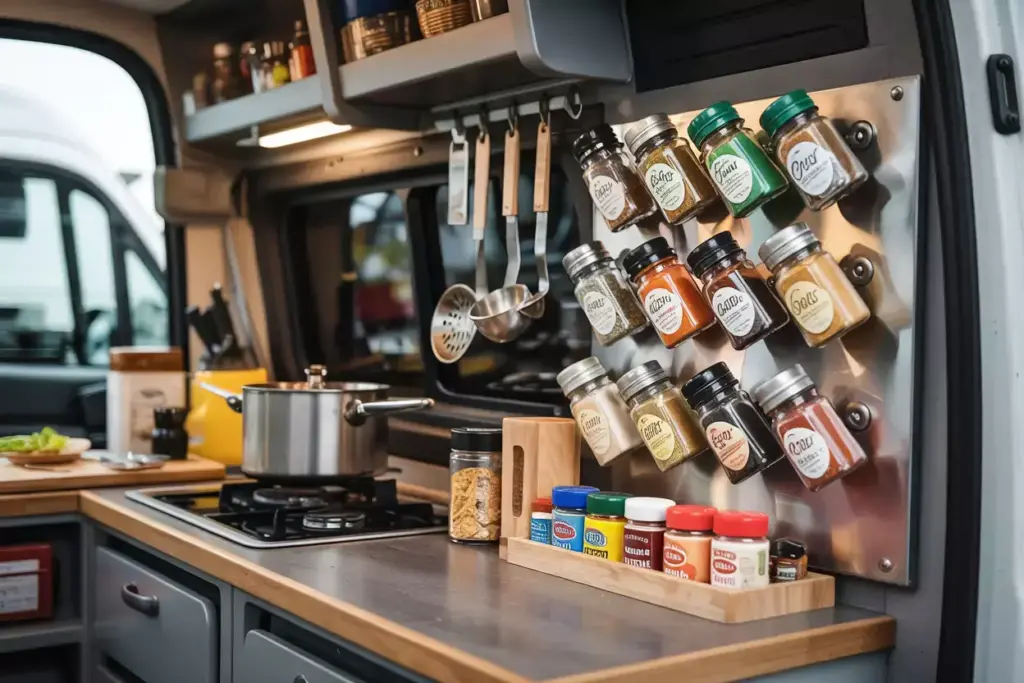
Transform your van’s kitchen area with a magnetic spice rack system that keeps seasonings secure during travel while maximizing counter space. This project requires minimal tools and creates professional-looking results in under two hours.
Materials needed:
- Small magnetic containers (12-15 pieces)
- Metal sheet or magnetic board
- Strong adhesive or screws for mounting
- Labels for identification
- Measuring tools
Start by selecting a convenient wall space near your cooking area, typically on the side of a cabinet or refrigerator housing. Metal sheets provide the magnetic surface, while adhesive mounting eliminates the need for drilling into van walls. Position the sheet at eye level for easy access while cooking.
Fill magnetic containers with frequently used spices, leaving space for contents to shift during travel. Clear containers allow quick identification, while waterproof labels withstand kitchen moisture and temperature changes. This system keeps spices organized and prevents containers from sliding around during driving.
The magnetic system extends beyond spices to include small kitchen tools like measuring spoons, bottle openers, and magnetic timers. This approach maximizes vertical space while keeping essentials within arm’s reach of your cooking area.
2. Overhead Cargo Nets for Lightweight Items
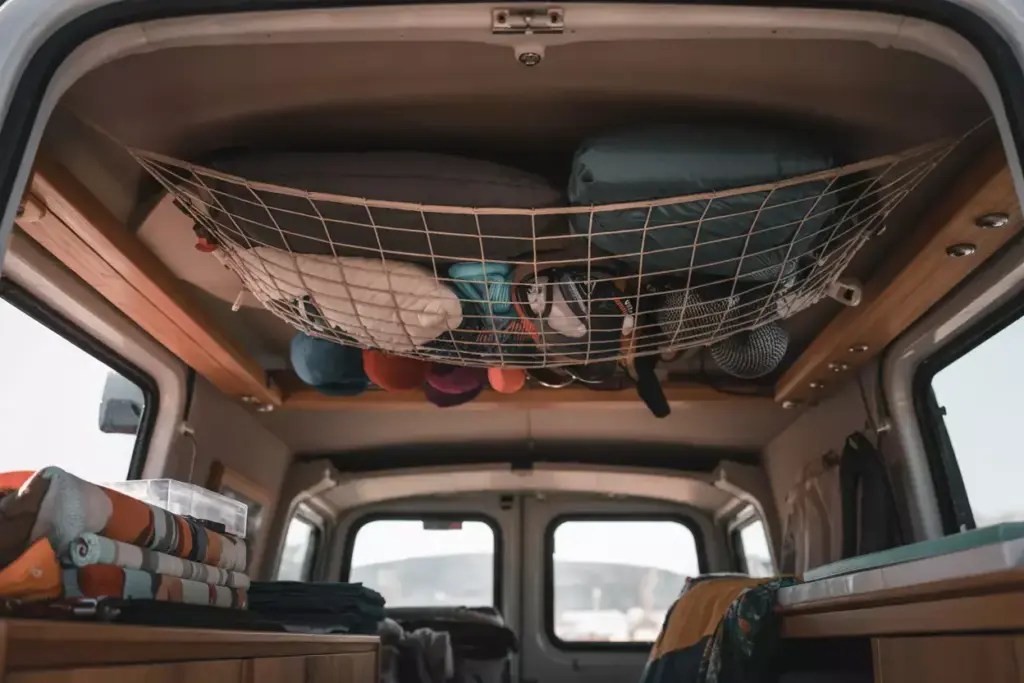
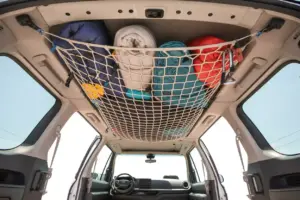
Overhead storage utilizes often-wasted ceiling space for lightweight, frequently accessed items. Cargo nets provide flexible storage that adapts to different item sizes while maintaining easy access from below.
Install mounting points using eye bolts or carabiners attached to van ceiling ribs or reinforced mounting plates. Space mounting points 18-24 inches apart to distribute weight evenly and prevent sagging. Bungee-style nets offer stretch accommodation for various item sizes.
Store items like extra bedding, seasonal clothing, or outdoor gear that you need regularly but not daily. Avoid storing heavy items overhead, as they become dangerous projectiles during sudden stops or accidents.
Weight distribution remains critical for safe driving dynamics. Limit overhead storage to 20-30 pounds total, focusing on bulky but lightweight items. This approach keeps the van’s center of gravity low while maximizing storage capacity.
3. Under-Bed Sliding Drawer System
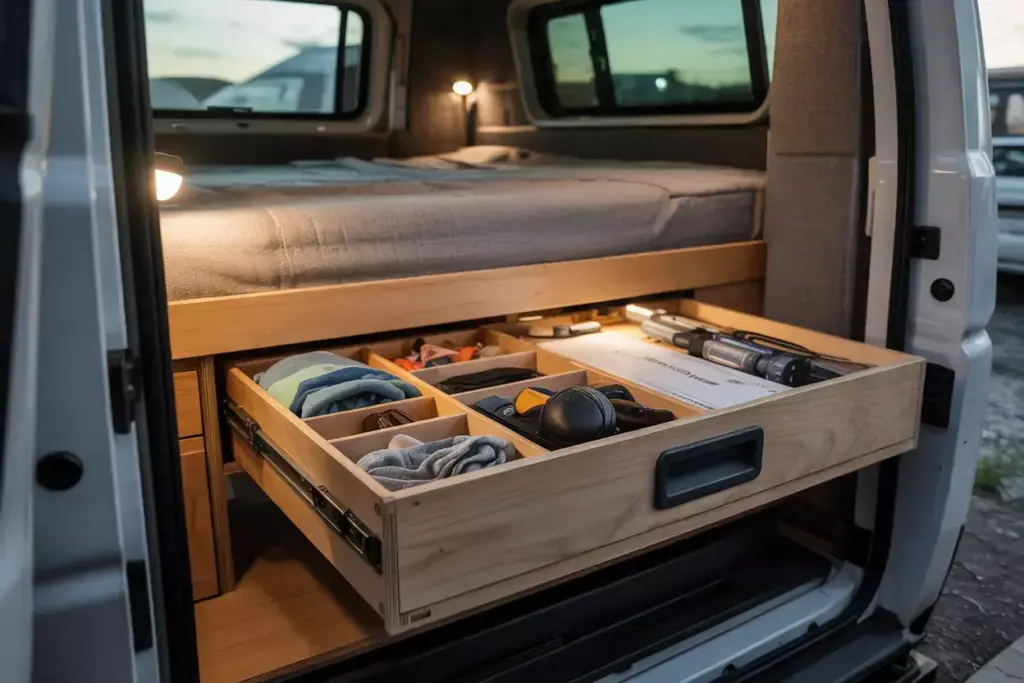
Under-bed storage represents prime real estate in van conversions, and sliding drawers maximize accessibility compared to static storage boxes. This project creates organized storage for clothing, electronics, and personal items.
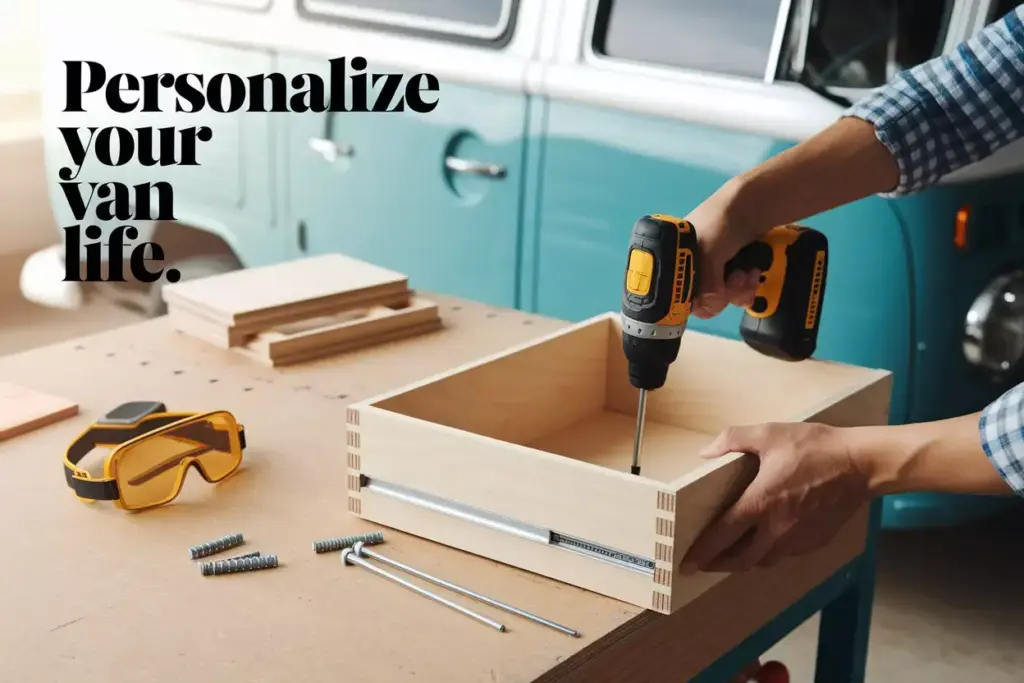
Build drawer boxes using 1/2-inch plywood with simple butt joints reinforced by wood screws. Size drawers to fit your bed platform dimensions while leaving clearance for drawer slides. Heavy-duty slides rated for 100+ pounds handle clothing and gear loads effectively.
Divider systems within drawers keep small items organized during travel. Create removable dividers using thin plywood or purchase adjustable organizer inserts designed for drawers. This prevents items from shifting and creating noise during driving.
Install soft-close mechanisms to prevent drawers from slamming shut during travel. These hardware additions reduce noise and protect drawer contents from impact damage. Magnetic latches provide additional security during rough road conditions.
Comfort and Ambiance Enhancements
Creating a cozy atmosphere transforms your van from basic transportation into a true home on wheels. These comfort-focused 7 Easy Van Living DIY Projects to Personalize Your Space enhance daily living quality through improved lighting, seating, and personal touches.
4. Custom LED Lighting System with Dimmer Controls
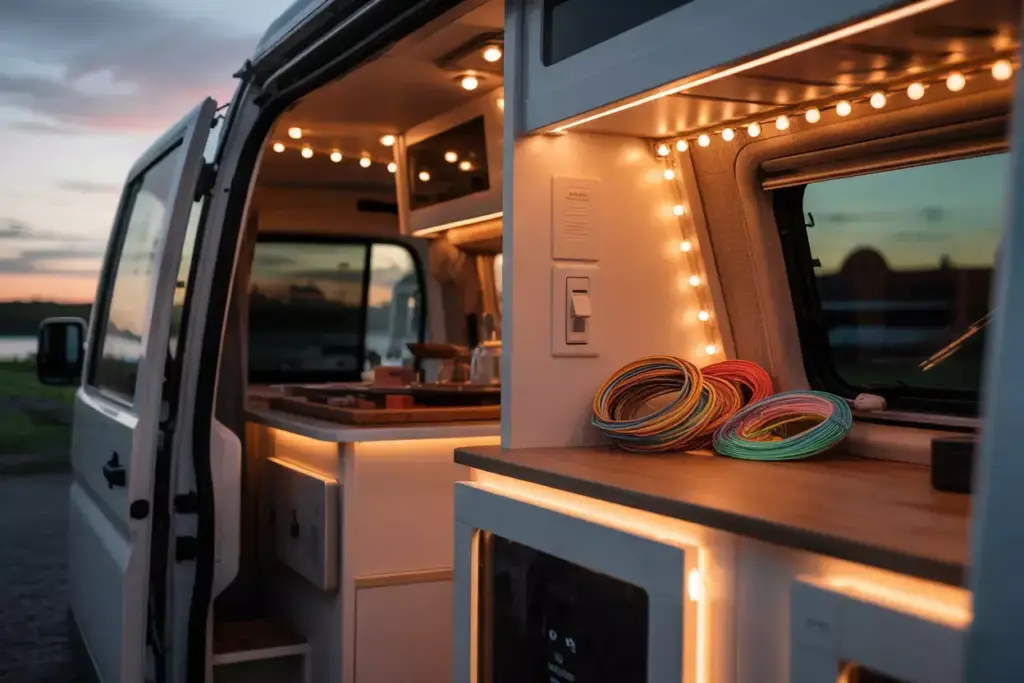
Ambient lighting dramatically improves van interior comfort, especially during evening hours when harsh overhead lights create an institutional feeling. Custom LED systems provide energy-efficient illumination with personalized control options.
LED strip lights offer versatile installation options along cabinet edges, under counters, or around windows. Choose warm white (2700K-3000K) for cozy evening ambiance or daylight (5000K-6500K) for task lighting during cooking or reading.
Install dimmer switches to adjust brightness levels throughout the day. 12V dimmers designed for automotive applications handle LED loads effectively while providing smooth brightness control. Wire multiple zones separately for customized lighting in different van areas.
Color-changing RGB strips add personality and mood lighting options for special occasions or relaxation. Smart controllers allow color selection and timing programs through smartphone apps, creating dynamic lighting experiences.
Power consumption remains minimal with LED systems, typically drawing 1-3 amps for comprehensive van lighting. This efficiency allows extended use without draining house batteries, making LED upgrades practical for off-grid camping.
5. Fold-Down Wall Desk for Remote Work
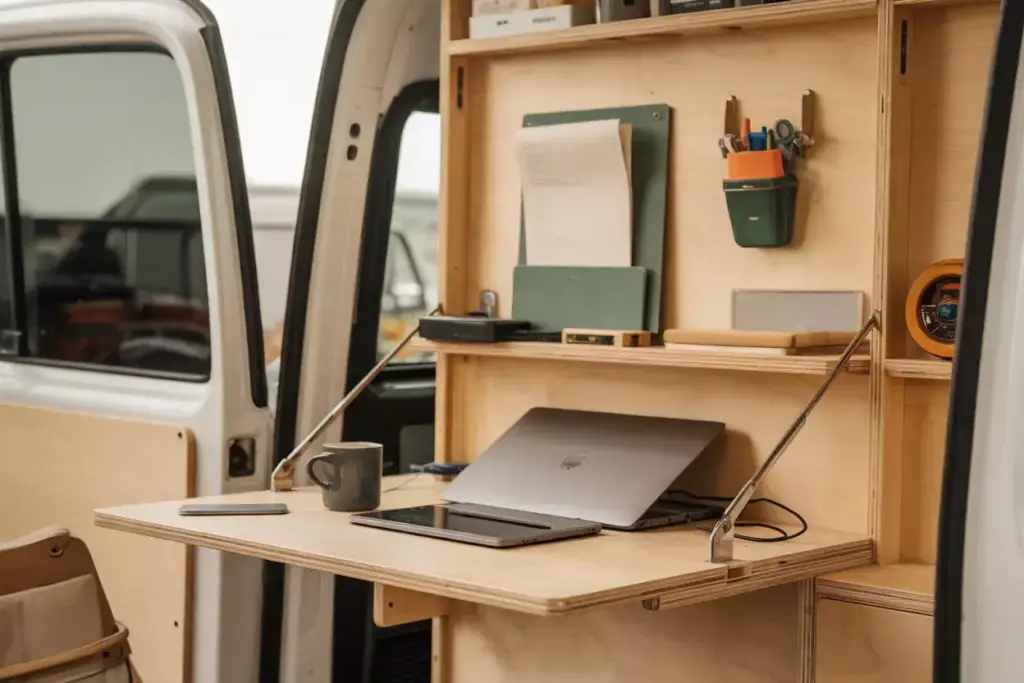
Remote work capability has become essential for many van lifers, requiring dedicated workspace that doesn’t consume precious floor area when not in use. A fold-down desk provides full-size work surface that disappears when travel time arrives.
Design the desk using 3/4-inch plywood for stability under laptop and monitor weight. Piano hinges provide smooth folding action and distribute weight evenly across the mounting wall. Size the desktop to accommodate your specific work equipment while fitting available wall space.
Cable management keeps charging cords and data cables organized when the desk deploys. Install cable clips along the desk edge or create cable channels in the desktop surface. This prevents tangled cables and maintains a clean workspace appearance.
Add fold-down legs or support brackets for larger desks that require additional stability. Adjustable legs accommodate uneven van parking while providing solid support for typing and writing activities. Quick-release mechanisms allow rapid setup and breakdown.
Storage integration maximizes desk functionality through built-in shelves or document holders. These additions keep work materials organized while maintaining the desk’s space-saving design when folded.
6. Custom Window Treatments and Privacy Solutions
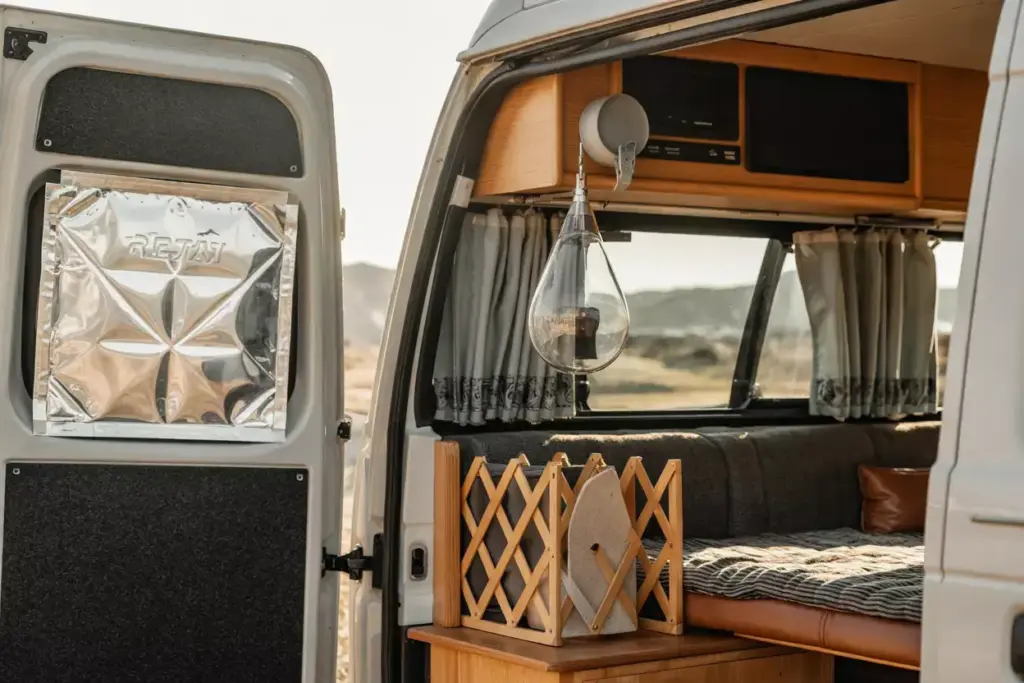
Privacy and light control significantly impact van living comfort, especially when camping in populated areas or dealing with bright morning sunlight. Custom window treatments provide better fit and function than generic RV curtains.
Reflectix insulation serves dual purposes as privacy screen and temperature control. Cut panels to fit window dimensions exactly, creating custom templates for each window. Velcro strips around window frames allow quick installation and removal.
Fabric curtains add warmth and personality while providing privacy options. Choose blackout fabrics for sleeping areas or light-filtering materials for living spaces. Magnetic curtain rods install without drilling and adjust to various window widths.
Accordion-style privacy screens fold compactly when not needed while providing complete coverage when deployed. Build frames using lightweight aluminum or wood strips with fabric panels stretched between frame sections.
Ventilation considerations ensure adequate airflow when privacy screens are deployed. Leave gaps at window tops or bottoms, or install mesh panels that provide privacy while allowing air circulation.
7. Multi-Purpose Ottoman with Hidden Storage
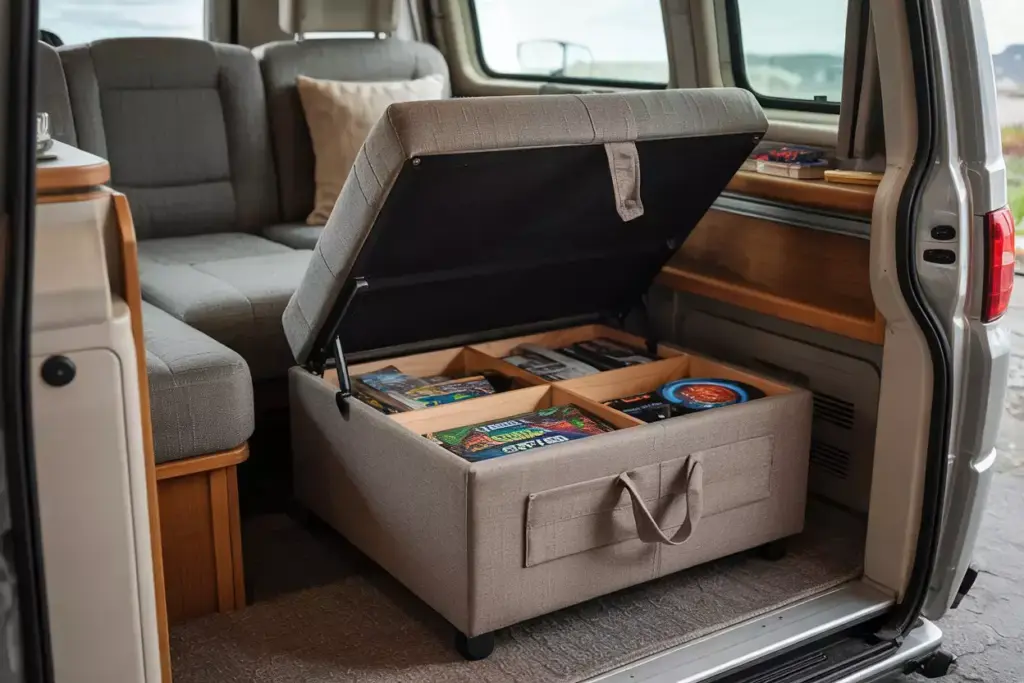
Multi-functional furniture maximizes van utility by serving multiple purposes within limited space. A custom ottoman provides seating, storage, and table surface while maintaining portability for outdoor use.
Build the ottoman frame using 2×2 lumber or plywood construction sized to fit your space requirements and storage needs. Hinged tops provide access to internal storage while supporting weight when used as seating or table surface.
Upholstery options range from simple foam padding with fabric covers to professional vinyl upholstery that withstands outdoor use. Removable covers allow washing and seasonal changes while protecting the underlying structure.
Internal organization maximizes storage efficiency through dividers or removable bins. Store items like games, electronics, tools, or emergency supplies that benefit from protected, organized storage.
Mobility features like handles or wheels allow easy movement between indoor and outdoor use. Lightweight construction ensures one person can move the ottoman without strain while maintaining structural integrity under load.
Advanced Personalization Projects
For those ready to tackle more involved 7 Easy Van Living DIY Projects to Personalize Your Space, these advanced projects create truly custom features that reflect personal style while adding significant functionality to van living experiences.
Creating Gallery Walls with Removable Art Systems
Personalized wall displays transform sterile van interiors into warm, inviting spaces that reflect individual personality and interests. Removable mounting systems allow artwork changes without permanent wall modifications.
Picture ledges provide stable display platforms for framed photos, artwork, or decorative objects while preventing items from falling during travel. Build ledges using 1×2 lumber with lip edges that keep items secure during movement.
Magnetic mounting systems work well on metal van walls, using strong neodymium magnets attached to frame backs. This approach allows quick artwork changes and prevents wall damage from repeated mounting and removal.
Wire display systems create gallery-style presentations using picture hanging wire stretched between eye hooks. Clips or small hooks along the wire hold photos, postcards, or lightweight artwork that changes easily.
Corkboard walls provide bulletin board functionality for maps, tickets, photos, and planning materials. Fabric-covered cork adds color and texture while maintaining functionality for pinning items.
Installing Murphy Bed Mechanisms for Space Conversion
Convertible sleeping areas maximize van versatility by transforming bedrooms into living spaces during daytime hours. Murphy bed systems provide full-size sleeping comfort without permanent floor space commitment.
Hardware selection determines installation complexity and bed weight capacity. Heavy-duty hinges and gas struts provide smooth operation while supporting mattress and frame weight. Locking mechanisms prevent accidental deployment during travel.
Frame construction requires sturdy lumber or metal framework capable of supporting sleeping loads plus safety margins. 3/4-inch plywood or 2×4 lumber provides adequate strength for most mattress sizes while maintaining reasonable weight.
Safety considerations include soft-close mechanisms and finger guards that prevent injury during bed operation. Positive locking in both up and down positions ensures bed stability during use and travel.
Space planning ensures adequate clearance for bed operation while maximizing the utility of converted space. Fold-down tables or seating areas make productive use of floor space when the bed retracts.
Budget-Friendly Material Sources and Cost-Saving Tips
Completing 7 Easy Van Living DIY Projects to Personalize Your Space doesn’t require expensive materials or specialized tools. Smart shopping and material selection keep costs reasonable while achieving professional-looking results.
Finding Affordable Materials
Hardware stores like Home Depot and Lowe’s provide most materials needed for van DIY projects. Lumber yards often offer better prices on plywood and dimensional lumber, especially for larger projects requiring multiple sheets.
Online retailers like Amazon and eBay excel for specialized hardware like drawer slides, hinges, and LED components. Bulk purchasing reduces per-unit costs for items like screws, brackets, and electrical components.
Salvage yards and architectural salvage stores provide unique materials like reclaimed wood, vintage hardware, and decorative elements at fraction of retail costs. These sources add character while reducing project expenses.
Facebook Marketplace and Craigslist offer used tools and materials from other DIY enthusiasts. Van conversion groups on social media frequently sell surplus materials from completed projects.
Tool Sharing and Rental Options
Tool libraries in many cities provide free access to power tools, specialty equipment, and measuring devices for registered users. This approach eliminates tool purchase costs for infrequently used items.
Home improvement stores rent larger tools like table saws, miter saws, and sanders by the day or week. Rental costs often prove more economical than purchasing tools for single projects.
Community workshops and makerspaces provide access to professional-grade equipment along with expert guidance from experienced members. Monthly memberships often cost less than single tool purchases.
Friend networks within van life communities frequently share tools and expertise. Tool sharing agreements benefit everyone while building community connections among van lifers.
Safety Considerations and Best Practices
Safety protocols ensure successful project completion while protecting both the builder and future van occupants. Proper planning and quality materials prevent accidents and ensure long-term reliability.
Structural Integrity and Weight Distribution
Load calculations determine safe weight limits for storage systems, furniture, and appliances. Van manufacturers provide payload specifications that include passengers, cargo, and modifications.
Mounting techniques must account for road vibrations and sudden stops that create forces many times greater than static loads. Through-bolts and backing plates distribute loads across larger areas than simple screws.
Weight distribution affects driving dynamics and tire wear. Heavy items belong low and centered, while lightweight storage can utilize overhead areas within reasonable limits.
Professional consultation makes sense for structural modifications or electrical work beyond basic 12V installations. Certified technicians ensure code compliance and insurance coverage validity.
Electrical Safety and Code Compliance
12V systems require proper fusing, appropriate wire gauges, and secure connections to prevent fires and electrical failures. Marine-grade components withstand vibration and moisture better than automotive alternatives.
Circuit protection through fuses or circuit breakers prevents wire overheating during short circuits or overload conditions. Size protection devices according to wire capacity rather than load requirements.
Grounding systems provide safety pathways for electrical faults while reducing radio interference and electrical noise. Multiple ground points improve system reliability and performance.
Professional inspection ensures electrical modifications meet safety standards and local codes. Documentation helps with insurance claims and resale value when modifications are properly completed.
Maintenance and Longevity Tips
Regular maintenance keeps DIY projects functioning properly while preventing small issues from becoming major problems. Preventive care extends project lifespan and maintains van reliability.
Protecting Projects from Road Vibration
Vibration dampening through rubber washers, foam padding, and flexible mounting reduces stress on joints, hinges, and electrical connections. Road forces exceed normal household stresses significantly.
Regular inspections catch loose fasteners, worn components, and developing problems before they cause failures. Monthly checks during extended travel periods prevent roadside emergencies.
Quality fasteners like stainless steel screws and galvanized bolts resist corrosion and maintain holding power longer than basic hardware. Thread locking compounds prevent fasteners from loosening due to vibration.
Flexible connections for electrical and plumbing systems accommodate van movement without breaking. Service loops and strain reliefs prevent damage from repeated flexing.
Seasonal Maintenance Routines
Temperature cycling causes expansion and contraction that stresses joints and seals. Seasonal inspections identify caulk failures, loose panels, and hardware issues before they worsen.
Moisture control prevents mold growth and wood rot in storage areas and hidden spaces. Ventilation improvements and moisture barriers protect project longevity.
Lubrication schedules for hinges, slides, and moving parts ensure smooth operation and prevent premature wear. Marine-grade lubricants resist washing away and provide longer protection.
Documentation of maintenance activities and component specifications helps with future repairs and replacement parts ordering. Photo records show original installation details for reference.
Conclusion
7 Easy Van Living DIY Projects to Personalize Your Space transform basic cargo vans into comfortable, functional homes that reflect individual style and needs. These projects range from simple storage solutions to advanced comfort upgrades, all designed for completion with basic tools and moderate skill levels.
Success factors include proper planning, quality materials, and attention to safety requirements. Weight considerations, structural integrity, and electrical safety ensure projects enhance rather than compromise van functionality and reliability.
Budget-conscious approaches through smart material sourcing, tool sharing, and phased project completion make van customization accessible to most budgets. Community resources and online tutorials provide guidance and support throughout the building process.
Regular maintenance and quality construction ensure these personalization projects provide years of reliable service while withstanding the unique stresses of mobile living. Professional consultation for complex modifications protects both safety and investment value.
Start with simple projects like magnetic organizers and LED lighting to build confidence before tackling more complex installations. Document your progress and share experiences with the van life community to help others on their customization journeys.
Your personalized van awaits creation through these practical, achievable projects that transform mobile living from basic transportation into a true home on wheels. Begin planning today and take the first steps toward creating your perfect van life sanctuary.