9 Travel Trailer Must Haves for Your First Camping Adventure
Picture this: you’ve finally hitched up your travel trailer, the open road is ahead of you, and you’re buzzing with excitement — only to arrive at your campsite and realize you forgot the electrical adapter, your water hose is the wrong type, and you have no idea how to level your rig. 😬 That sinking feeling is completely avoidable. Whether you’re a weekend warrior or planning a month-long road trip, knowing the 9 Travel Trailer Must Haves for Your First Camping Adventure before you leave the driveway can make the difference between a stressful ordeal and the trip of a lifetime.
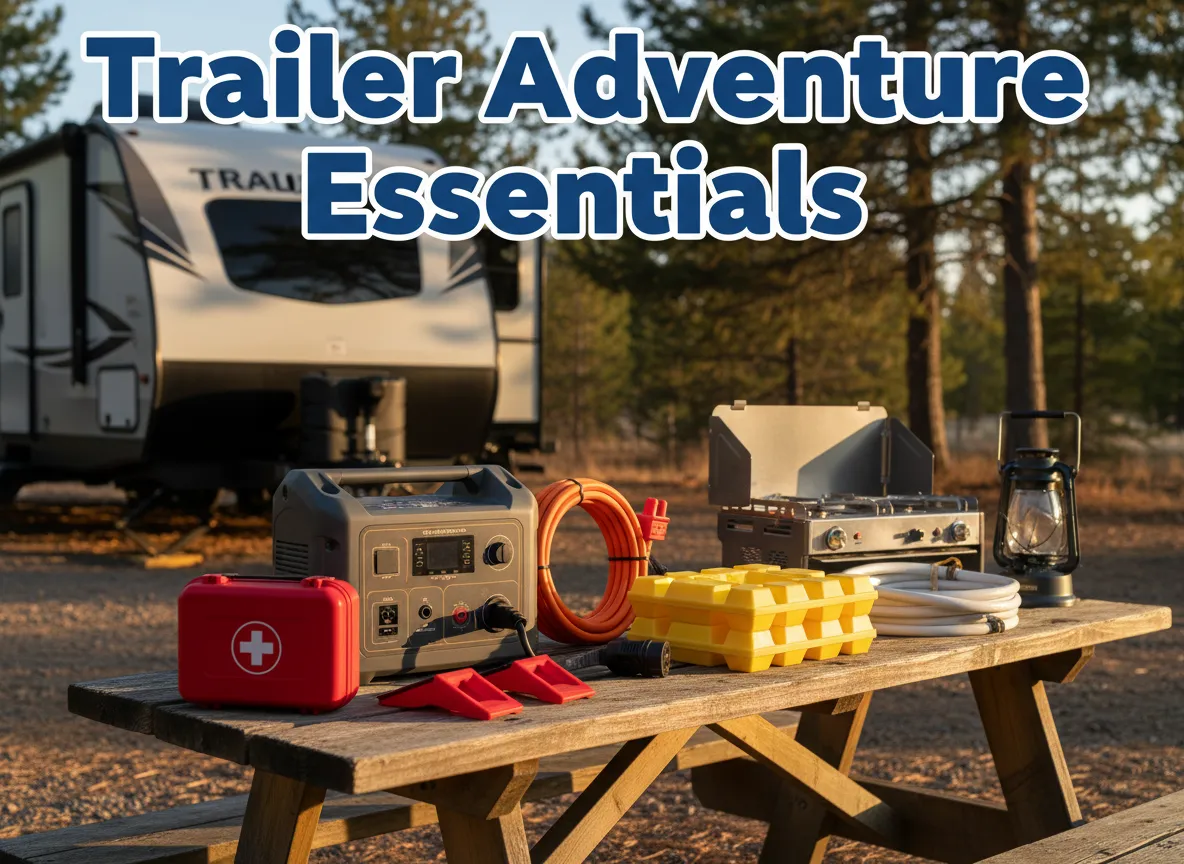
I’ve pulled together expert-backed research and real-world camping wisdom to build this definitive guide. From power solutions to sanitation, every item on this list earns its place in your trailer.
Key Takeaways 🗝️
- Electrical infrastructure (adapters, extension cords) is the #1 overlooked essential for first-timers connecting to RV park hookups.
- A portable power station keeps your devices running without draining your trailer’s battery overnight.
- Leveling blocks and wheel chocks are non-negotiable safety items that protect both your trailer and your sleep quality.
- Water and sanitation supplies — including RV-specific toilet paper and a water filter — prevent costly plumbing headaches.
- Pre-assembled RV starter kits are a smart, budget-friendly shortcut for beginners who want to cover all the basics at once.
The Complete List: 9 Travel Trailer Must Haves for Your First Camping Adventure
Getting your gear list right before your first trip is one of the smartest investments you can make. Below, I break down each essential item, explain why it matters, and give you concrete product recommendations to make shopping easier.
1. Electrical Adapters and Extension Cords
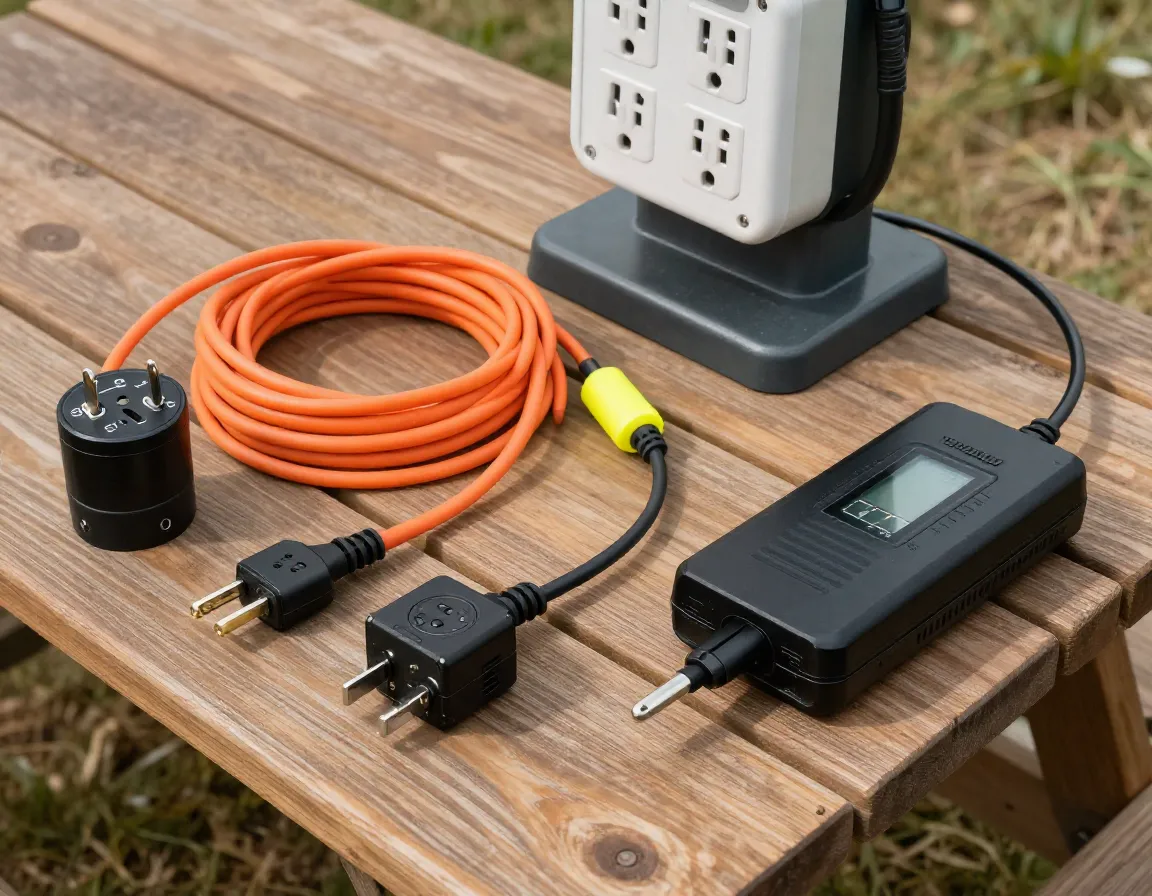
One of the most frustrating surprises for first-time RVers is arriving at a campground only to find that the power pedestal doesn’t match your trailer’s plug. RV parks use both 30-amp and 50-amp hookups, and having the wrong adapter means no power for the night.
What you need:
- A 30-amp to 50-amp adapter (and vice versa)
- A heavy-duty outdoor extension cord (at least 25–30 feet)
- A surge protector designed for RV use
💡 “Electrical adapters for converting between 30 and 50 amps are critical for connecting to different RV park hookups.” [4]
A surge protector is especially important because campground power can be inconsistent. Voltage spikes can damage your trailer’s electronics, refrigerator, and air conditioning unit. Spending $50–$100 on a quality surge protector now can save you thousands in repairs later.
| Adapter Type | Use Case | Approx. Cost |
|---|---|---|
| 30A Female → 50A Male | 50A trailer at 30A site | $15–$30 |
| 50A Female → 30A Male | 30A trailer at 50A site | $15–$30 |
| RV Surge Protector | All hookup types | $50–$150 |
2. Portable Power Station
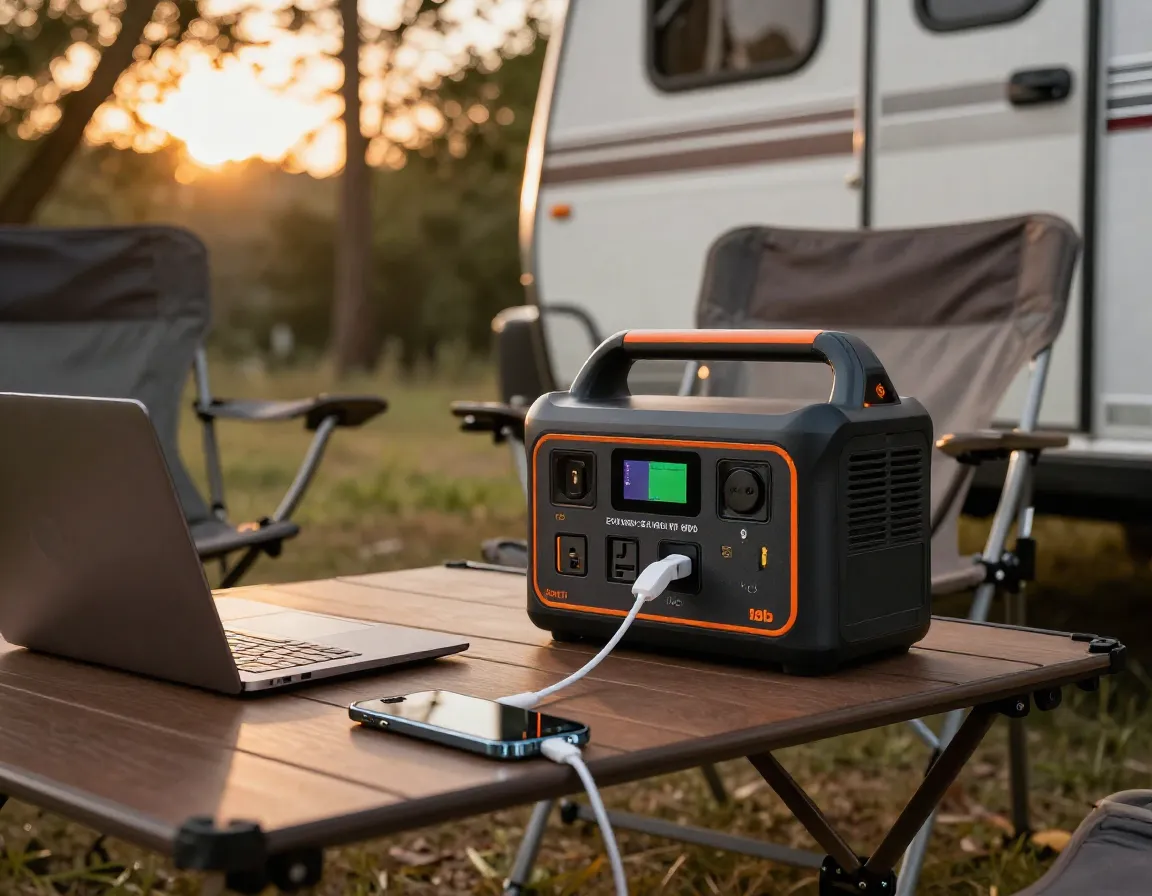
Even when you’re hooked up to shore power, there are times — campfire evenings, outdoor workspaces, or off-grid boondocking nights — when you need reliable portable power. A high-capacity portable power station like the Jackery Explorer 1000 Pro is one of the most versatile tools you can bring along. [3]
These units can run laptops, coffee makers, CPAP machines, and phone chargers for hours without touching your trailer’s battery system. For first-time campers who work remotely or rely on medical devices, this is a genuine game-changer.
Key specs to look for:
- Capacity: 1,000Wh or higher for overnight use
- Output ports: Multiple AC outlets plus USB-A and USB-C
- Recharge options: Solar panel compatibility for off-grid flexibility
- Weight: Under 25 lbs for portability
3. Reliable Lighting System

Campsite lighting does more than help you find the bathroom at 2 a.m. — it sets the mood, improves safety, and reduces the risk of tripping over tent stakes or equipment. A layered lighting approach works best. [1]
The lighting trio every camper needs:
- 🌞 Solar lantern: The LuminAID Titan Solar Lantern offers up to 100 hours of light on a single charge and collapses flat for easy storage. [1]
- 🔦 Headlamp: Keeps your hands free for cooking, setting up camp, or navigating trails after dark. Always pack extra batteries.
- 💡 String lights: LED string lights powered by your power station add ambiance and make your outdoor living space feel like home.
Pro tip: Choose lanterns with multiple brightness settings so you can conserve battery life on longer trips.
Inflatable solar lanterns are particularly popular with travel trailer campers because they pack down to almost nothing and charge passively during the day while you’re out exploring. [1]
4. Water Hoses and Sanitation Supplies
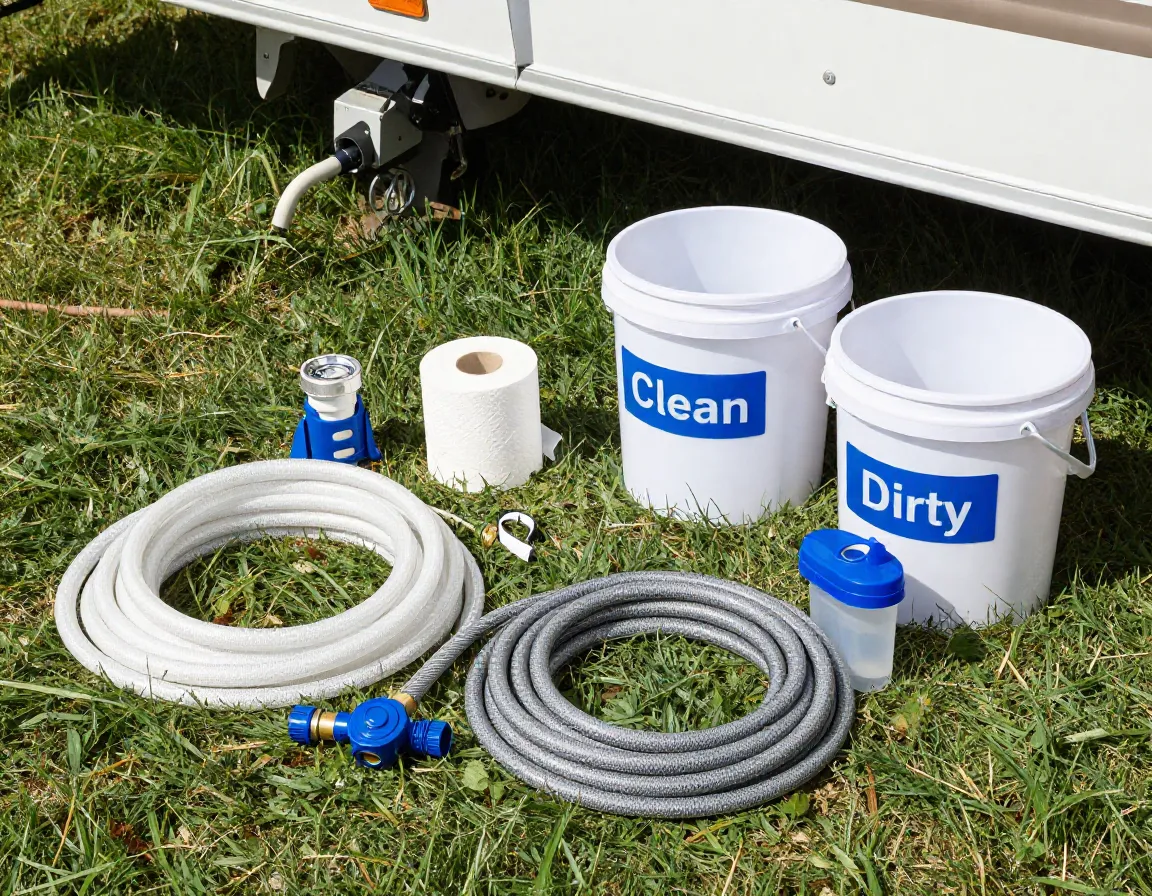
Water management is one of the areas where first-time travel trailer campers most often run into trouble. Your trailer needs a dedicated fresh water hose — never use a standard garden hose, as it can leach chemicals into your drinking water. [4]
Essential water and sanitation items:
- White, food-grade fresh water hose (at least 25 feet)
- Separate sewer hose for waste connections
- Water pressure regulator (protects your trailer’s plumbing from high-pressure campground water)
- RV-specific toilet paper (regular toilet paper can clog your black tank)
- Portable water filter or purification tablets
- Two 5-gallon buckets for water transport and washing [4]
The two-bucket rule is a simple but brilliant tip: one for clean water tasks, one for dirty water disposal. It keeps your campsite sanitary and reduces trips to the water spigot.
5. Wheel Chocks and Leveling Blocks
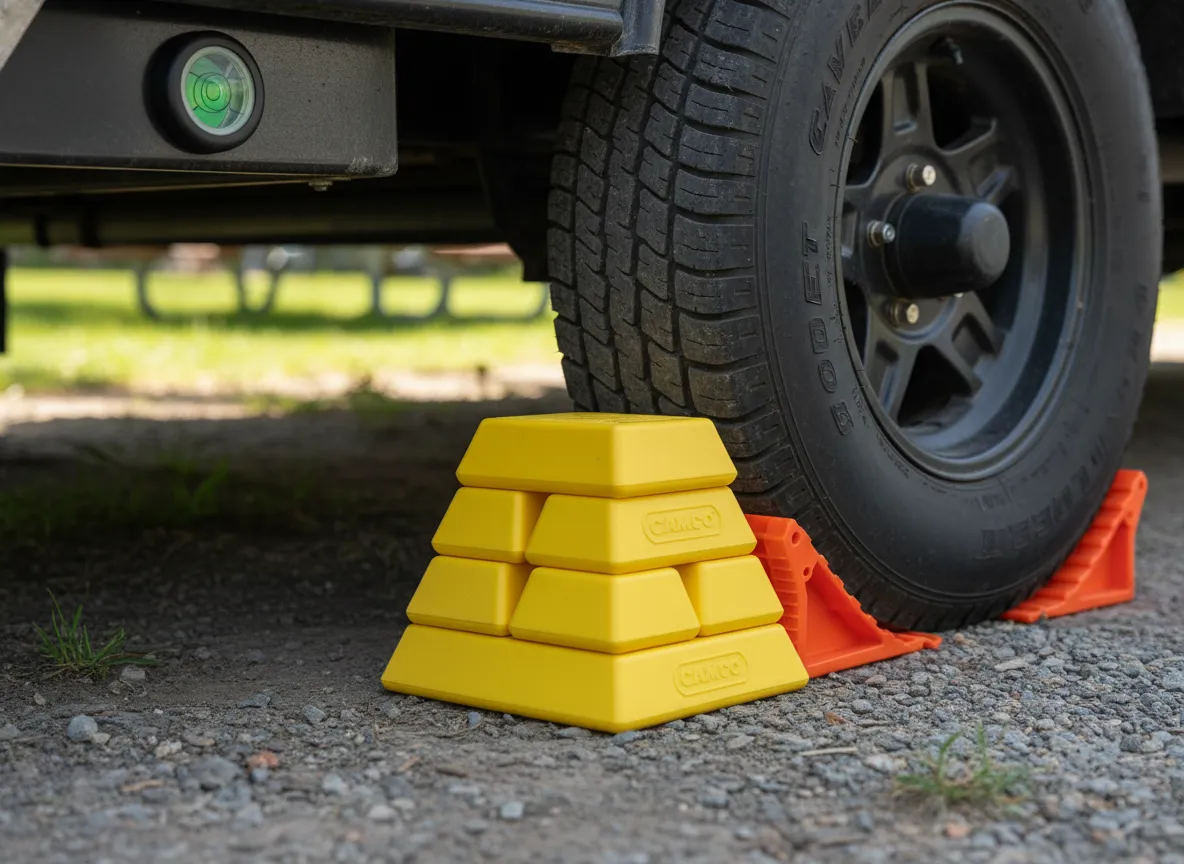
A trailer that isn’t level is more than just uncomfortable — it can cause your refrigerator to malfunction (most RV fridges need to be level to work properly), create sleep issues, and even put strain on your hitch. Wheel chocks and leveling blocks are inexpensive, lightweight, and absolutely essential. [4]
How they work:
- Leveling blocks (like Camco’s stackable leveling blocks) go under your tires to raise one side of the trailer.
- Wheel chocks wedge against your tires to prevent rolling once you’re parked.
⚠️ Never skip wheel chocks, even on flat ground. A trailer rolling unexpectedly can cause serious injury or damage.
Many first-time campers try to eyeball their level, but a small bubble level or a smartphone leveling app takes the guesswork out completely. Aim for your trailer to be within 1–2 degrees of level for optimal comfort and appliance performance.
6. Portable Camp Stove and Cookware
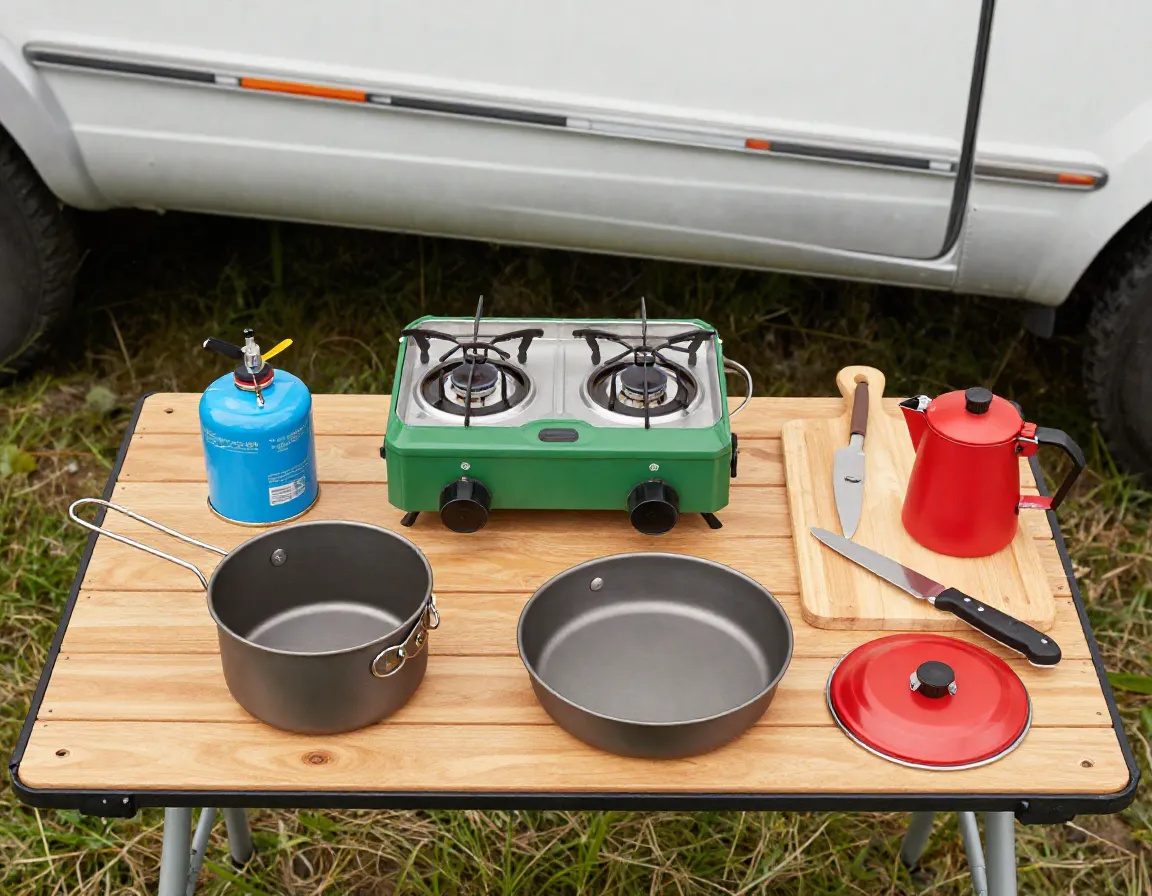
Not every campsite has a charcoal grill, and even when one is available, you may not want to rely on it for every meal. A portable camp stove gives you the freedom to cook what you want, when you want, regardless of your campsite’s amenities. [2]
What to pack:
- Two-burner propane camp stove
- Extra propane canisters (at least 2–3 for a weekend trip)
- Lightweight camping cookware set (nesting pots and pans save space)
- Camp utensils, cutting board, and a sharp knife
- Biodegradable camp soap and a small scrub brush
| Meal Type | Recommended Cookware |
|---|---|
| Boiling/Pasta | 2-quart pot |
| Eggs/Stir Fry | 10-inch skillet |
| Coffee | Percolator or pour-over kit |
| Grilling | Cast iron skillet or camp grill grate |
A good cookware set doesn’t have to be expensive. Look for hard-anodized aluminum or stainless steel options that nest together to minimize storage space in your trailer’s kitchen cabinets.
7. Quality Sleeping System
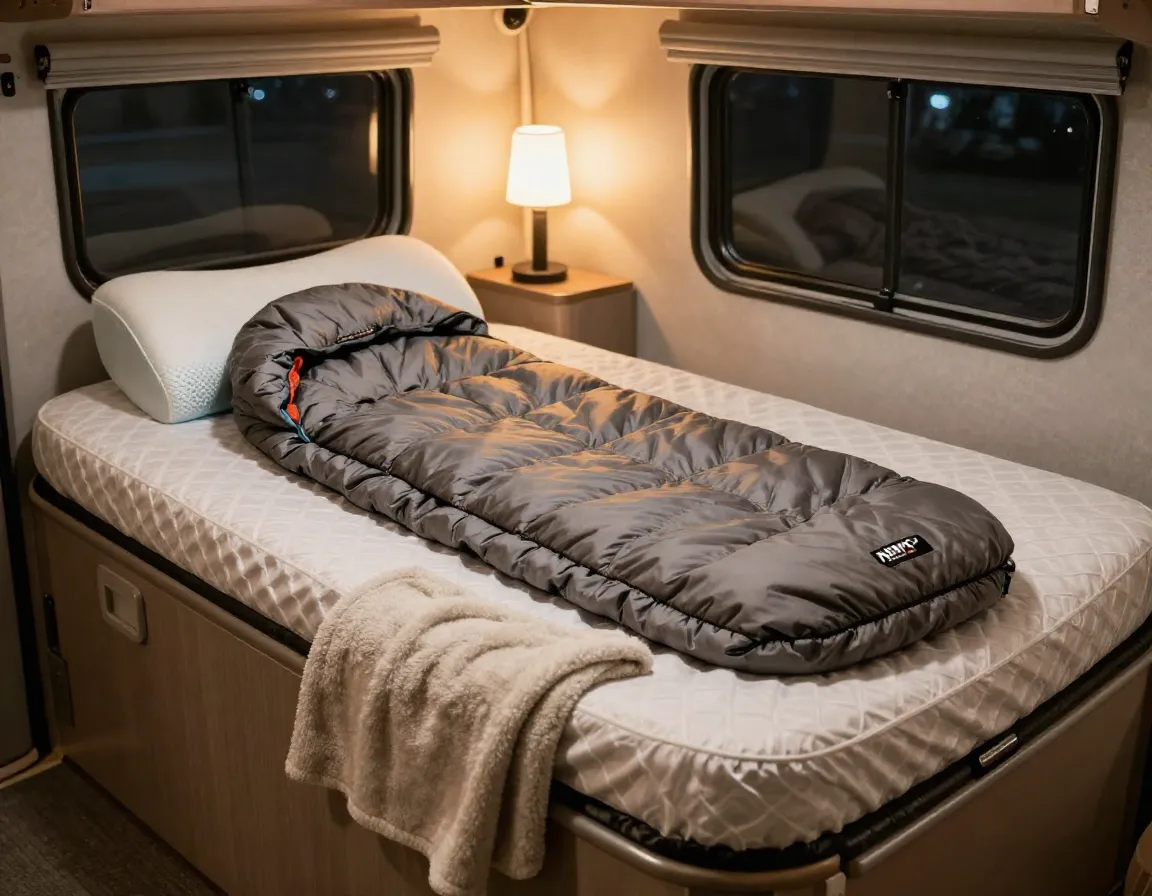
Even though your travel trailer has a built-in bed, your sleeping system matters more than most first-timers expect. Trailer mattresses vary widely in quality, and many budget trailers come with thin, uncomfortable foam pads. Investing in a quality sleeping setup transforms your rest — and a well-rested camper is a happy camper. [2]
The core sleep system:
- Sleeping pad or mattress topper: The NEMO Roamer Sleeping Pad (available in double size) is a popular upgrade that adds significant cushioning. [2]
- Sleeping bag: Choose a bag rated for temperatures 10–15°F below the coldest expected night temperature.
- Camping pillow: Compressible memory foam pillows are a huge comfort upgrade over standard camping options.
- Lightweight blanket: A fleece or down blanket adds warmth without bulk.
💤 A proper sleeping system isn’t a luxury — it’s a safety essential. Poor sleep impairs judgment, which matters when you’re driving a tow vehicle.
8. Powered Cooler and Food Storage
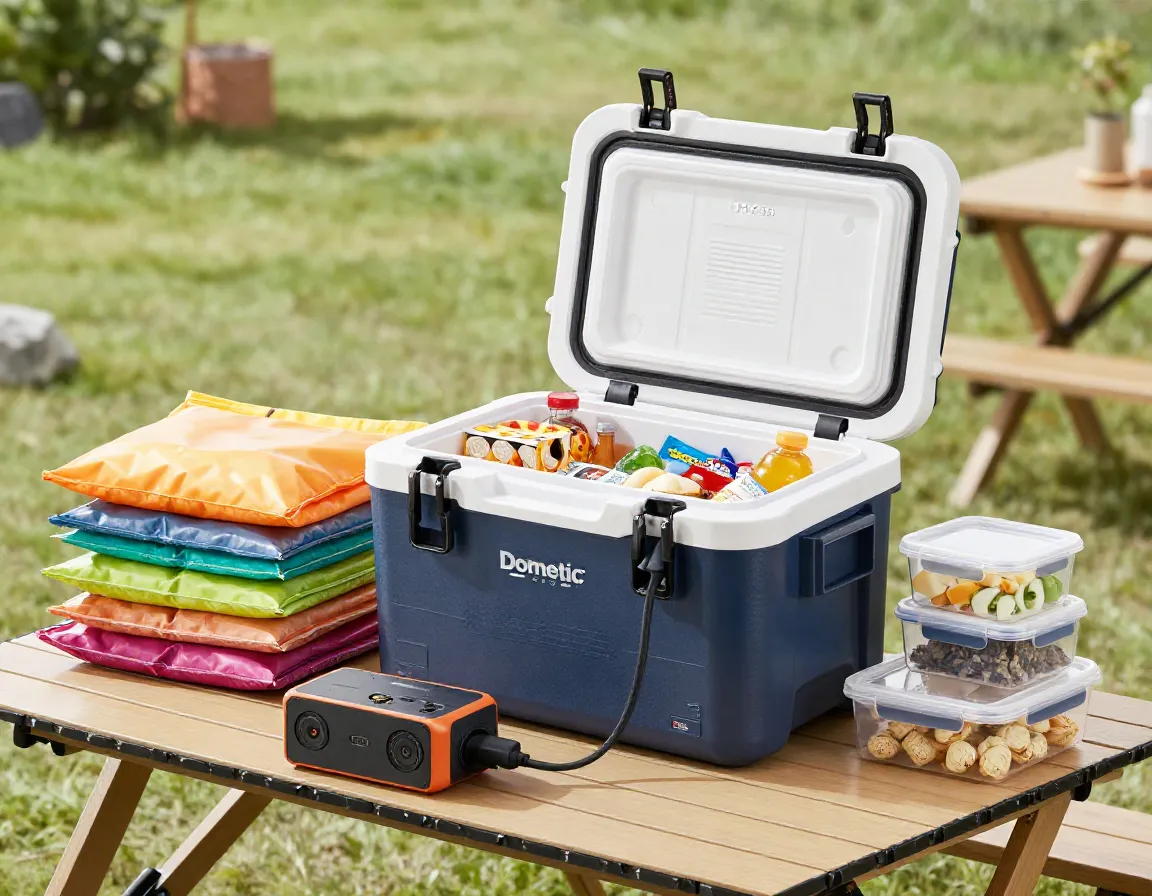
A standard ice cooler works fine for a weekend trip, but for longer adventures — or when you want to keep things simple — a powered cooler is a transformative upgrade. Units like the Dometic CFX3 35 can maintain freezer-level temperatures using your trailer’s 12V power or your portable power station. [1]
Benefits of a powered cooler:
- No ice needed (saves money and hassle)
- Maintains consistent temperature for food safety
- Can double as a freezer for meat and ice cream 🍦
- Connects via 12V, 24V, or AC power
For food items that don’t need refrigeration, waterproof dry bags protect snacks, spices, and dry goods from moisture, condensation, and the occasional rainstorm. [1] Stackable, airtight containers also help you organize your trailer’s limited cabinet space efficiently.
9. Emergency Road Kit and First Aid Supplies
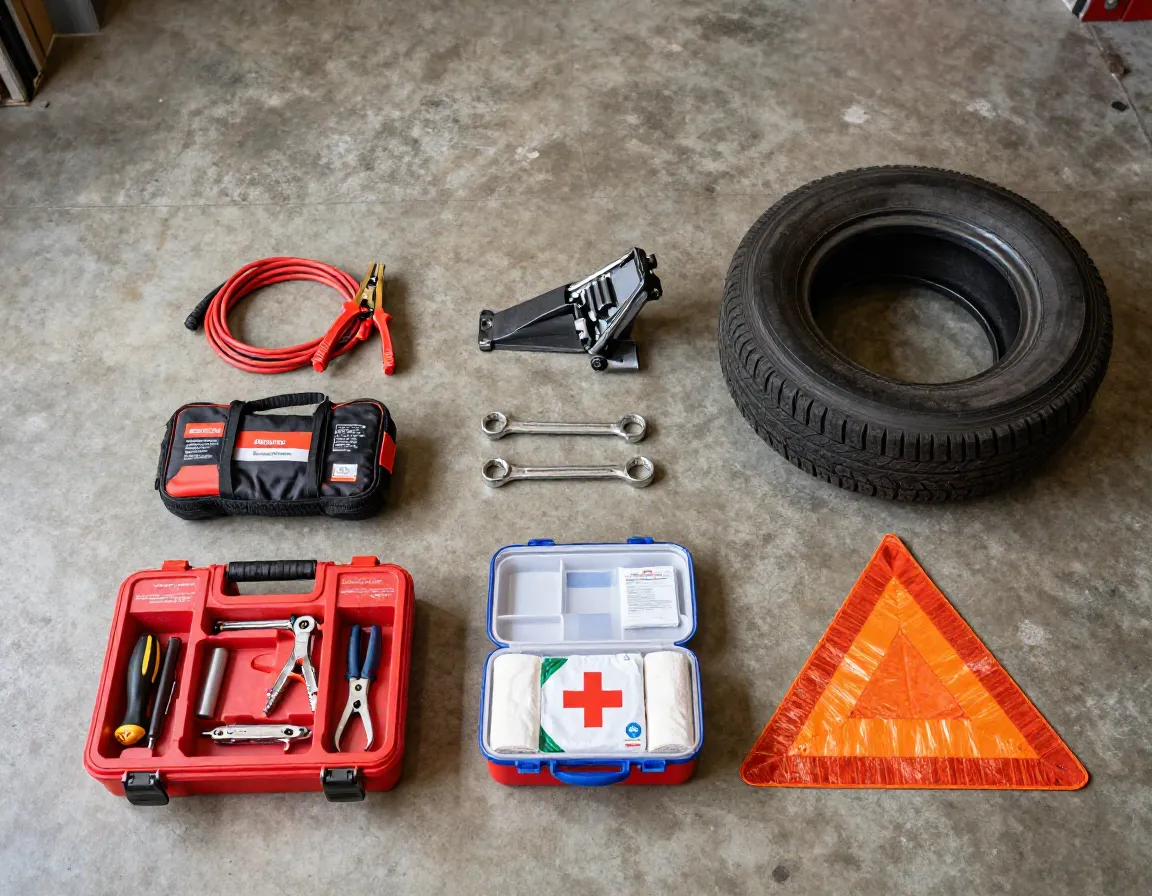
The final item on our list of 9 Travel Trailer Must Haves for Your First Camping Adventure is the one most people hope they’ll never need — but will be incredibly grateful to have. Towing a trailer adds complexity to roadside emergencies, and being prepared can turn a scary situation into a manageable one. [4]
Your emergency road kit should include:
- Jumper cables or a jump starter pack
- Tire-changing tools and a spare tire (for both your tow vehicle and trailer)
- Reflective triangles or road flares
- Tow strap
- Basic hand tools (screwdrivers, pliers, adjustable wrench)
- First aid kit with bandages, antiseptic, pain relievers, and any personal medications
🚨 Always check your trailer’s tire pressure before every trip. Blowouts are one of the most common — and preventable — travel trailer emergencies.
Bonus tip: Consider adding a multi-tool (like a Leatherman or Gerber) to your kit. It’s one of the most versatile pieces of gear you can own, useful for everything from tightening hitch bolts to opening canned goods. [4]
Smart Shortcuts: RV Starter Kits for Beginners
If reading through this list feels overwhelming, here’s some good news: you don’t have to source every item individually. Pre-assembled RV starter kits like the Camco RV Starter Kit Box or the Valterra RV Basic Starter Kit K88102 bundle many of the essential components — water hoses, sewer hoses, adapters, and more — into a single, affordable package. [6]
These kits are especially valuable for first-time campers because:
- They ensure compatibility between components
- They’re typically priced below buying items separately
- They eliminate the “did I forget something?” anxiety
- They make great gifts for new RV owners
Once you’ve covered the basics with a starter kit, you can layer in the more specialized items (powered cooler, portable power station, solar lantern) based on your specific camping style and budget.
Quick Reference: 9 Travel Trailer Must Haves Checklist ✅
| # | Item | Priority Level | Approx. Budget |
|---|---|---|---|
| 1 | Electrical Adapters & Surge Protector | 🔴 Critical | $65–$180 |
| 2 | Portable Power Station | 🔴 Critical | $300–$1,000 |
| 3 | Lighting System (lantern + headlamp) | 🔴 Critical | $40–$100 |
| 4 | Water Hoses & Sanitation Supplies | 🔴 Critical | $50–$120 |
| 5 | Wheel Chocks & Leveling Blocks | 🔴 Critical | $20–$60 |
| 6 | Camp Stove & Cookware | 🟡 High | $80–$200 |
| 7 | Quality Sleeping System | 🟡 High | $100–$300 |
| 8 | Powered Cooler & Food Storage | 🟡 High | $200–$600 |
| 9 | Emergency Road Kit & First Aid | 🔴 Critical | $60–$150 |
Conclusion: You’re Ready to Hit the Road 🚐
The 9 Travel Trailer Must Haves for Your First Camping Adventure aren’t just a shopping list — they’re your foundation for safe, comfortable, and genuinely enjoyable camping. Every item on this list addresses a real challenge that first-time campers face, from power failures and water mishaps to uncomfortable nights and roadside emergencies.
Your actionable next steps:
- Start with the critical items — electrical adapters, wheel chocks, water hoses, and an emergency kit. These protect your safety and your investment.
- Consider a starter kit to cover multiple basics in one purchase and avoid compatibility headaches.
- Upgrade gradually — add a powered cooler, portable power station, or solar lantern on your second or third trip once you know your camping style.
- Do a test run — park your trailer in your driveway for a night before your first real trip. You’ll quickly discover anything you’ve missed.
- Join an RV community — forums, Facebook groups, and apps like Campendium connect you with experienced campers who love sharing tips.
The open road is waiting. Pack smart, stay safe, and enjoy every mile of your first travel trailer adventure. 🌲🏕️
References
[1] 10 Must Have Camping Gear Items Of 2026 – https://rinsekit.com/blogs/news/10-must-have-camping-gear-items-of-2026
[2] Best Camping List – https://www.outdoorgearlab.com/topics/camping-and-hiking/best-camping-list
[3] Must Have Rv Camping Accessories 2026 – https://www.bougerv.com/blogs/article/must-have-rv-camping-accessories-2026
[4] Rv Camping Essentials – https://www.cruiseamerica.com/trip-inspiration/rv-camping-essentials
[5] Must Have Camping Gear Of 2026 – https://strongerthanfire.com/must-have-camping-gear-of-2026/
[6] Rving In 2026 Best Products And What You Need To Know – https://rvshare.com/blog/rving-in-2026-best-products-and-what-you-need-to-know/