How to Style 5 Must-Have Hiking Fits for Fall Weather
As autumn paints the mountains in brilliant shades of gold and crimson, outdoor enthusiasts face a styling challenge that goes far beyond aesthetics. Fall hiking demands a strategic approach to layering that balances warmth, breathability, and weather protection while maintaining comfort across unpredictable temperature swings. Learning how to style 5 must-have hiking fits for fall weather transforms potentially miserable trail experiences into comfortable adventures that let hikers focus on the stunning seasonal scenery rather than battling the elements.
Key Takeaways
- Master the three-layer system: base layer for moisture management, insulating layer for warmth, and outer shell for weather protection
- Choose versatile pieces that can be easily added or removed as temperatures and weather conditions change throughout the day
- Prioritize moisture-wicking materials like merino wool and synthetic fabrics over cotton to maintain body temperature regulation
- Invest in quality footwear and accessories including waterproof hiking boots, warm hats, and gloves for complete fall weather protection
- Plan outfits based on specific trail conditions including elevation changes, expected weather patterns, and duration of the hike
Understanding Fall Hiking Weather Challenges
Fall weather creates unique challenges for outdoor enthusiasts. Morning temperatures might hover around 40°F while afternoon highs reach 70°F, creating a 30-degree swing that demands adaptable clothing choices. Add unpredictable precipitation, varying wind conditions, and elevation changes that drop temperatures by 3-5 degrees per 1,000 feet of elevation gain, and the complexity becomes clear.
Successful fall hiking outfits must address multiple variables simultaneously. The clothing needs to handle moisture from both external sources (rain, snow, morning dew) and internal sources (perspiration from physical exertion). The outfit must also provide adequate insulation without causing overheating during strenuous climbs.
The Science of Layering for Fall Conditions
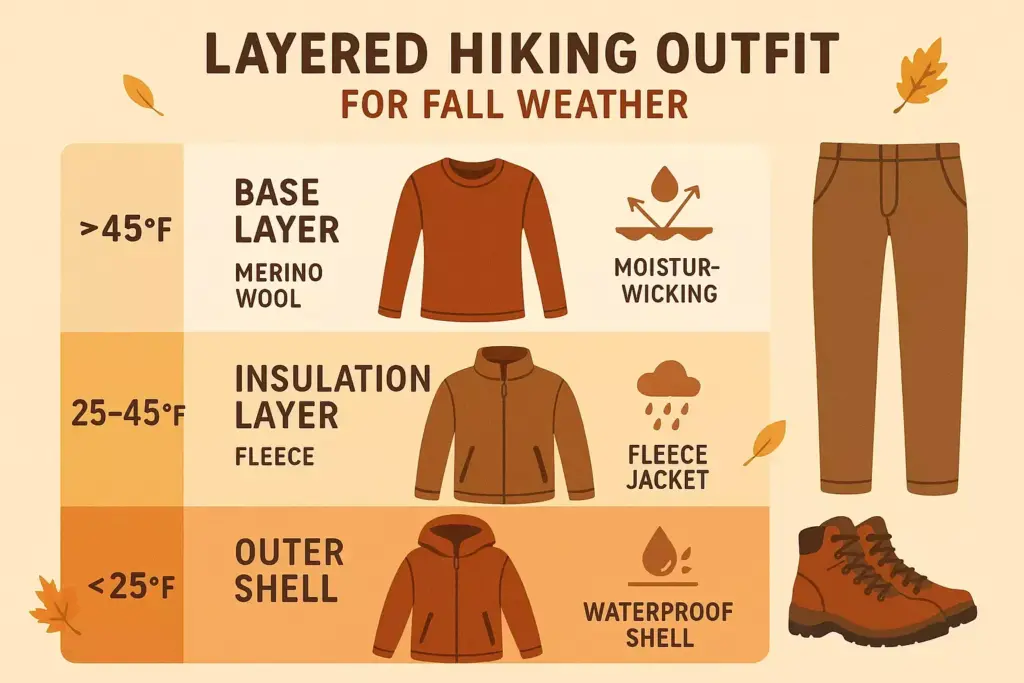
The three-layer system forms the foundation of effective fall hiking attire:
- Base Layer: Manages moisture and regulates body temperature
- Insulating Layer: Provides warmth and can be adjusted based on activity level
- Shell Layer: Protects against wind, rain, and snow
This system allows hikers to add or remove layers as conditions change, maintaining optimal comfort throughout the entire hiking experience.
Essential Fall Hiking Gear Components
Before diving into specific outfit combinations, understanding the individual components ensures informed decisions when building a fall hiking wardrobe.
Base Layer Essentials
Merino wool stands out as the premium choice for fall base layers. This natural fiber provides excellent temperature regulation, naturally resists odors, and maintains insulating properties even when damp. Synthetic alternatives like polyester blends offer similar moisture-wicking capabilities at lower price points.
Key base layer features include:
- Moisture-wicking properties
- Quick-drying capabilities
- Comfortable fit that allows full range of motion
- Flat seams to prevent chafing during long hikes
Insulating Layer Options
The insulating layer provides warmth while allowing moisture vapor to escape. Popular options include:
| Material | Pros | Cons | Best For |
|---|---|---|---|
| Fleece | Lightweight, breathable, quick-drying | Less packable, can pill over time | Active hiking, mild conditions |
| Down | Excellent warmth-to-weight ratio, highly packable | Loses insulation when wet, expensive | Cold, dry conditions |
| Synthetic Insulation | Maintains warmth when wet, affordable | Heavier than down, less packable | Wet conditions, budget-conscious hikers |
Outer Shell Considerations
Waterproof-breathable shells provide essential protection against precipitation and wind. Look for jackets with:
- Waterproof rating of at least 10,000mm
- Breathability rating of 10,000g/m²/24hr or higher
- Pit zips for additional ventilation
- Adjustable hood and cuffs
How to Style 5 Must-Have Hiking Fits for Fall Weather: Complete Outfit Guide
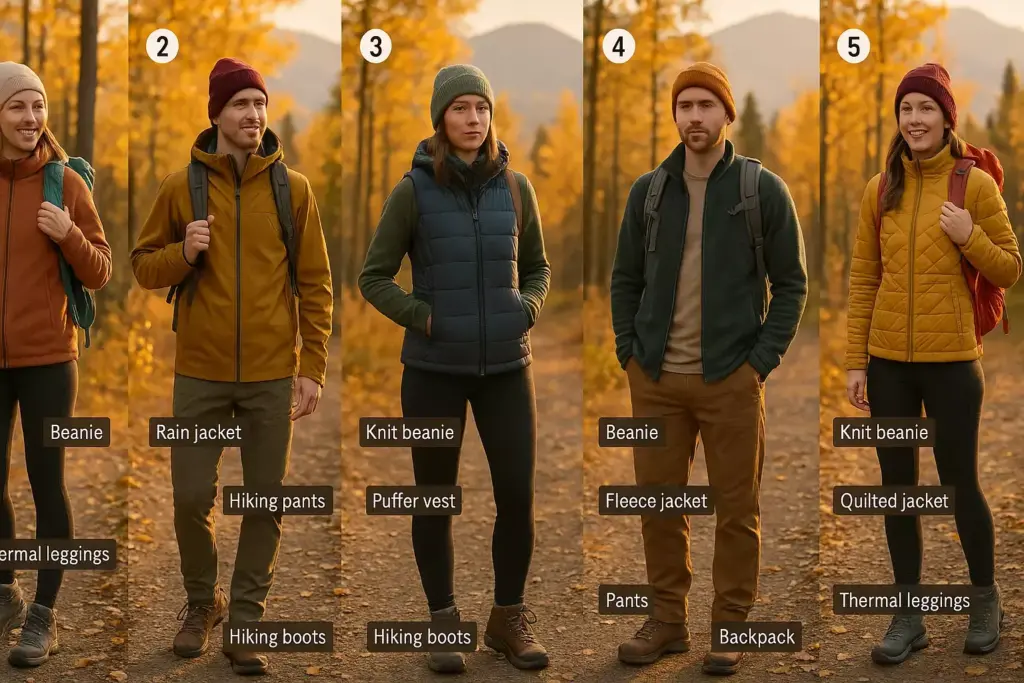
Outfit #1: The Classic Fall Day Hiker
Perfect for: Moderate temperatures (45-65°F), partly cloudy conditions, 4-6 hour hikes
Base Layer: Long-sleeve merino wool shirt in neutral gray or navy
Bottom Base: Lightweight hiking pants or leggings
Insulating Layer: Lightweight fleece jacket or vest
Outer Layer: Packable windbreaker
Footwear: Mid-cut hiking boots with good tread
Accessories: Baseball cap, lightweight gloves, day pack
This versatile combination handles most fall hiking scenarios. The merino wool base layer regulates temperature while the fleece provides adjustable warmth. The windbreaker packs small but offers essential protection against unexpected weather changes.
“The key to comfortable fall hiking is having options. This classic setup gives you multiple ways to adjust your comfort level without carrying excessive gear.” – Trail Magazine, 2025
Outfit #2: The Cold Weather Warrior
Perfect for: Temperatures below 40°F, potential for snow or sleet, high elevation hikes
Base Layer: Heavyweight merino wool long-sleeve top
Bottom Base: Thermal leggings under hiking pants
Insulating Layer: Down or synthetic insulated jacket
Outer Layer: Hardshell rain jacket with full zip
Footwear: Insulated waterproof hiking boots
Accessories: Warm beanie, insulated gloves, neck gaiter, gaiters
When temperatures drop significantly, this outfit provides serious warmth without sacrificing mobility. The combination of thermal base layers and insulated mid-layer creates a warm microclimate while the hardshell protects against harsh conditions.
Outfit #3: The Wet Weather Specialist
Perfect for: Rainy conditions, high humidity, muddy trails
Base Layer: Synthetic moisture-wicking shirt
Bottom Base: Quick-dry hiking pants
Insulating Layer: Synthetic insulated vest
Outer Layer: Waterproof rain jacket and pants
Footwear: Waterproof hiking boots with aggressive tread
Accessories: Waterproof hat, waterproof gloves, pack rain cover
Synthetic materials excel in wet conditions because they maintain insulating properties even when saturated. This outfit prioritizes staying dry while ensuring comfort during active hiking in challenging weather.
Outfit #4: The Variable Conditions Adapter
Perfect for: Unpredictable weather, long hikes with elevation changes, shoulder season conditions
Base Layer: Lightweight merino wool shirt
Bottom Base: Convertible hiking pants
Insulating Layer: Packable down vest
Outer Layer: Softshell jacket
Footwear: Lightweight hiking boots
Accessories: Sun hat and warm beanie, lightweight gloves, buff or neck gaiter
This adaptable outfit handles dramatic weather changes throughout a single hike. Convertible pants transform from long pants to shorts, while the packable down vest adds warmth without bulk when needed.
Outfit #5: The Autumn Photography Explorer
Perfect for: Early morning starts, golden hour sessions, stop-and-go hiking pace
Base Layer: Medium-weight merino wool shirt
Bottom Base: Comfortable hiking jeans or softshell pants
Insulating Layer: Wool sweater or fleece pullover
Outer Layer: Stylish hiking jacket with multiple pockets
Footwear: Comfortable hiking shoes or low-cut boots
Accessories: Photography vest, fingerless gloves, comfortable hat
Photography-focused hikes require frequent stops that can lead to rapid cooling. This outfit balances style with function, providing easy access to gear while maintaining warmth during stationary periods.
Advanced Styling Tips for Fall Hiking Success
Color Coordination and Visibility
Earth tones like olive green, burnt orange, and deep brown complement fall landscapes while providing some camouflage for wildlife viewing. However, include at least one bright accent piece for safety, especially during hunting season.
Strategic color choices can also affect temperature regulation:
- Dark colors absorb more heat from sunlight
- Light colors reflect heat and stay cooler
- Bright colors improve visibility to other hikers and hunters
Fabric Technology Considerations
Modern hiking apparel incorporates advanced fabric technologies that enhance performance:
DWR (Durable Water Repellent) coatings on outer layers cause water to bead and roll off rather than soaking into the fabric. These coatings require periodic reapplication to maintain effectiveness.
Stretch fabrics in hiking pants and base layers improve mobility and comfort during challenging terrain navigation. Look for garments with 4-way stretch capabilities for maximum freedom of movement.
Fit and Comfort Optimization
Proper fit dramatically impacts the effectiveness of fall hiking outfits:
- Base layers should fit snugly without being restrictive
- Insulating layers need room for air circulation while avoiding excessive bulk
- Outer shells must accommodate all underlying layers without limiting movement
Seam placement affects comfort during long hikes. Flat-seam construction or strategically placed seams prevent chafing and hot spots that develop over extended periods of movement.
🥾 Fall Hiking Outfit Planner
Find the perfect hiking outfit for your fall adventure
Seasonal Transition Strategies
Early Fall Adaptations
Early fall hiking (September-October) often features warm days and cool nights. Focus on versatile pieces that can handle significant temperature variations:
- Lightweight base layers that can be supplemented with additional insulation
- Convertible pants that transform from shorts to full coverage
- Packable insulation that compresses small when not needed
Late Fall Preparations
Late fall conditions (November-December) approach winter weather patterns. Outfit strategies should emphasize:
- Heavier base layers for consistent warmth
- Waterproof protection against increased precipitation
- Insulated footwear for cold ground and potential snow
Regional Considerations
Geographic location significantly impacts fall hiking outfit requirements:
Pacific Northwest: Prioritize waterproof protection and breathable layers for high humidity and frequent precipitation.
Rocky Mountains: Focus on wind protection and rapid temperature change adaptation for high elevation hiking.
Northeast: Emphasize versatile layering for variable conditions and excellent insulation for cold snaps.
Southeast: Choose lighter base layers and increased ventilation options for higher humidity and warmer temperatures.
Maintenance and Care for Fall Hiking Gear
Fabric Care Best Practices
Proper care extends the life and performance of fall hiking apparel:
Merino wool requires gentle washing in cool water with wool-specific detergents. Avoid fabric softeners that can reduce moisture-wicking properties.
Synthetic fabrics benefit from regular washing to maintain moisture-wicking capabilities. Use technical fabric detergents that don’t leave residue.
Down insulation needs special care including proper drying with tennis balls to maintain loft and insulating properties.
DWR Coating Maintenance
Durable Water Repellent coatings on outer shells require periodic renewal:
- Clean the garment thoroughly to remove dirt and oils
- Apply DWR treatment following manufacturer instructions
- Heat activate using a dryer or iron on appropriate settings
- Test water repellency before your next hiking adventure
Storage Considerations
Proper storage maintains gear performance between seasons:
- Down items should be stored uncompressed in breathable storage sacks
- Synthetic insulation can be compressed for storage without damage
- Waterproof items should be stored in dry conditions to prevent mildew
Budget-Conscious Outfit Building
Investment Priorities
Strategic purchasing maximizes value when building a fall hiking wardrobe:
High Priority Investments:
- Quality waterproof hiking boots
- Reliable rain jacket
- Merino wool base layers
Medium Priority Items:
- Insulating layers (fleece or down)
- Hiking pants
- Warm accessories
Budget-Friendly Options:
- Synthetic base layers
- Generic fleece items
- Basic hiking socks
Multi-Season Value
Versatile pieces serve multiple seasons and activities:
- Softshell jackets work for fall hiking, winter activities, and spring adventures
- Merino wool base layers function year-round for various outdoor activities
- Quality hiking boots serve multiple seasons with appropriate sock choices
Safety Considerations for Fall Hiking Outfits
Visibility and Communication
Fall hunting seasons overlap with prime hiking weather in many regions. Include bright orange or red accessories for visibility, especially when hiking in areas with hunting activity.
Emergency preparedness should influence outfit choices:
- Bright colors aid in search and rescue visibility
- Multiple pockets organize emergency supplies
- Durable construction withstands unexpected situations
Weather Monitoring Integration
Modern hiking outfits can integrate technology for enhanced safety:
- Smartphone compatibility with glove-friendly touchscreen capabilities
- GPS device protection through secure pocket systems
- Emergency whistle attachment points on jackets or packs
Conclusion
Mastering how to style 5 must-have hiking fits for fall weather transforms autumn outdoor adventures from endurance tests into comfortable explorations of nature’s most spectacular season. The key lies in understanding the three-layer system and selecting versatile pieces that adapt to changing conditions throughout the day.
Successful fall hiking outfits balance warmth, breathability, and weather protection while maintaining the flexibility to adjust as conditions change. Whether tackling a challenging mountain peak or enjoying a leisurely forest walk, the right combination of base layers, insulation, and outer protection ensures comfort and safety.
Take action today by assessing your current hiking wardrobe and identifying gaps in your fall weather protection. Start with high-priority items like quality base layers and waterproof protection, then build your collection over time with versatile pieces that serve multiple conditions and seasons.
Remember that the best hiking outfit is one that lets you focus on the incredible fall scenery rather than battling uncomfortable gear. Invest in quality pieces, maintain them properly, and enjoy countless comfortable autumn adventures on the trails.