How to Dress for Summer Hiking in Switzerland: A Practical Style Guide
Picture this: you’re standing at the base of the majestic Matterhorn, ready to embark on an unforgettable Swiss Alpine adventure. The morning sun kisses the snow-capped peaks while wildflowers dance in the mountain breeze. But as you look around at fellow hikers, you notice some are shivering in inadequate clothing while others are sweating profusely in heavy winter gear. Don’t let poor clothing choices ruin your Swiss hiking experience. Understanding how to dress for summer hiking in Switzerland can make the difference between a magical mountain adventure and a miserable ordeal.
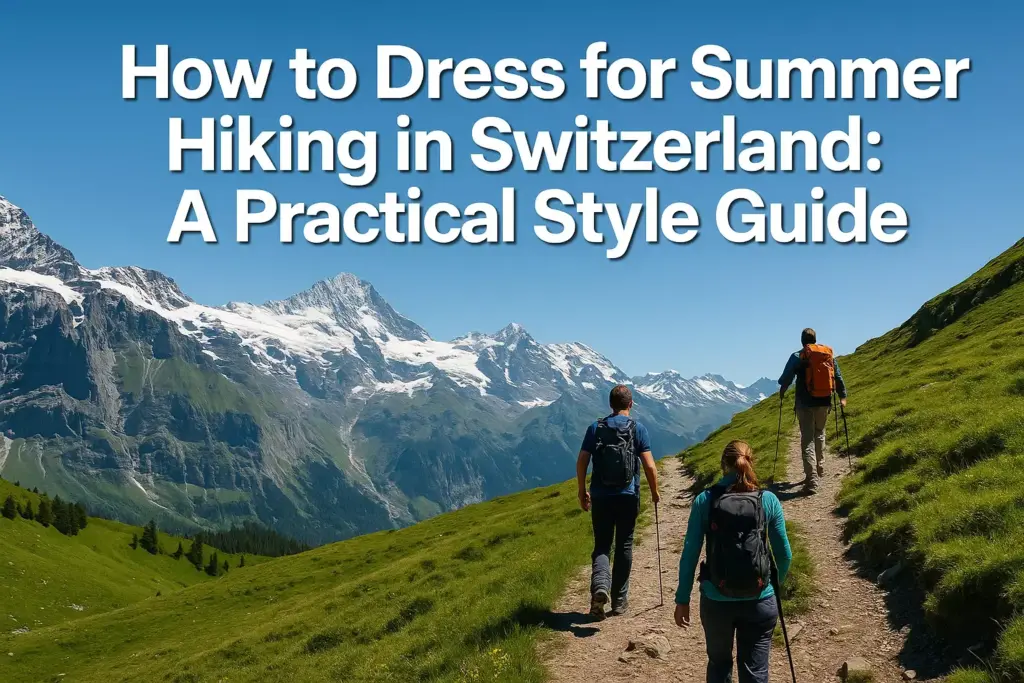
Switzerland’s diverse terrain and unpredictable mountain weather demand strategic clothing choices that balance comfort, safety, and style. This comprehensive guide will equip you with everything needed to dress appropriately for Swiss summer hiking adventures.
Key Takeaways
- Layer strategically with moisture-wicking base layers, insulating mid-layers, and waterproof outer shells to adapt to Switzerland’s changing mountain conditions
- Prioritize sun protection with UV-rated clothing, wide-brimmed hats, and high-SPF sunscreen due to intense Alpine UV exposure at elevation
- Choose proper footwear with ankle support, waterproof materials, and aggressive tread patterns for Switzerland’s rocky, wet terrain
- Pack weather-appropriate accessories including rain gear, warm layers, and emergency items for sudden Alpine weather changes
- Focus on moisture management using merino wool and synthetic fabrics that wick sweat and dry quickly in humid mountain conditions
Understanding Swiss Summer Weather Patterns
Alpine Climate Characteristics 🏔️
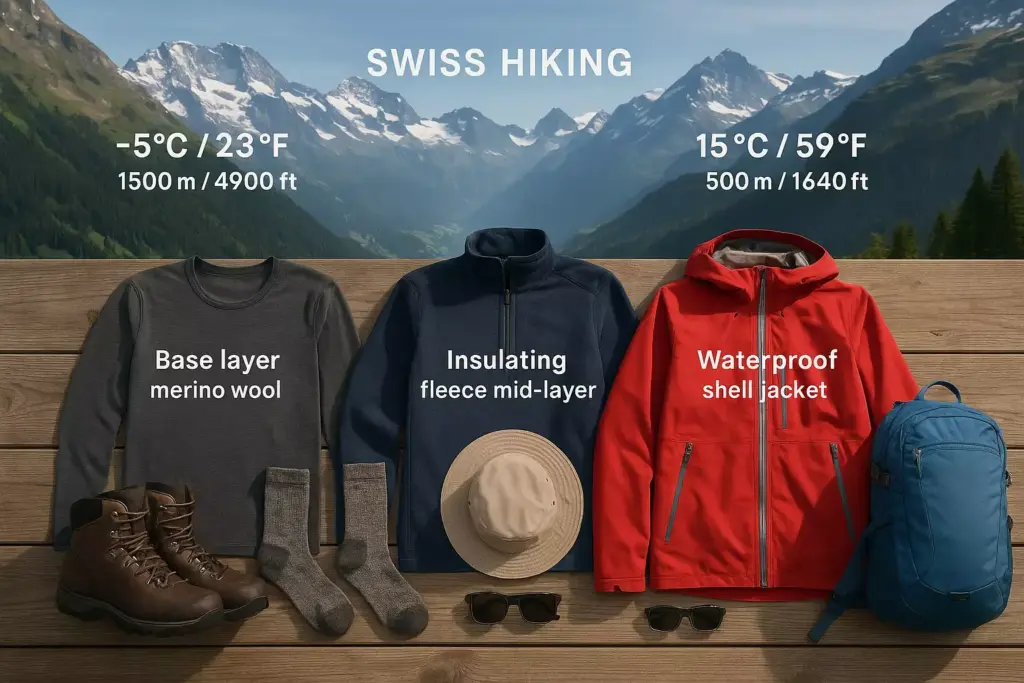
Switzerland’s mountain climate presents unique challenges for hikers. Summer temperatures can range from 60°F (15°C) in valleys to near-freezing at high elevations. Weather patterns change rapidly, with sunny mornings transforming into afternoon thunderstorms within hours.
Key weather factors include:
- Elevation-dependent temperature drops (approximately 3.5°F per 1,000 feet)
- High UV radiation due to thin atmosphere and snow reflection
- Sudden precipitation and wind changes
- Morning frost possible above 8,000 feet even in summer
- Intense sun exposure on glaciated terrain
Regional Weather Variations
Different Swiss regions require adapted clothing strategies:
| Region | Temperature Range | Precipitation | Special Considerations |
|---|---|---|---|
| Bernese Oberland | 50-75°F (10-24°C) | Moderate-High | Glacial weather, rapid changes |
| Valais | 55-80°F (13-27°C) | Low-Moderate | Dry climate, intense sun |
| Graubünden | 45-70°F (7-21°C) | Moderate | High altitude, cooler temperatures |
| Ticino | 60-85°F (16-29°C) | High | Mediterranean influence, humidity |
Essential Layering System for Swiss Hiking
Base Layer Fundamentals
The foundation of any effective Swiss hiking outfit starts with a high-quality base layer. This crucial first layer manages moisture and regulates body temperature throughout your mountain adventure.
Recommended base layer materials:
- Merino wool: Natural odor resistance, temperature regulation, comfort in varying conditions
- Synthetic blends: Quick-drying, durable, cost-effective for frequent use
- Bamboo fiber: Sustainable option with natural antimicrobial properties
“A proper base layer is like having a personal climate control system. It keeps you dry when you’re working hard and warm when you stop to rest.” – Swiss Alpine Guide Association
Avoid cotton materials at all costs, as they retain moisture and lose insulating properties when wet – a dangerous combination in Swiss mountain conditions.
Mid-Layer Strategy
Mid-layers provide essential insulation while maintaining breathability for active hiking. The key is choosing pieces that can be easily added or removed as conditions change.
Top mid-layer options:
- Fleece jackets: Lightweight, breathable, quick-drying
- Synthetic insulation: Maintains warmth when wet, compressible
- Down vests: Excellent warmth-to-weight ratio for dry conditions
- Soft-shell jackets: Wind resistance with stretch and breathability
Outer Shell Protection
Swiss weather demands a reliable outer shell for protection against wind, rain, and snow. Look for jackets with:
- Waterproof-breathable membranes (Gore-Tex, eVent, or similar)
- Fully sealed seams to prevent water intrusion
- Adjustable hoods that fit over hiking helmets
- Ventilation zippers for temperature regulation
- Multiple pockets for easy access to essentials
Footwear Selection for Swiss Terrain
Hiking Boot Requirements
Swiss terrain demands specialized footwear that provides support, protection, and traction on diverse surfaces. The right boots can prevent injuries and enhance hiking enjoyment.
Essential boot features:
- Ankle support: Crucial for rocky, uneven Swiss trails
- Waterproof construction: Protection from streams, snow, and rain
- Vibram soles: Superior grip on wet rocks and loose terrain
- Toe protection: Reinforced areas for rocky scrambles
- Proper fit: Room for toe movement with thick hiking socks
Sock Technology
High-quality hiking socks are often overlooked but essential for comfort and blister prevention. Choose socks with:
- Moisture-wicking materials (merino wool or synthetic blends)
- Cushioning in heel and forefoot areas
- Seamless toe construction to prevent hot spots
- Appropriate thickness for your boot fit
- Height above boot collar to prevent chafing
Protecting Against Swiss Sun and Elements
UV Protection Strategies ☀️
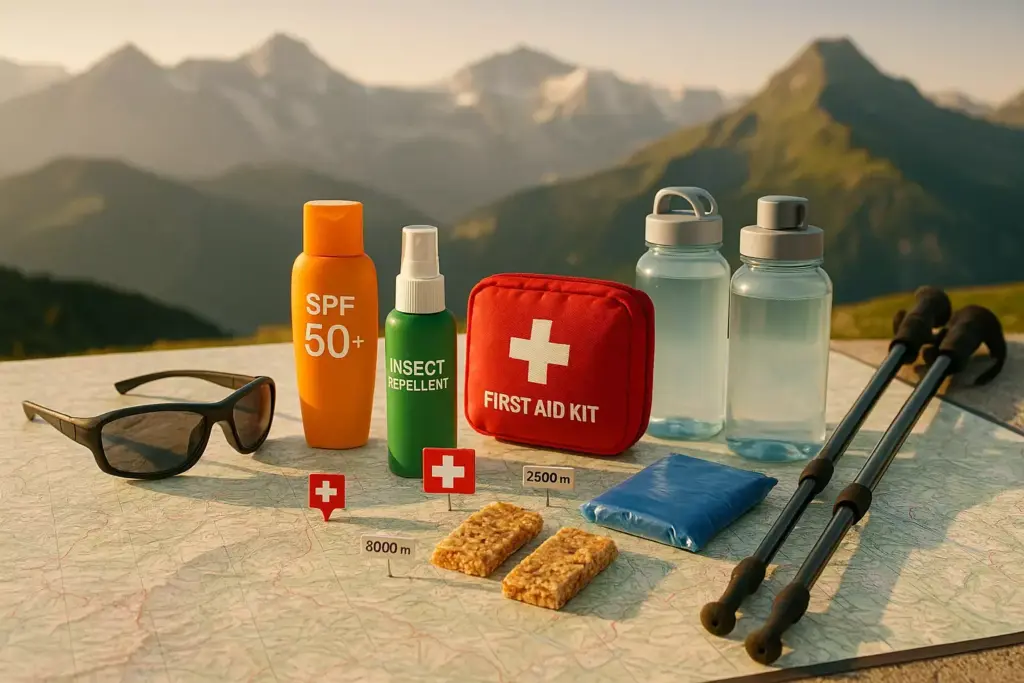
Switzerland’s high altitude and reflective snow surfaces create intense UV exposure that can cause severe sunburn and long-term skin damage. Comprehensive sun protection is non-negotiable.
Essential sun protection gear:
- UPF-rated clothing: Long-sleeve shirts and pants with UV protection
- Wide-brimmed hats: 3+ inch brims for face and neck coverage
- UV-blocking sunglasses: Category 3 or 4 lenses for glacier travel
- High-SPF sunscreen: SPF 50+ applied every 2 hours
- Lip balm with SPF: Often forgotten but crucial protection
Weather Protection Accessories
Swiss mountain weather requires additional protective accessories beyond basic clothing layers:
Must-have accessories:
- Waterproof gloves: For sudden weather changes
- Warm hat: Insulation for early morning starts
- Neck gaiter: Versatile protection from sun and wind
- Rain pants: Lightweight protection for lower body
- Gaiters: Keep debris and moisture out of boots
Practical Style Guide Implementation
Color and Pattern Considerations
While functionality takes priority, smart color choices enhance both safety and style on Swiss trails.
Recommended color strategies:
- Bright colors for visibility: Orange, red, or yellow for safety
- Earth tones for versatility: Brown, green, or tan blend naturally
- Dark colors for practicality: Hide dirt and wear on frequently used items
- Avoid all-white: Shows dirt quickly and provides poor visibility
Fabric Technology and Performance
Modern technical fabrics offer superior performance for Swiss hiking conditions. Understanding fabric properties helps make informed clothing choices.
Key fabric technologies:
- DWR coatings: Durable water repellent treatments
- 4-way stretch: Freedom of movement on challenging terrain
- Antimicrobial treatments: Odor control for multi-day adventures
- Ripstop construction: Tear resistance for bushwhacking
- Reflective elements: Enhanced visibility in low light
Sizing and Fit Guidelines
Proper fit is crucial for comfort and performance during long Swiss hikes. Consider these fitting principles:
- Layer accommodation: Size outer layers to fit over base and mid-layers
- Range of motion: Test arm and leg movement in all positions
- Length considerations: Adequate coverage when reaching or bending
- Adjustment features: Utilize drawstrings, velcro, and zippers for custom fit
Seasonal Adaptation Strategies
Early Summer Preparations (June)
Early summer hiking in Switzerland often encounters residual snow and cool temperatures. Adapt clothing choices accordingly:
- Pack extra insulation layers
- Bring waterproof boots for snow travel
- Include warm gloves and hat
- Carry microspikes for icy trail sections
Peak Summer Optimization (July-August)
Peak summer conditions allow for lighter clothing choices while maintaining protection:
- Focus on breathable, lightweight fabrics
- Emphasize sun protection over insulation
- Carry minimal rain gear for afternoon storms
- Prioritize ventilation and moisture management
Late Summer Considerations (September)
Late summer hiking requires preparation for changing conditions as autumn approaches:
- Pack additional warm layers for temperature drops
- Prepare for increased precipitation
- Consider shorter daylight hours in planning
- Bring extra protection for sudden weather changes
Emergency Preparedness and Safety
Essential Safety Gear
Swiss mountain conditions can change rapidly, making emergency preparedness a critical component of proper hiking attire.
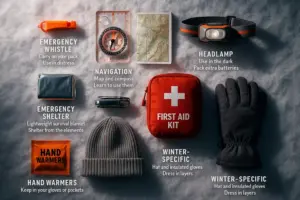
Safety equipment checklist:
- Emergency shelter: Lightweight bivy or emergency blanket
- First aid supplies: Comprehensive kit for common hiking injuries
- Navigation tools: Map, compass, and GPS device
- Communication device: Cell phone or satellite communicator
- Emergency food and water: Extra supplies for unexpected delays
Weather Contingency Planning
Effective contingency planning includes clothing strategies for worst-case scenarios:
- Sudden storms: Pack full rain gear regardless of forecast
- Temperature drops: Carry insulation layers even on warm days
- Extended exposure: Bring extra food and emergency shelter
- Navigation challenges: Include warm clothes for potential overnight stays
🏔️ Swiss Hiking Outfit Planner
Your Recommended Outfit
Budget-Friendly Clothing Options
Cost-Effective Strategies 💰
Building a Swiss hiking wardrobe doesn’t require breaking the bank. Smart shopping strategies can provide quality gear at reasonable prices.
Money-saving approaches:
- End-of-season sales: Purchase gear during off-season clearances
- Outlet stores: Find discounted name-brand equipment
- Used gear markets: Quality second-hand equipment from outdoor enthusiasts
- Multi-purpose items: Choose versatile pieces that work in multiple conditions
- Gradual building: Invest in key pieces over time rather than all at once
Investment Priorities
Focus spending on items that most impact safety and comfort:
- Quality hiking boots: Foundation of foot comfort and safety
- Waterproof outer shell: Essential protection in Swiss conditions
- Merino wool base layers: Superior comfort and performance
- UV-protection accessories: Critical for high-altitude exposure
- Reliable backpack: Carries all essential gear comfortably
Maintenance and Care Tips
Extending Gear Lifespan
Proper care significantly extends the life of hiking clothing and maintains performance characteristics.
Essential maintenance practices:
- Wash technical fabrics according to manufacturer instructions
- Reapply DWR treatments annually or when water no longer beads
- Store gear properly in dry, ventilated areas away from direct sunlight
- Repair damage promptly to prevent small issues from becoming major problems
- Rotate gear usage to prevent excessive wear on favorite items
Cleaning Technical Fabrics
Specialized cleaning maintains the performance of technical hiking clothing:
- Use technical fabric detergents that don’t leave residues
- Avoid fabric softeners which can clog membrane pores
- Air dry when possible to preserve fabric treatments
- Clean regularly to maintain breathability and water resistance
Conclusion
Mastering how to dress for summer hiking in Switzerland requires understanding the unique challenges of Alpine environments and selecting appropriate clothing systems that provide comfort, safety, and style. The key lies in strategic layering, quality materials, and proper preparation for Switzerland’s unpredictable mountain conditions.
Remember that effective hiking attire balances multiple factors: weather protection, temperature regulation, moisture management, UV protection, and comfort during extended activity. By following this practical style guide, hikers can confidently tackle Swiss trails while staying comfortable and safe throughout their mountain adventures.
Take action today by evaluating your current hiking wardrobe against these recommendations. Start with essential items like quality base layers and waterproof outer shells, then gradually build a complete Swiss hiking clothing system. Most importantly, test all gear on shorter local hikes before embarking on major Swiss Alpine adventures.
Your Swiss hiking experience awaits – proper preparation ensures you’ll create lasting memories rather than uncomfortable ordeals in some of the world’s most spectacular mountain landscapes.