8 Must-Have Items for Your Ultimate Packing List for Camp
Picture this: you’ve driven three hours to your favorite campsite, the sun is setting, and you just realized you forgot your sleeping pad. The ground is hard, the temperature is dropping, and your back is already protesting. 😬 We’ve all been there — or at least heard the horror stories. That’s exactly why having a solid, well-researched packing list for camp can make the difference between a trip you’ll rave about for years and one you’d rather forget.
Disclosure: This post contains affiliate links. As an Amazon Associate, we earn from qualifying purchases, and at no extra cost to you.

In this guide, I’ll walk you through the 8 Must-Have Items for Your Ultimate Packing List for Camp — the gear that outdoor experts, seasoned campers, and trusted sources all agree you simply cannot leave behind. Whether you’re heading out for a weekend family trip or a longer backcountry adventure, this list covers your bases. Let’s make sure your 2026 camping season is your best one yet.
Key Takeaways 🏕️
- Shelter and sleep systems are your top priority — a quality tent, sleeping bag, and pad protect you from the elements and ensure real rest.
- Food and water essentials (stove, cooler, and filtration system) keep you fueled and safe throughout your trip.
- Safety and navigation gear — including a first aid kit and headlamp — are non-negotiable, especially in remote areas.
- Clothing layers adapted to your destination’s weather can prevent hypothermia and discomfort.
- Packing smart means choosing multi-purpose, lightweight items that serve more than one function.
Why a Thoughtful Camp Packing List Matters
Most camping trips don’t go wrong because of bad luck — they go wrong because of poor preparation. According to outdoor experts at REI and KOA, the most common camp mistakes involve forgetting basic shelter, warmth, and safety items [1][3]. A comprehensive camp packing list removes the guesswork and lets you focus on what actually matters: enjoying nature.
“The best camping trips are the ones where you never have to think about what you forgot — because you didn’t forget anything.”
The 8 Must-Have Items for Your Ultimate Packing List for Camp outlined below are drawn from multiple trusted outdoor resources and reflect what experienced campers consistently rank as essential. Let’s break them down one by one.
The 8 Must-Have Items for Your Ultimate Packing List for Camp
1. Tent with Stakes and Rainfly
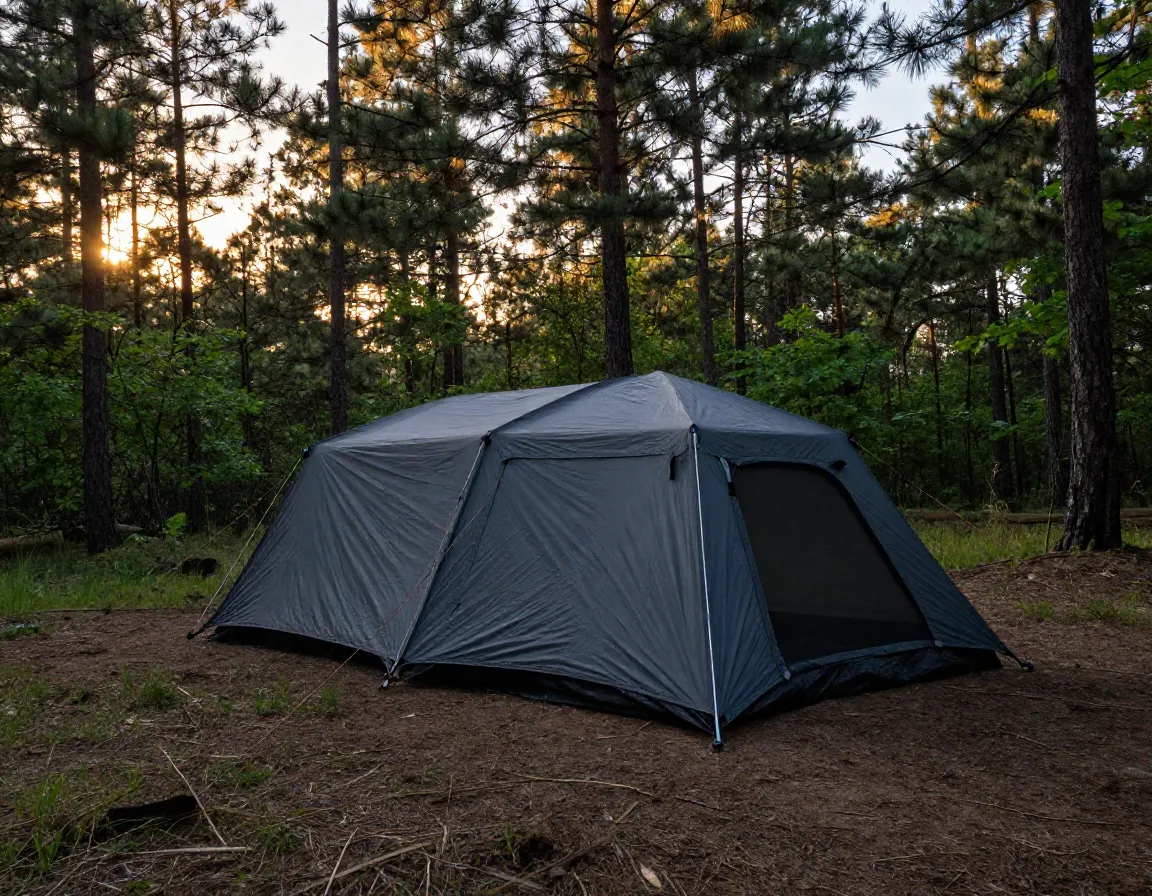
Your tent is your home away from home, and it’s the single most important item on any camping packing list. A good tent protects you from rain, wind, insects, and unexpected temperature drops. Without it, everything else on this list becomes irrelevant.
What to look for:
| Feature | Why It Matters |
|---|---|
| Rainfly | Keeps moisture out during storms |
| Sturdy stakes | Anchors tent in wind and soft ground |
| Ventilation mesh | Reduces condensation inside |
| Easy setup design | Saves time and frustration at camp |
| Seasonality rating | Matches your camping environment |
REI recommends choosing a tent rated for at least one season beyond what you expect — so if you’re camping in summer, consider a 3-season tent for extra protection [1]. Outdoor Gear Lab also emphasizes that the rainfly should fully cover the tent body for maximum weather resistance [2].
Pro tip: Always do a test setup in your backyard before your trip. Discovering a missing pole at the trailhead is a nightmare you can easily avoid. 🏕️
2. Sleeping Bag and Sleeping Pad
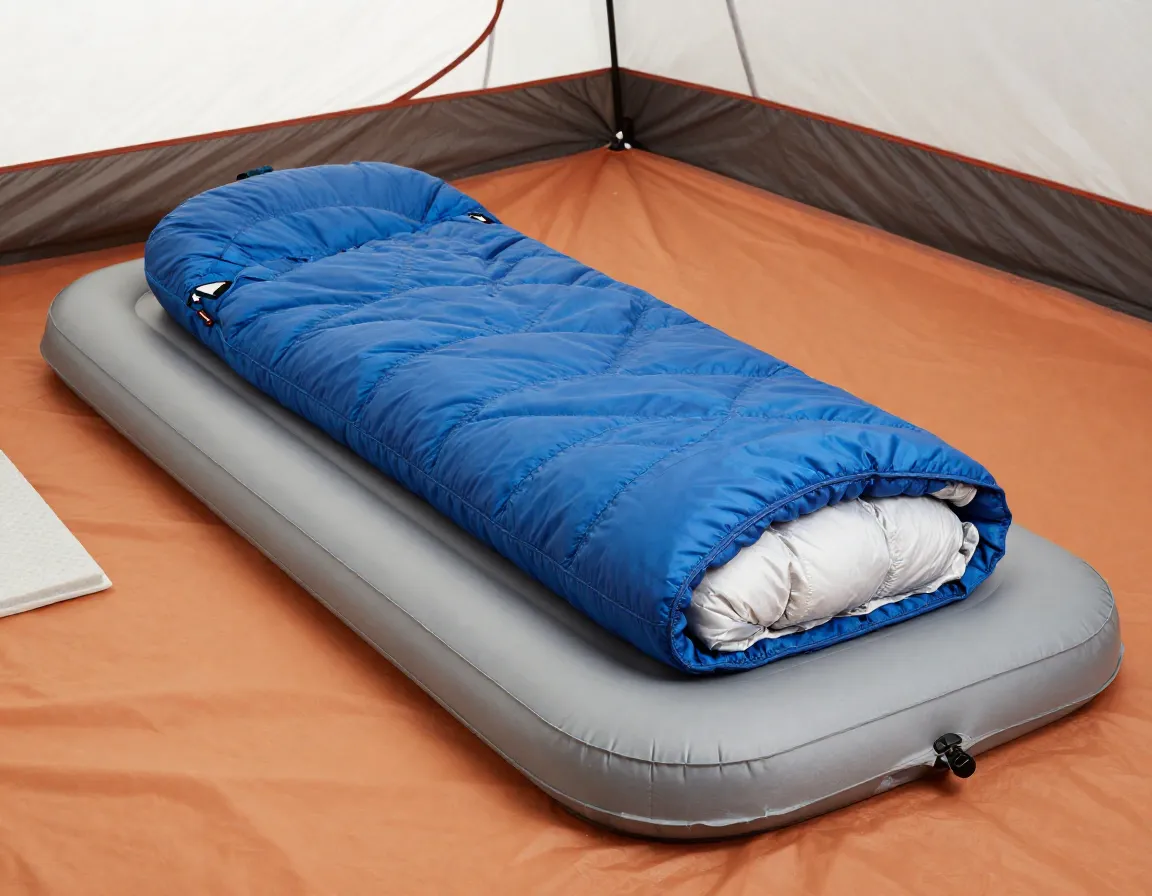
Sleep is your body’s recovery tool in the outdoors. A poor night’s sleep affects your energy, mood, and safety on the trail. That’s why a sleeping bag and sleeping pad are always near the top of every expert’s camp checklist.
Sleeping Bag Basics:
- Choose a temperature rating 10–15°F lower than the coldest night you expect
- Down fill offers the best warmth-to-weight ratio; synthetic fill performs better when wet
- Mummy-style bags retain heat more efficiently than rectangular bags
Sleeping Pad Basics:
- Foam pads are affordable and durable but bulky
- Inflatable pads offer better insulation (measured in R-value) and comfort
- An R-value of 2 or higher is recommended for summer camping [4]
According to Outdoorithm, many first-time campers underestimate the importance of the sleeping pad — it’s not just about comfort, it’s about insulation from the cold ground, which can drain your body heat faster than cold air [4]. REI echoes this, noting that a pad’s insulating properties are just as critical as the sleeping bag itself [1].
3. Camping Stove with Fuel
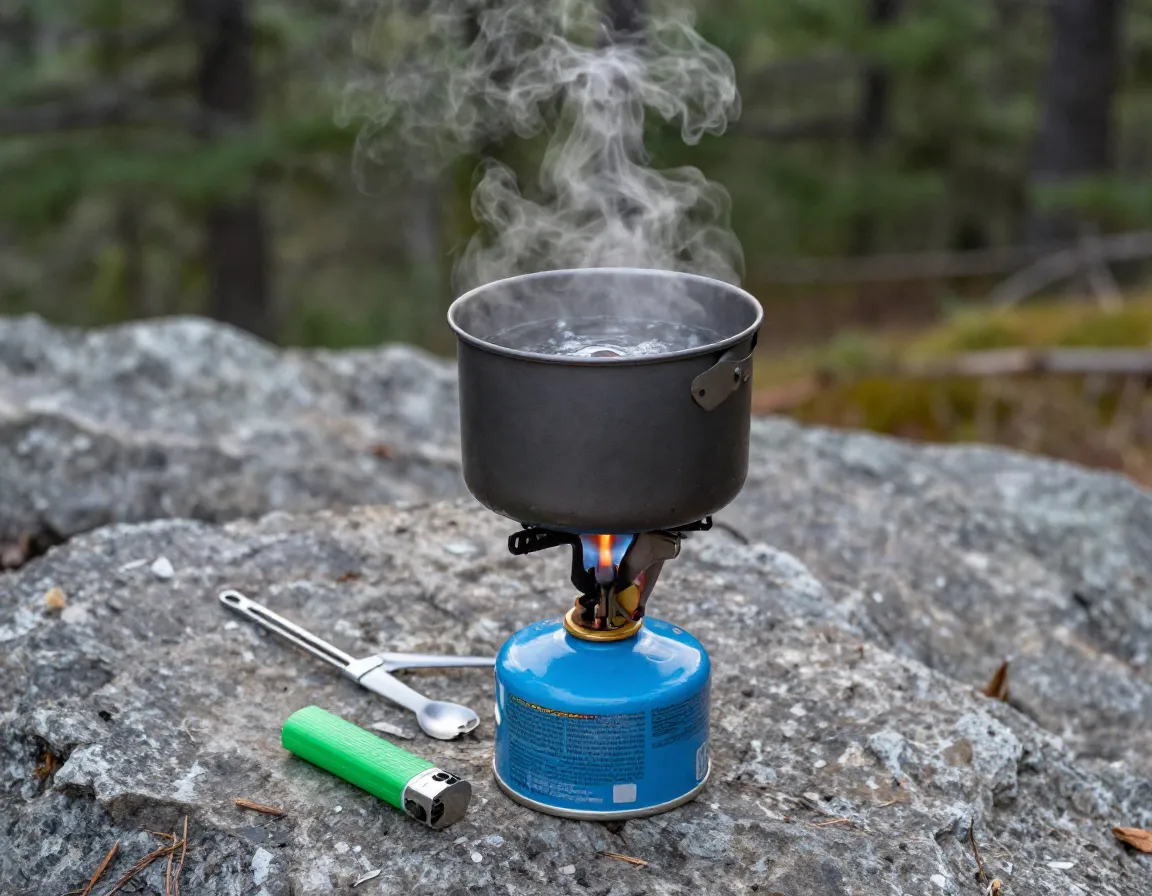
Eating well at camp isn’t a luxury — it’s a necessity. A camping stove gives you the ability to cook hot meals, boil water for purification, and make that morning coffee that makes everything better. ☕
Types of camping stoves to consider:
- Canister stoves — Lightweight, easy to use, ideal for backpacking
- Liquid fuel stoves — Work better in cold temperatures and at altitude
- Wood-burning stoves — No fuel to carry, but dependent on dry wood availability
- Propane stoves — Great for car camping; powerful and easy to control
Under30Experiences highlights that a reliable stove with enough fuel for your entire trip is a core part of any essential camping gear checklist [5]. Outdoor Gear Lab adds that you should always carry 10–20% more fuel than you think you’ll need to account for wind, altitude, and cold conditions [2].
Don’t forget: A lighter or waterproof matches, a pot or pan, and a camp-safe utensil set. These small additions complete your cooking setup.
4. Cooler with Ice
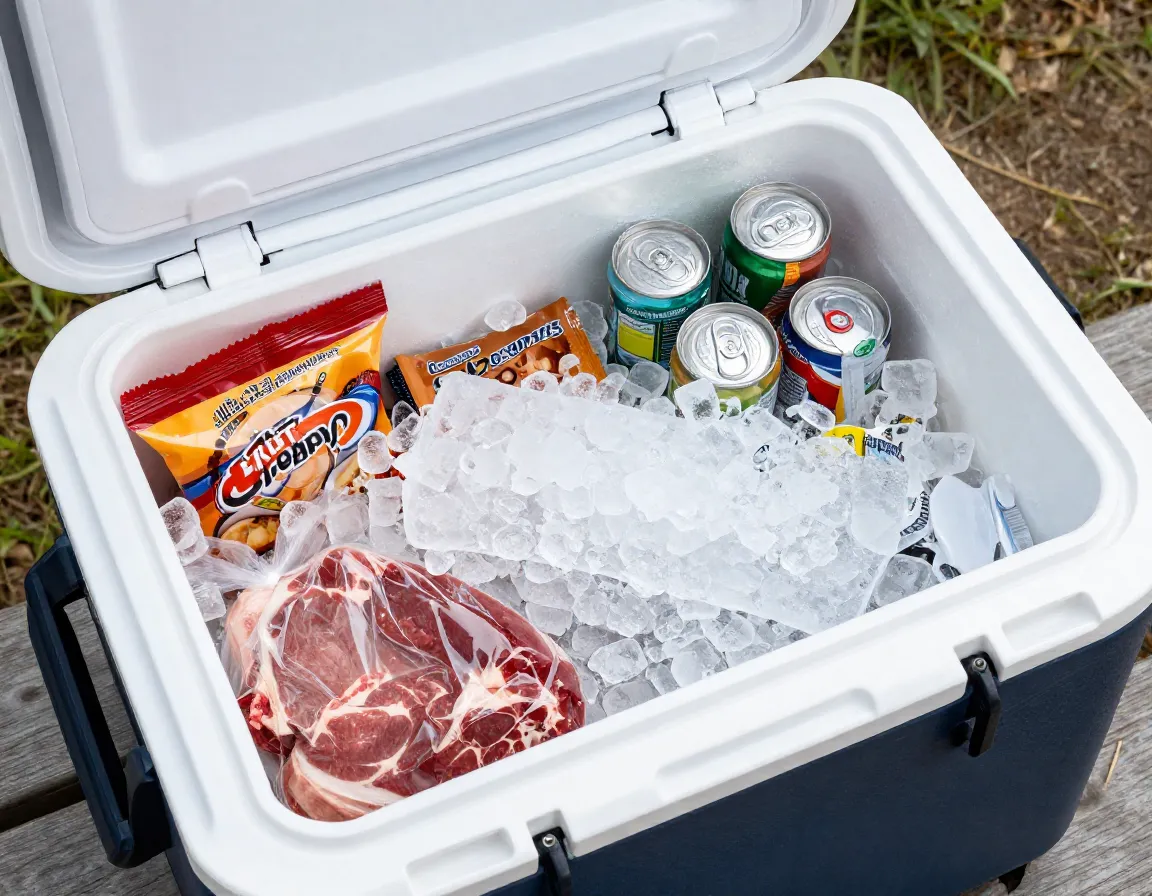
Food safety is a real concern on multi-day camping trips. A quality cooler with ice keeps your perishables fresh, prevents foodborne illness, and honestly just makes camp meals a lot more enjoyable.
Cooler selection tips:
- Hard-sided coolers retain ice longer (up to 5–7 days for premium models)
- Soft-sided coolers are lighter and easier to carry but less durable
- Look for 2 inches of insulation in the walls for best performance
- Pre-chill your cooler before packing it — this dramatically extends ice life
KOA recommends organizing your cooler strategically: raw meats at the bottom (in sealed bags), drinks and snacks on top, and ice packed tightly around everything [3]. REI also suggests keeping a separate cooler for drinks so your food cooler isn’t opened constantly, which preserves ice much longer [1].
“A well-packed cooler isn’t just convenient — it’s a food safety essential on any trip longer than a day.”
Under30Experiences also notes that block ice lasts significantly longer than cubed ice, making it the smarter choice for longer trips [5].
5. Headlamps or Flashlights with Extra Batteries

After dark, a campsite transforms. Paths become harder to see, tasks like cooking or finding gear require light, and nighttime bathroom trips become genuine adventures. A headlamp or flashlight is one of those items that seems minor until you desperately need it. 🔦
Headlamp vs. Flashlight:
| Feature | Headlamp | Flashlight |
|---|---|---|
| Hands-free use | ✅ Yes | ❌ No |
| Brightness range | High | High |
| Best for | Hiking, cooking, reading | Searching, group use |
| Weight | Very light | Varies |
REI lists headlamps as a critical safety item, especially for families with children at camp [1]. The Minnesota DNR also emphasizes that every camper should carry their own light source — not just one per group — to ensure individual safety in case anyone gets separated [6].
Key tips:
- Always pack extra batteries or a backup USB charger
- Choose a headlamp with a red light mode to preserve night vision
- Look for at least 200 lumens for practical campsite use
6. First Aid Kit and Emergency Supplies
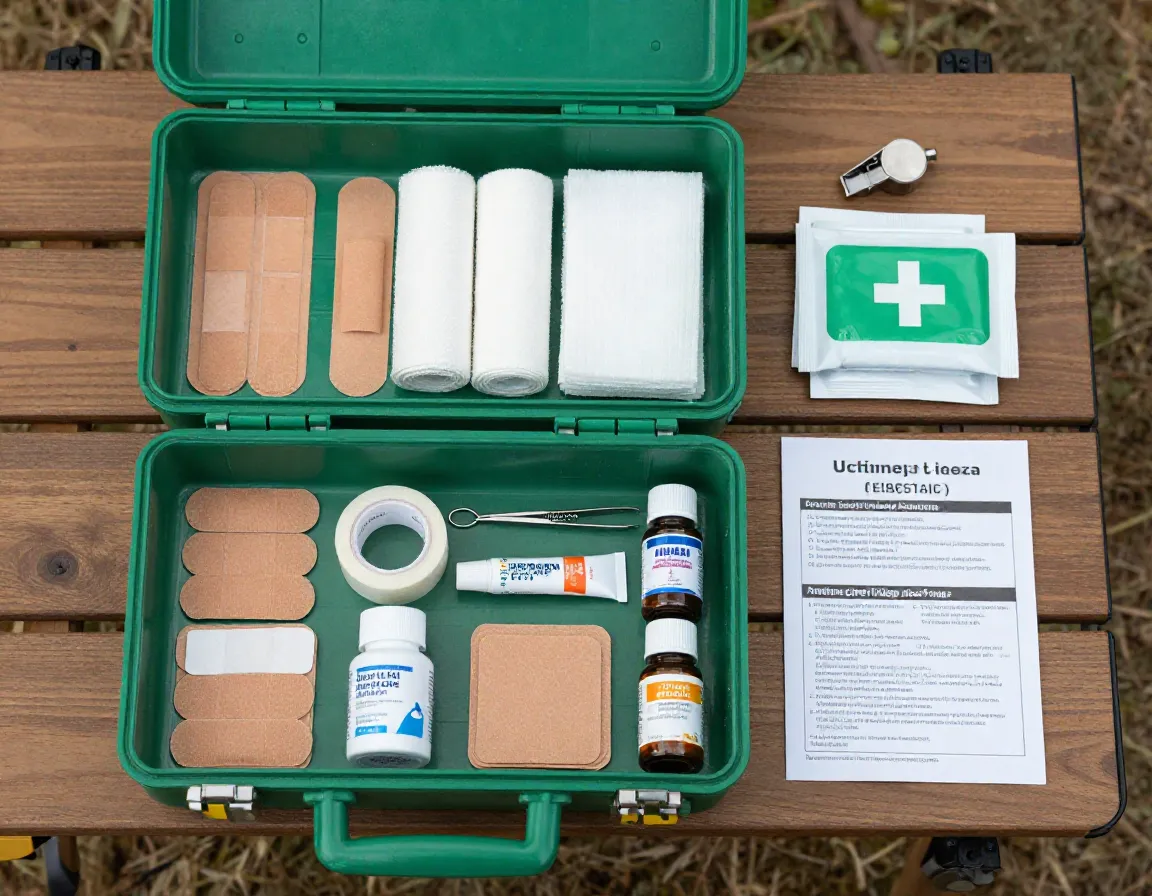
Accidents happen — a twisted ankle on the trail, a burn from the stove, or an unexpected allergic reaction. Being miles from the nearest urgent care makes a well-stocked first aid kit one of the most critical items on your camp packing list.
Essential first aid kit contents:
- Adhesive bandages (multiple sizes)
- Sterile gauze pads and medical tape
- Antiseptic wipes and antibiotic ointment
- Blister treatment (moleskin)
- Pain relievers (ibuprofen, acetaminophen)
- Antihistamines for allergic reactions
- Tweezers (for splinters and ticks)
- Emergency whistle
- CPR face shield
- Any personal prescription medications
KOA recommends that campers also include a printed emergency contact list and the address of the nearest hospital in their first aid kit [3]. Outdoorithm adds that you should customize your kit based on the specific activities you plan — adding items like SAM splints for hiking or extra blister care for long-distance walks [4].
Under30Experiences points out that many campers buy pre-made kits but never check the contents — always review and restock your kit before every trip [5].
7. Water Storage and Filtration System
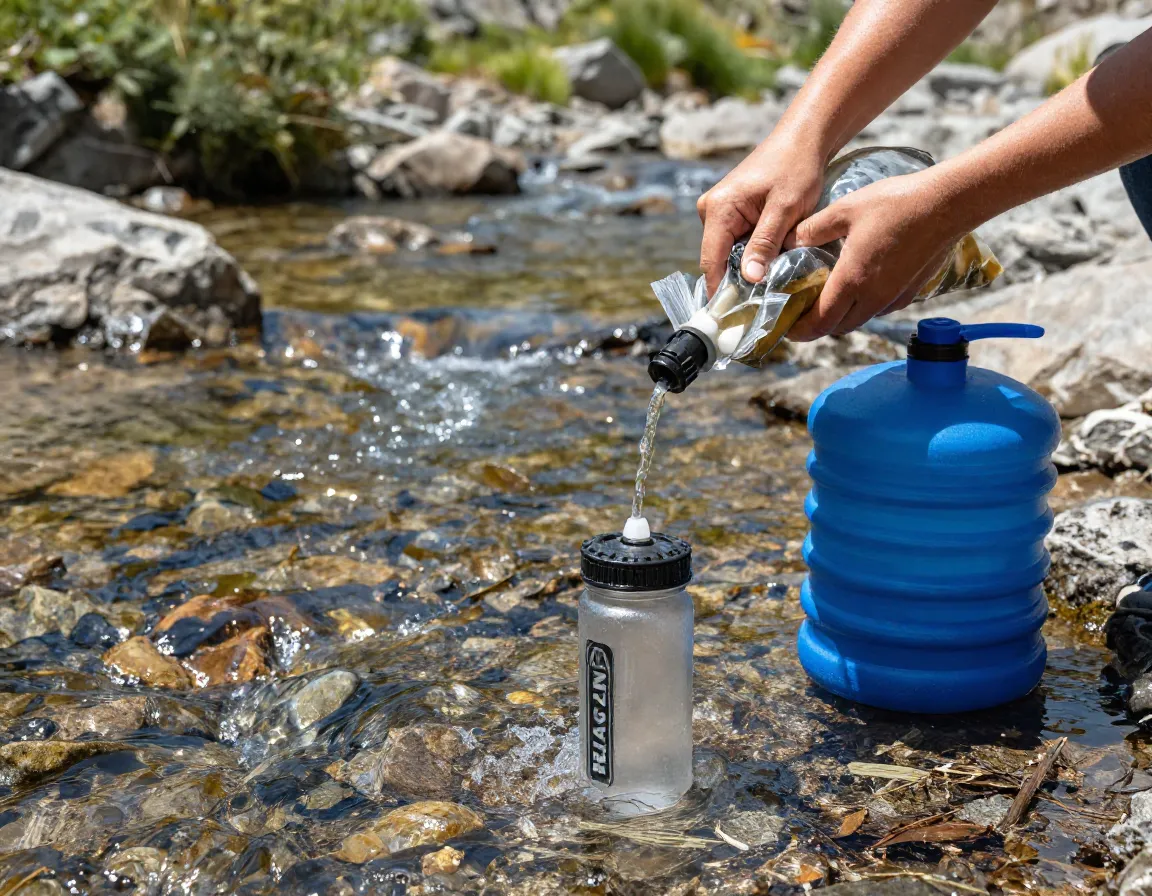
Water is life — literally. On any camping trip, having access to safe, clean drinking water is non-negotiable. Whether you’re at a developed campground with a water spigot or deep in the backcountry, having a storage and filtration system protects you from waterborne pathogens like Giardia and Cryptosporidium.
Water system options:
| Method | Best For | Pros | Cons |
|---|---|---|---|
| Water filter pump | Backcountry | Reliable, reusable | Slower, heavier |
| Squeeze filter | Lightweight trips | Fast, compact | Lower capacity |
| UV purifier | All environments | Kills viruses | Needs batteries |
| Purification tablets | Emergency backup | Ultra-light | Chemical taste |
| Water storage jugs | Car camping | High capacity | Heavy when full |
REI recommends carrying at least 2 liters of water per person per day as a baseline, with more needed in hot weather or during strenuous activity [1]. KOA emphasizes that even water from “clean-looking” streams should always be filtered or treated before drinking [3].
Outdoor Gear Lab notes that a combination approach works best: carry a primary filter and keep purification tablets as a backup [2]. This redundancy can be a lifesaver if your primary system fails.
Storage tip: Collapsible water containers are a space-saving solution for car campers who need high-volume storage without the bulk.
8. Weather-Appropriate Clothing Layers
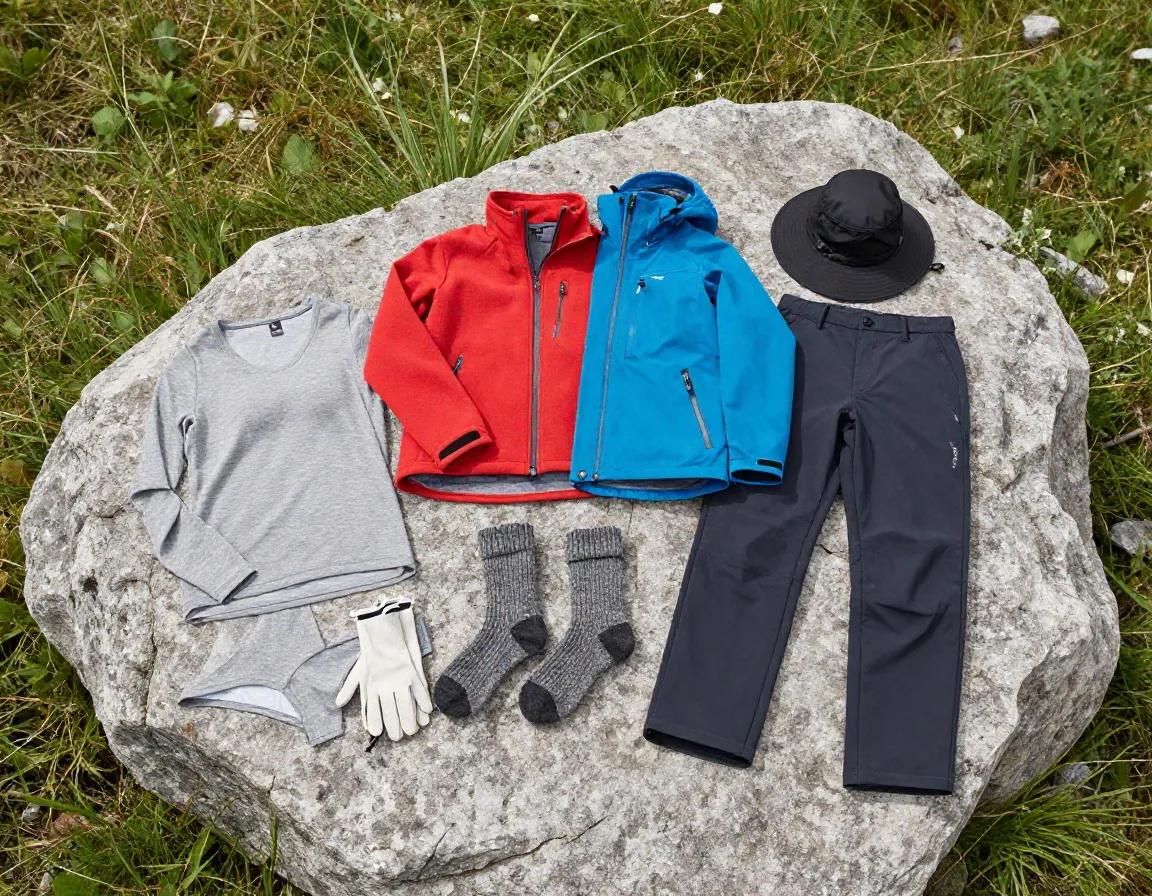
Clothing might seem obvious, but packing the right clothing layers for your specific camping environment is a skill that separates comfortable campers from miserable ones. Temperature swings of 30°F or more between day and night are common in many camping destinations, and being caught underprepared can be genuinely dangerous.
The layering system:
- Base layer — Moisture-wicking material (merino wool or synthetic) to keep sweat away from your skin
- Mid layer — Insulating layer (fleece or down jacket) to trap body heat
- Outer layer — Waterproof and windproof shell to block the elements
Outdoor Gear Lab strongly recommends the avoid cotton rule for all camping clothing — cotton holds moisture and loses all insulating properties when wet, which can lead to hypothermia even in mild temperatures [2]. Under30Experiences reinforces this, noting that synthetic or wool fabrics are always the smarter choice for outdoor adventures [5].
Clothing checklist by category:
- 🧢 Head: Warm beanie, sun hat, buff/neck gaiter
- 🧤 Hands: Lightweight gloves (even in summer for cold mornings)
- 👟 Feet: Moisture-wicking wool socks (pack 2 pairs per day), sturdy hiking boots
- 🧥 Body: Base layer set, mid layer, waterproof rain jacket, camp pants
KOA also recommends packing a dedicated set of dry camp clothes that you only wear at the campsite — keeping them separate from your hiking clothes ensures you always have something dry and comfortable to change into [3].
Quick Reference: The Complete Camp Packing List at a Glance
Here’s a summary table of all 8 Must-Have Items for Your Ultimate Packing List for Camp:
| # | Item | Priority Level | Key Consideration |
|---|---|---|---|
| 1 | Tent with stakes and rainfly | 🔴 Critical | Match to season and group size |
| 2 | Sleeping bag and sleeping pad | 🔴 Critical | Check temperature rating and R-value |
| 3 | Camping stove with fuel | 🟠 High | Carry 20% extra fuel |
| 4 | Cooler with ice | 🟠 High | Use block ice, organize strategically |
| 5 | Headlamp/flashlight + batteries | 🔴 Critical | One per person, not per group |
| 6 | First aid kit and emergency supplies | 🔴 Critical | Customize and restock before each trip |
| 7 | Water storage and filtration | 🔴 Critical | Use a primary + backup system |
| 8 | Weather-appropriate clothing layers | 🟠 High | Avoid cotton; embrace layers |
Common Packing Mistakes to Avoid
Even experienced campers make packing errors. Here are the most frequent ones — and how to sidestep them:
- Overpacking clothes, underpacking safety gear — It’s easy to pack five outfit options and forget the first aid kit. Prioritize function over fashion.
- Forgetting to check gear before leaving — Test your stove, check your headlamp batteries, and inflate your sleeping pad at home.
- Ignoring the weather forecast — Always check the 10-day forecast before packing. A surprise cold front or rain system can change everything.
- Packing duplicate items as a group — Coordinate with your camping partners so you’re not carrying three camp stoves and zero water filters.
- Leaving the car with no backup plan — Always tell someone your itinerary and expected return date, and carry a paper map as a backup to your GPS.
Conclusion: Pack Smart, Camp Better
The difference between a forgettable camping trip and an unforgettable one often comes down to preparation. By building your camp packing list around the 8 Must-Have Items for Your Ultimate Packing List for Camp — shelter, sleep, cooking, food storage, lighting, safety, water, and clothing — you give yourself the foundation for a safe, comfortable, and genuinely enjoyable outdoor experience.
Your actionable next steps:
- Print or bookmark this list and use it as your pre-trip checklist before every camping adventure.
- Audit your current gear — identify what you already own and what needs upgrading or replacing.
- Test everything at home before you hit the road — your backyard is the best place to discover a broken zipper or a leaky water filter.
- Customize for your trip — add destination-specific items like bear canisters, trekking poles, or insect repellent based on where you’re headed.
- Share this list with your camping group so everyone knows what they’re responsible for bringing.
The outdoors rewards those who prepare. Pack these eight essentials, and you’ll be ready for whatever the wilderness throws your way. Happy camping! 🌲🔥
References
[1] Family Camping Checklist – https://www.rei.com/learn/expert-advice/family-camping-checklist.html
[2] Best Camping List – https://www.outdoorgearlab.com/topics/camping-and-hiking/best-camping-list
[3] The Ultimate Camping Packing List Printable Pdf Camping Checklist – https://koa.com/blog/the-ultimate-camping-packing-list-printable-pdf-camping-checklist/
[4] Camping Packing Checklist – https://outdoorithm.com/blog/camping-packing-checklist
[5] Essential Camping Gear Checklist – https://under30experiences.com/blog/essential-camping-gear-checklist
[6] Packing101 – https://www.dnr.state.mn.us/state_parks/stay_overnight/packing101.html