8 Ways to Find a Pretty Nature Scene on Your Next Trail
Have you ever finished a hike feeling like you missed something — like the most stunning view was just around the bend you skipped? You are not alone. Knowing how to find a pretty nature scene on your next trail is part skill, part timing, and part curiosity. In this guide, I’ll walk you through 8 ways to find a pretty nature scene on your next trail so you can stop leaving beauty to chance and start discovering it with intention.
Disclosure: This post contains affiliate links. As an Amazon Associate, we earn from qualifying purchases, and at no extra cost to you.
Key Takeaways
- 🗺️ Planning ahead using maps and trail apps dramatically increases your chances of finding scenic spots.
- 🌅 Timing your hike around golden hour or seasonal changes unlocks views most hikers never see.
- 📐 Composition awareness — noticing leading lines, natural frames, and backgrounds — transforms ordinary scenes into extraordinary ones.
- 🌿 Eco-friendly scouting protects the locations you love so others can enjoy them too.
- 🔁 Revisiting trails in different seasons reveals entirely new visual experiences on familiar paths.
Section 1: Planning and Preparation Strategies
Finding a breathtaking scene rarely happens by accident. The hikers who consistently stumble upon gorgeous views are usually the ones who did their homework before lacing up their boots.
1. Use Trail Apps and Topographic Maps to Scout Locations in Advance

Before you hit the trail, spend time researching it digitally. Apps like AllTrails, Gaia GPS, and CalTopo let you preview elevation changes, water features, and user-submitted photos. Topographic maps reveal ridgelines, valleys, and bodies of water — all prime candidates for a pretty nature scene.
💡 “The best view is rarely at the trailhead. It’s the one you planned to reach.”
Look for spots where contour lines cluster tightly — those are steep drops or dramatic ridges that often deliver jaw-dropping panoramas. Cross-reference with satellite imagery to spot open meadows, lakes, or cliff edges before you arrive.
Quick Checklist Before Your Hike:
- Review trail photos on AllTrails or Hiking Project
- Download an offline topographic map
- Identify 2–3 “target zones” along the route
- Note any water sources (streams, waterfalls, lakes)
2. Time Your Hike Around Golden Hour and Blue Hour
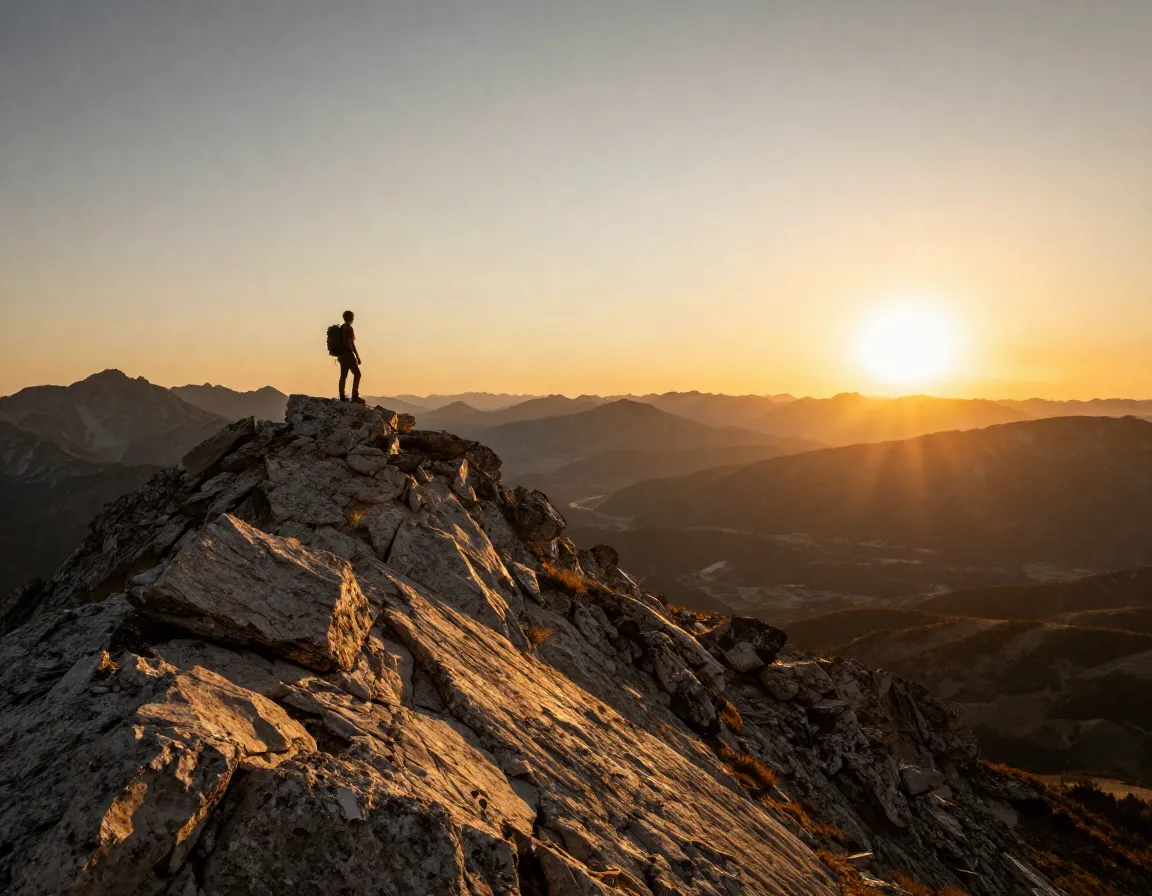
Lighting is everything in nature photography and visual appreciation. The golden hour — roughly 30 to 60 minutes after sunrise and before sunset — bathes landscapes in warm, directional light that makes colors pop and shadows dramatic. The blue hour, just before sunrise or after sunset, creates a cool, ethereal mood perfect for misty forests and still water reflections.
| Time of Day | Light Quality | Best For |
|---|---|---|
| Blue Hour (pre-dawn) | Cool, soft, diffused | Fog, reflections, quiet forests |
| Golden Hour (sunrise) | Warm, low-angle | Meadows, ridgelines, dew |
| Midday | Harsh, flat | Waterfalls (overcast days) |
| Golden Hour (sunset) | Warm, dramatic | Peaks, open vistas, lakes |
| Blue Hour (dusk) | Cool, moody | Silhouettes, calm water |
Plan your start time so you arrive at your target scenic spot during one of these windows. It often means an early alarm, but the reward is worth it.
3. Research Seasonal and Environmental Conditions
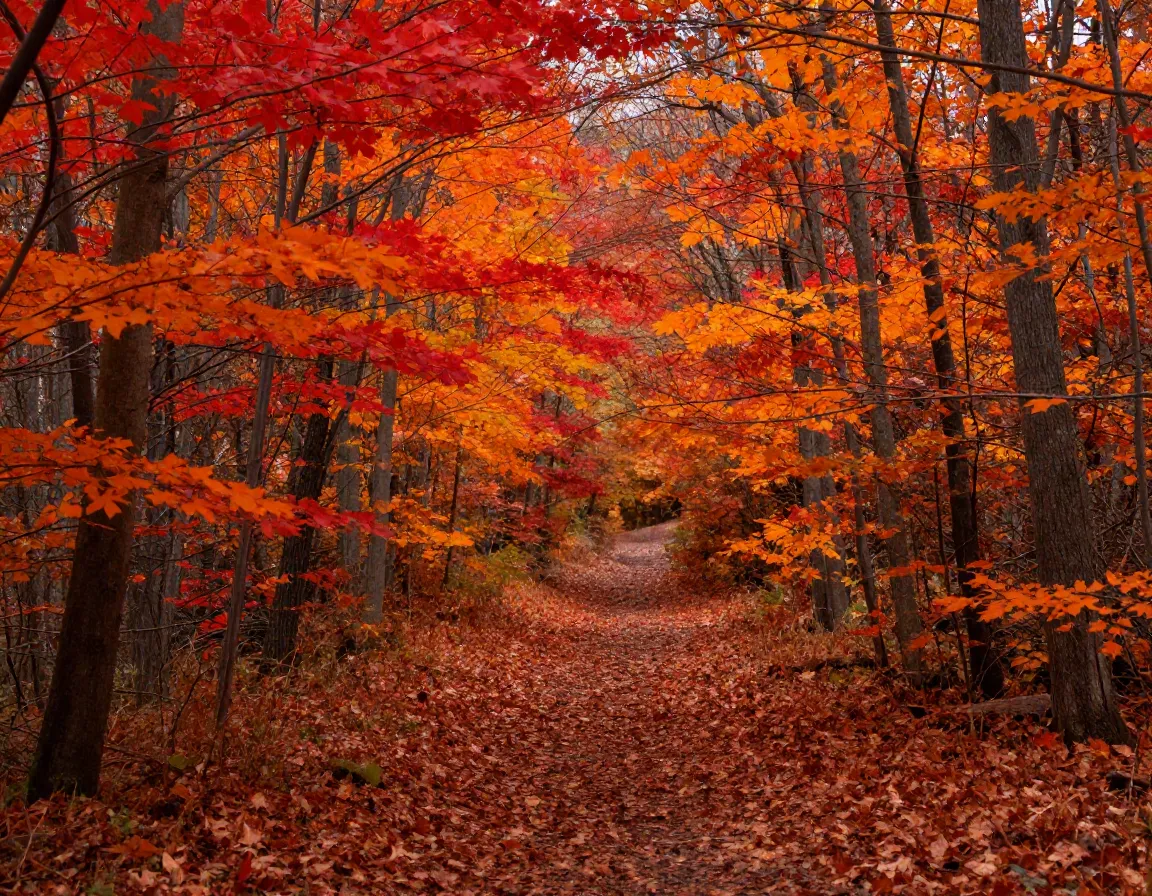
One of the most overlooked ways to find a pretty nature scene on your next trail is simply choosing the right season. The same trail looks completely different in spring, summer, fall, and winter.
- 🌸 Spring: Wildflowers bloom, waterfalls run full from snowmelt, and fresh green foliage creates vibrant color contrast.
- ☀️ Summer: Lush canopies, mountain lakes are accessible, and high-altitude trails open up.
- 🍂 Fall: Peak foliage transforms forests into a mosaic of red, orange, and gold — arguably the most photogenic season.
- ❄️ Winter: Snow-covered landscapes offer dramatic minimalism, and frozen waterfalls are truly unique.
Check local ranger station websites or nature forums for peak bloom dates, fall foliage forecasts, and water level reports. Environmental timing can mean the difference between a good hike and an unforgettable one.
Section 2: On-Trail Techniques for Discovering Scenic Spots
Once you are on the trail, the real discovery begins. These next five strategies help you see the landscape with fresh eyes — and find beauty that most hikers walk right past.
4. Train Your Eye to Spot Leading Lines
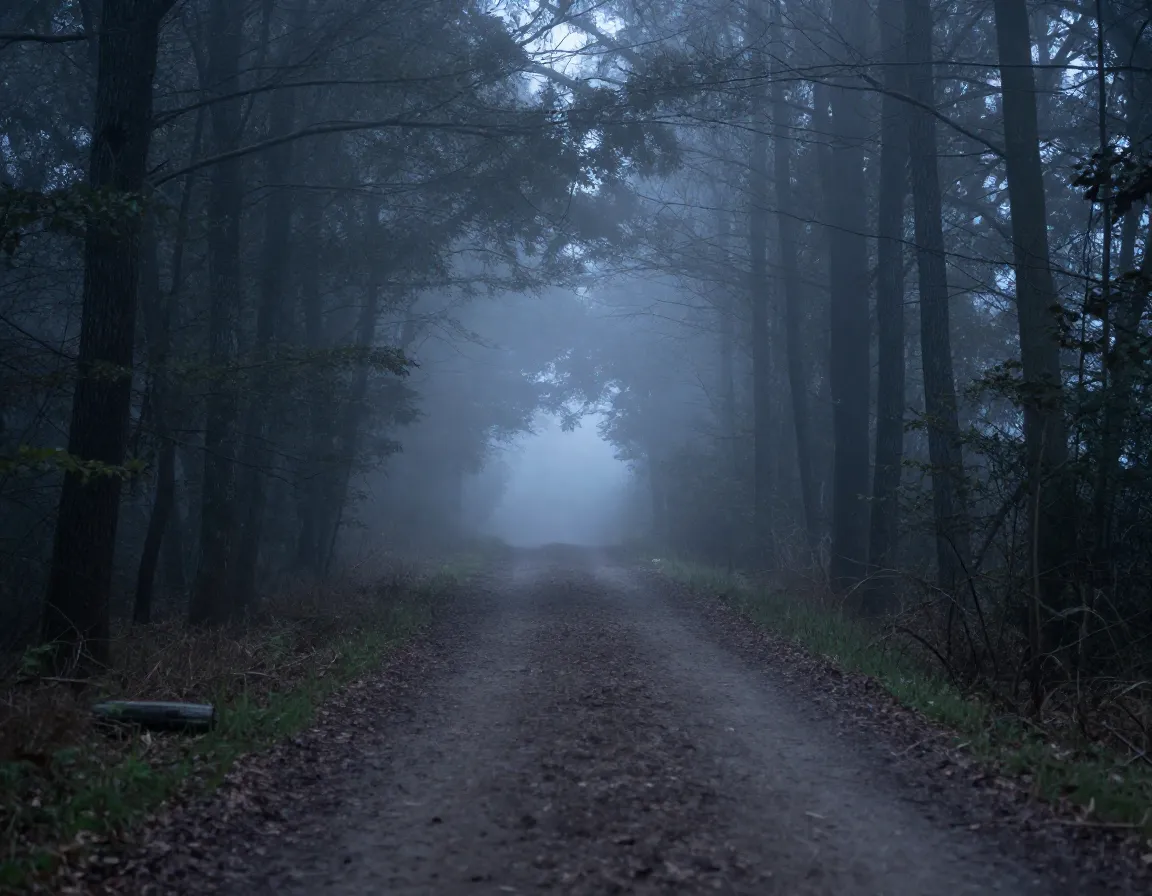
Leading lines are natural elements — a winding river, a row of trees, a rocky path — that draw the eye through a scene toward a focal point. Learning to recognize them is one of the most powerful ways to identify a visually striking nature scene.
When you pause on the trail, ask yourself: What is my eye naturally drawn to? If something pulls your gaze forward or inward, you have found a leading line worth exploring. Step off the main path slightly (without damaging vegetation) to position yourself where the line creates the strongest visual pull.
Common leading lines in nature:
- Rivers and streams curving through a valley
- A trail disappearing into a misty forest
- A fallen log pointing toward a mountain peak
- Rows of trees creating a natural tunnel
5. Look for Natural Frames Within the Landscape
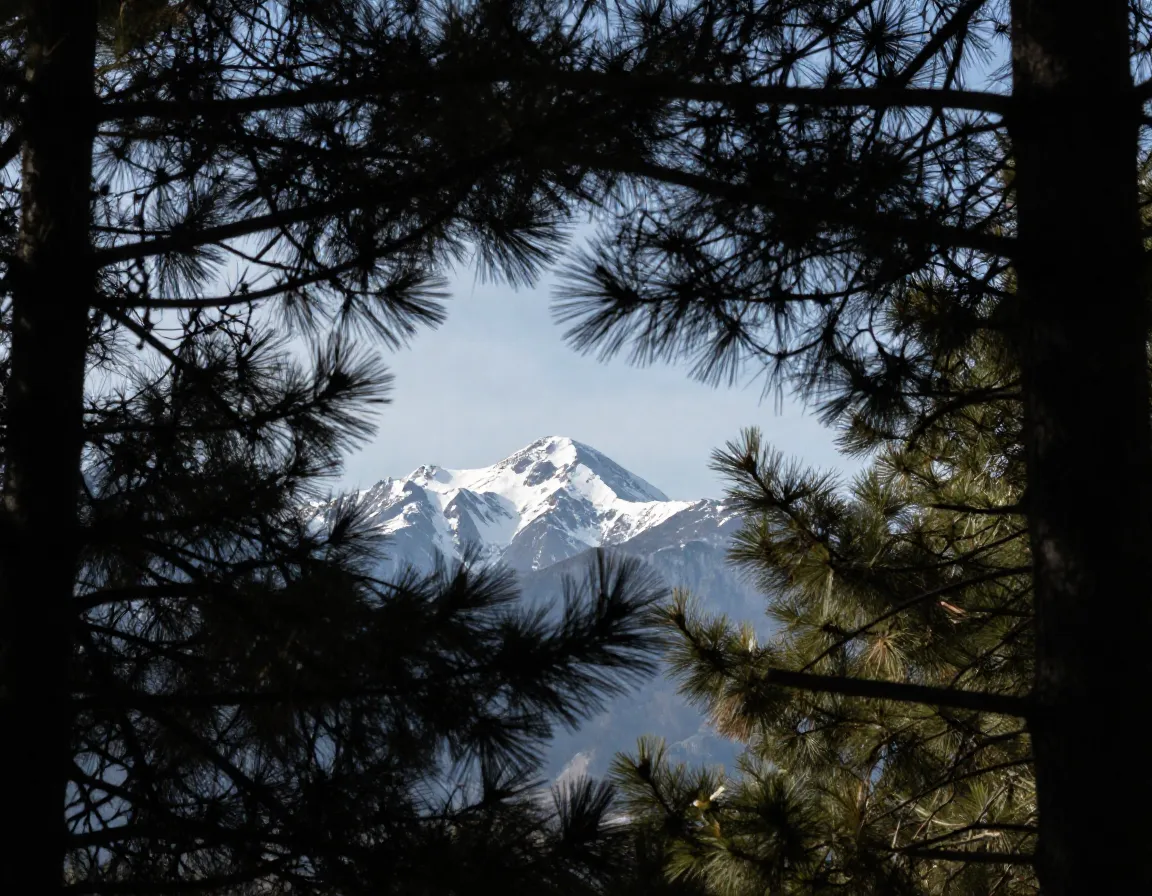
Natural framing means using elements in the environment — tree branches, rock arches, cave openings, or dense foliage — to create a “window” around a distant scene. This technique instantly adds depth and context to any view.
🌿 “Nature builds its own picture frames. Your job is simply to find them.”
As you walk, look for overhanging branches that frame a waterfall, boulders that bracket a valley view, or a gap in the tree line that reveals a distant peak. These frames exist on almost every trail — they just require a slower pace and a curious eye to find them.
6. Pay Attention to Backgrounds and Negative Space

A beautiful foreground subject — a wildflower, a mossy rock, a deer — can be ruined by a cluttered or distracting background. Conversely, a simple, clean background (an open sky, a smooth body of water, a distant ridge) can elevate even a modest subject into a stunning scene.
Practice this habit: Before you stop to admire or photograph anything, turn around. Look at what is behind your subject. A slightly different angle or a few steps to the left or right can completely change the background from chaotic to clean.
7. Slow Down and Explore Side Trails and Overlooks
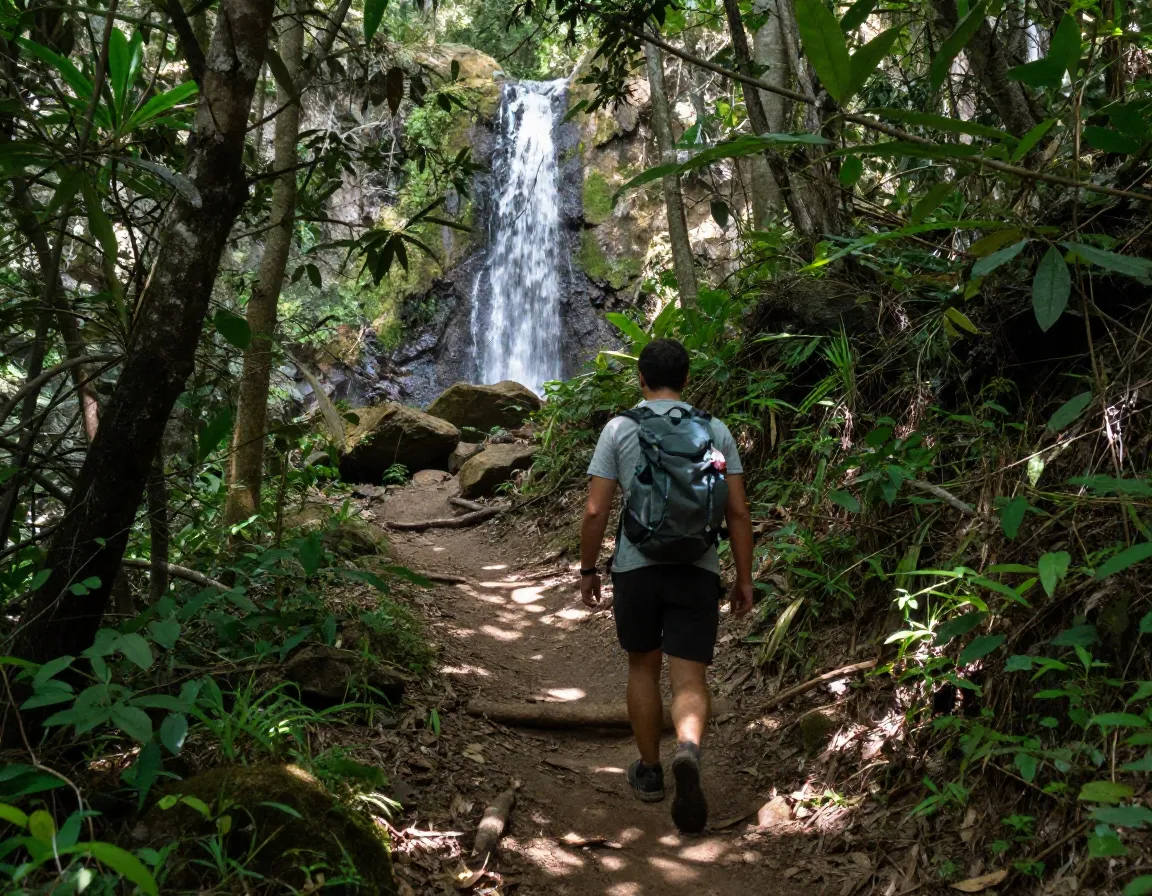
The most scenic spots are often not on the main trail. Short spur trails, unmarked overlooks, and creek crossings frequently lead to hidden gems that the majority of hikers never see because they stay on the beaten path.
When you see a faint trail branching off, check your map. If it is marked as an overlook or leads toward a water feature, take it. Even unmarked social trails (created by other curious hikers) often lead somewhere worth seeing. Just be mindful of fragile ecosystems — stick to durable surfaces where possible.
8. Practice Eco-Friendly Scouting to Protect What You Find

Discovering a beautiful nature scene comes with responsibility. Eco-friendly scouting means enjoying and sharing these locations without degrading them for future visitors.
Key principles to follow:
- Stay on designated trails to avoid trampling vegetation and soil crust.
- Leave no trace — pack out everything you bring in.
- Avoid sharing exact GPS coordinates of sensitive or fragile locations on public platforms.
- Do not pick wildflowers or disturb wildlife for a better photo opportunity.
- Visit during off-peak hours to reduce crowding pressure on popular spots.
♻️ “The prettiest scenes stay pretty only when we treat them with care.”
Sustainable scouting ensures that the gorgeous waterfall or wildflower meadow you found in 2026 will still be there for the next generation of hikers to discover.
Conclusion: Your Action Plan for Finding Beautiful Trail Scenes
Finding a pretty nature scene on your next trail is not about luck — it is about preparation, awareness, and respect. By applying these 8 ways to find a pretty nature scene on your next trail, you shift from passive hiker to active explorer.
Your next steps:
- Download a trail app and scout your next hike before you go.
- Set your alarm 90 minutes earlier to catch golden hour on the trail.
- Research the seasonal conditions for your target location.
- Practice spotting leading lines, natural frames, and clean backgrounds as you walk.
- Commit to leaving every scene exactly as you found it.
The trail is full of beauty waiting to be noticed. All it takes is a little intention, a slower pace, and the right set of eyes. Get out there — your next stunning scene is closer than you think. 🌄
References
- Freeman, M. (2007). The Photographer’s Eye: Composition and Design for Better Digital Photos. Focal Press.
- Leave No Trace Center for Outdoor Ethics. (2019). Leave No Trace Seven Principles. LNT.org.
- Peterson, B. (2003). Learning to See Creatively: Design, Color & Composition in Photography. Amphoto Books.
- National Park Service. (2021). Protecting Natural Landscapes: Visitor Guidelines for Scenic Areas. NPS.gov.