8 Breathable Mountain Trip Outfit Ideas for a Hot Summer Hike
When summer temperatures soar and the mountains call, finding the perfect balance between comfort and performance becomes crucial for any hiking adventure. The scorching sun, steep terrain, and unpredictable weather conditions demand carefully selected gear that keeps hikers cool, dry, and protected throughout their journey. These 8 breathable mountain trip outfit ideas for a hot summer hike will transform any challenging trek into a comfortable and enjoyable experience.
Disclosure: This post contains affiliate links. As an Amazon Associate, we earn from qualifying purchases, and at no extra cost to you.
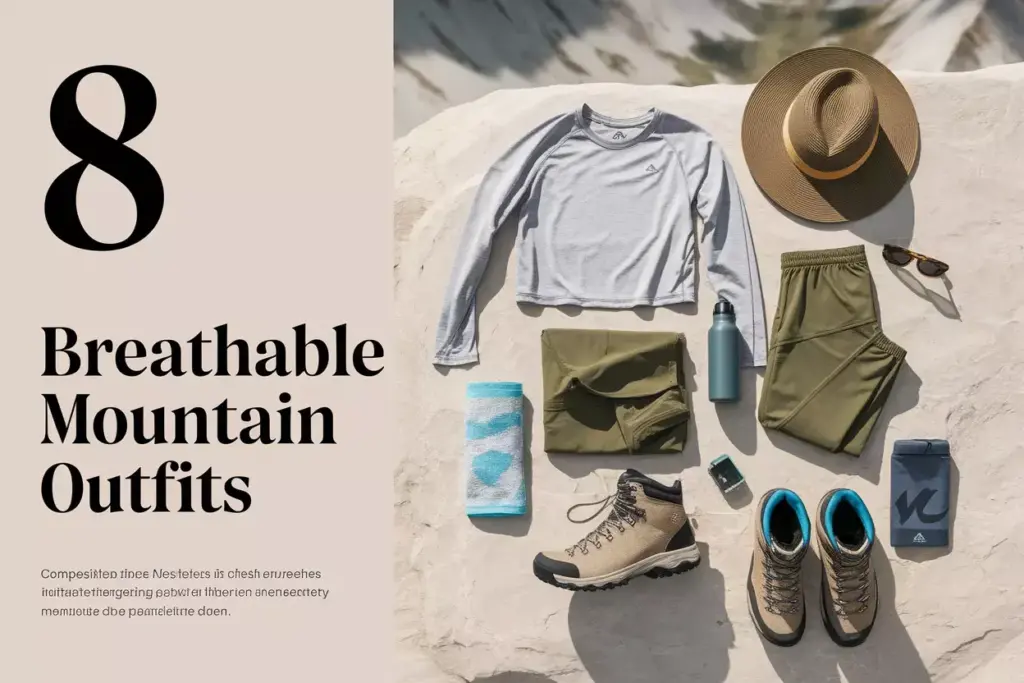
Summer mountain hiking presents unique challenges that require strategic outfit planning. Unlike winter adventures where warmth is the primary concern, hot weather hiking demands clothing that promotes airflow, wicks moisture, and provides essential sun protection without adding unnecessary weight or bulk.
Key Takeaways
- Moisture-wicking fabrics are essential for keeping sweat away from the skin and maintaining body temperature regulation during intense summer hikes
- Layering systems allow hikers to adapt quickly to changing mountain conditions and temperature variations throughout the day
- UV protection through proper clothing choices prevents dangerous sun exposure at higher elevations where UV rays are more intense
- Breathable footwear with proper ventilation prevents overheating and reduces the risk of blisters during long summer treks
- Strategic color choices in light, reflective tones help deflect heat while maintaining visibility on mountain trails
Essential Fabric Technologies for Hot Weather Hiking
Understanding the science behind breathable hiking fabrics makes all the difference when selecting gear for summer mountain adventures. Modern textile technology has revolutionized outdoor clothing, creating materials that actively work to keep hikers comfortable in challenging conditions.
Moisture-wicking synthetic fabrics form the foundation of any effective hot weather hiking outfit. These engineered materials use capillary action to pull sweat away from the skin and spread it across the fabric’s surface, where it can evaporate quickly. Popular options include polyester blends, nylon composites, and specialized synthetic fibers designed specifically for athletic performance.
Merino wool offers natural temperature regulation and odor resistance, making it an excellent choice for multi-day mountain trips. Unlike traditional wool, merino fibers are incredibly fine and soft, providing comfort against the skin while maintaining excellent breathability and moisture management properties.
Mesh panels and ventilation zones strategically placed in high-sweat areas create additional airflow channels. These design features are commonly found in the underarms, back panels, and side seams of quality hiking shirts and pants.
The UPF (Ultraviolet Protection Factor) rating indicates how effectively fabric blocks harmful UV rays. For mountain hiking, look for clothing with UPF 30 or higher, as UV exposure increases significantly with elevation.
Complete Breathable Mountain Trip Outfit Ideas for Hot Summer Adventures
1. The Classic Lightweight Explorer
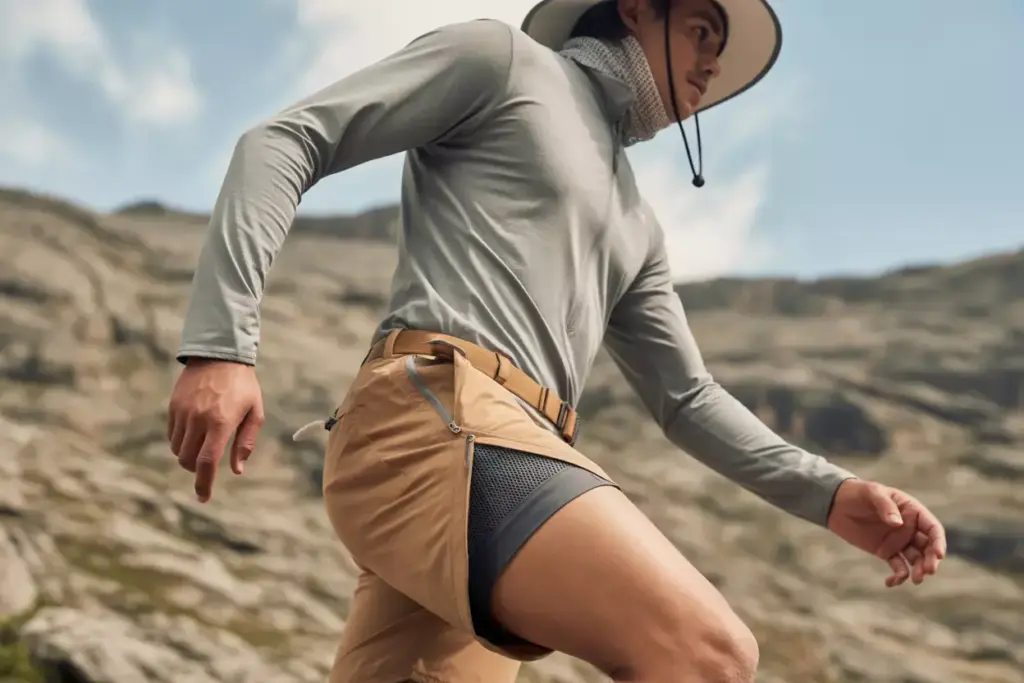
This timeless combination prioritizes simplicity and proven performance for day hikes in hot mountain conditions. The outfit centers around a lightweight, long-sleeve hiking shirt in light gray or khaki with built-in UPF 50+ protection. The long sleeves provide essential sun coverage while the loose fit promotes airflow around the torso.
Pair this with convertible hiking pants in a neutral tan or olive color. These versatile pants feature zip-off legs that transform into shorts when temperatures rise, providing ultimate adaptability for changing conditions. The fabric should be a ripstop nylon blend with DWR (Durable Water Repellent) coating for light rain protection.
Accessories include:
- Wide-brimmed sun hat with chin strap
- Lightweight hiking socks with cushioned heel and toe
- Breathable hiking boots with mesh panels
- Cooling neck gaiter for additional sun protection
2. The Technical Performance System
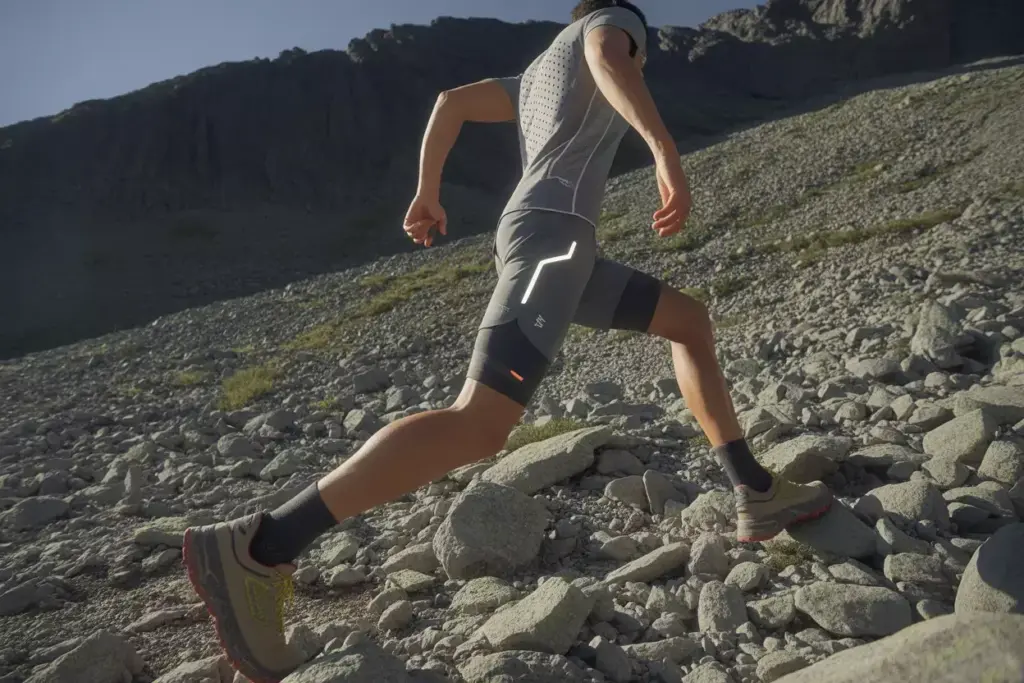
Designed for serious hikers tackling challenging terrain, this outfit incorporates advanced technical fabrics and innovative design features. The base layer consists of a sleeveless moisture-wicking tank top with seamless construction to prevent chafing during long hikes.
Layer over this a lightweight hiking shirt with laser-cut ventilation holes and mesh back panel. The shirt should feature a partial zip front for quick temperature regulation and rolled sleeves that can be secured with button tabs.
Bottom half features:
- Technical hiking shorts with 7-inch inseam
- Built-in compression liner for muscle support
- Multiple secure pockets for essentials
- Reflective details for safety
Complete the system with trail running shoes designed for hiking, offering superior breathability compared to traditional hiking boots while maintaining adequate support and protection.
3. The Desert Mountain Specialist
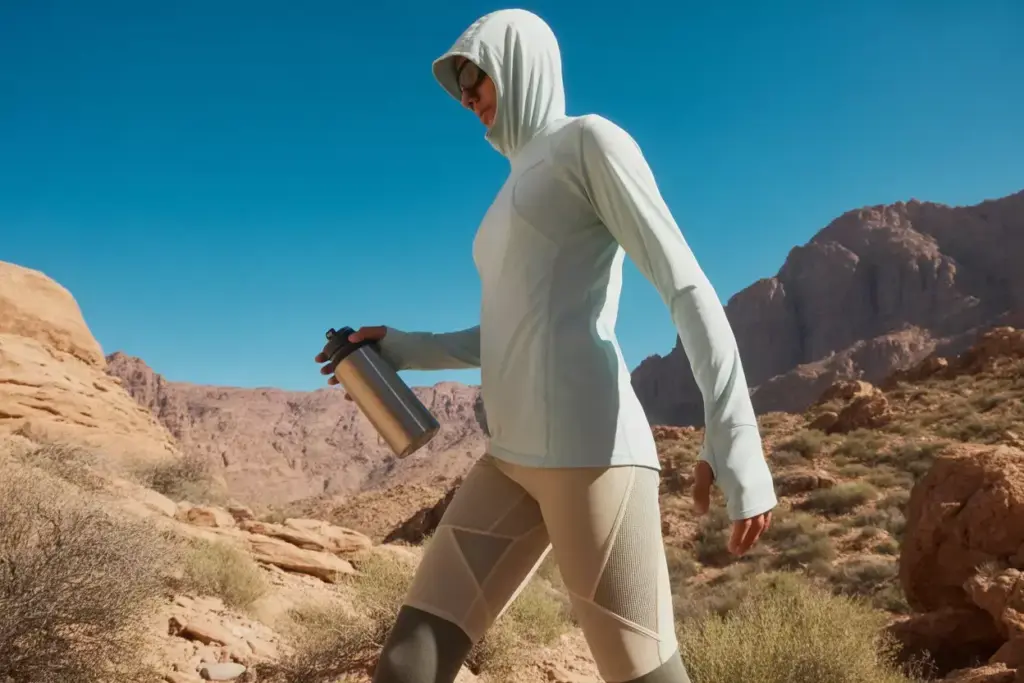
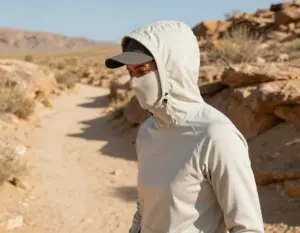
Perfect for hiking in arid mountain environments where sun exposure and heat are primary concerns. This outfit maximizes coverage while maintaining excellent breathability through strategic fabric choices and design elements.
The centerpiece is a long-sleeve hiking hoodie in light-colored fabric with thumbhole sleeves for hand protection. The hood provides additional neck and head coverage when needed, while the loose fit creates a cooling air pocket around the body.
Key components:
- Lightweight hiking leggings with mesh side panels
- Compression shorts underneath for chafe prevention
- Gaiters to keep debris out of shoes
- Insulated water bottle to maintain cool drink temperatures
4. The Minimalist Approach
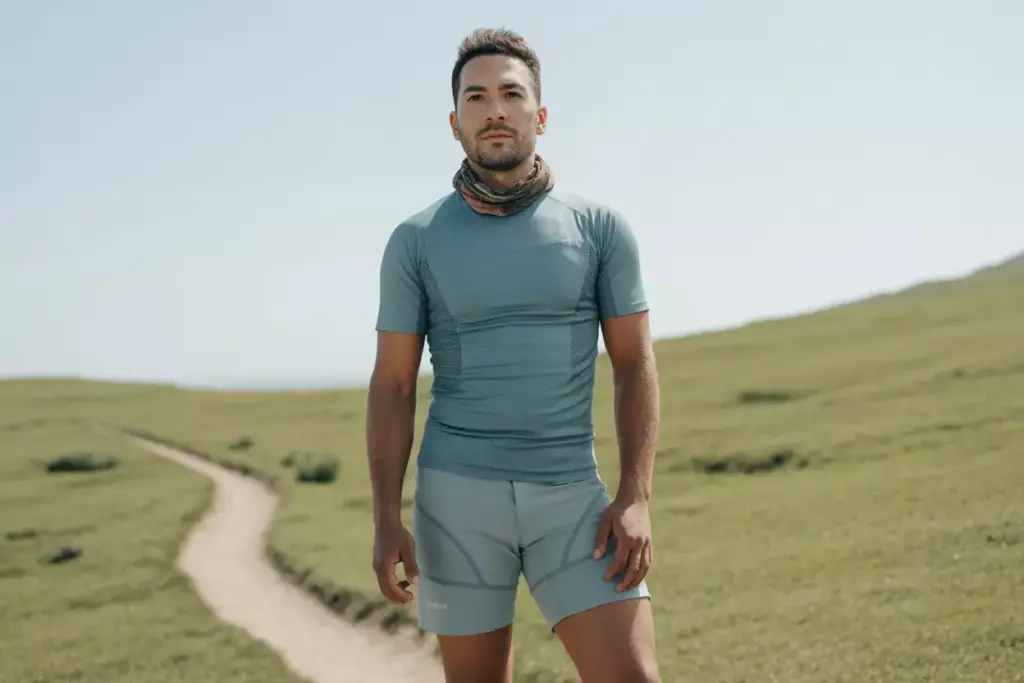
For hikers who prefer simplicity and reduced pack weight, this streamlined outfit focuses on multi-functional pieces that perform multiple roles. The core piece is a technical hiking t-shirt with seamless construction and strategic mesh placement.
Essential elements:
- Lightweight hiking shorts with built-in brief
- Merino wool hiking socks for natural odor resistance
- Minimalist trail shoes with maximum ventilation
- Multi-use buff for sun protection and cooling
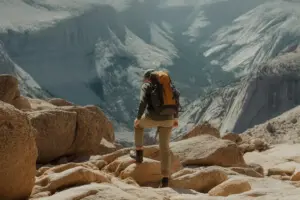
5. The Alpine Explorer
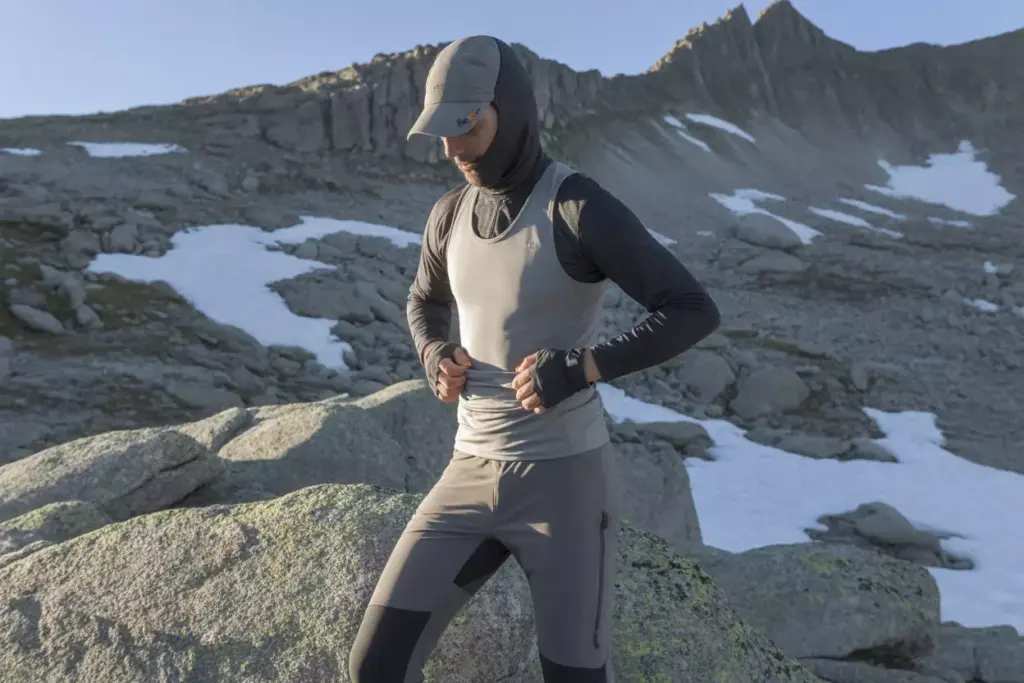
Designed for higher elevation hikes where temperatures can fluctuate dramatically throughout the day. This outfit emphasizes layering capability while maintaining breathability during the hottest parts of the day.
Start with a moisture-wicking base layer tank top and add a lightweight long-sleeve shirt that can be easily removed and tied around the waist when temperatures rise. The layering system allows for quick adjustments as conditions change with elevation and time of day.
Additional features:
- Softshell hiking pants with full-length side zips
- Lightweight fleece vest for early morning starts
- Ventilated hiking cap with neck protection
- Breathable hiking gloves for rocky terrain
6. The Sun Protection Specialist

This outfit prioritizes maximum sun protection without sacrificing breathability, perfect for exposed mountain ridges and high-altitude hiking where UV exposure is intensified.
The foundation is a UPF 50+ long-sleeve shirt with a high collar and extended sleeves that cover the hands. Choose light colors that reflect heat while providing maximum UV protection.
Complete protection includes:
- Full-length hiking pants with UPF rating
- Sun sleeves for additional arm protection
- Legionnaire-style hat with full neck coverage
- UV-protective sunglasses with side shields
7. The Quick-Dry Adventure System
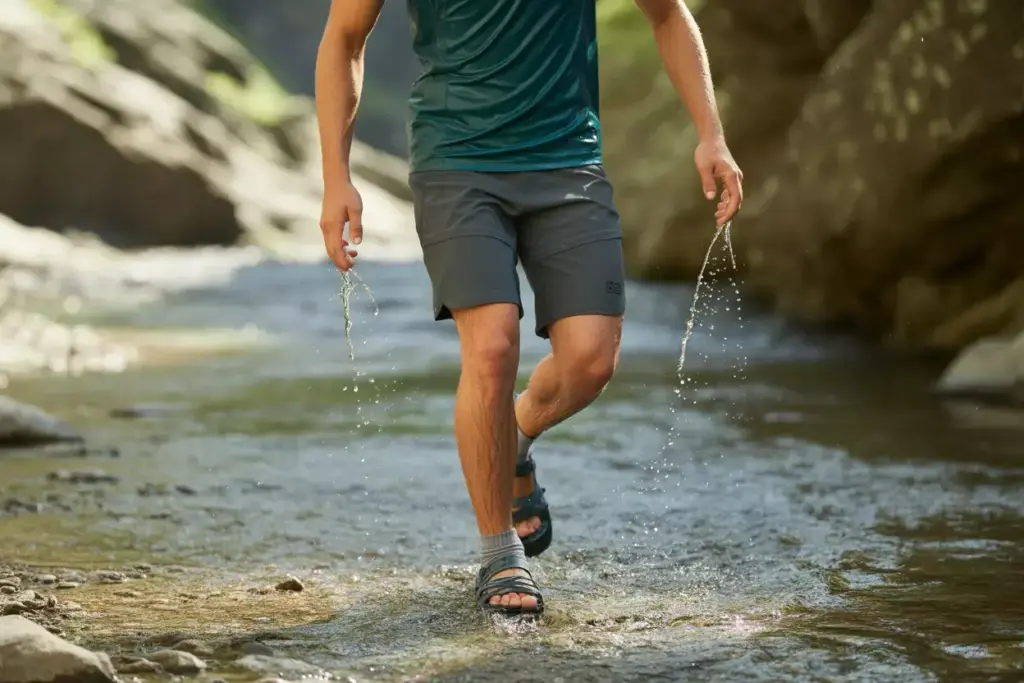
Perfect for hiking in humid mountain environments or areas where stream crossings are common. This outfit features fabrics and designs that dry rapidly when wet while maintaining comfort during intense activity.
Core pieces:
- Quick-dry hiking shirt with antimicrobial treatment
- Board short-style hiking shorts that double as swim shorts
- Synthetic hiking socks that maintain insulation when wet
- Water-friendly hiking sandals with toe protection
8. The Versatile All-Day Comfort
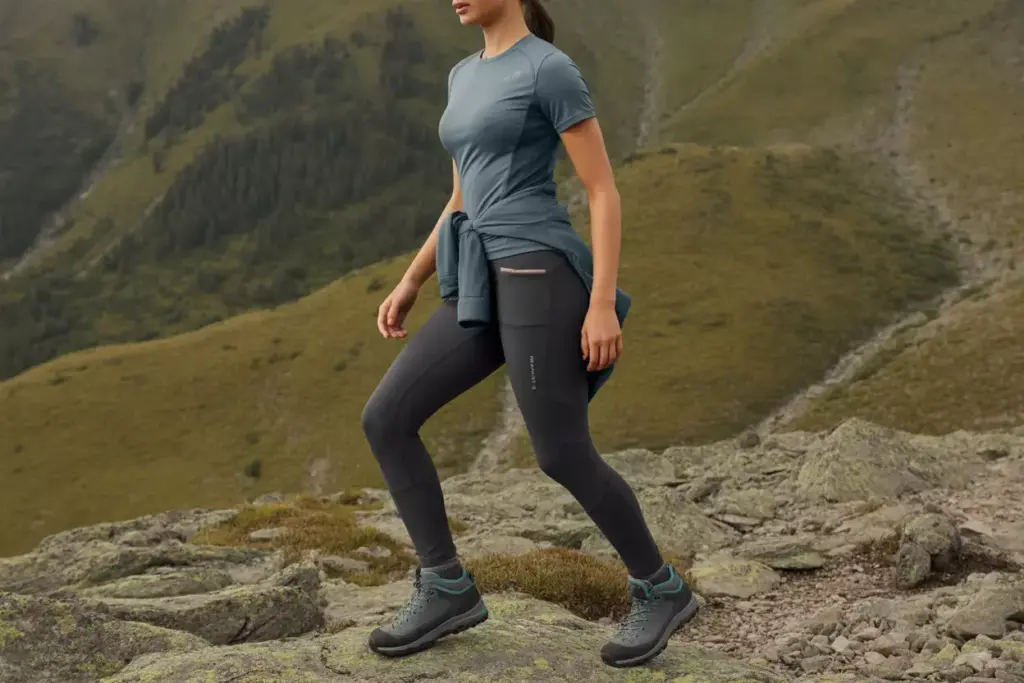
This outfit balances performance, comfort, and style for hikers who want to look good while tackling challenging mountain terrain. The pieces work together to create a cohesive system that performs from trailhead to summit.
Key components:
- Fitted moisture-wicking t-shirt with flattering cut
- High-performance hiking leggings with side pockets
- Lightweight hiking jacket for weather protection
- Stylish hiking boots with modern athletic design
Essential Accessories for Hot Weather Mountain Hiking
Beyond the core clothing pieces, strategic accessories can make or break a hot weather hiking experience. Cooling towels activated by water provide instant relief during rest breaks, while electrolyte replacement systems help maintain proper hydration levels.
Sun protection accessories include:
- Polarized sunglasses with UV400 protection
- Lip balm with SPF 30 or higher
- Zinc-based sunscreen for nose and ears
- Cooling bandana that can be soaked in streams
Comfort enhancers:
- Moisture-wicking headband to keep sweat from eyes
- Lightweight trekking poles to reduce leg strain
- Breathable pack with ventilated back panel
- Insulated hydration system to keep drinks cool
Fabric Care and Maintenance for Longevity
Proper care of technical hiking fabrics ensures they maintain their breathability and performance characteristics over time. Wash synthetic fabrics in cold water with specialized technical wash products that don’t leave residue in the fibers.
Avoid fabric softeners which can clog the pores in moisture-wicking fabrics and reduce their effectiveness. Instead, use white vinegar in the rinse cycle to maintain fabric softness while preserving technical properties.
Air drying is preferable to machine drying for most technical fabrics, as high heat can damage synthetic fibers and reduce their moisture-wicking capabilities. When machine drying is necessary, use low heat settings and remove items while slightly damp.
DWR coating maintenance involves periodic reapplication of water-repellent treatments to maintain the fabric’s ability to shed light moisture and dry quickly.
Safety Considerations for Hot Weather Mountain Hiking
Hot weather hiking presents unique safety challenges that proper clothing choices can help mitigate. Heat exhaustion and heat stroke are serious risks that can be reduced through appropriate fabric selection and outfit planning.
Early warning signs of heat-related illness include:
- Excessive sweating or sudden stop in sweating
- Dizziness or lightheadedness
- Nausea or vomiting
- Rapid heartbeat
- Confusion or irritability
Prevention strategies include wearing light-colored, loose-fitting clothing that promotes airflow and choosing fabrics that wick moisture effectively. Plan hiking times to avoid the hottest parts of the day, typically between 10 AM and 4 PM.
Emergency preparedness should include carrying extra water, electrolyte supplements, and a lightweight emergency shelter that can provide shade if needed.
Budget-Friendly Alternatives and DIY Solutions
Quality hiking gear can be expensive, but smart shopping strategies and creative solutions can help hikers build effective hot weather outfits without breaking the bank. End-of-season sales offer significant savings on previous year’s models that often feature similar technology to current offerings.
Thrift stores and consignment shops sometimes carry high-quality outdoor gear at fraction of retail prices. Look for well-known brands and inspect items carefully for wear patterns and fabric condition.
DIY modifications can improve the breathability of existing clothing:
- Add mesh panels to the sides of cotton t-shirts
- Convert long pants to shorts with proper hemming
- Create ventilation holes in hat brims for increased airflow
- Modify pack straps with breathable padding
Multi-use items help stretch budgets while reducing pack weight. A lightweight sarong can serve as sun protection, towel, pillow, or emergency shelter depending on needs.
Regional Considerations for Mountain Hiking Outfits
Different mountain regions present unique challenges that influence optimal outfit choices. Desert mountains require maximum sun protection and light colors to reflect heat, while humid mountain environments prioritize rapid moisture evacuation and quick-drying fabrics.
High-altitude hiking demands clothing that can adapt to rapid temperature changes while providing protection from intense UV radiation. The thin atmosphere at elevation offers less protection from harmful rays, making UPF-rated clothing essential.
Coastal mountain ranges often experience sudden weather changes and higher humidity levels, requiring versatile layering systems and fabrics that perform well in varied conditions.
Volcanic terrain may require additional protection from abrasive surfaces and sharp rock, influencing choices in pants and footwear materials.
Seasonal Timing and Weather Pattern Considerations
Understanding local weather patterns helps optimize outfit choices for specific hiking dates and locations. Early summer hiking may require more layering options as nighttime temperatures can still be cool, while late summer conditions often feature more stable, consistently hot weather.
Monsoon seasons in many mountain regions bring afternoon thunderstorms that require quick-drying fabrics and lightweight rain protection. Fire season considerations may influence color choices, with some areas requiring bright colors for visibility during emergency situations.
Microclimate awareness helps hikers prepare for conditions that may vary significantly within a single hike, such as shaded valleys, exposed ridges, and different elevations.
Technology Integration and Modern Innovations
Modern hiking clothing increasingly incorporates advanced technologies that enhance performance in hot weather conditions. Phase-change materials actively regulate body temperature by absorbing and releasing heat as needed.
Antimicrobial treatments prevent odor-causing bacteria growth, allowing hikers to wear garments multiple days without washing. Insect-repellent fabrics provide built-in protection from mosquitoes and other biting insects common in summer mountain environments.
Smart fabrics that change properties based on temperature and humidity are becoming more common, offering adaptive performance that responds to changing conditions automatically.
Sustainability considerations are driving innovations in recycled and eco-friendly fabric options that maintain high performance while reducing environmental impact.
Conclusion
Selecting the right breathable outfit for hot summer mountain hiking requires careful consideration of fabric technology, layering strategies, and regional conditions. These 8 breathable mountain trip outfit ideas for a hot summer hike provide proven combinations that prioritize comfort, safety, and performance in challenging conditions.
The key to success lies in understanding how different fabrics and design features work together to create effective cooling and moisture management systems. Whether choosing the classic lightweight explorer approach or the technical performance system, each outfit idea offers specific advantages for different hiking styles and conditions.
Take action today by evaluating current hiking gear against these guidelines and identifying areas for improvement. Start with one complete outfit system and test it on shorter local hikes before committing to longer mountain adventures. Remember that the best hiking outfit is one that has been tested and proven in conditions similar to planned adventures.
Invest in quality pieces gradually, focusing first on base layers and core garments that have the greatest impact on comfort and safety. With proper planning and the right breathable clothing choices, hot summer mountain hiking becomes an enjoyable and rewarding experience that opens up endless possibilities for outdoor adventure.