7 Small Space Camping Gear Organization Ideas to Maximize Your Campsite
Picture this: you arrive at your dream campsite after hours of driving, only to realize your gear is scattered, your tent space feels cramped, and you can’t find your camp stove when hunger strikes. Sound familiar? Disorganized camping gear can quickly turn an adventure into a frustrating experience, especially when working with limited space. The good news is that with the right 7 Small Space Camping Gear Organization Ideas to Maximize Your Campsite, even the most compact camping setup can become a model of efficiency and comfort.
Disclosure: This post contains affiliate links. As an Amazon Associate, we earn from qualifying purchases, and at no extra cost to you.
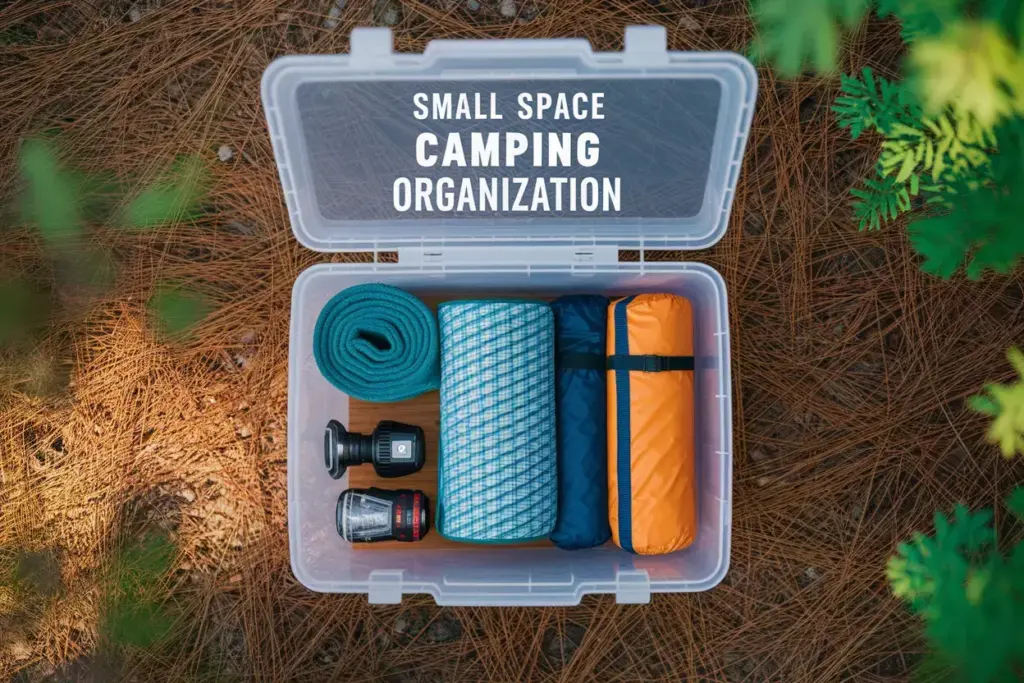
Whether you’re car camping in a small site, backpacking with minimal space, or setting up camp in your backyard, smart organization transforms chaos into calm. These proven strategies will help you make the most of every square foot while keeping your essential gear accessible and protected.
Key Takeaways
- Vertical storage solutions like hanging organizers and wall pockets can double your usable storage space without expanding your footprint
- Multi-purpose gear reduces clutter by serving multiple functions, from storage ottomans that hold supplies to camp tables with built-in organizers
- Strategic zoning of your campsite creates designated areas for cooking, sleeping, and storage, maximizing efficiency in small spaces
- Modular storage systems allow you to customize organization based on trip length and group size while maintaining consistency
- Proper gear categorization and labeling systems ensure quick access to essentials and prevent overpacking
Understanding Small Space Camping Challenges
Small space camping presents unique organizational hurdles that require creative solutions. Limited ground space means every item must earn its place, while weather protection becomes crucial when gear can’t be spread out to dry. Additionally, accessibility issues arise when frequently used items get buried under less essential gear.
The key to success lies in maximizing vertical space, choosing dual-purpose items, and creating designated zones for different activities. Smart campers also understand that organization isn’t just about tidiness—it’s about safety, efficiency, and enjoyment of the outdoor experience.
Common small space camping scenarios include:
- Compact car camping sites with limited flat ground
- Backpacking setups where every ounce matters
- Group camping with multiple people sharing small spaces
- Extended stays requiring more gear in the same footprint
- Weather-sensitive locations needing quick setup and breakdown
1. Vertical Storage Solutions: Going Up Instead of Out
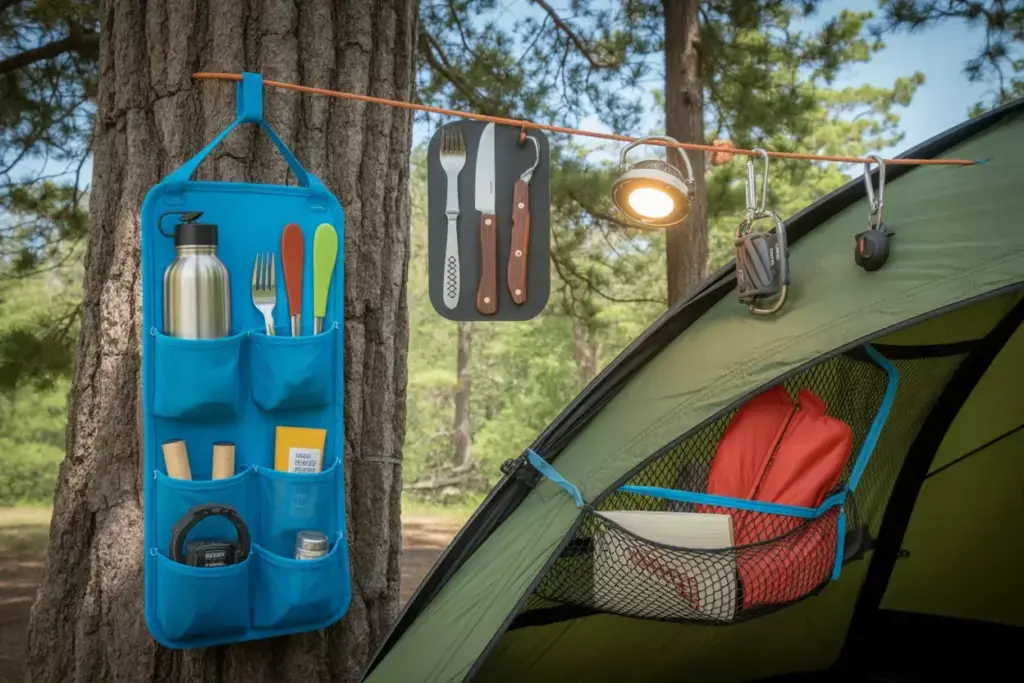
When ground space is at a premium, vertical storage solutions become your best friend. These systems utilize the often-overlooked space above your campsite, creating storage opportunities without expanding your footprint.
Hanging organizers represent one of the most versatile vertical solutions. Mesh pockets can be suspended from trees, tent guy-lines, or portable camp structures to hold everything from toiletries to cooking utensils. Look for organizers with multiple compartments and weather-resistant materials that can withstand outdoor conditions.
Wall-mounted systems work excellently for RV camping or when using tarps and canopies. Magnetic strips hold metal utensils, while adhesive hooks support lightweight items. For tent camping, internal hanging nets maximize space inside your shelter without cluttering the floor.
Popular Vertical Storage Options:
| Storage Type | Best For | Capacity | Weather Resistance |
|---|---|---|---|
| Hanging shoe organizers | Small items, toiletries | 12-24 pockets | Moderate |
| Mesh gear lofts | Tent organization | 2-4 cubic feet | High |
| Magnetic strips | Metal utensils | 8-12 items | High |
| Carabiner systems | Quick access gear | Variable | Excellent |
Tree-hanging systems offer natural mounting points for vertical storage. Use tree-friendly straps to protect bark while creating anchor points for organizers, lanterns, and gear bags. This approach keeps items off the ground and easily accessible.
Consider modular hanging systems that can be reconfigured based on your needs. These typically include removable pouches and adjustable mounting hardware, allowing customization for different camping scenarios.
2. Multi-Purpose Gear: Double Duty for Maximum Efficiency
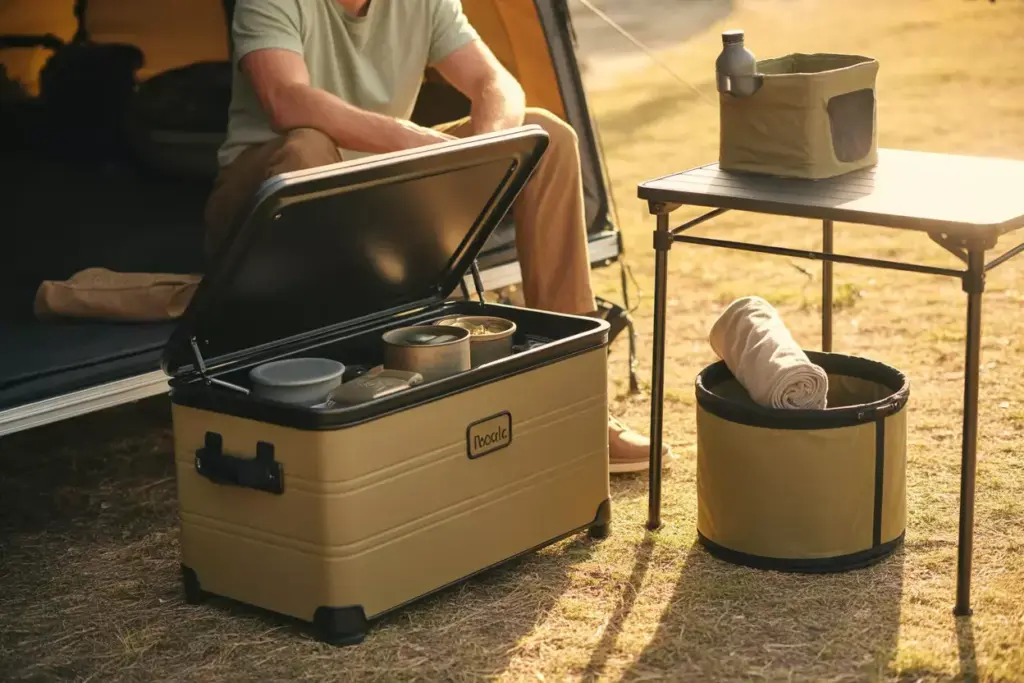
Selecting multi-purpose camping gear dramatically reduces the number of items needed while maintaining functionality. This strategy proves especially valuable when implementing 7 Small Space Camping Gear Organization Ideas to Maximize Your Campsite.
Storage ottomans serve as seating, tables, and storage containers simultaneously. Choose models with waterproof interiors and sturdy construction that can support adult weight while protecting contents from moisture and pests.
Camp tables with built-in storage eliminate the need for separate furniture and organization systems. Look for designs featuring underneath baskets, side pockets, and integrated cup holders that keep essentials within reach during meal preparation.
Essential Multi-Purpose Items:
- Collapsible buckets – Water carrying, washing, storage
- Camp chairs with storage – Seating plus gear organization
- Coolers with wheels – Food storage plus transportation
- Lanterns with charging ports – Lighting plus device power
- Sleeping bags with compression sacks – Bedding plus space-saving storage
Modular furniture systems represent the pinnacle of multi-purpose design. These pieces can be reconfigured as tables, benches, or storage units depending on immediate needs. While initially more expensive, they provide exceptional space efficiency and versatility.
Clothing with built-in storage includes pants with cargo pockets, jackets with internal pouches, and hats with hidden compartments. These items keep small essentials accessible without requiring additional storage solutions.
“The best camping gear serves multiple purposes without compromising quality in any single function. This philosophy transforms small spaces into highly functional outdoor homes.” – Outdoor Gear Expert
3. Strategic Zoning: Creating Designated Areas
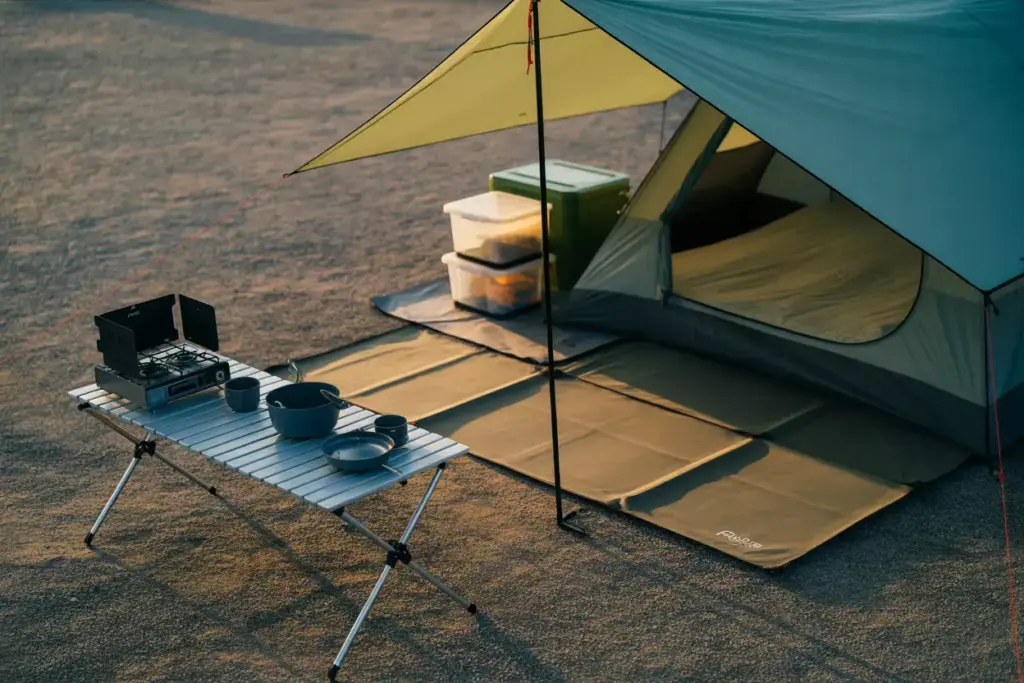
Strategic zoning involves dividing your small campsite into specific functional areas, maximizing efficiency through thoughtful space allocation. This approach forms a cornerstone of effective 7 Small Space Camping Gear Organization Ideas to Maximize Your Campsite.
Kitchen zones should be positioned away from sleeping areas but close to water sources when available. Use portable camp kitchens or designated prep areas with defined boundaries created by tarps, mats, or natural features. Keep cooking gear, utensils, and food storage within this zone to prevent contamination and improve workflow.
Sleeping zones require clean, level ground protected from wind and moisture. Position tents and sleeping areas uphill from cooking zones to prevent water runoff issues. Use ground tarps to define boundaries and protect gear from ground moisture.
Storage zones work best in covered areas protected from weather but easily accessible. Position these zones between kitchen and sleeping areas for convenient access from both locations. Consider elevation changes to prevent water pooling around stored gear.
Zoning Best Practices:
- Traffic flow – Create clear pathways between zones
- Wind patterns – Position cooking areas downwind from sleeping zones
- Water drainage – Ensure storage zones stay dry during rain
- Privacy – Use natural features to create visual barriers
- Safety – Keep fire/cooking areas away from flammable storage
Activity zones accommodate specific camping activities like gear maintenance, relaxation, or games. These flexible spaces can be reconfigured throughout the day as needs change, utilizing portable furniture and temporary boundaries.
Buffer zones between different areas prevent contamination and reduce noise transfer. Even in small spaces, strategic separation improves organization and camping comfort.
4. Modular Storage Systems: Customizable Organization
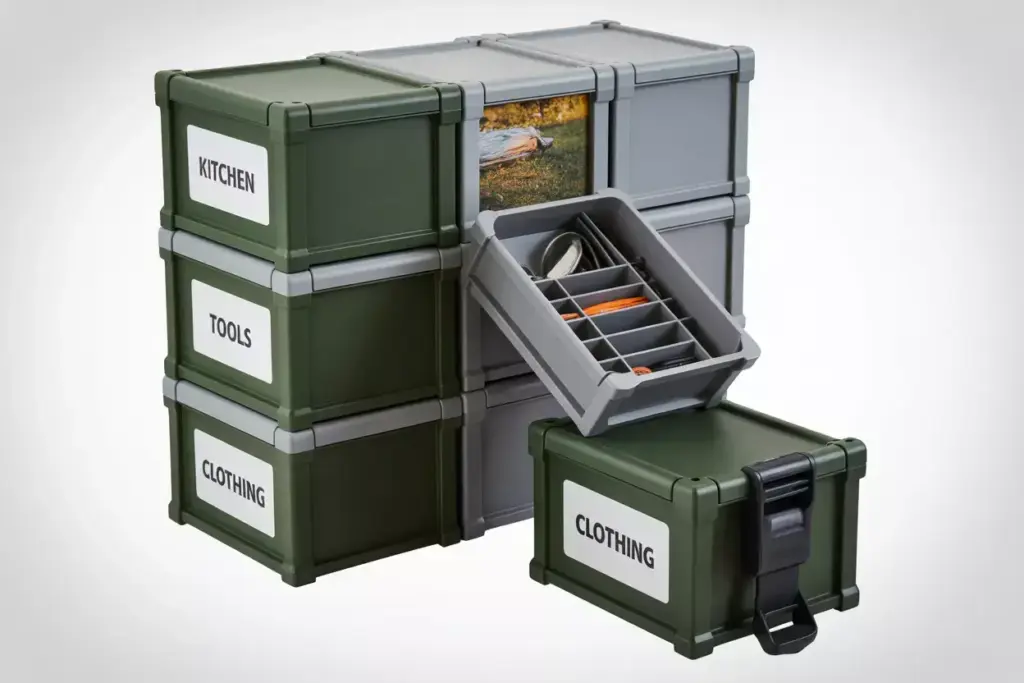
Modular storage systems provide the flexibility needed for various camping scenarios while maintaining organizational consistency. These systems adapt to different group sizes, trip lengths, and gear requirements without requiring completely different organizational approaches.
Cube storage systems offer standardized dimensions that stack, nest, and arrange in multiple configurations. Choose cubes with reinforced corners, weather-resistant materials, and secure latching mechanisms. Label each cube clearly to identify contents without opening.
Interlocking containers create custom storage solutions that expand or contract based on needs. These systems typically feature universal connections allowing different sized containers to work together seamlessly.
Modular System Components:
| Component Type | Function | Size Options | Connectivity |
|---|---|---|---|
| Base units | Primary storage | Small, medium, large | Universal clips |
| Divider inserts | Organization | Adjustable | Friction fit |
| Lid attachments | Weather protection | Standard sizes | Snap-on |
| Mounting hardware | Securing systems | Variable | Multiple options |
Drawer systems work exceptionally well for car camping scenarios where weight isn’t a primary concern. These systems slide out for easy access while maintaining organization during transport. Look for ball-bearing slides and soft-close mechanisms for durability.
Bag-based modular systems offer lightweight alternatives for backpacking while maintaining organizational benefits. These systems use color-coding, size standardization, and compression features to create modular organization without rigid containers.
Expandable systems accommodate growing gear collections or changing camping styles. Start with basic components and add modules as needs evolve, ensuring long-term value and adaptability.
5. Compact Gear Selection: Size Matters
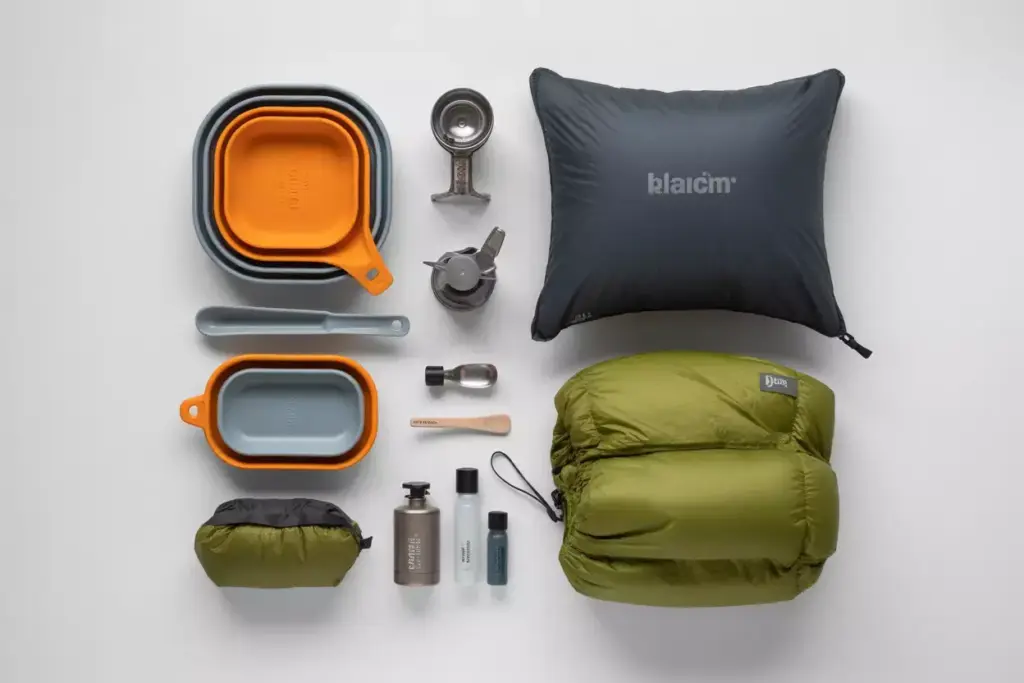
Choosing compact camping gear forms the foundation of successful small space organization. When implementing 7 Small Space Camping Gear Organization Ideas to Maximize Your Campsite, gear selection proves as important as organization methods.
Collapsible cookware reduces kitchen storage requirements by up to 70% compared to traditional camping pots and pans. Modern silicone and aluminum combinations provide excellent heat distribution while compressing to minimal sizes. Look for sets with nesting capabilities and removable handles for maximum space efficiency.
Inflatable furniture offers comfort without permanent space commitment. Air mattresses, pillows, and chairs can be deflated when not needed, freeing space for other activities. Choose items with built-in pumps and puncture-resistant materials for reliability.
Space-Saving Gear Categories:
- Ultralight tents with minimal packed size
- Compression sleeping bags reducing volume by 60%
- Folding camp furniture with compact storage
- Telescoping tools extending when needed
- Concentrated supplies like soap sheets and powder detergents
Miniaturized versions of essential items maintain functionality while reducing space requirements. Compact camp stoves, small coolers, and travel-sized toiletries provide necessary functions without oversized footprints.
Digital alternatives replace bulky traditional items. Smartphone apps substitute for physical maps, books, and games. Portable chargers ensure devices remain functional throughout trips while occupying minimal space.
Quality over quantity principles guide smart gear selection. Choose well-made items that serve multiple functions rather than accumulating numerous single-purpose tools. This approach reduces both space requirements and weight considerations.
6. Smart Packing Techniques: Maximizing Every Inch
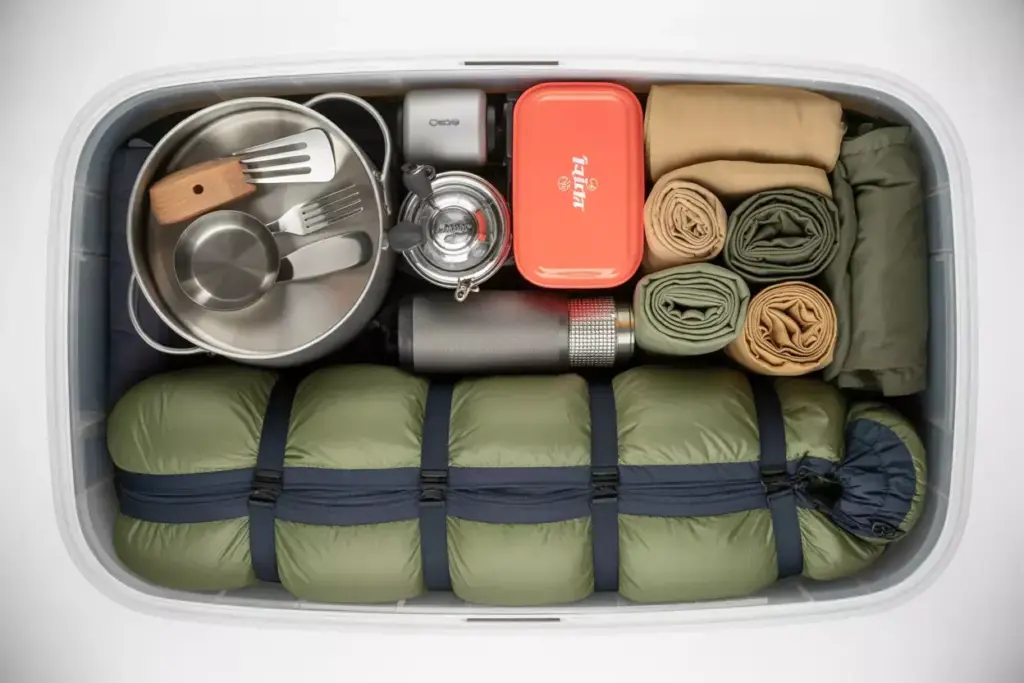
Smart packing techniques transform limited storage space into highly efficient organization systems. These methods work synergistically with other 7 Small Space Camping Gear Organization Ideas to Maximize Your Campsite to create maximum impact.
Tetris-style packing involves fitting items together like puzzle pieces, eliminating wasted space between objects. Practice this technique at home to identify optimal arrangements before arriving at your campsite. Take photos of successful configurations for future reference.
Compression packing reduces soft goods volume through vacuum bags, compression sacks, and strategic folding. Clothing, sleeping bags, and towels benefit most from these techniques. However, avoid over-compressing items that lose insulation properties when compressed.
Packing Efficiency Strategies:
- Heavy items on bottom – Creates stable foundation
- Frequently used items on top – Reduces unpacking needs
- Fragile items in center – Provides protection from impacts
- Liquids in sealed containers – Prevents spills and contamination
- Similar items grouped together – Simplifies location and inventory
Nesting techniques place smaller items inside larger ones, maximizing space utilization. Cooking pots hold utensils, cups nest inside each other, and clothing fills gaps between rigid items. This approach requires careful planning but dramatically improves packing efficiency.
Weight distribution affects both transportation and campsite organization. Balance heavy items across multiple containers to prevent handling difficulties and structural stress on storage systems.
Accessibility planning ensures frequently needed items remain reachable without major unpacking efforts. Create quick-access zones for essentials like first aid supplies, flashlights, and snacks.
“Efficient packing is like creating a three-dimensional filing system where every item has a designated location and logical access pattern.” – Professional Outdoor Guide
7. Maintenance and Cleaning Organization
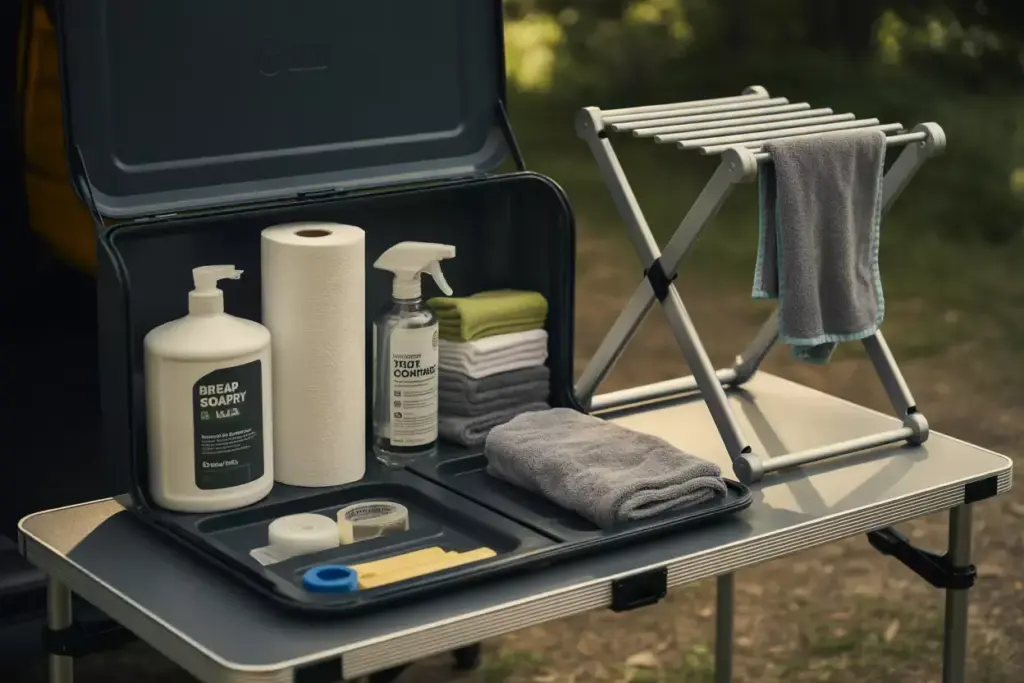
Maintenance and cleaning organization often gets overlooked but proves crucial for successful small space camping. Proper systems prevent gear degradation, pest problems, and health issues while maintaining organizational efficiency.
Cleaning supply stations centralize maintenance tools in designated containers. Include biodegradable soaps, microfiber cloths, disinfectant wipes, and repair materials in weather-resistant storage. Position these stations for easy access from both kitchen and sleeping zones.
Drying systems prevent moisture damage and mold growth in small spaces where air circulation may be limited. Use collapsible drying racks, retractable clotheslines, and mesh bags to create temporary drying areas that don’t permanently consume space.
Essential Maintenance Organization:
| Category | Items | Storage Method | Access Frequency |
|---|---|---|---|
| Daily cleaning | Soap, towels, wipes | Quick-access pouch | Multiple times daily |
| Gear maintenance | Repair kits, lubricants | Secure container | As needed |
| Laundry supplies | Detergent, line, clips | Compact bag | Weekly |
| Sanitation | Hand sanitizer, TP | Waterproof case | Daily |
Waste management systems maintain campsite cleanliness while minimizing odors and pest attraction. Use sealed containers for food waste, recycling bags for appropriate materials, and portable toilets when facilities aren’t available.
Regular maintenance schedules prevent small problems from becoming major issues. Inspect tent zippers, stove connections, and storage seals daily. Address issues immediately rather than allowing them to compound.
Tool organization keeps maintenance equipment accessible but secure. Use tool rolls, magnetic strips, or dedicated pouches to organize multi-tools, duct tape, zip ties, and replacement parts.
Advanced Organization Tips for Small Space Camping
Advanced organization techniques elevate basic systems into professional-level efficiency. These strategies represent the culmination of 7 Small Space Camping Gear Organization Ideas to Maximize Your Campsite implementation.
Color-coding systems provide instant visual identification of gear categories. Assign specific colors to cooking gear (red), sleeping equipment (blue), clothing (green), and tools (yellow). Use colored tape, bags, or labels to maintain consistency across all storage systems.
Inventory management prevents overpacking and ensures essential items aren’t forgotten. Create digital checklists with quantity specifications and location notes. Update lists after each trip to reflect gear changes and lessons learned.
Seasonal adaptation modifies organization systems for different weather conditions and activity types. Summer setups emphasize ventilation and sun protection, while winter configurations prioritize insulation and moisture management.
Professional Organization Techniques:
- Label everything with waterproof labels
- Photograph configurations for future reference
- Time packing/unpacking to identify efficiency improvements
- Create backup systems for critical items
- Document successful arrangements in camping journals
Technology integration enhances traditional organization through digital tools. Use smartphone apps for inventory tracking, GPS marking of gear locations, and photo documentation of successful setups.
Group coordination becomes essential when multiple people share small spaces. Establish clear responsibilities, shared storage areas, and communication protocols to prevent organizational breakdown.
Continuous improvement involves regular assessment and refinement of organizational systems. What works for weekend trips may need modification for extended expeditions or different group compositions.
Troubleshooting Common Organization Problems
Even well-planned small space camping organization encounters challenges that require problem-solving skills and adaptive strategies. Understanding common issues and their solutions prevents minor problems from derailing entire trips.
Overcrowding represents the most frequent organizational challenge. When gear exceeds space capacity, prioritize essential items and consider off-site storage for non-critical equipment. Implement strict weight limits per storage zone to prevent system overload.
Weather-related disruptions can quickly destroy organizational systems. Develop backup plans for equipment protection during unexpected storms. Use waterproof containers for critical items and quick-deploy covers for larger storage areas.
Access problems occur when frequently needed items become buried under less essential gear. Redesign storage hierarchies to maintain easy access to daily necessities. Consider duplicate items for high-frequency use rather than constant reorganization.
Common Problem Solutions:
| Problem | Cause | Solution | Prevention |
|---|---|---|---|
| Gear avalanches | Unstable stacking | Horizontal storage | Weight distribution |
| Lost items | Poor labeling | Clear identification | Consistent systems |
| Moisture damage | Inadequate protection | Sealed containers | Regular inspection |
| Access delays | Poor organization | Logical grouping | Usage-based placement |
Equipment failures can cascade into organizational chaos. Maintain backup storage options and repair capabilities for critical organizational components. Duct tape, zip ties, and replacement parts often provide temporary solutions until permanent repairs are possible.
Group conflicts over space allocation require clear agreements and fair distribution of storage areas. Establish ground rules before trips and designate mediators for dispute resolution.
Time management issues arise when setup/breakdown takes longer than expected. Practice organizational systems at home and time each process to identify bottlenecks and improvement opportunities.
Seasonal Considerations for Year-Round Organization
Seasonal camping requires adaptive organization strategies that account for changing weather conditions, gear requirements, and activity patterns. Successful implementation of 7 Small Space Camping Gear Organization Ideas to Maximize Your Campsite must consider these seasonal variations.
Summer organization emphasizes heat management, insect protection, and sun safety. Ventilated storage prevents heat buildup in enclosed containers, while mesh barriers protect gear from insects without restricting airflow. Position heat-sensitive items in shaded areas and use reflective covers for additional protection.
Winter camping prioritizes insulation, moisture control, and quick access to warming items. Insulated storage prevents freezing of liquids and battery-powered devices. Keep emergency gear easily accessible and maintain backup heating sources in multiple locations.
Spring conditions often involve unpredictable weather requiring flexible organization systems. Prepare for rapid weather changes with easily accessible rain gear and quick-deploy shelter options. Mud management becomes crucial for maintaining clean storage areas.
Seasonal Organization Priorities:
Spring:
- Waterproof everything
- Elevated storage above potential flooding
- Quick-access rain gear
- Mud containment systems
Summer:
- Ventilated containers
- Shade creation for storage areas
- Insect-proof storage
- Heat-sensitive item protection
Fall:
- Wind-resistant setups
- Leaf management around storage areas
- Extended darkness preparation
- Temperature fluctuation planning
Winter:
- Insulated storage solutions
- Moisture prevention systems
- Emergency gear accessibility
- Heating equipment organization
Transition seasons require hybrid approaches that accommodate rapidly changing conditions. Modular systems prove especially valuable during these periods, allowing quick reconfiguration as weather patterns shift.
Gear rotation ensures seasonal equipment remains properly maintained and readily available. Store off-season items in clearly labeled containers with condition notes and maintenance schedules.
Budget-Friendly Organization Solutions
Implementing effective camping organization doesn’t require expensive specialized equipment. Budget-conscious campers can achieve professional-level organization using creative solutions and repurposed household items.
DIY storage solutions offer customization and cost savings compared to commercial alternatives. Plastic containers from discount stores provide weather resistance at fraction costs of outdoor-specific storage. Add custom labels and organizational inserts to create professional functionality.
Repurposed household items often outperform expensive camping gear for organizational purposes. Shoe organizers create excellent hanging storage, spice containers organize small camping supplies, and laundry bags provide breathable storage for damp items.
Budget Organization Ideas:
- Pill organizers for small hardware and repair items
- Ice cream buckets for bulk storage with secure lids
- Mesh laundry bags for quick-dry storage
- Magnetic strips from kitchen stores for tool organization
- Bungee cords and carabiners for flexible attachment systems
Thrift store finds often include high-quality storage solutions at significantly reduced prices. Look for hard-sided luggage, tackle boxes, tool organizers, and kitchen storage that adapts well to camping applications.
Group purchases reduce individual costs for larger organizational systems. Camping clubs and friend groups can share expenses for modular storage systems that individual members use for different trips.
Gradual system building spreads costs over multiple seasons while allowing system testing and refinement. Start with basic organization and add components as budget allows and needs become clear.
“The most effective camping organization systems often combine creative problem-solving with practical functionality, regardless of budget constraints.” – Outdoor Recreation Specialist
Conclusion
Mastering the 7 Small Space Camping Gear Organization Ideas to Maximize Your Campsite transforms chaotic camping experiences into models of efficiency and enjoyment. From vertical storage solutions that utilize overlooked space to multi-purpose gear that serves double duty, each strategy contributes to a comprehensive organizational system that adapts to various camping scenarios.
The key to success lies in understanding your specific needs, choosing appropriate solutions, and consistently implementing organizational principles. Whether you’re working with budget constraints or premium equipment, the fundamental concepts remain the same: maximize vertical space, choose versatile gear, create designated zones, and maintain flexible systems that adapt to changing conditions.
Seasonal considerations and troubleshooting strategies ensure your organizational systems remain effective throughout the year and under challenging conditions. Remember that perfect organization develops over time through experience, experimentation, and continuous refinement.
Your Next Steps:
- Assess your current camping setup and identify the biggest organizational challenges
- Choose 2-3 strategies from this guide to implement on your next camping trip
- Document what works and what needs adjustment for future improvements
- Gradually expand your organizational systems as experience and budget allow
- Share successful strategies with fellow campers to learn from their experiences
Start small, think vertically, and remember that the best camping organization system is the one you’ll actually use consistently. With these proven strategies, even the smallest campsite can become a comfortable, efficient outdoor home that enhances rather than hinders your wilderness adventures.