9 Camping Trip Necessities: The Ultimate Travel Essentials List
Picture this: you’ve driven three hours to a remote campsite, the sun is setting fast, and you just realized you forgot your tent stakes. 😬 It’s a nightmare scenario that thousands of campers experience every year — and it’s 100% avoidable. Whether you’re a first-timer or a seasoned outdoor enthusiast, having the right gear can mean the difference between an unforgettable adventure and a miserable night in the woods. That’s why I put together this definitive guide to the 9 Camping Trip Necessities: The Ultimate Travel Essentials List — so you never show up underprepared again.
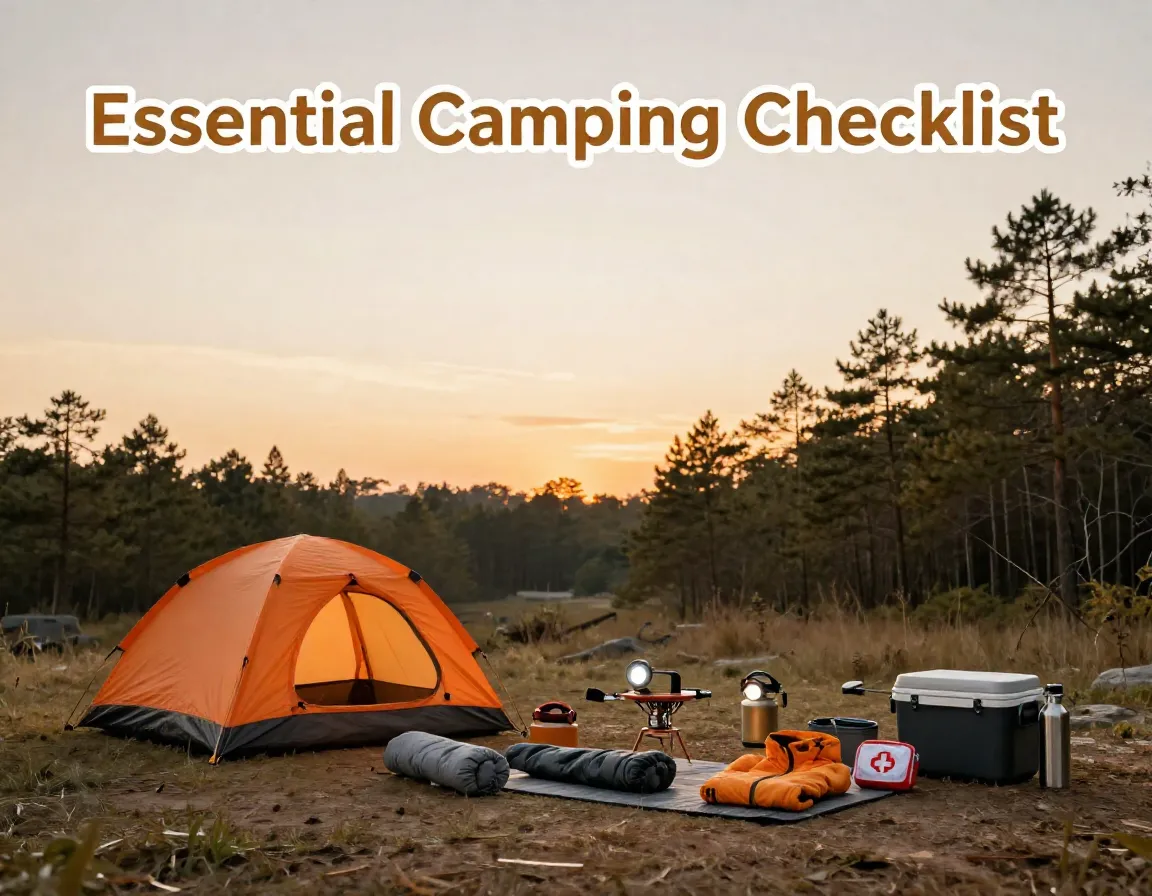
This guide covers everything from shelter and sleep systems to hydration and safety, drawing on expert advice from top outdoor resources. By the time you finish reading, you’ll know exactly what to pack, why each item matters, and how to choose the best version for your trip.
Key Takeaways
- 🏕️ Shelter is non-negotiable — a proper tent with stakes, rainfly, and ground tarp protects you from the elements.
- 🌡️ Sleep system quality matters — pairing the right sleeping bag with a sleeping pad prevents cold, damp, and sleepless nights.
- 💡 Safety items save lives — a first aid kit and headlamp are must-haves, not optional extras.
- 🍳 Food and water systems are critical — a camping stove, cooler, and hydration containers keep you fueled and healthy.
- 🧥 Clothing can make or break your trip — layering weather-appropriate clothing and rain gear is essential for comfort and safety.
Why the Right Gear Changes Everything
Most camping trips that go wrong do so because of one simple reason: poor preparation. According to multiple outdoor experts, the gear you bring — or forget — directly impacts your safety, comfort, and enjoyment [1][3]. The good news? You don’t need to spend a fortune or carry a massive pack. You just need the right items.
“The best camping gear is the gear you actually have with you when you need it.”
This ultimate travel essentials list is designed to be practical, comprehensive, and easy to follow. Let’s break down each of the 9 camping trip necessities one by one.
The 9 Camping Trip Necessities: The Ultimate Travel Essentials List
1. Tent with Stakes, Rainfly, and Ground Tarp
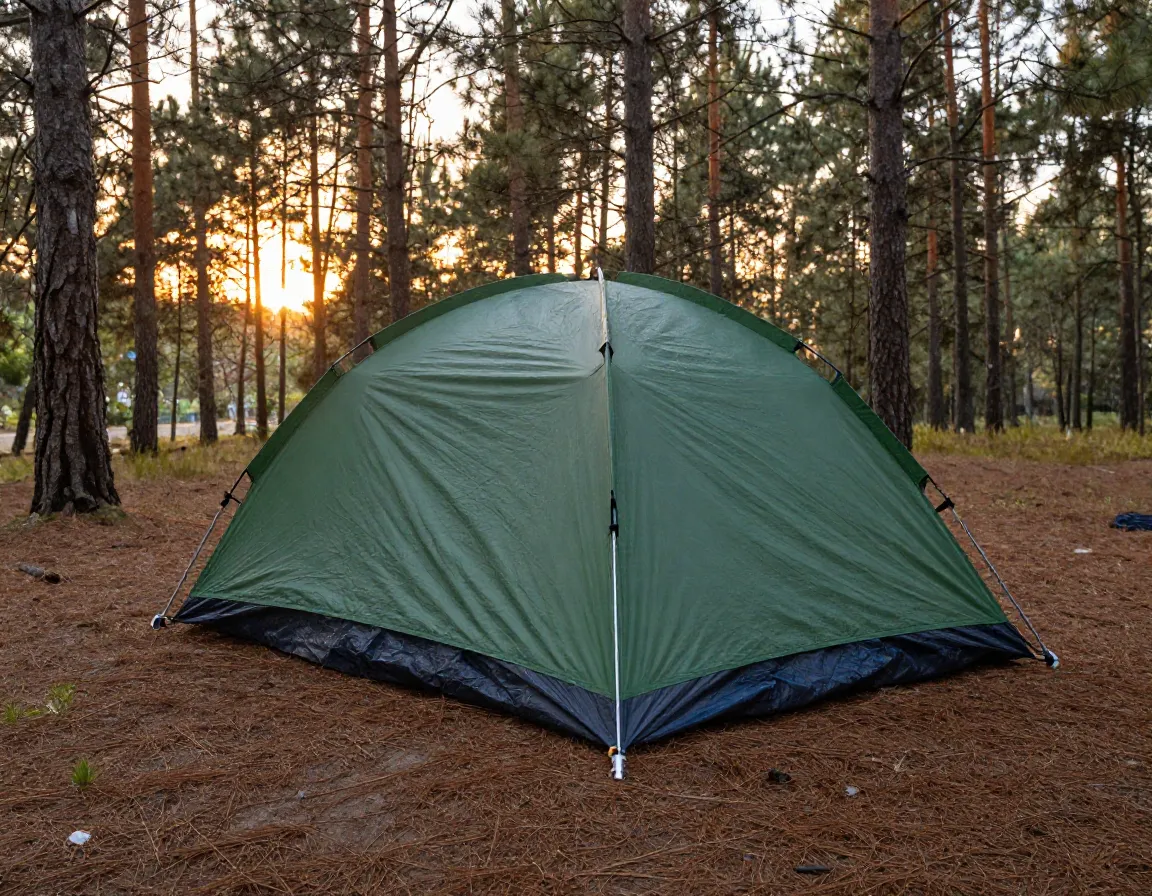
Your tent is your home away from home — and it’s the single most important piece of gear you’ll bring. But a tent alone isn’t enough. You need the complete shelter system: the tent body, stakes to anchor it, a rainfly to keep moisture out, and a ground tarp or footprint underneath to protect the tent floor from punctures and moisture absorption [1][2][3].
What to look for:
| Feature | Why It Matters |
|---|---|
| Tent capacity | Choose one size up from your group (e.g., 3-person tent for 2 campers) |
| Rainfly coverage | Full coverage protects better than partial |
| Stake quality | Aluminum stakes hold better than plastic |
| Footprint/tarp size | Should match or be slightly smaller than your tent floor |
Pro tip: Always practice setting up your tent at home before your trip. A 10-minute test run can save you an hour of frustration in the dark.
2. Sleeping Bag
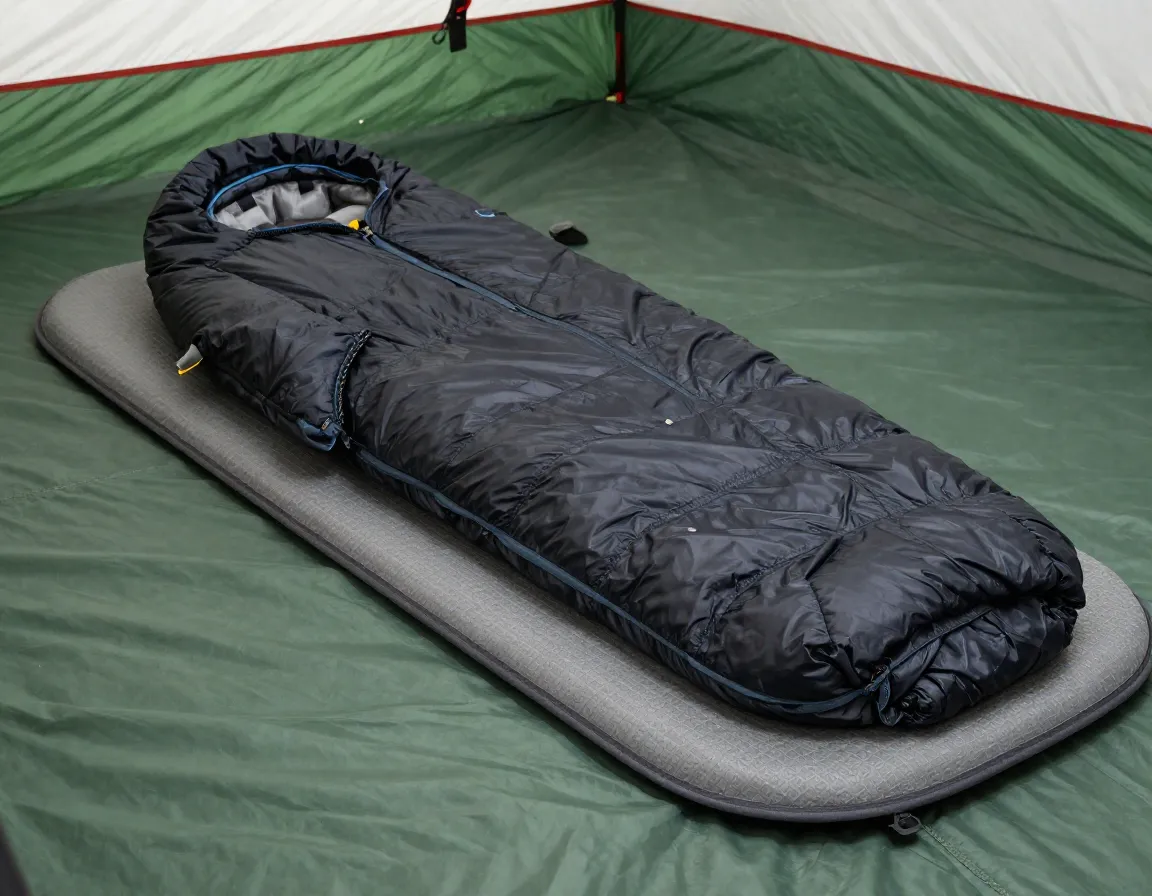
A quality sleeping bag is rated as one of the most essential camping items across every major outdoor resource [4][5]. The key is choosing the right temperature rating for your trip. If you’re camping in summer, a 35°F (2°C) bag is usually sufficient. For shoulder seasons or high-altitude trips, you’ll want a 15°F to 20°F (-9°C to -7°C) rated bag.
Types of sleeping bags:
- Mummy bags — Snug fit, excellent heat retention, great for cold weather
- Rectangular bags — Roomier, better for warm weather or car camping
- Semi-rectangular (barrel) bags — A middle-ground option for versatility
Fill material matters too:
- Down fill — Lighter, more compressible, but loses insulation when wet
- Synthetic fill — Heavier, bulkier, but retains warmth even when damp
💡 Quick tip: Always store your sleeping bag uncompressed when not in use. Keeping it stuffed in a compression sack for months degrades the insulation over time.
3. Sleeping Pad or Mattress
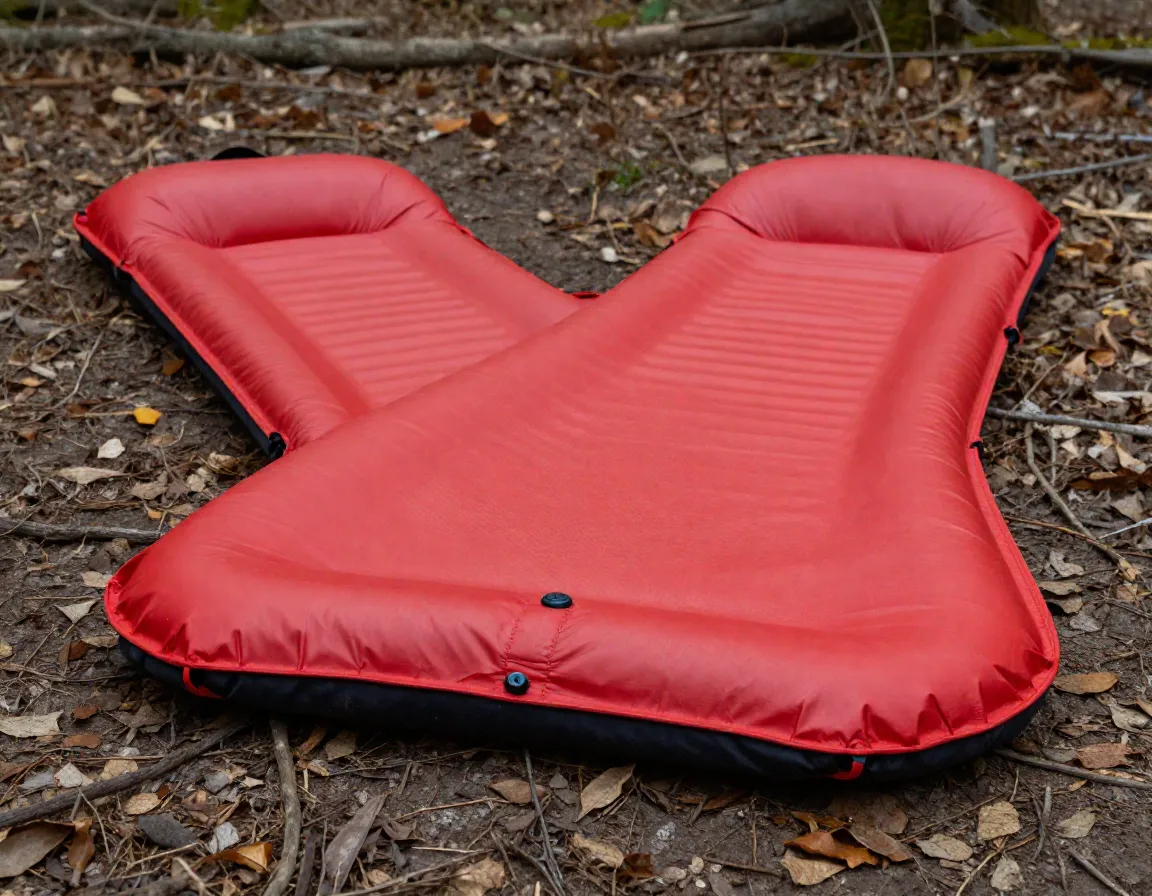
Many new campers overlook the sleeping pad — and then spend the night shivering on cold, hard ground. A sleeping pad serves two critical functions: insulation from the cold ground and cushioning for comfort [2][6].
Even in summer, the ground draws heat away from your body. A sleeping pad with a good R-value (a measure of thermal resistance) prevents this heat loss effectively.
Sleeping pad comparison:
| Type | R-Value | Weight | Best For |
|---|---|---|---|
| Foam/closed-cell | 2–4 | Light | Budget camping, backpacking |
| Inflatable | 3–7 | Very light | Backpacking, comfort |
| Self-inflating | 2–5 | Medium | Car camping, versatility |
| Air mattress | 1–2 | Heavy | Car camping, maximum comfort |
For car camping, a self-inflating pad or air mattress gives you the best night’s sleep. For backpacking, an ultralight inflatable pad is worth the investment.
4. Camping Stove with Fuel
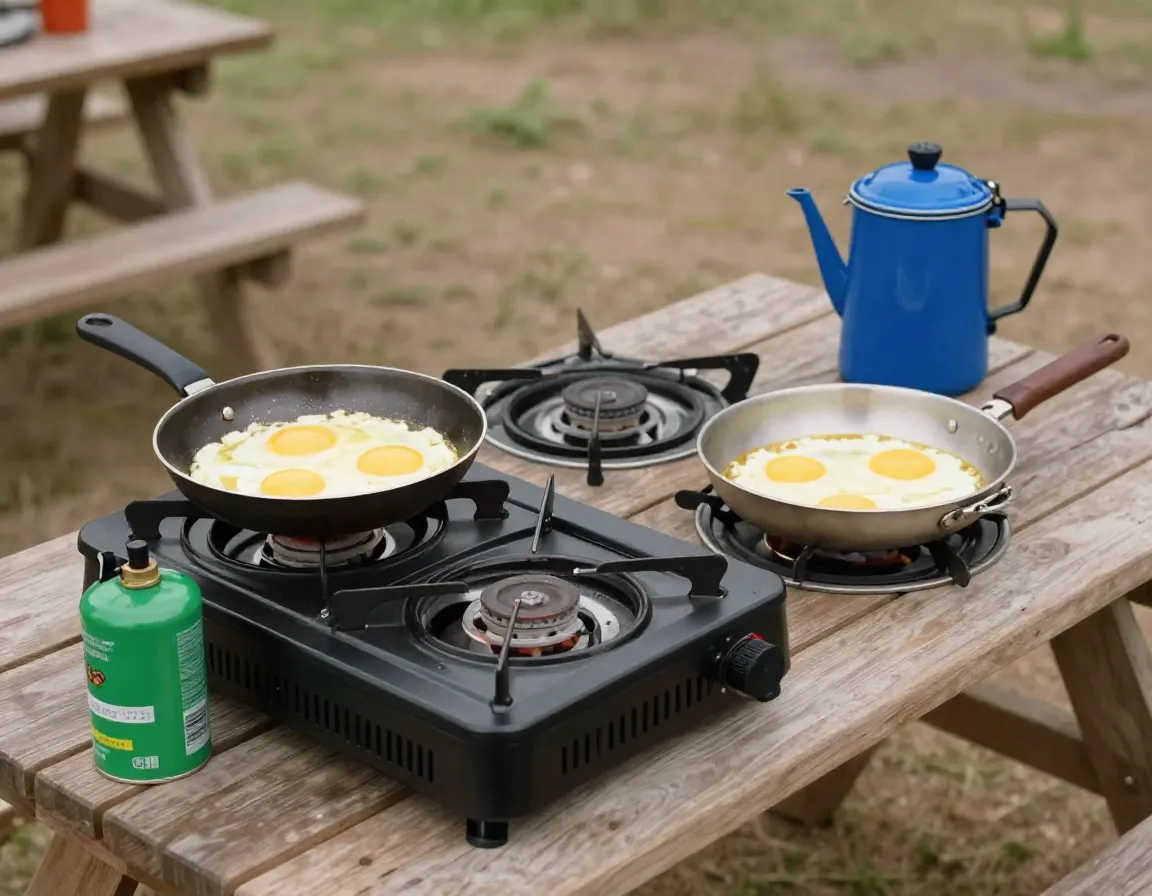
Hot meals transform a camping trip. A reliable camping stove with fuel is essential for cooking breakfast, boiling water for coffee or purification, and preparing warm dinners after a long day on the trail [7][3].
Don’t make the most common mistake: forgetting the fuel canister. It sounds obvious, but it happens more often than you’d think. Always double-check that you have the correct fuel type for your stove model.
Types of camping stoves:
- Canister stoves — Compact, easy to use, great for backpacking
- Liquid fuel stoves — Work in cold temperatures, refillable, better for winter camping
- Propane stoves (two-burner) — Ideal for car camping, powerful output
- Wood-burning stoves — No fuel to carry, but dependent on dry wood availability
Essential cooking accessories to pack alongside your stove:
- Lightweight pot or pan
- Camp utensils (spork, spatula, ladle)
- Biodegradable soap and a small sponge
- Pot gripper or oven mitt
5. Headlamp or Flashlight with Extra Batteries
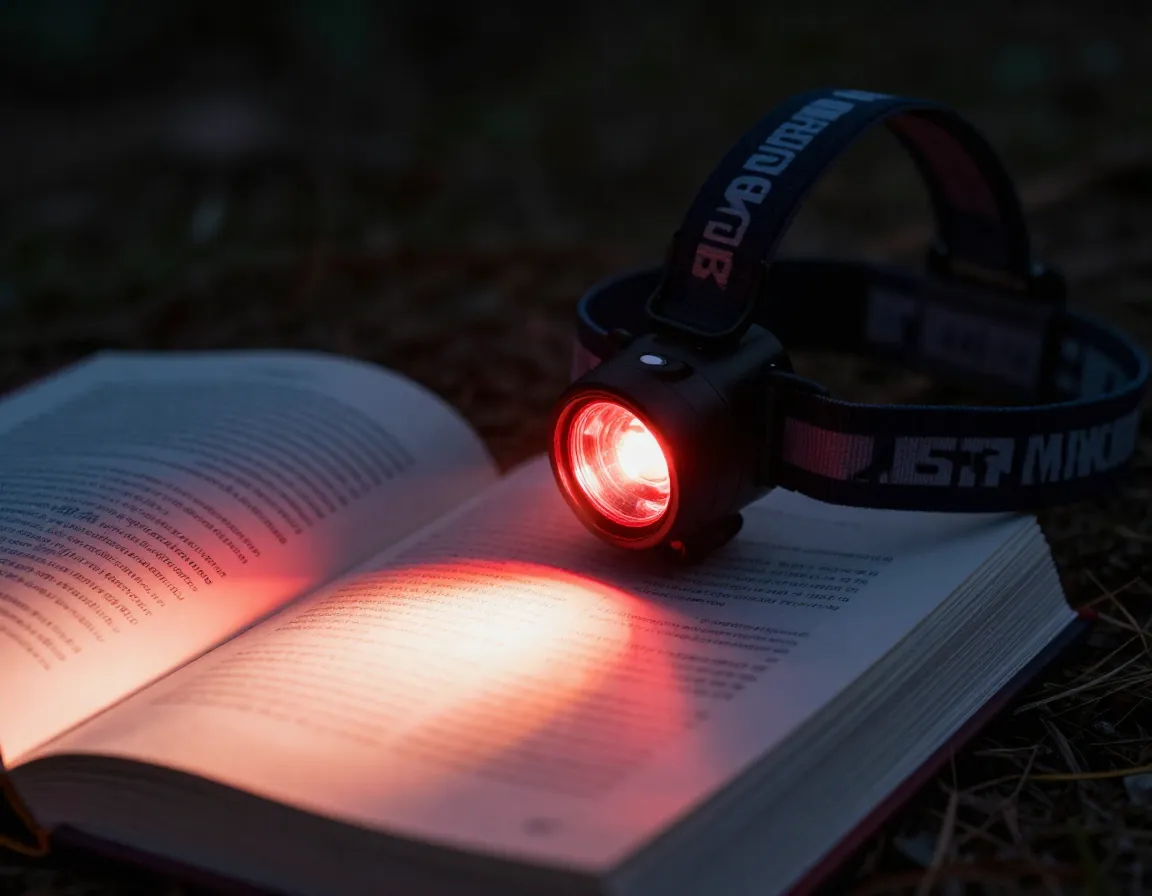
Once the sun goes down at camp, a reliable light source becomes critical for safety and convenience [1][5]. A headlamp is the preferred choice among experienced campers because it keeps your hands free — whether you’re setting up camp, cooking, or navigating to the restroom at 2 a.m.
🔦 Headlamp vs. flashlight — which is better?
| Feature | Headlamp | Flashlight |
|---|---|---|
| Hands-free use | ✅ Yes | ❌ No |
| Portability | ✅ Lightweight | ✅ Compact |
| Brightness range | High | High |
| Best for | Camp tasks, hiking | Signaling, stationary use |
What to look for in a headlamp:
- Lumens: 150–300 lumens is sufficient for most camping tasks
- Red light mode: Preserves night vision and doesn’t disturb others
- Battery life: Look for 40+ hours on low mode
- Water resistance: IPX4 rating or higher for rainy conditions
Always pack extra batteries or a backup power bank if you’re using a USB-rechargeable headlamp.
6. First Aid Kit
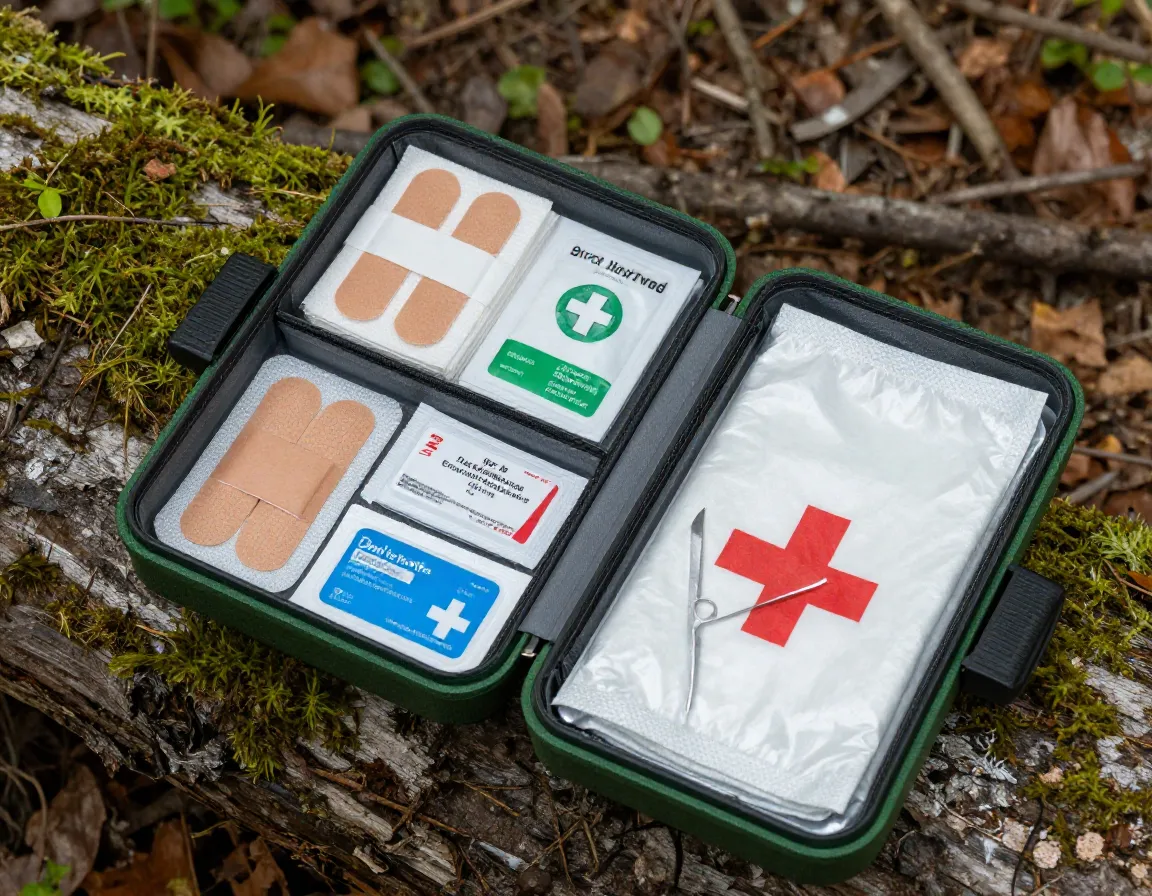
A first aid kit is the one item you hope you never need — but it’s absolutely non-negotiable [5]. Minor injuries happen on almost every camping trip: blisters, cuts, insect stings, sprains, and sunburns are all common. Having the right supplies on hand can prevent a minor issue from becoming a serious emergency.
Essential first aid kit contents:
- Adhesive bandages (assorted sizes)
- Sterile gauze pads and medical tape
- Antiseptic wipes and antibiotic ointment
- Blister treatment pads (Moleskin)
- Tweezers (for splinters and ticks)
- Pain relievers (ibuprofen, acetaminophen)
- Antihistamine (for allergic reactions)
- Emergency mylar blanket
- CPR face shield
- Personal prescription medications
⚠️ Important: If you’re camping in a remote area, consider taking a Wilderness First Aid (WFA) course. Knowing how to use your kit is just as important as having it.
Pre-assembled kits are convenient, but I recommend customizing yours based on your group size, trip length, and any specific medical needs.
7. Weather-Appropriate Clothing and Rain Gear
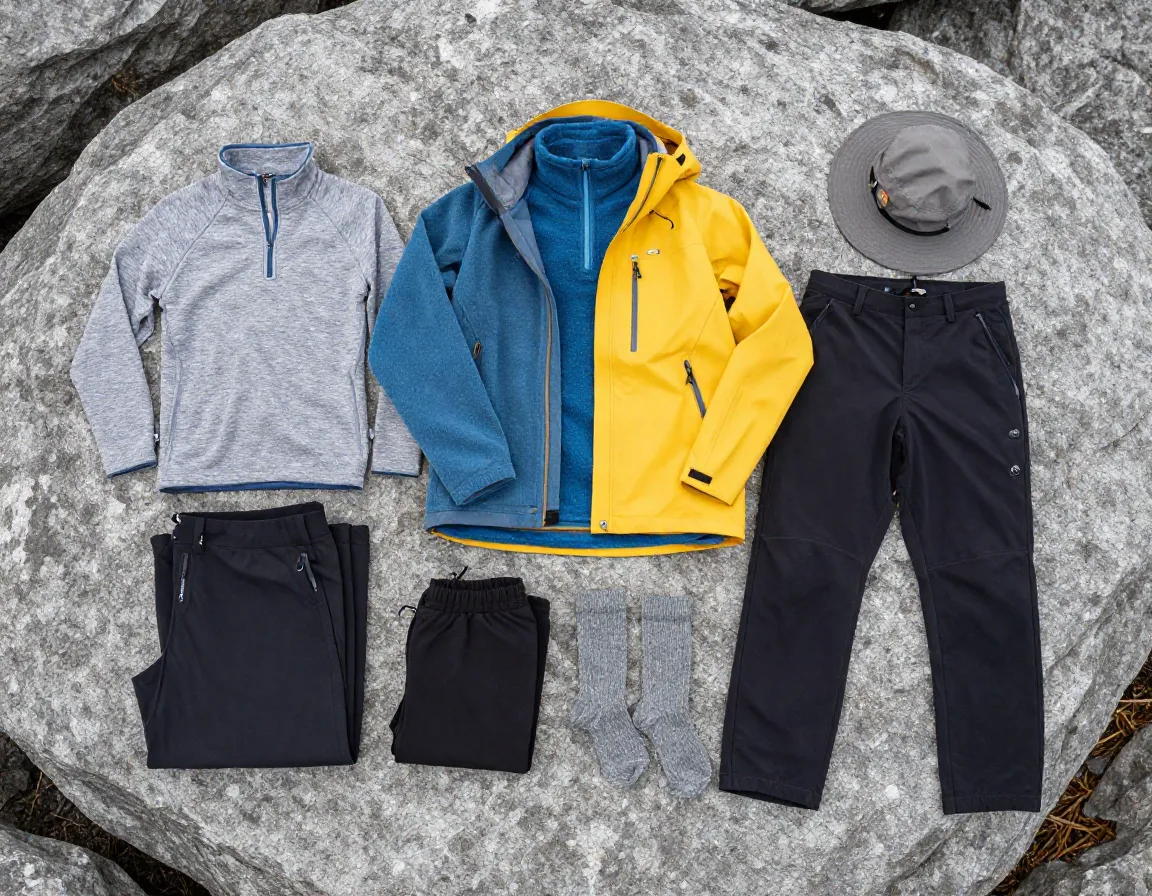
Clothing is often underestimated as a camping necessity — until you’re soaked, freezing, or sunburned. Weather-appropriate clothing and rain gear are essential for both comfort and safety, and the right layering strategy makes all the difference [5][2].
The three-layer system:
- Base layer — Moisture-wicking material (merino wool or synthetic) that pulls sweat away from your skin
- Mid layer — Insulating layer (fleece or down jacket) that traps body heat
- Outer layer — Waterproof and wind-resistant shell that blocks rain and wind
🧥 Clothing checklist by condition:
| Weather | Must-Have Items |
|---|---|
| Summer | Moisture-wicking shirts, sun hat, shorts, light fleece for nights |
| Spring/Fall | Mid-layer fleece, waterproof jacket, warm base layer |
| Winter | Heavy insulated jacket, thermal base layers, waterproof gloves, wool socks |
| Rainy conditions | Waterproof rain jacket, rain pants, waterproof boots |
Don’t forget: Cotton is the enemy in the outdoors. It absorbs moisture and loses all insulating ability when wet. Always choose wool or synthetic fabrics for camping.
8. Cooler with Ice
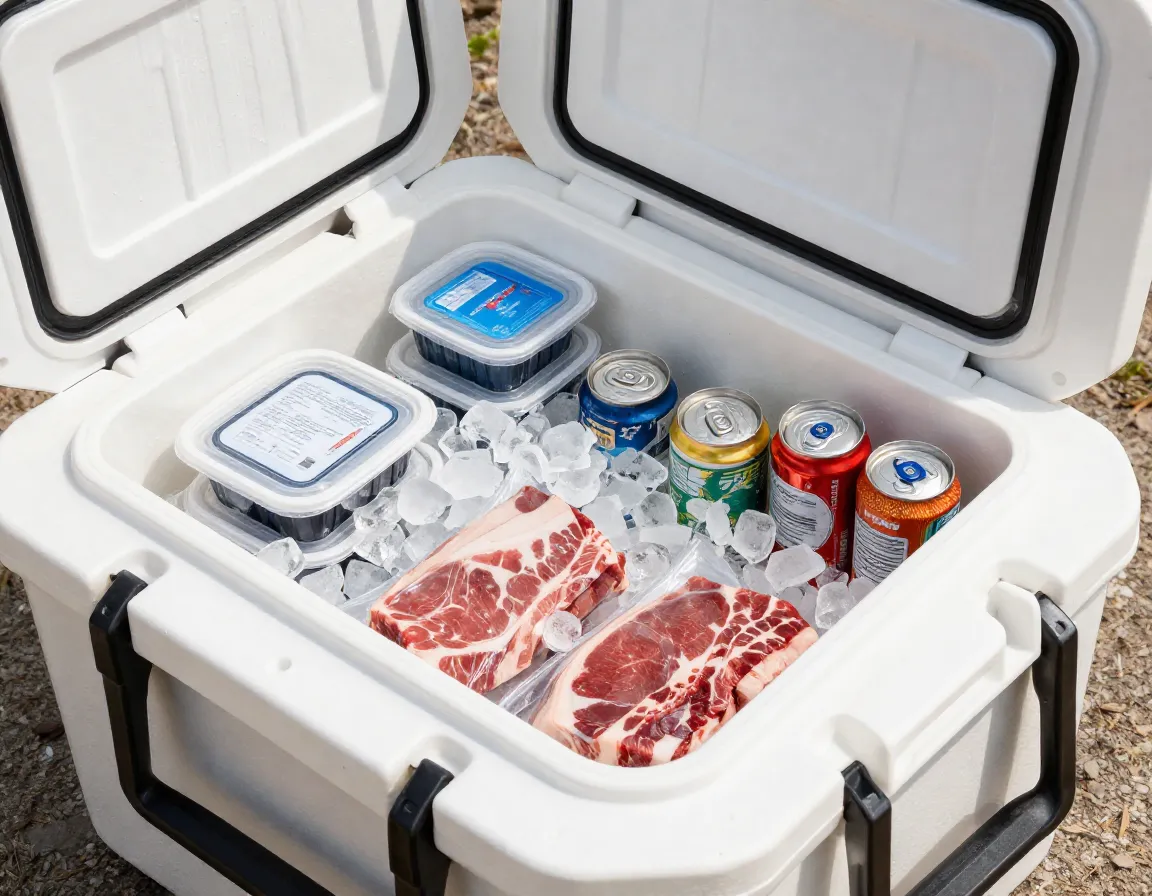
Food safety is a serious concern when camping, and a quality cooler with ice is your best defense against spoilage [1][3]. Beyond keeping food safe, a good cooler also stores beverages, keeps snacks fresh, and reduces how often you need to restock supplies.
Cooler buying guide:
| Cooler Type | Ice Retention | Best For |
|---|---|---|
| Soft-sided cooler | 1–2 days | Day trips, light packing |
| Hard-sided budget | 3–5 days | Weekend camping |
| Premium rotomolded | 7–10+ days | Extended trips, hot climates |
Tips for maximizing cooler performance:
- Pre-chill the cooler with ice for a few hours before packing food
- Use block ice instead of cubed ice — it lasts significantly longer
- Pack food in waterproof bags or containers to prevent sogginess
- Keep the cooler in the shade and avoid opening it unnecessarily
- Store raw meats at the bottom, away from ready-to-eat foods
🧊 Pro tip: A 2:1 ice-to-food ratio keeps everything colder for longer. For a 3-day trip, plan accordingly.
9. Water Bottles or Hydration Containers

Staying hydrated is one of the most fundamental aspects of outdoor safety, and water bottles or hydration containers are the last — but certainly not least — item on this ultimate travel essentials list [2][3].
Dehydration can sneak up on you quickly during physical activity, especially in hot or high-altitude environments. Having the right containers — and enough of them — ensures you always have access to safe drinking water.
Hydration options for campers:
- Reusable water bottles — Stainless steel or BPA-free plastic, 32 oz minimum per person
- Hydration bladders — Fits inside a backpack, hands-free drinking via a tube, great for hiking
- Large water jugs (1–5 gallon) — For base camp water storage and cooking
- Water filter or purification tablets — Essential if you’re sourcing water from streams or lakes
Daily water intake guide for campers:
| Activity Level | Recommended Daily Intake |
|---|---|
| Light (relaxing at camp) | 2–3 liters |
| Moderate (day hiking) | 3–4 liters |
| High (strenuous activity) | 4–6 liters |
Always carry more water than you think you’ll need. In a survival situation, water is the most critical resource.
Quick Reference: Your Complete Packing Checklist
Here’s a fast-reference summary of the 9 Camping Trip Necessities: The Ultimate Travel Essentials List to use when packing:
- ✅ Tent with stakes, rainfly, and ground tarp
- ✅ Sleeping bag (temperature-rated for your trip)
- ✅ Sleeping pad or mattress
- ✅ Camping stove with fuel
- ✅ Headlamp or flashlight with extra batteries
- ✅ First aid kit
- ✅ Weather-appropriate clothing and rain gear
- ✅ Cooler with ice
- ✅ Water bottles or hydration containers
Print this list, save it to your phone, or bookmark this page before every trip. 📋
Bonus Tips for a Smoother Camping Experience
Beyond the 9 essentials, here are a few extra items and habits that experienced campers swear by:
- Navigation tools — A paper map and compass as backup to your phone GPS
- Fire-starting kit — Waterproof matches, lighter, and fire starter cubes
- Insect repellent — DEET-based or picaridin for tick and mosquito protection
- Sunscreen (SPF 30+) — UV exposure increases at higher altitudes
- Trash bags — Leave No Trace principles require packing out all waste
- Camp chairs and a table — Adds comfort for longer stays
Conclusion
Being prepared is what separates a great camping trip from a stressful one. The 9 Camping Trip Necessities: The Ultimate Travel Essentials List — shelter, sleep system, cooking gear, lighting, safety, clothing, food storage, and hydration — covers every core need you’ll have in the outdoors.
Your actionable next steps:
- Print or save this checklist and use it before every camping trip
- Audit your existing gear — identify what you already own and what needs replacing or upgrading
- Invest in quality where it counts — sleeping bag, tent, and first aid kit are worth spending more on
- Test your gear at home before hitting the trail — set up your tent, fire up your stove, check your headlamp batteries
- Customize your list based on your destination, season, and group size
The outdoors is one of the most rewarding places to spend your time — but only when you’re properly equipped. Pack smart, stay safe, and enjoy every moment of your next adventure. 🏕️
References
[1] Family Camping Checklist – https://www.rei.com/learn/expert-advice/family-camping-checklist.html
[2] Best Camping List – https://www.outdoorgearlab.com/topics/camping-and-hiking/best-camping-list
[3] Essential Camping Gear Checklist – https://under30experiences.com/blog/essential-camping-gear-checklist
[4] Packing101 – https://www.dnr.state.mn.us/state_parks/stay_overnight/packing101.html
[5] Camping Checklist – https://reolink.com/blog/camping-checklist/
[6] Camping Packing List – https://madelinemarquardt.com/camping-packing-list/
[7] Camping Packing Checklist – https://outdoorithm.com/blog/camping-packing-checklist