6 Kitchen Organization Ideas for Camping That Are Pure Genius
Picture this: you’re at your campsite, ready to cook a delicious meal after a long day of hiking, but you can’t find the can opener anywhere. Your spices are scattered across three different bags, and your cooking utensils are buried beneath sleeping bags and camping gear. Sound familiar? 6 Kitchen Organization Ideas for Camping That Are Pure Genius can transform your outdoor cooking experience from chaotic to seamless, turning meal preparation into one of the most enjoyable parts of your camping adventure.
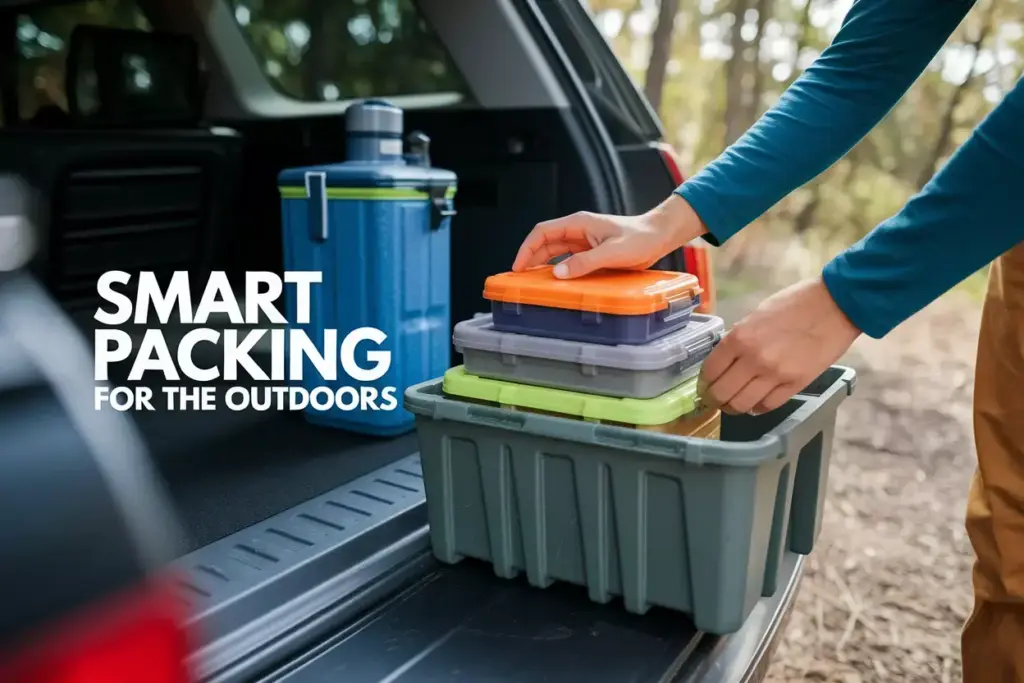
Smart camping kitchen organization isn’t just about convenience—it’s about maximizing your outdoor experience while minimizing stress and wasted time. When your cooking essentials are properly organized, you’ll spend less time searching for items and more time enjoying nature’s beauty with family and friends.
Key Takeaways
- Magnetic solutions and vertical storage maximize limited camping space while keeping essentials easily accessible
- Pre-portioned ingredients and labeled containers eliminate guesswork and reduce cooking time at the campsite
- Multi-functional gear and collapsible storage systems provide maximum organization without overwhelming your pack
- Strategic setup techniques create efficient cooking workflows that rival your home kitchen functionality
- Smart packing methods ensure everything has a designated place, making cleanup quick and effortless
Why Camping Kitchen Organization Matters More Than You Think
Camping kitchen organization extends far beyond simple tidiness. Proper organization directly impacts food safety, as it helps maintain proper temperatures for perishables and prevents cross-contamination between raw and cooked foods. Well-organized camping kitchens also reduce the risk of attracting wildlife to your campsite, as food items remain securely stored and easily monitored.
The psychological benefits are equally important. A well-organized camping kitchen reduces stress and decision fatigue, allowing campers to focus on relaxation and connection with nature. When everything has its place, meal preparation becomes a meditative activity rather than a frantic search mission.
The Cost of Poor Organization
Disorganized camping kitchens lead to several common problems:
- Food waste from forgotten or spoiled ingredients
- Increased expenses from purchasing duplicate items
- Safety hazards from improperly stored cooking tools
- Time loss that could be spent on recreational activities
- Frustration that diminishes the overall camping experience
Essential Principles Behind Genius Camping Kitchen Organization
Before diving into specific organizational strategies, understanding core principles ensures long-term success. The “everything in its place” philosophy forms the foundation of effective camping kitchen management. This means assigning specific locations for every item and consistently returning items to their designated spots after use.
Accessibility ranking represents another crucial principle. Items used most frequently should occupy the most accessible storage positions, while rarely used items can be stored in less convenient locations. This hierarchy prevents unnecessary unpacking and repacking during meal preparation.
The “pack light, pack smart” mentality encourages choosing multi-functional items over single-purpose tools. A spork eliminates the need for separate spoons and forks, while a cutting board that doubles as a serving tray maximizes utility while minimizing weight.
Weight Distribution and Balance
Proper weight distribution prevents damage to gear and makes transportation easier. Heavy items like cast iron cookware should be packed low and centered, while lighter items like paper products can occupy higher positions. This principle applies whether using backpacks, car trunks, or camping trailers.
The Complete Guide to 6 Kitchen Organization Ideas for Camping That Are Pure Genius
1. Create a Magnetic Spice and Seasoning Station
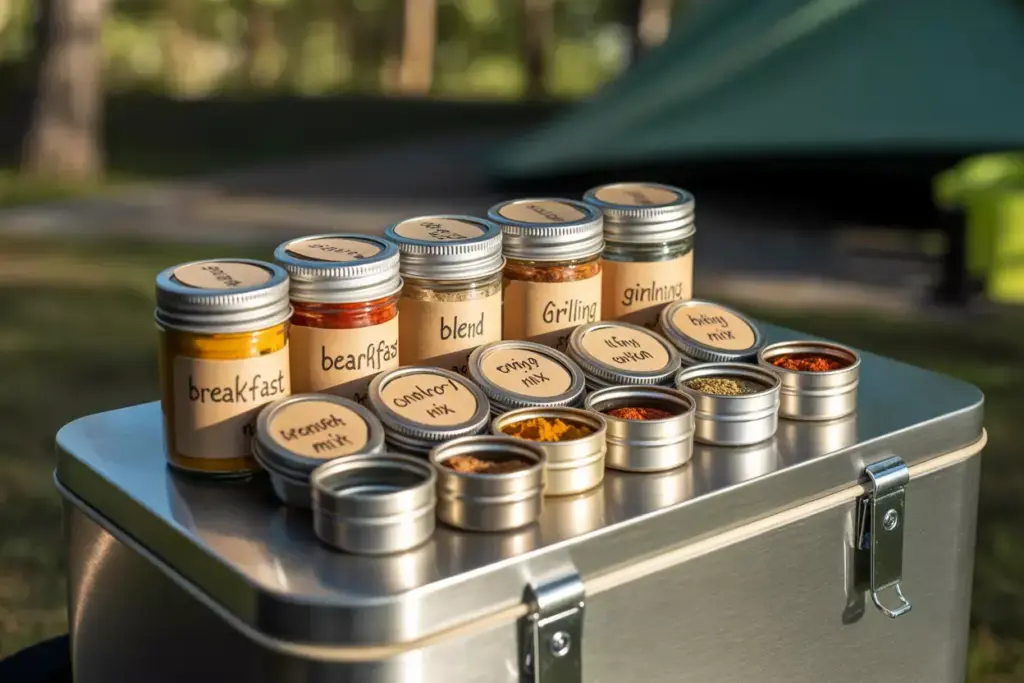
Transform any metal surface at your campsite into a sophisticated spice organization system using magnetic containers. Small magnetic tins or repurposed baby food jars with magnetic strips attached to their lids create an instantly accessible spice station on camp stoves, metal tables, or even the side of your vehicle.
Pre-measure your favorite spice blends before leaving home, eliminating the need to transport entire spice bottles. Popular camping spice combinations include:
- Breakfast blend: cinnamon, nutmeg, and brown sugar
- Grilling mix: garlic powder, paprika, black pepper, and salt
- Trail seasoning: chili powder, cumin, and oregano
- Universal blend: onion powder, garlic powder, and herbs
Label each magnetic container clearly with waterproof labels or permanent markers. This system keeps spices organized, easily visible, and prevents the common camping frustration of bland food due to forgotten seasonings.
Pro tip: Attach magnetic containers to the inside of a metal camping box lid for a portable spice station that travels safely and sets up instantly at any campsite.
2. Implement a Color-Coded Container System
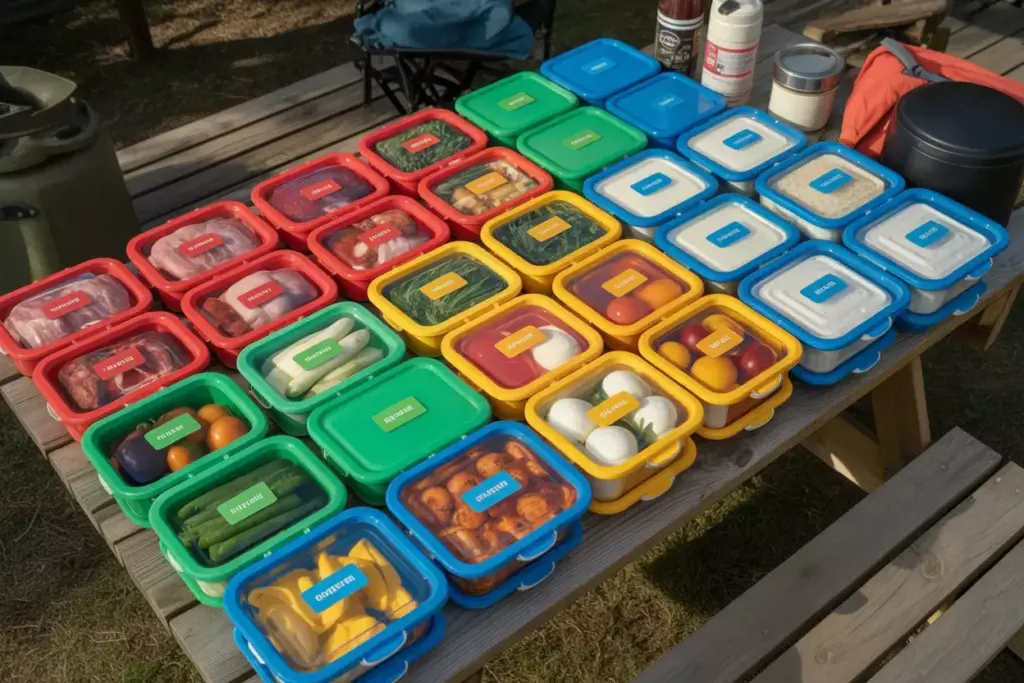
Develop a comprehensive color-coding system for all food storage containers, making identification instant even in low-light conditions. Assign specific colors to food categories:
- 🔴 Red containers: Raw meats and proteins
- 🟢 Green containers: Fresh vegetables and produce
- 🔵 Blue containers: Dairy products and cold items
- 🟡 Yellow containers: Dry goods and pantry staples
- ⚪ Clear containers: Leftovers and prepared foods
This visual organization system prevents cross-contamination while making meal planning effortless. Family members and camping companions can quickly locate needed ingredients without opening multiple containers or asking constant questions.
Enhance the system by adding waterproof labels with contents and dates. Use containers with tight-sealing lids to maintain freshness and prevent pest infiltration. Stack containers by size within color groups to maximize cooler and storage space efficiency.
3. Design a Hanging Utensil Organization Hub
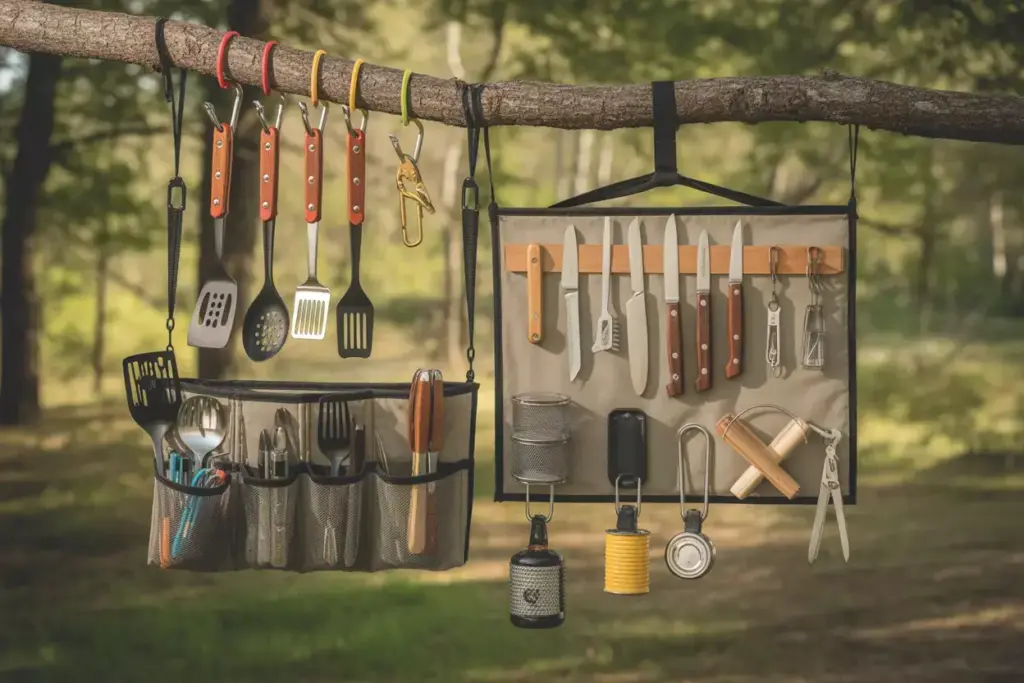
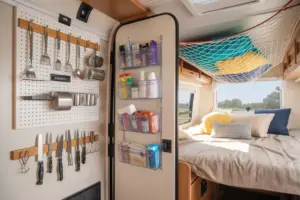
Vertical storage solutions maximize limited camping space while keeping essential tools within arm’s reach. Create a comprehensive hanging system using:
Mesh organizers with multiple pockets for utensils, can openers, measuring cups, and small tools. These lightweight organizers attach to tent poles, picnic table edges, or dedicated camping kitchen stands.
Carabiner clusters hold frequently used items like spatulas, tongs, and serving spoons. Attach carabiners to a horizontal rope or bungee cord stretched between trees or tent guy-lines.
Magnetic tool strips mounted on metal surfaces provide instant access to knives, bottle openers, and other metal utensils. These strips work particularly well on camp kitchen boxes or trailer exteriors.
Roll-up utensil wraps protect sharp tools while maintaining organization during transport. These wraps unfold to reveal individual pockets for each utensil and can hang from hooks or carabiners during use.
4. Establish Pre-Portioned Meal Prep Stations
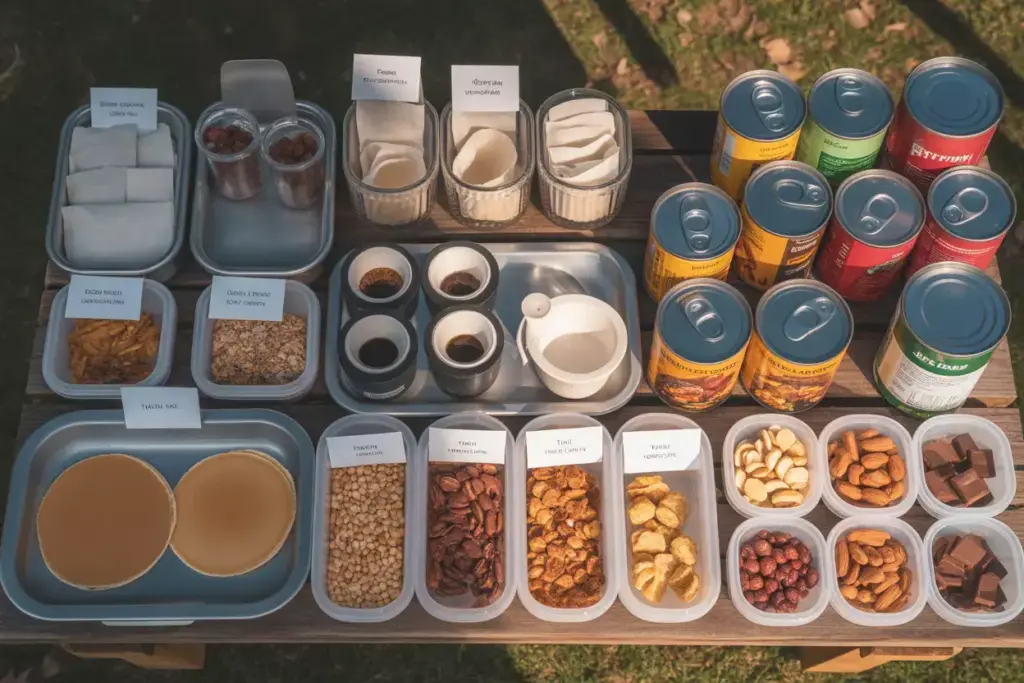
Eliminate guesswork and reduce cooking time by preparing individual meal components before departing for your camping trip. This genius organization strategy transforms meal preparation from complex cooking sessions into simple assembly processes.
Create breakfast stations with pre-measured pancake mix, individual oatmeal portions, and coffee supplies in labeled containers. Include everything needed for specific meals in dedicated bags or boxes.
Prepare dinner kits containing all ingredients for specific recipes. For example, a “camping chili kit” might include pre-measured spices, canned ingredients, and cooking instructions in a single container.
Organize snack stations with trail mix ingredients, individual fruit portions, and grab-and-go options. Use clear containers to monitor supply levels and prevent over-packing.
Benefits of pre-portioned organization:
- Reduces food waste through precise measurements
- Eliminates forgotten ingredients that ruin planned meals
- Speeds up cooking processes significantly
- Simplifies grocery shopping with detailed lists
- Enables easy meal delegation to other campers
5. Build a Collapsible Kitchen Command Center
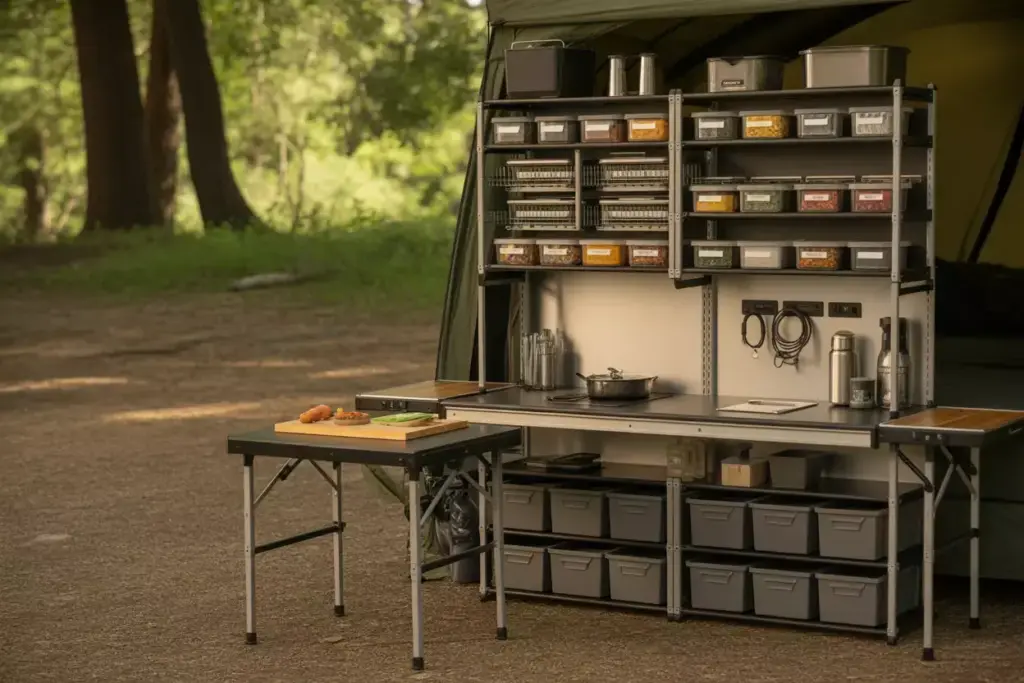
Design a comprehensive kitchen organization system that collapses for easy transport but expands to provide full kitchen functionality at your campsite. This approach combines multiple organizational elements into one cohesive system.
Multi-level storage solutions utilize vertical space efficiently. Collapsible shelving units provide surfaces for food prep, storage areas for containers, and hanging space for utensils. Look for units with adjustable heights to accommodate different camping scenarios.
Modular container systems fit together like puzzle pieces, maximizing packing efficiency while providing organized storage for various food categories. These systems often include:
- Large base containers for bulk items
- Medium containers for meal-specific ingredients
- Small containers for spices and condiments
- Specialized containers for fragile items
Integrated work surfaces fold out from storage containers, providing clean preparation areas that pack away completely. Some advanced systems include cutting board surfaces, sink basins, and even small prep sinks.
Cable management solutions keep extension cords, device chargers, and lighting cables organized and tangle-free. Use cord organizers or simple zip-tie solutions to prevent the common camping frustration of tangled wires.
6. Master the Art of Strategic Packing Workflows
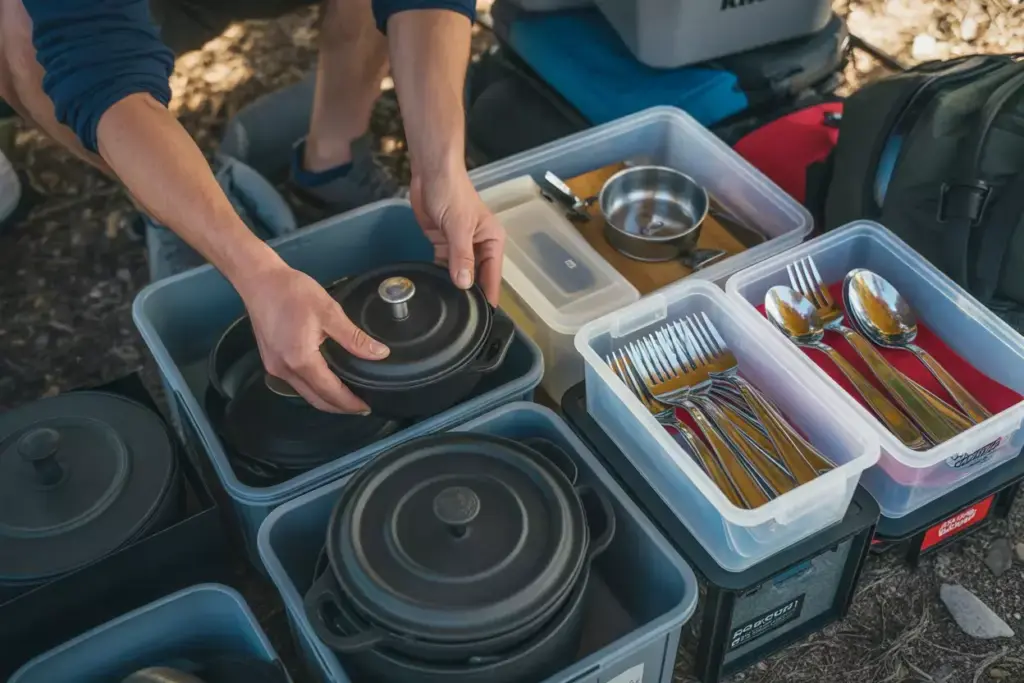
Develop systematic packing and unpacking procedures that ensure consistent organization throughout your camping trip. This final genius strategy ties together all previous organizational elements into a cohesive system.
Create loading sequences that place frequently used items in easily accessible positions while protecting fragile equipment. Load heavy items first and low, followed by medium-weight containers, with light and frequently accessed items on top.
Establish unpacking protocols that designate specific areas for different item categories. Set up your spice station first, followed by utensil organization, then food storage systems. This sequence ensures essential tools are available when needed for subsequent setup steps.
Implement repacking routines that maintain organization throughout your trip. Designate specific times for reorganizing storage areas, typically after meals or before bedtime. This prevents the gradual chaos that often develops during extended camping trips.
Document your system with photos or written guides that help family members and camping companions maintain organizational standards. Include specific instructions for where items belong and how to properly pack containers.
Advanced Tips for Implementing These Genius Organization Ideas
Seasonal Adaptations
Modify organizational strategies based on camping seasons and conditions. Winter camping requires additional considerations for preventing frozen liquids and maintaining access to essential items in cold conditions. Store frequently used items in insulated containers and keep emergency supplies easily accessible.
Summer camping focuses on food safety and pest prevention. Use airtight containers consistently and implement strict cleanup protocols to prevent attracting insects and wildlife.
Group Camping Considerations
When camping with multiple families or large groups, expand organizational systems to accommodate increased volume and variety. Assign organizational responsibilities to specific individuals to prevent confusion and ensure consistent maintenance of systems.
Create shared resource areas for commonly used items like cooking oil, salt, and cleaning supplies. Use larger containers and more robust labeling systems to handle increased usage.
Technology Integration
Modern camping benefits from strategic technology integration. Digital meal planning apps help organize shopping lists and ensure all necessary ingredients are included in pre-portioned meal kits.
Photo documentation of organizational systems helps maintain consistency and assists with repacking. Take photos of properly organized storage areas to reference during cleanup and packing.
Troubleshooting Common Camping Kitchen Organization Challenges
Limited Storage Space
Maximize vertical space using hanging organizers and stackable containers. Choose multi-functional items that serve multiple purposes, reducing overall item count without sacrificing functionality.
Prioritize essential items and leave non-essential tools at home. Focus on items used for multiple meals rather than single-purpose gadgets.
Weather-Related Issues
Protect organizational systems from rain and wind using waterproof containers and secure attachment methods. Plan backup organization strategies for severe weather conditions that might limit access to primary storage areas.
Use weather-resistant materials for labels and organizational tools. Laminated labels and plastic containers withstand moisture better than paper-based alternatives.
Group Coordination
Establish clear organizational rules and communicate them to all camping participants before departure. Assign specific responsibilities for maintaining different aspects of the organizational system.
Create visual guides showing where items belong and how systems should be maintained. Simple diagrams or photos help ensure everyone understands expectations.
Maintenance and Long-Term Success Strategies
Regular System Evaluation
Assess organizational effectiveness after each camping trip and identify areas for improvement. Note which systems worked well and which created frustration or inefficiency.
Gather feedback from all camping participants about organizational challenges and suggestions for improvements.
Equipment Maintenance
Clean and inspect organizational tools regularly to ensure continued functionality. Replace worn containers, damaged labels, and broken hardware before they cause system failures.
Update inventory lists and meal planning documents based on changing preferences and successful recipe discoveries.
Continuous Improvement
Experiment with new organizational tools and techniques to enhance existing systems. Stay informed about innovative camping gear that might improve organizational efficiency.
Document successful modifications to organizational systems for future reference and to share with other camping enthusiasts.
Conclusion
These 6 Kitchen Organization Ideas for Camping That Are Pure Genius transform chaotic outdoor cooking experiences into streamlined, enjoyable activities that enhance your overall camping adventure. By implementing magnetic spice stations, color-coded container systems, hanging utensil hubs, pre-portioned meal prep, collapsible command centers, and strategic packing workflows, you’ll spend less time searching for supplies and more time creating lasting memories with family and friends.
The key to success lies in starting small and gradually implementing these organizational strategies. Choose one or two ideas that address your most pressing camping kitchen challenges, then expand your organizational system as you gain experience and confidence.
Take action today by selecting the organizational strategy that resonates most with your camping style. Gather necessary supplies, plan your implementation approach, and prepare to experience the genius of well-organized outdoor cooking. Your future camping self will thank you for investing time in creating these efficient, stress-free kitchen systems that make every outdoor meal a pleasure rather than a chore.
Remember that effective camping kitchen organization is an ongoing process that improves with experience and adaptation. Each camping trip provides opportunities to refine your systems and discover new efficiencies that make outdoor cooking even more enjoyable.