The Ultimate Packing List: 9 Pro Tips for Any Trip
Have you ever stood at your front door, bags in hand, only to realize you forgot something important — or worse, arrived at your destination dragging a suitcase so heavy it cost you extra fees at the airport? You are not alone. Packing is one of the most underrated travel skills, and most people never get taught how to do it right. That is exactly why I put together The Ultimate Packing List: 9 Pro Tips for Any Trip — a practical, proven guide that takes the stress out of packing, whether you are heading out for a weekend getaway or a month-long international adventure.
Disclosure: This post contains affiliate links. As an Amazon Associate, we earn from qualifying purchases, and at no extra cost to you.
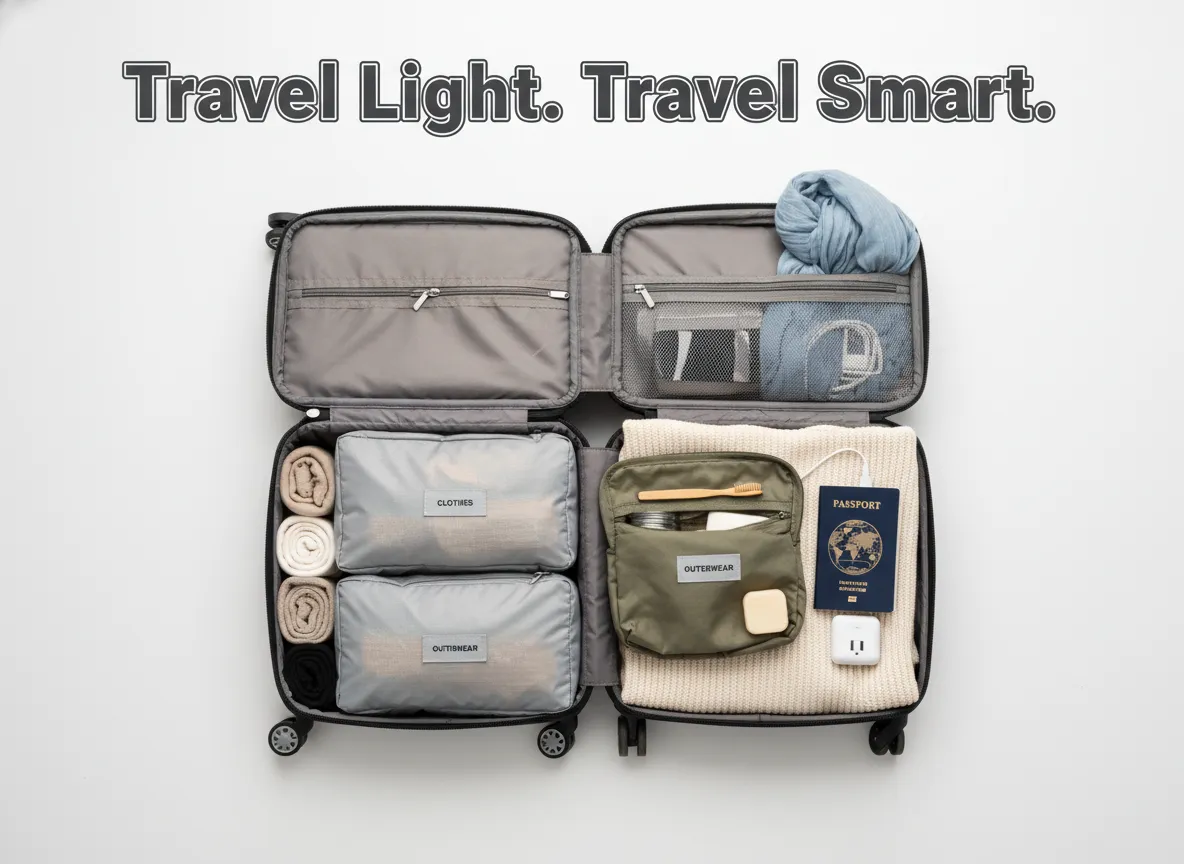
In 2026, travel is booming again. According to the World Tourism Organization, international tourist arrivals are expected to fully surpass pre-pandemic highs, meaning more people than ever are navigating airports, train stations, and hotel lobbies. Getting your packing strategy right is no longer a luxury — it is a competitive advantage. This guide distills the best packing wisdom into nine actionable tips you can use right now.
Key Takeaways 🧳
- Plan before you pack: A written packing list reduces forgotten items and overpacking by up to 50%.
- Rolling clothes and using packing cubes can increase luggage capacity by 30% or more.
- The one-bag rule (or carry-on-only travel) saves time, money, and stress on almost every trip.
- Layering and versatile clothing choices eliminate the need to pack outfit-specific items.
- Digital tools and apps can help you build a personalized master packing list you reuse every trip.
Why a Pro Packing Strategy Changes Everything
Most travelers pack the same way every time — throwing things in a bag the night before, hoping for the best. The result? Forgotten essentials, overstuffed bags, airline fees, and the dreaded “I never wore that” pile when you unpack at home.
A smart packing strategy is about more than just fitting things into a bag. It is about traveling lighter, smarter, and with more confidence. Studies from travel behavior researchers suggest that overpacking is one of the top sources of travel stress, right alongside flight delays and lost reservations.
💬 “The secret to packing is not fitting more in — it is needing less.” — A philosophy shared by seasoned travel minimalists worldwide.
The nine pro tips below form the backbone of The Ultimate Packing List: 9 Pro Tips for Any Trip. Each one builds on the last, so I recommend reading them in order the first time through.
The Ultimate Packing List: 9 Pro Tips for Any Trip
1. Start With a Master Packing List
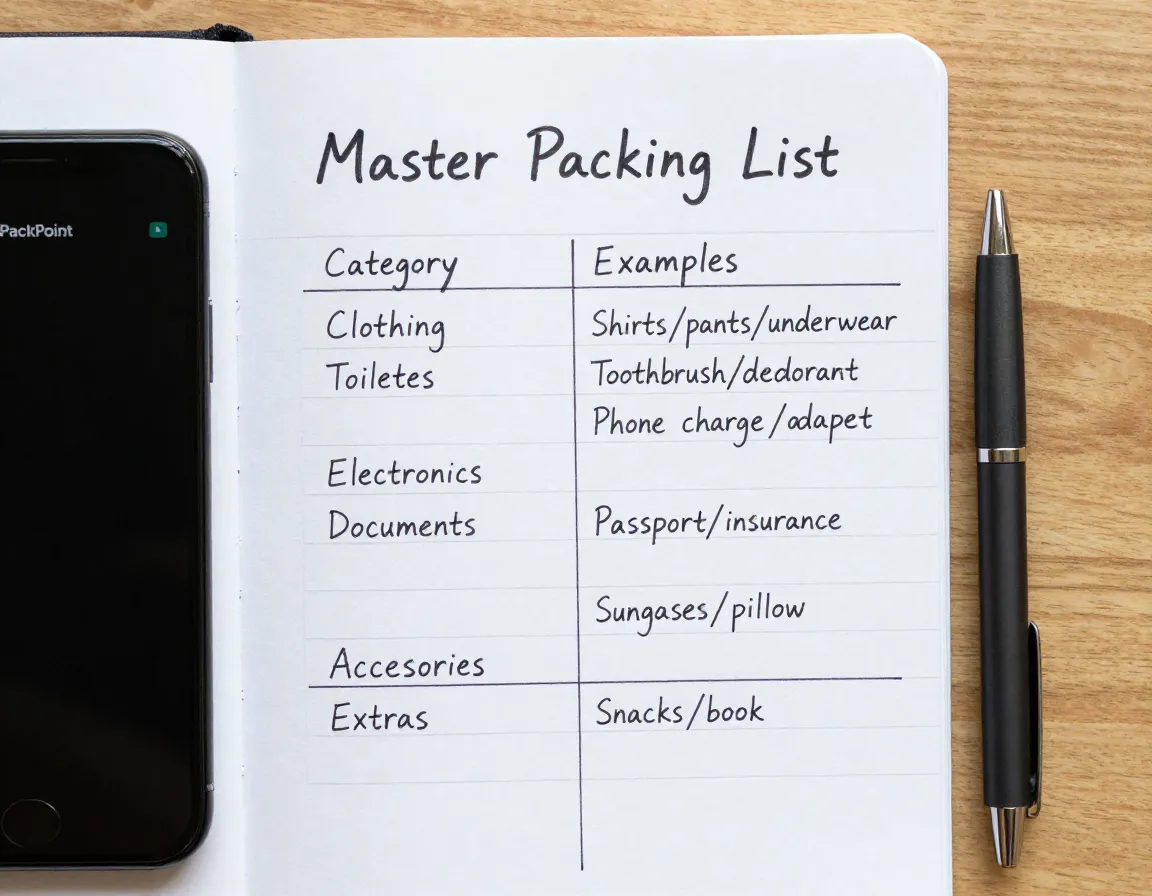
Before you touch a single item of clothing, write everything down. A master packing list is the single most powerful tool in a traveler’s arsenal. It is a living document you build once and refine over time.
Here is a simple framework to get started:
| Category | Examples |
|---|---|
| Clothing | Shirts, pants, underwear, socks, sleepwear |
| Toiletries | Toothbrush, deodorant, sunscreen, medications |
| Electronics | Phone charger, adapter, headphones, laptop |
| Documents | Passport, travel insurance, hotel confirmations |
| Accessories | Sunglasses, travel pillow, reusable bag |
| Extras | Snacks, book, journal, first-aid kit |
Pro tip: Apps like PackPoint or TripIt generate customized packing lists based on your destination, trip length, and planned activities. Use them as a starting point, then add your personal must-haves.
The goal is to never start from scratch. Once your master list is built, packing for any future trip takes minutes, not hours.
2. Choose the Right Bag for the Job
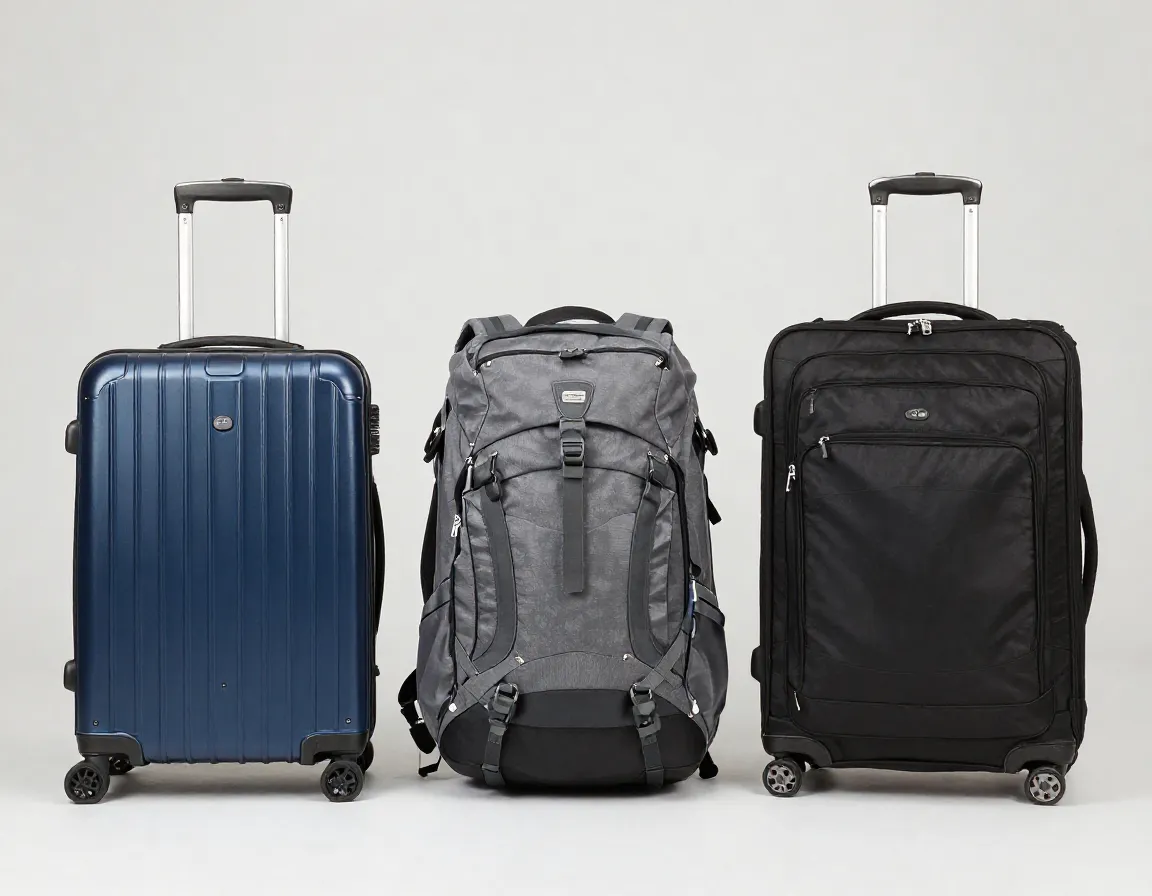
Your bag is not just a container — it is a strategic decision. Choosing the wrong bag can undermine even the best packing plan.
Here are the three most common options and when to use each:
Carry-on suitcase (under 22 inches): Best for trips up to two weeks. Avoids checked baggage fees and keeps your belongings with you at all times.
Backpack (40–50 liters): Ideal for adventure travel, hostels, or destinations with uneven terrain. Easier to carry through cobblestone streets or up stairs.
Checked luggage (24–30 inches): Reserve this for long trips (3+ weeks), family travel, or when you genuinely need bulky gear like ski equipment or formal wear.
🎯 The carry-on challenge: Many experienced travelers swear by carry-on-only travel for trips up to 10 days. It forces discipline, saves money, and eliminates the anxiety of lost luggage.
3. Use the Capsule Wardrobe Method
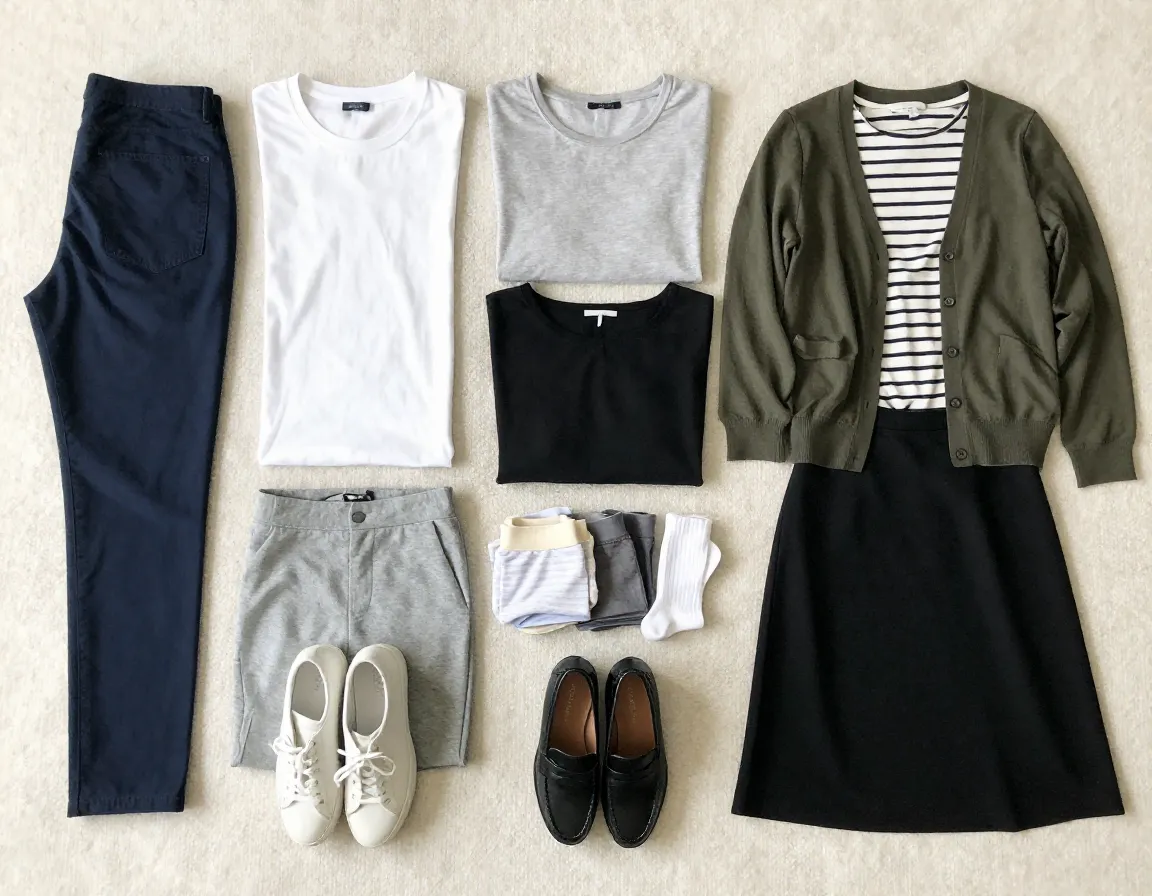
This is the tip that transforms most people’s packing game. A capsule wardrobe is a small, curated set of clothing items that all work together. Every piece mixes and matches with every other piece, multiplying your outfit options without multiplying your bag weight.
The formula:
- 3 bottoms (pants, shorts, or skirts)
- 5 tops (mix of casual and smart-casual)
- 1 dress or versatile layer (jacket or cardigan)
- 2 pairs of shoes (one comfortable walking shoe, one dressier option)
- 7 pairs of underwear and socks
With this formula, you can create 15–20 different outfits from just 11–12 clothing items. Stick to a neutral color palette (navy, grey, white, black, olive) so everything coordinates naturally.
💡 Bonus tip: Wear your bulkiest items — boots, jeans, a heavy jacket — on travel days so they don’t take up space in your bag.
4. Master the Roll-and-Cube System

How you pack matters as much as what you pack. The roll-and-cube system is the gold standard among frequent travelers.
Rolling vs. folding:
- Rolling clothes (especially t-shirts, jeans, and casual wear) reduces wrinkles and saves up to 30% more space than flat folding.
- Folding works better for structured items like blazers and dress shirts.
Packing cubes:
These zippered fabric organizers are game-changers. They compress your clothes, keep categories separated, and make unpacking at your destination effortless. Here is how to organize them:
- Cube 1: Tops
- Cube 2: Bottoms and sleepwear
- Cube 3: Underwear and socks
- Cube 4: Accessories and small items
Brands like Eagle Creek, Osprey, and Away make excellent packing cubes at various price points. Even budget options from Amazon work well for casual travelers.
5. Follow the TSA 3-1-1 Rule (and Go Solid When Possible)

Liquids are the number-one reason travelers get held up at security or have items confiscated. The TSA 3-1-1 rule applies to carry-on bags in the United States (and similar rules apply in most countries):
- 3.4 oz (100ml) or less per container
- 1 quart-sized clear zip-lock bag
- 1 bag per passenger
The smarter move? Go solid. Solid toiletries have exploded in popularity in 2026 because they are TSA-friendly, last longer than liquid equivalents, and are better for the environment.
Solid swaps to consider:
| Liquid Version | Solid Alternative |
|---|---|
| Shampoo | Shampoo bar |
| Conditioner | Conditioner bar |
| Body wash | Bar soap |
| Toothpaste | Toothpaste tablets |
| Deodorant | Solid deodorant stick |
| Sunscreen | Sunscreen stick |
Going solid can free up your entire liquids bag for items you genuinely cannot replace, like prescription medications or specialty skincare.
6. Pack a Lean but Complete Toiletry Kit
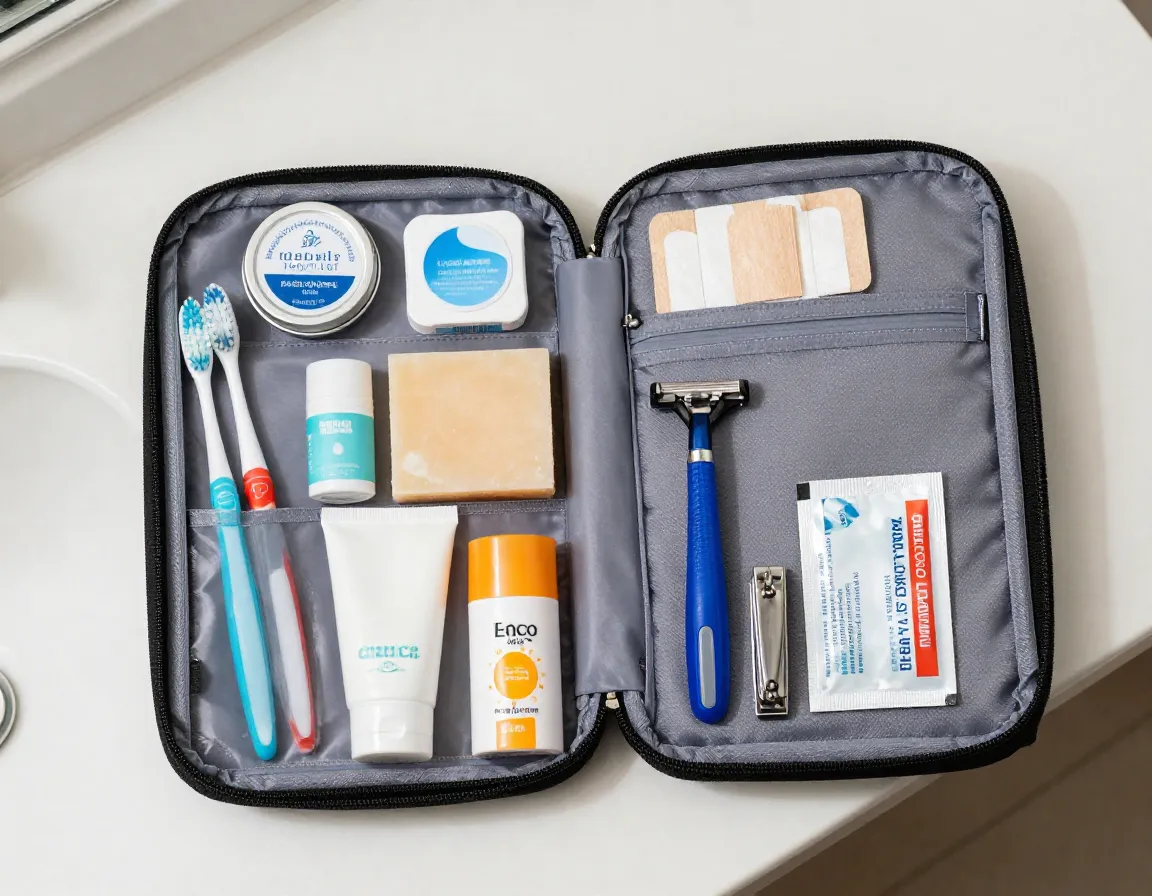
Your toiletry kit deserves its own dedicated strategy. The goal is complete without being excessive.
Here is a lean toiletry kit checklist:
✅ Toothbrush and toothpaste (or tablets)
✅ Floss
✅ Deodorant
✅ Shampoo and conditioner (solid or travel-size)
✅ Body wash or bar soap
✅ Face wash and moisturizer
✅ Sunscreen
✅ Razor and shaving cream (if needed)
✅ Feminine hygiene products (if applicable)
✅ Prescription medications (always in original packaging)
✅ Over-the-counter essentials: pain reliever, antacid, antihistamine, anti-diarrheal
✅ Bandages and antiseptic wipes
✅ Nail clippers and tweezers
What to leave behind: Full-size products, duplicate items, “just in case” beauty tools you have never used at home. Hotels and Airbnbs almost always provide shampoo, conditioner, and soap.
🎯 Smart move: Pre-fill a dedicated travel toiletry bag that lives in your suitcase. After every trip, restock it immediately so it is always ready to go.
7. Organize Your Tech and Documents Like a Pro
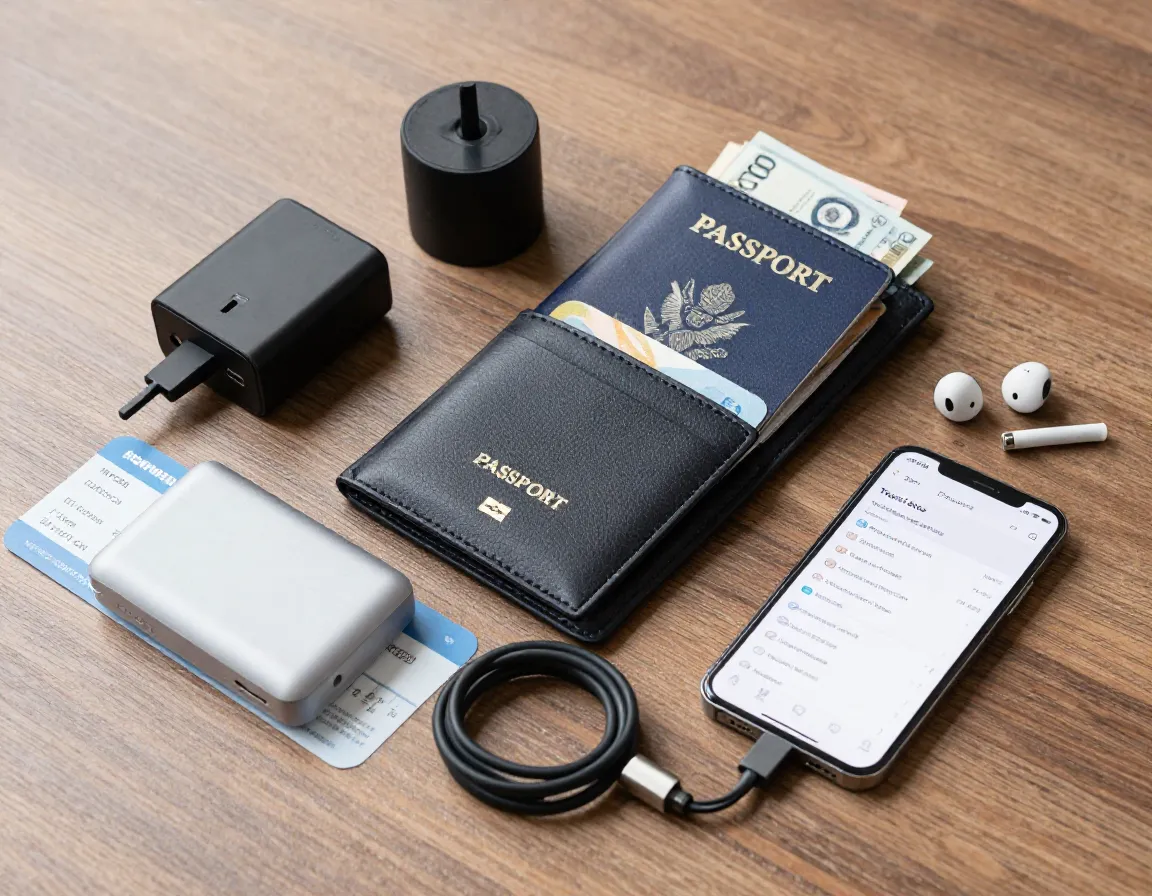
Electronics and travel documents are the two categories where disorganization causes the most real-world problems. Losing your passport or running out of battery at a critical moment can derail an entire trip.
Tech essentials for any trip:
- Universal travel adapter (covers 150+ countries)
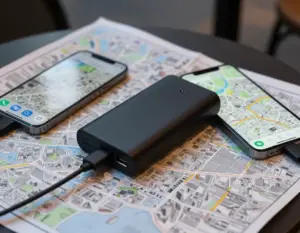
- Portable power bank (10,000 mAh minimum)
- Phone charger and cable
- Earbuds or noise-canceling headphones
- E-reader or tablet (optional but great for long flights)
- Laptop (only if genuinely needed)
Document organization system:
Use a travel document organizer or a slim RFID-blocking wallet to keep everything in one place:
- Passport (and a digital copy saved to cloud storage)
- Visa documents (printed and digital)
- Travel insurance card and policy number
- Hotel and accommodation confirmations
- Flight itinerary
- Emergency contact list
- Local currency (a small amount for immediate needs upon arrival)
💬 “Losing your documents abroad is not just stressful — it can cost you days and hundreds of dollars to resolve. A five-minute organization system prevents all of that.”
Pro tip: Email yourself scans of every important document before you leave. Store them in a labeled folder in your inbox so they are accessible from any device, anywhere in the world.
8. Pack for Your Specific Trip Type

One of the biggest mistakes travelers make is packing the same way for every trip. The Ultimate Packing List: 9 Pro Tips for Any Trip works precisely because it adapts to your specific travel context. Here is how to customize your list by trip type:
🏖️ Beach/Tropical Trip:
- Lightweight, quick-dry clothing
- Swimwear (2 pieces minimum)
- Reef-safe sunscreen
- Flip-flops and water shoes
- Insect repellent
- Waterproof phone case
🏔️ Adventure/Hiking Trip:
- Moisture-wicking base layers
- Waterproof outer shell
- Hiking boots (worn on travel day)
- Trekking poles (check airline policy)
- Blister prevention products
- Headlamp and extra batteries
🏙️ City/Business Trip:
- Smart-casual capsule wardrobe
- One formal outfit (if needed)
- Comfortable walking shoes
- Compact umbrella
- Business cards and laptop
❄️ Cold Weather Trip:
- Thermal base layers
- Wool or fleece mid-layer
- Insulated outer jacket
- Warm hat, gloves, and scarf
- Waterproof boots
The key is to start with your master list, then filter and add based on your destination and activities. This prevents both overpacking and forgetting destination-specific essentials.
9. Do a Final Audit Before You Zip Up
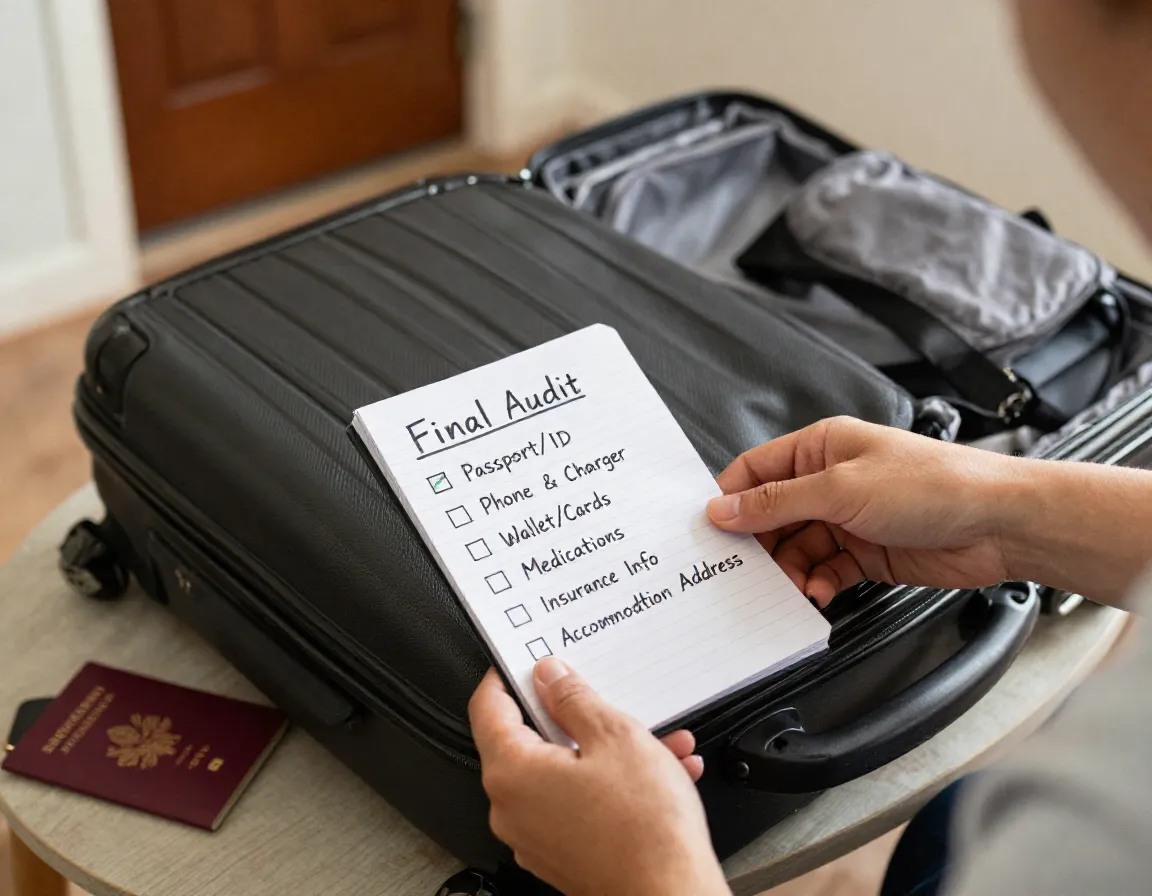
This last tip is the one most people skip — and it is the one that separates good packers from great ones. Before you close your bag for the last time, do a final audit.
Here is a simple three-step final check:
Step 1 — The Weight Test
Pick up your bag. If you cannot comfortably carry it for 10 minutes, it is too heavy. Remove items until it feels manageable. A good rule of thumb: your bag should weigh no more than 10% of your body weight for extended carry.
Step 2 — The “Would I Buy This Again?” Test
Look at every item in your bag and ask: “If I forgot this, would I actually buy it at my destination?” If the answer is yes, leave it behind. Most things — shampoo, a basic t-shirt, an umbrella — can be purchased anywhere in the world for a few dollars.
Step 3 — The Essentials Check
Run through this non-negotiable checklist:
✅ Passport/ID
✅ Phone and charger
✅ Wallet and cards
✅ Medications
✅ Travel insurance information
✅ Accommodation address and confirmation
If all six are accounted for, you are ready. Everything else is replaceable.
How to Build Your Own Version of The Ultimate Packing List: 9 Pro Tips for Any Trip
Now that you have the nine tips, the next step is making them your own. Here is a simple process to build a personalized packing system you will use for every trip going forward:
Phase 1 — Build Your Master List (30 minutes)
Sit down with a notes app or a printed template. Go category by category (clothing, toiletries, electronics, documents, accessories) and list everything you have ever needed on a trip. Do not edit yet — just brainstorm.
Phase 2 — Trim the Fat (15 minutes)
Go through your master list and ruthlessly cut anything you packed on a previous trip but never used. Be honest with yourself. That travel hair dryer? Most hotels have one. The three backup pairs of shoes? Pick one.
Phase 3 — Create Trip-Type Sublists (20 minutes)
Make three or four sublists for your most common trip types (beach, city, business, adventure). These become filters you apply on top of your master list.
Phase 4 — Test and Refine
After every trip, spend five minutes updating your list. What did you wish you had packed? What did you never touch? Over time, your list becomes a perfectly calibrated tool that reflects your real travel habits.
Recommended tools:
- PackPoint — Generates lists based on destination and activities
- TripIt — Organizes all travel documents and itineraries
- Notion or Google Docs — Great for building and maintaining a custom master list
- AirHelp — Useful for managing flight disruption claims (not packing, but essential travel prep)
Common Packing Mistakes to Avoid
Even experienced travelers fall into these traps. Watch out for:
❌ Packing for “just in case” scenarios that are extremely unlikely
❌ Bringing full-size toiletries when travel sizes or solids work just as well
❌ Ignoring the weight limit until you are at the airport check-in desk
❌ Packing valuables in checked luggage — always keep them in your carry-on
❌ Forgetting to check the weather at your destination for the actual dates of your trip
❌ Leaving packing until the night before — aim to pack at least 48 hours in advance so you have time to make adjustments
Conclusion: Pack Smarter, Travel Better
The best trips are not the ones where you packed the most — they are the ones where you packed the right things. The Ultimate Packing List: 9 Pro Tips for Any Trip is not about restriction; it is about freedom. When your bag is light, organized, and thoughtfully packed, you move through the world with more ease, more confidence, and more joy.
Here are your actionable next steps:
- This week: Download a packing list app (PackPoint is free) and start building your master list.
- Before your next trip: Apply the capsule wardrobe method and the roll-and-cube system for the first time.
- At the airport: Try carry-on-only travel, even if just for a short trip. Notice how different it feels.
- After every trip: Spend five minutes updating your master list based on what you actually used.
Travel is one of life’s greatest privileges. Do not let a poorly packed bag get in the way of experiencing it fully. Use these nine pro tips, build your system, and pack with purpose — every single time. ✈️
References
- World Tourism Organization (UNWTO). (2023). International Tourism Highlights. UNWTO Publications. https://www.unwto.org
- Transportation Security Administration. (2024). Liquids Rule. U.S. Department of Homeland Security. https://www.tsa.gov/travel/security-screening/whatcanibring/items/liquids
- Eagle Creek. (2023). Pack-It System Guide. Eagle Creek Travel Gear. https://www.eaglecreek.com
- PackPoint. (2024). Smart Packing List App. PackPoint LLC. https://www.packpnt.com
- Fodor’s Travel. (2023). How to Pack Like a Pro. Fodor’s Travel Publications. https://www.fodors.com