8 Magical Things to Do at Costa Rica’s Rio Celeste Waterfall
Imagine standing in the middle of a tropical rainforest, watching a waterfall crash into a pool of water so blue it looks like someone poured food coloring into it. That’s exactly what Rio Celeste feels like — and it’s 100% real. If you’re planning a trip to Costa Rica, the 8 Magical Things to Do at Costa Rica’s Rio Celeste Waterfall should be at the very top of your bucket list. Hidden inside Tenorio Volcano National Park, this electric-blue wonder is one of the most jaw-dropping natural sites in all of Central America.
Disclosure: This post contains affiliate links. As an Amazon Associate, we earn from qualifying purchases, and at no extra cost to you.
Key Takeaways
- 🌊 Rio Celeste’s turquoise color comes from volcanic minerals scattering light — not dye or algae.
- 📅 In 2026, advance reservations through SINAC are mandatory, with only 300 visitors allowed per day during high season.
- 🥾 The main trail is a moderate 30-minute hike with 250 paved stairs and a scenic Indiana Jones–style bridge.
- 📸 The best photography window is 7–10 AM, when soft morning light hits the water without harsh shadows.
- 🌧️ Visiting during the rainy season (May–November) means fewer crowds and fuller waterfalls.
Exploring the 8 Magical Things to Do at Costa Rica’s Rio Celeste Waterfall
1. Stand Before the Iconic Waterfall
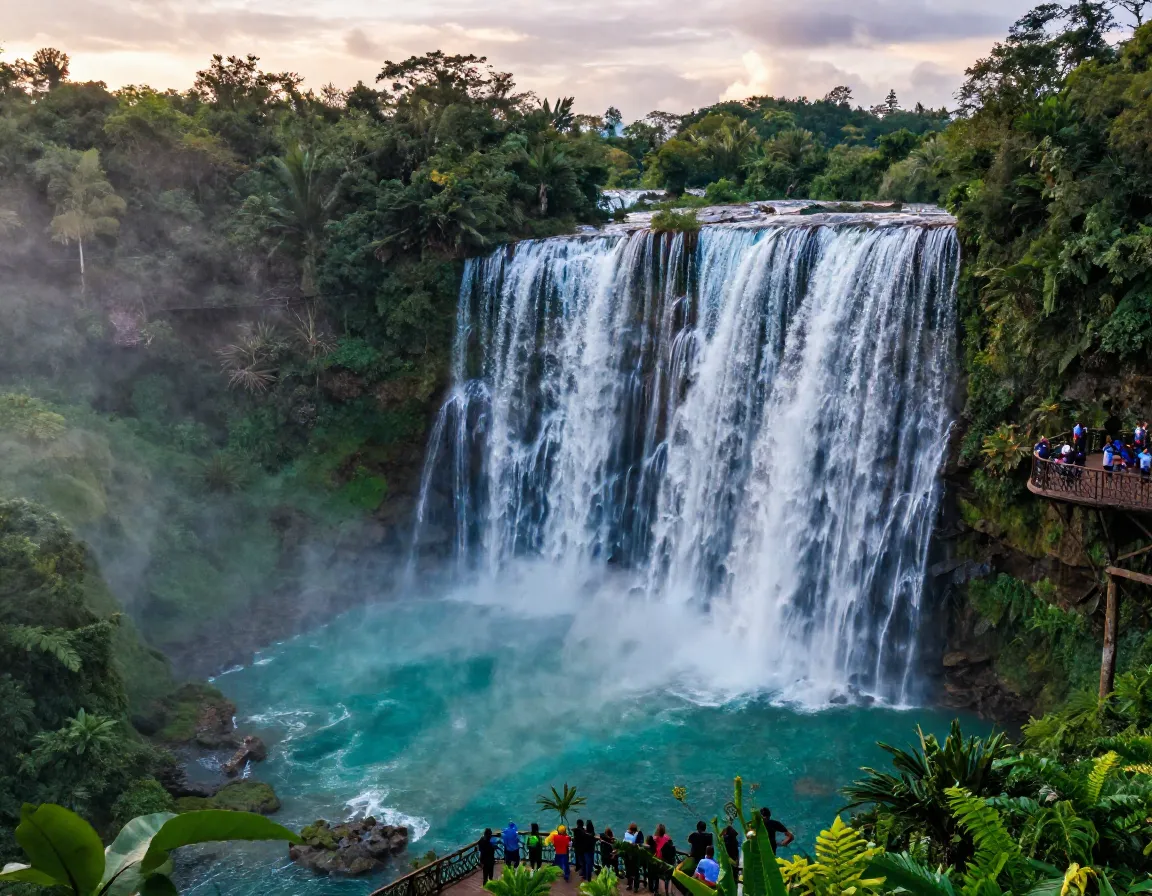
The main event is the waterfall itself — a powerful cascade plunging 90 to 98 feet into a glowing turquoise pool. Dense tropical forest wraps around it on all sides, making the scene feel almost unreal. I’d recommend arriving early to get the best experience. The viewing platforms offer clear sightlines to the full drop, and the mist from the falls keeps the air refreshingly cool even on warm days.
💬 “There are places in the world that make you question whether you’re still on Earth. Rio Celeste is one of them.”
The lower viewing platform is currently undergoing repairs following 2025 storm damage, but the upper overlook — positioned about 50 feet above the falls — still provides a breathtaking bird’s-eye perspective.
2. Time Your Photos Like a Pro 📸
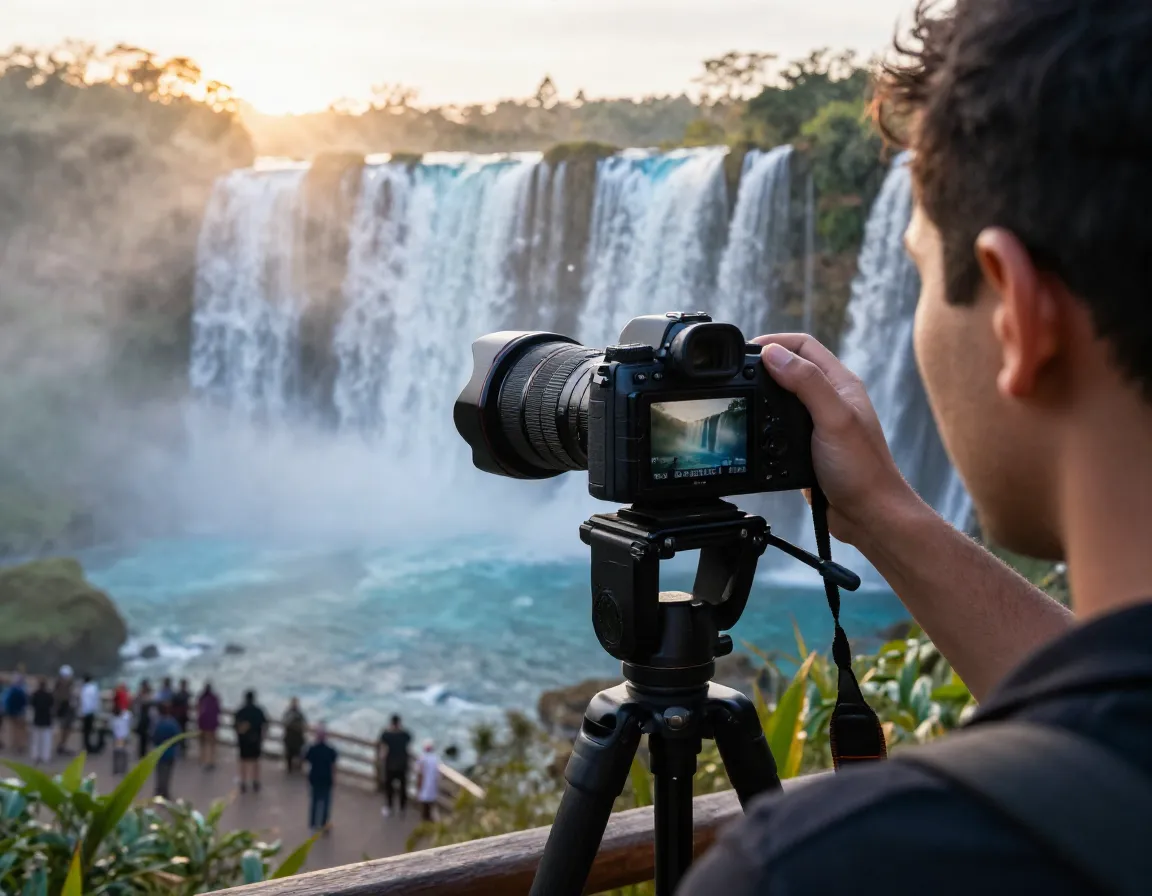
If photography is your goal, timing is everything. The optimal window is between 7 and 10 AM, when sunlight filters softly through the canopy and illuminates the turquoise water without creating harsh shadows or glare. Later in the day, the angle of the sun can wash out the vivid color that makes Rio Celeste so famous. Bring a wide-angle lens if you have one — the full scale of the waterfall and its surroundings is hard to capture any other way.
Quick Photography Tips:
| Time of Day | Light Quality | Crowd Level |
|---|---|---|
| 7–10 AM | Soft, golden | Low |
| 10 AM–1 PM | Bright, harsh | Moderate |
| 1–4 PM | Flat, diffused | High |
3. Witness El Teñidero — Nature’s Color Magic 🔵
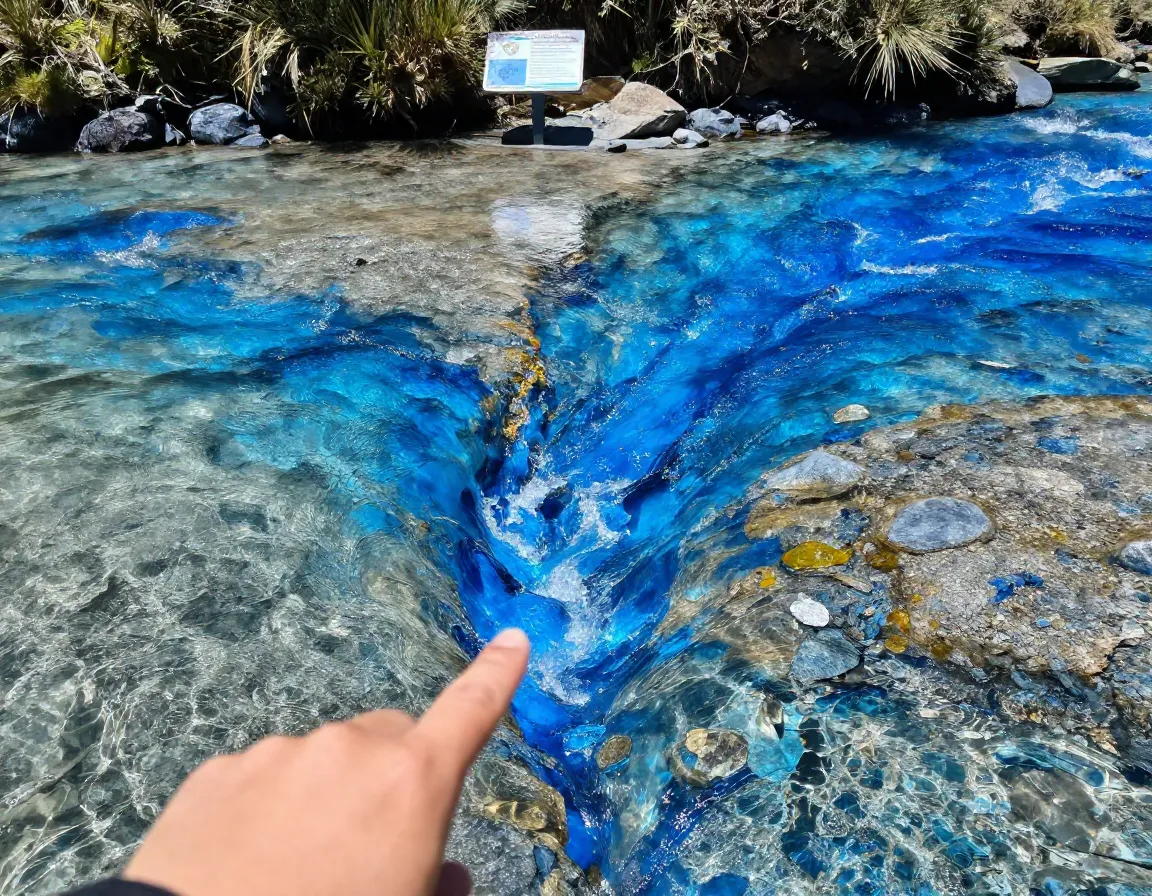
One of the most scientifically fascinating stops on the trail is El Teñidero, where two completely clear rivers — Quebrada Agria and Rio Buena Vista — meet and instantly transform into brilliant blue. There’s no paint, no algae, no trick of the eye. The color is caused by volcanic minerals from Tenorio Volcano scattering light in a process similar to how the sky appears blue. Educational displays near the confluence explain the science in an accessible way. Watching the color change happen right before your eyes is genuinely one of the most memorable moments of the entire visit.
4. Hike the Well-Maintained Trail System 🥾
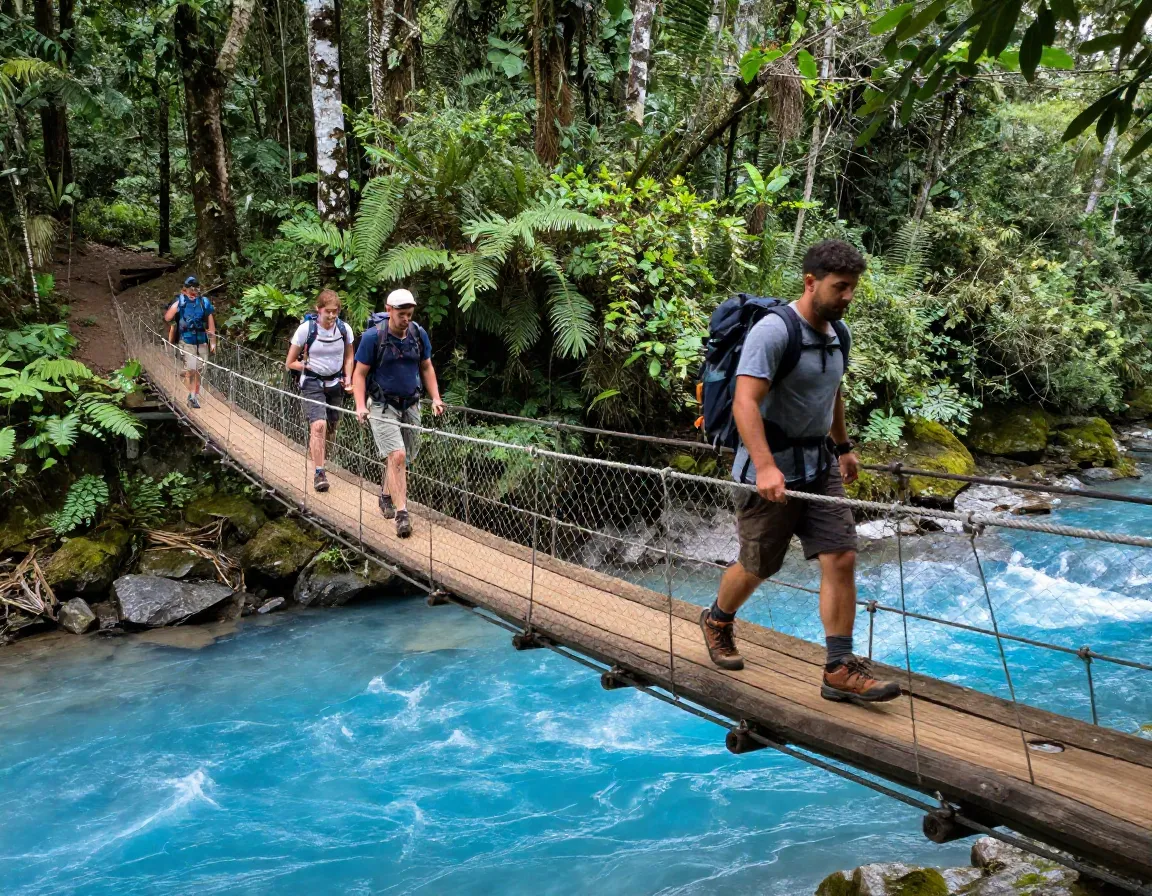
Getting to the waterfall is an adventure in itself. The trail from the ranger station takes roughly 30 minutes through lush rainforest. It’s rated as moderate — manageable for most fitness levels, but not a casual stroll. Highlights along the way include:
- Boardwalks running alongside river sections, keeping your feet dry and protecting the ecosystem.
- An Indiana Jones–style suspension bridge that sways gently over the river — thrilling but completely safe.
- 250 paved stairs with handrails descending to the waterfall viewing area, making the descent accessible and secure.
Wear sturdy, closed-toe shoes with grip. The trail can be slippery after rain, and the stairs, while paved, can be wet.
5. Soak in the Natural Hot Springs ♨️
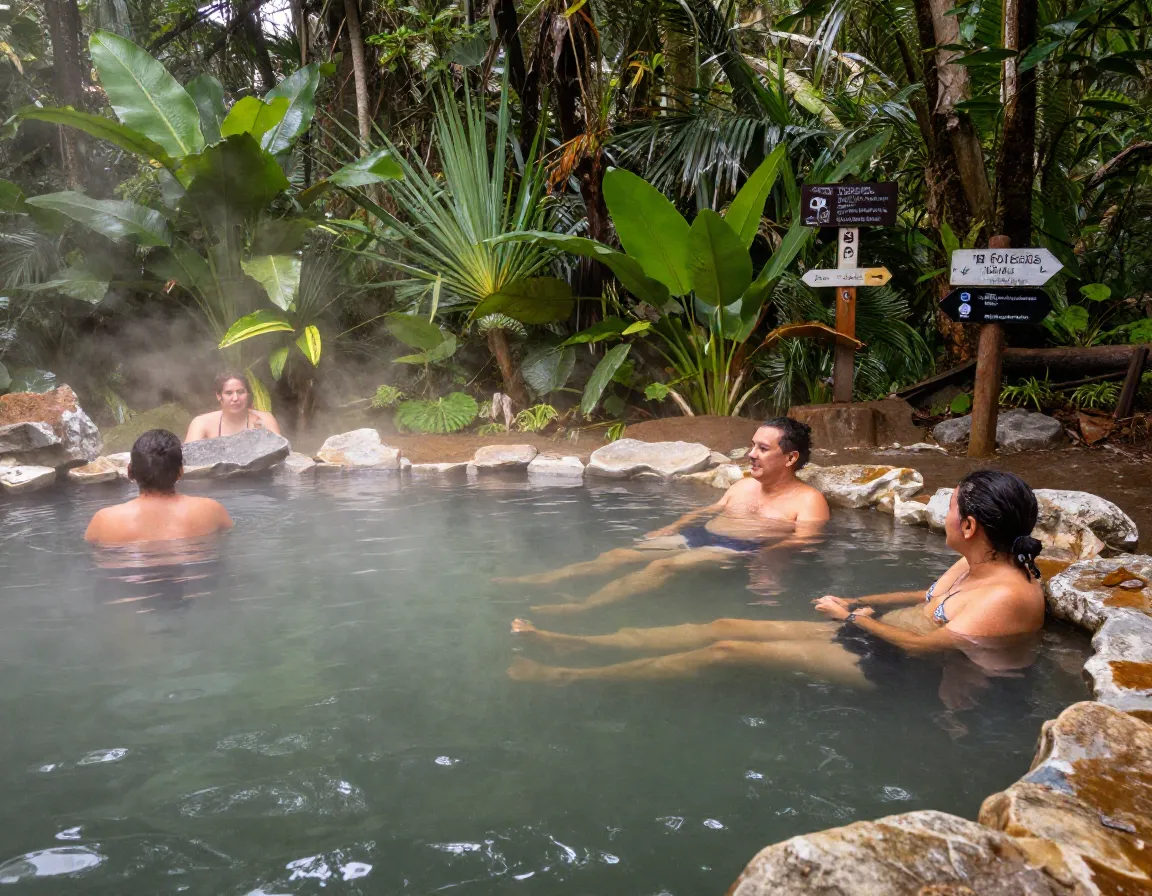
After the hike, your legs will thank you for stopping at the natural hot springs near the trail junction. These mineral-rich thermal pools are one of the few spots in the park where swimming is legally permitted. The warm water has a silky quality from the dissolved minerals, and soaking here feels like a reward well earned. It’s a quieter, more relaxed experience compared to the waterfall area — perfect for unwinding before heading back to the ranger station.
6. Immerse Yourself in the Rainforest Canopy 🌿
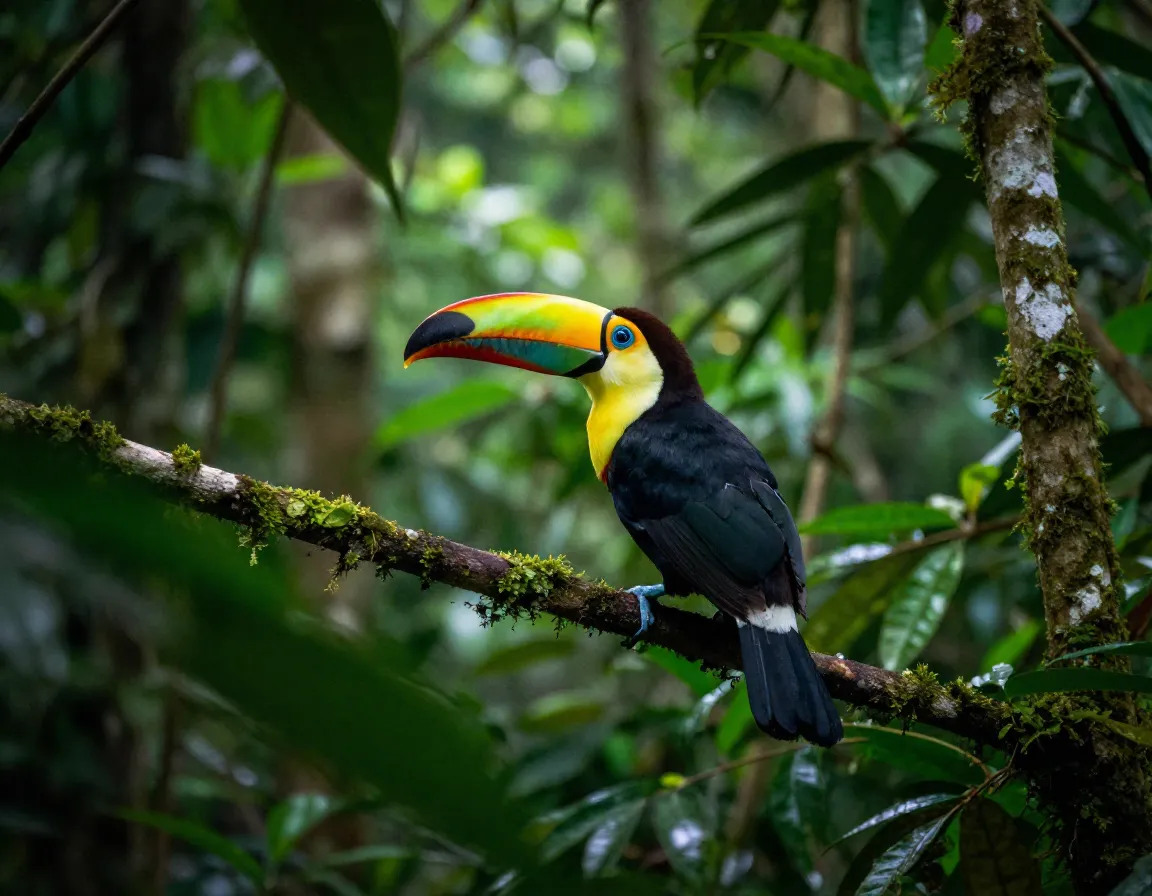
Even if you’ve visited rainforests before, the vegetation at Tenorio Volcano National Park feels especially dramatic. The dense canopy creates a cool, green tunnel effect along much of the trail, and the contrast between the electric-blue water and the deep emerald forest is visually stunning. This is also prime territory for wildlife spotting. Keep your eyes open for:
- Toucans and other colorful birds in the upper canopy
- Howler monkeys crashing through the trees
- Poison dart frogs on the forest floor
- Coatis sniffing around near the trail edges
Move slowly and quietly for the best chances of wildlife encounters.
7. Visit During the Rainy Season for a Different Experience 🌧️
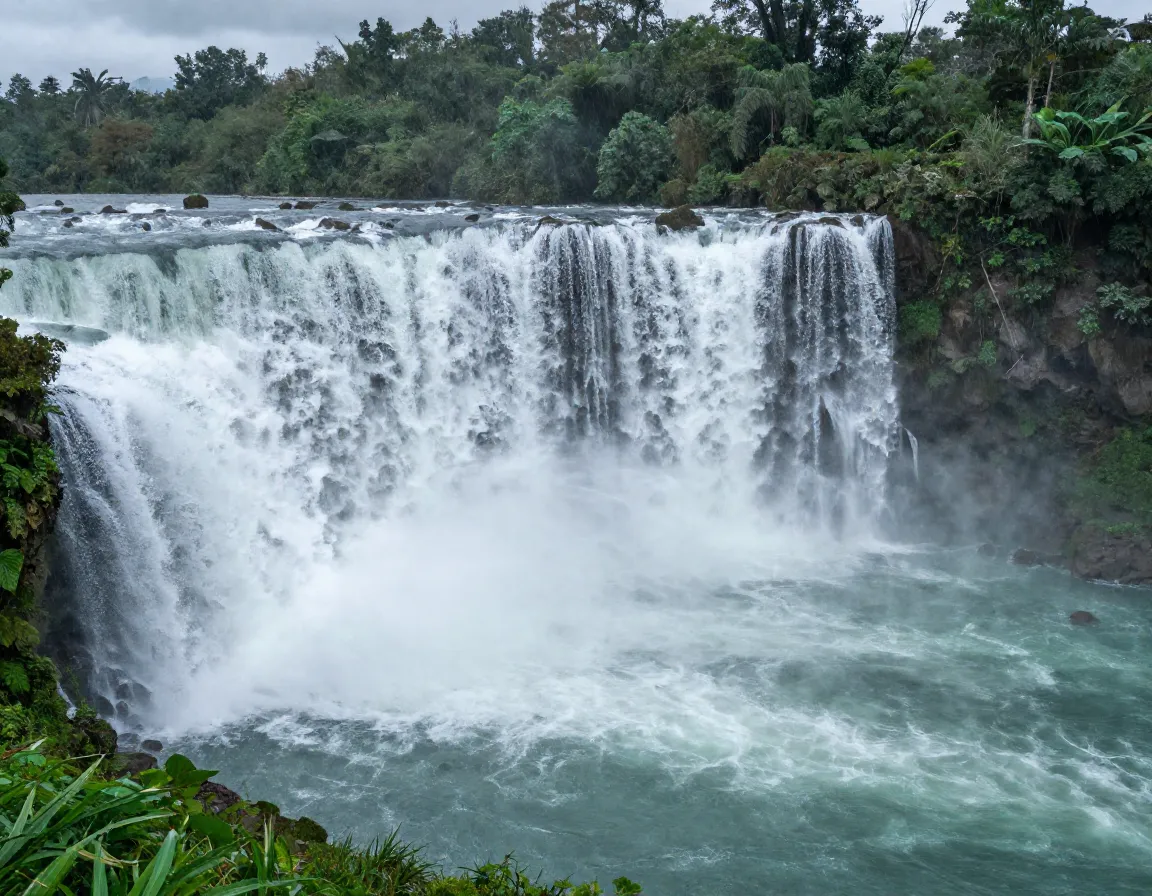
Most travelers target the dry season (December–April) for Costa Rica travel, but Rio Celeste during the rainy season (May–November) has its own magic. Waterfalls run fuller and more powerful. Crowds are noticeably thinner. The forest feels alive in a different way — steam rises from the ground, and everything is intensely green.
One important note: after heavy rainfall, the water can shift from its vivid turquoise to a milky turquoise or gray-blue due to sediment stirred up from the riverbed. It’s still beautiful, just different. If you’re chasing that iconic electric-blue color, check local weather reports before visiting.
8. Navigate the 2026 Visitor Management System
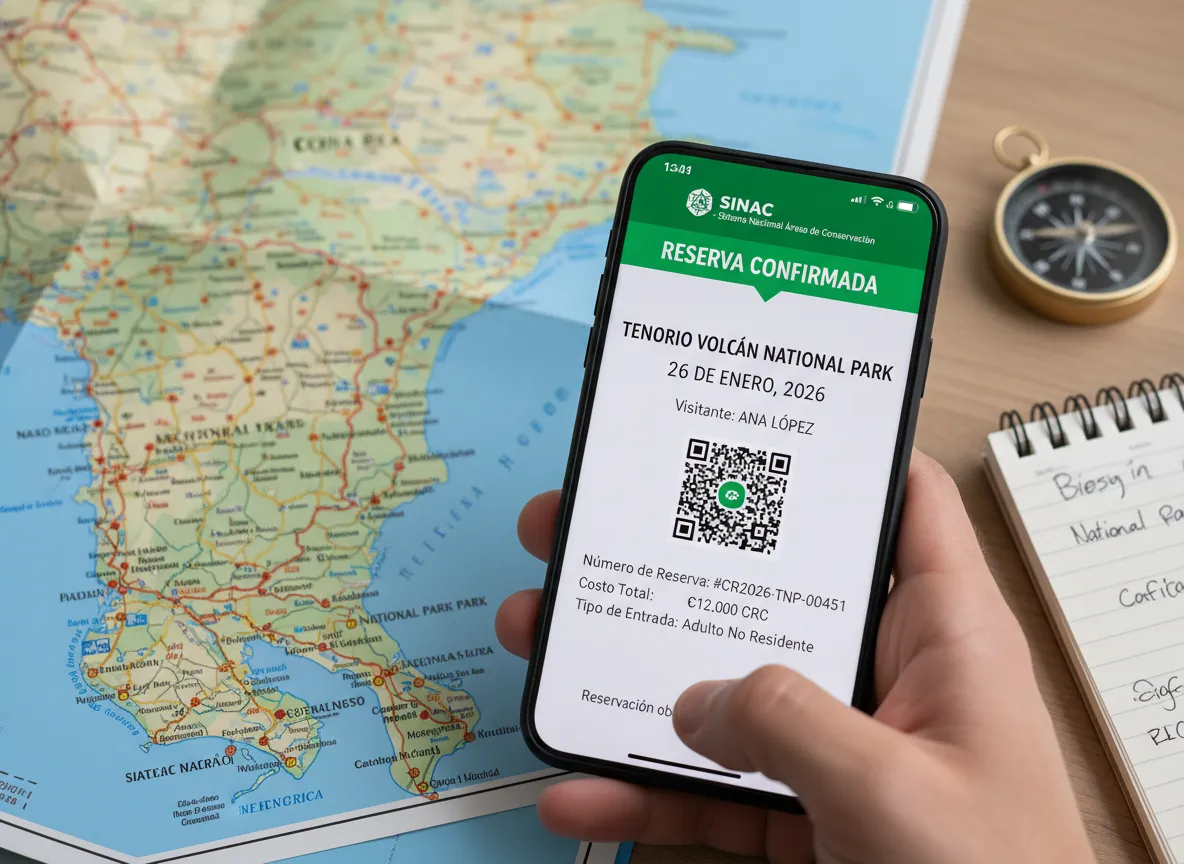
One of the most practical of the 8 Magical Things to Do at Costa Rica’s Rio Celeste Waterfall is simply planning your visit correctly. In 2026, the park operates under a mandatory reservation system managed by SINAC (Costa Rica’s National System of Conservation Areas). Here’s what you need to know:
- Daily visitor limit: 300 people during high season (December–April, July–August)
- Booking window: Reserve 4–6 weeks in advance for weekends and holidays
- Platform: Bookings are made through the official SINAC online portal
- Cancellations: Slots fill fast; have a backup date ready
⚠️ Showing up without a reservation during peak season almost guarantees you won’t get in. Book early.
Off-peak weekday visits are easier to secure, but even then, booking ahead is strongly recommended.
Practical Planning Guide
Before You Go — Quick Reference:
| Detail | Info |
|---|---|
| 📍 Location | Tenorio Volcano National Park, Guanacaste |
| 🕖 Best Arrival Time | 7–8 AM |
| 🥾 Trail Difficulty | Moderate |
| ⏱️ Total Visit Time | 3–4 hours |
| 🌦️ Best Season | Dry (Dec–Apr) for color; Rainy (May–Nov) for fewer crowds |
| 🎟️ Reservations | Mandatory via SINAC in 2026 |
What to Pack:
- Waterproof hiking shoes with good grip
- Rain jacket (even in dry season, showers happen)
- Insect repellent
- Reusable water bottle
- Dry bag for camera gear near the waterfall
Conclusion
Rio Celeste is not just a waterfall — it’s a full sensory experience that combines geology, ecology, and raw natural beauty in a way few places on Earth can match. The 8 Magical Things to Do at Costa Rica’s Rio Celeste Waterfall outlined here give you a complete picture of what to expect and how to make the most of every moment on the trail.
Your actionable next steps:
- Book your SINAC reservation now — don’t wait, especially for weekend visits.
- Plan your arrival for 7 AM to catch the best light and beat the crowds.
- Pack smart — the right gear makes the hike comfortable and safe.
- Stay flexible — if rain shifts the water color, embrace the experience for what it is.
Costa Rica’s magic is real, and Rio Celeste is its most vivid proof. Go see it for yourself. 🌊
References
- Tenorio Volcano National Park visitor guidelines and trail information. SINAC Costa Rica. (2023).
- Storm damage and infrastructure repair updates, Rio Celeste lower viewing platform. Tenorio National Park Management Report. (2025).
- Optical phenomenon at El Teñidero: volcanic mineral light scattering. Journal of Volcanology and Geothermal Research. (2013).
- Rio Celeste rainy season visitor experience and water color variation. Costa Rica Tourism Board (ICT). (2022).
- Tenorio Volcano National Park trail system and waterfall features. Lonely Planet Costa Rica. (2023).