8 DIY Camping Food Storage Hacks to Keep Critters Out and Food Fresh
Picture this: You wake up after a perfect night under the stars, ready to enjoy a hearty breakfast, only to discover that raccoons have turned your campsite into their personal buffet. Your carefully planned meals are scattered across the ground, containers chewed through, and your camping trip suddenly becomes a survival challenge. This nightmare scenario happens to thousands of campers every year, but it’s completely preventable with the right food storage strategies.
Disclosure: This post contains affiliate links. As an Amazon Associate, we earn from qualifying purchases, and at no extra cost to you.
Whether dealing with curious squirrels, persistent raccoons, or even dangerous bears, protecting your food while camping requires more than just hoping for the best. The 8 DIY camping food storage hacks to keep critters out and food fresh outlined in this guide will transform how you approach outdoor meal planning and storage, ensuring your adventures remain memorable for all the right reasons.
Key Takeaways
- Proper elevation and distance are crucial – store food at least 12 feet high and 4 feet from tree trunks to prevent most wildlife access
- Airtight containers serve dual purposes by keeping food fresh longer and reducing odors that attract animals
- The bear rope method remains one of the most effective DIY solutions for backcountry camping when done correctly
- Scent management is as important as physical barriers – clean cooking areas and dispose of waste properly
- Multiple storage methods work better than relying on a single solution, creating redundant protection for your food supplies
Understanding the Challenge: Why Wildlife Loves Your Camping Food
Before diving into specific storage solutions, understanding why animals target camping food helps create more effective prevention strategies. Wildlife has evolved to be opportunistic feeders, and human food offers high-calorie, easily accessible meals that require minimal energy to obtain.
Common camping food raiders include:
- 🐻 Bears – Attracted by strong scents, can break into cars and tear through most containers
- 🦝 Raccoons – Incredibly dexterous paws can open latches, zippers, and even some “secure” containers
- 🐿️ Squirrels and chipmunks – Small size allows access to tiny openings, excellent climbers
- 🦌 Deer and elk – Drawn to salt and sweet foods, can be surprisingly destructive
- 🐜 Insects and ants – Swarm food sources quickly, contaminate supplies
The key to successful food storage lies in eliminating three attraction factors: scent, accessibility, and opportunity. Each of the following hacks addresses one or more of these factors using materials and techniques available to any camper.
Essential DIY Food Storage Hacks for Smart Campers
1. The Bear Rope Hang Method: Master the Classic Technique
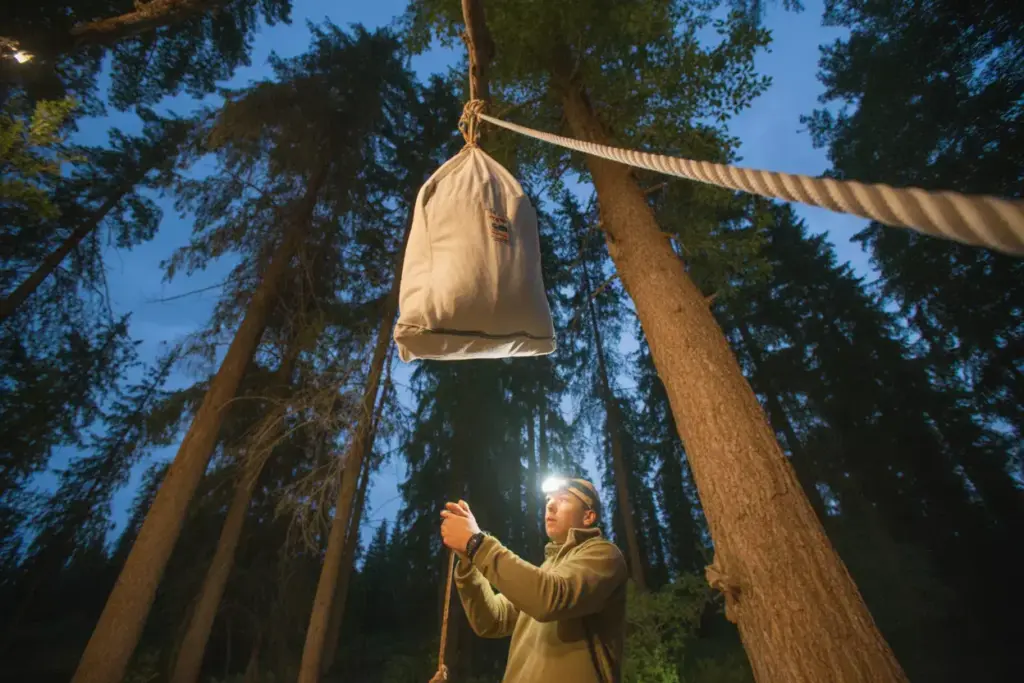
The bear rope hang remains the gold standard for backcountry food storage, and mastering this technique is essential for any serious camper. This method works by suspending food at least 12 feet above ground and 4 feet from any tree trunk or branch that could support an animal’s weight.
Materials needed:
- 50+ feet of paracord or climbing rope
- Stuff sack or dry bag for food
- Small rock or carabiner for weight
- Headlamp for nighttime setup
Step-by-step process:
- Select the right tree – Look for a sturdy branch at least 15 feet high with minimal surrounding branches
- Tie your weight to one end of the rope and throw it over the selected branch
- Attach your food bag to the rope at the proper height (12 feet minimum)
- Secure the rope to a tree trunk using a clove hitch or trucker’s hitch
- Mark the location with reflective tape for easy nighttime retrieval
Pro Tip: Practice this technique at home before your trip. Many campers struggle with rope throws in the dark or when tired after a long day of hiking.
Common mistakes to avoid:
- Hanging too close to tree trunks (bears can reach 4+ feet)
- Using insufficient height (raccoons are excellent climbers)
- Choosing branches that can’t support the weight
- Forgetting to account for rope stretch over time
2. DIY Bear Canisters from PVC Pipe
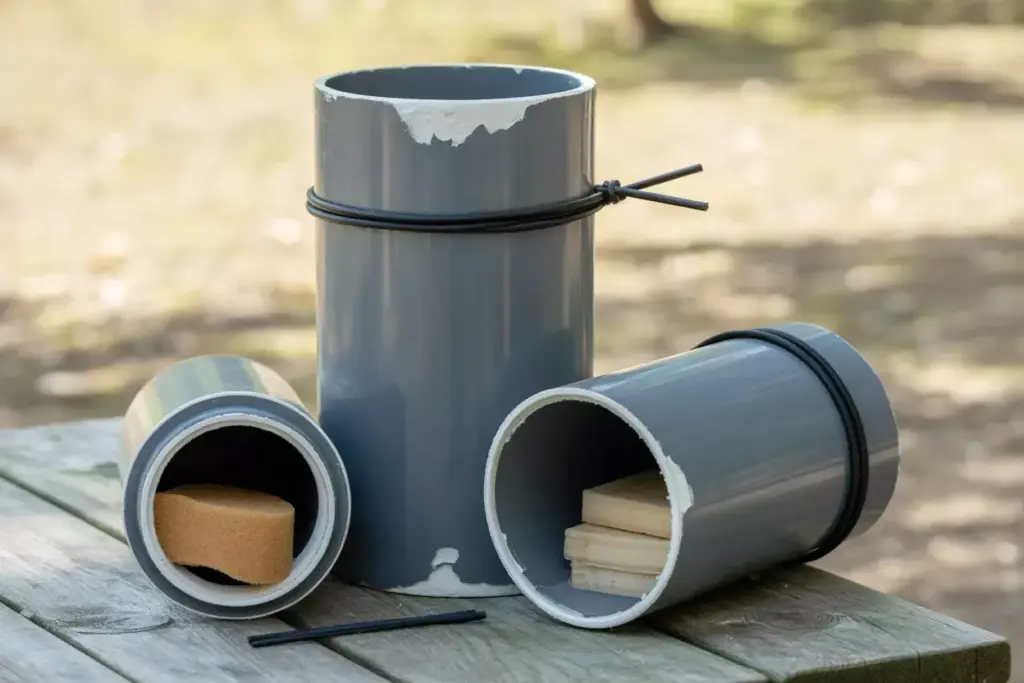
Commercial bear canisters cost $80-$300, but creating an effective DIY version using PVC pipe costs under $30 and provides excellent protection for car camping scenarios.
Materials required:
- 6-inch diameter PVC pipe (12-18 inches long)
- Two PVC end caps
- PVC primer and cement
- Heavy-duty zip ties or hose clamps
- Foam padding (optional)
Construction steps:
- Cut pipe to desired length – 12 inches holds 2-3 days of food for one person
- Attach one end cap permanently using PVC cement for a watertight seal
- Create removable closure – Drill holes around the rim of the remaining cap
- Install zip tie system – Thread heavy-duty zip ties through holes for secure closure
- Add padding – Line interior with foam to prevent food crushing
Usage guidelines:
- Store the canister at least 100 yards from your sleeping area
- Place on flat ground away from cliffs (bears may roll containers)
- Ensure zip ties are pulled tight – loose closures invite tampering
- Check local regulations – some wilderness areas require certified bear canisters
This DIY solution works exceptionally well for car camping and provides waterproof storage that doubles as a camp stool when not in use.
3. Scent-Proof Mason Jar Storage System
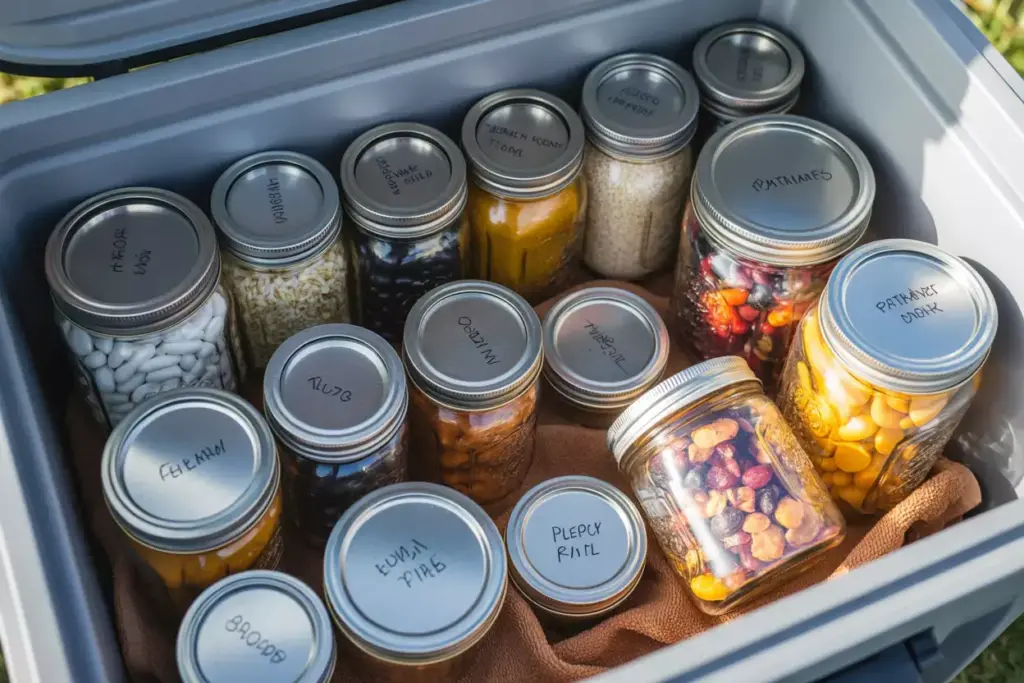
Mason jars offer an underrated solution for camping food storage, providing airtight seals that contain odors while keeping food fresh for extended periods. This method works particularly well for spices, dried goods, and prepared meals.
Advantages of mason jar storage:
- Complete odor containment when properly sealed
- Transparent containers allow easy food identification
- Stackable design maximizes storage efficiency
- Reusable and environmentally friendly
- Pest-proof – even ants cannot penetrate proper seals
Optimal jar selection:
- Wide-mouth jars for easy access and cleaning
- Various sizes (8oz, 16oz, 32oz) for different food types
- Quality lids with rubber gaskets for best seals
- Consider plastic lids for reduced weight and breakage risk
- Pre-portion meals into individual jars before departure
- Layer ingredients for one-pot meals in larger jars
- Include oxygen absorbers for extended freshness
- Label contents and dates with waterproof markers
Protection methods:
- Store jars in hard-sided coolers or storage boxes
- Wrap individually in towels to prevent breaking
- Keep in vehicle overnight or in secure storage
- Never leave glass containers accessible to wildlife
4. Elevated Platform Storage Solutions
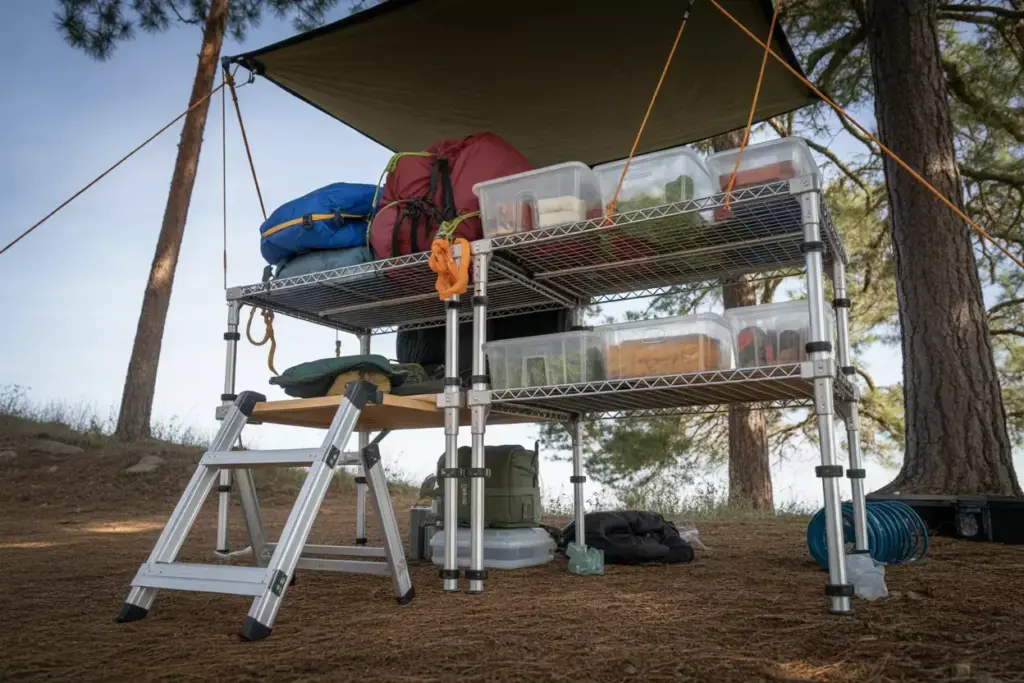
Creating elevated storage platforms keeps food away from ground-dwelling creatures while providing organized, accessible storage during meal preparation. This method works exceptionally well for extended camping trips or base camp situations.
Basic platform construction:
- Materials: Lightweight aluminum tubing, mesh shelving, bungee cords
- Height: Minimum 6 feet, ideally 8+ feet for bear country
- Stability: Guy-lines or stakes for wind resistance
- Access: Removable ladder or step system
Advanced platform features:
- Pulley systems for raising and lowering food supplies
- Weather protection with tarp or canopy attachment points
- Multiple levels for organizing different food types
- Locking mechanisms to secure platform in lowered position
Food organization tips:
- Group items by meal (breakfast, lunch, dinner)
- Keep frequently used items easily accessible
- Use clear containers for quick identification
- Maintain inventory list to track supplies
This system excels for group camping where multiple people need food access throughout the day, and the elevated design provides excellent protection from most wildlife while keeping supplies organized and dry.
5. Underground Cache Storage Method
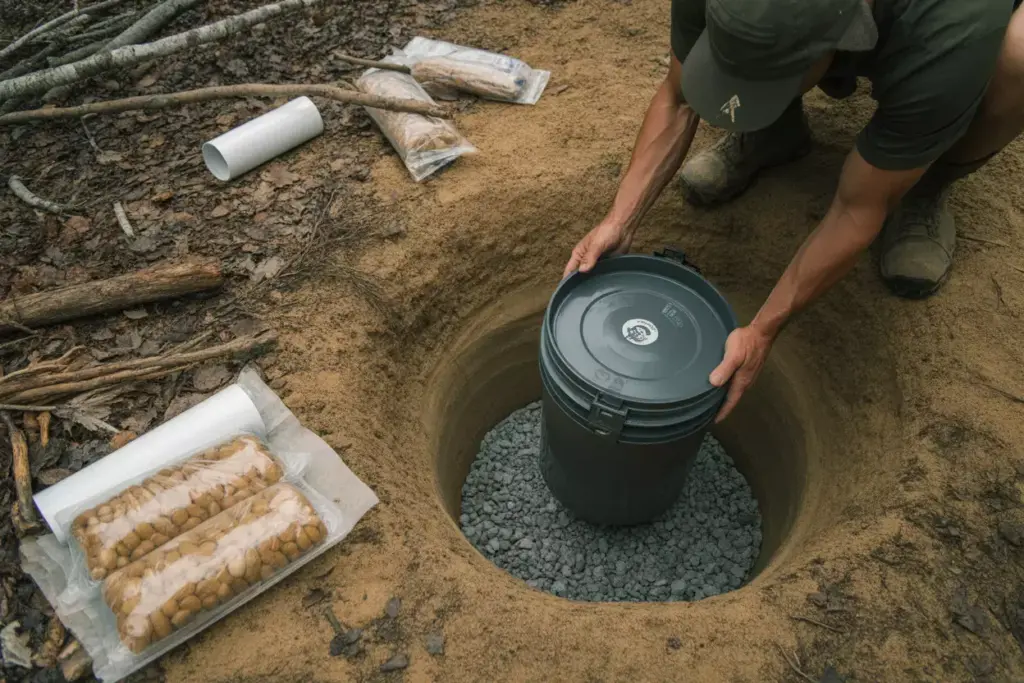
Underground storage provides excellent protection from wildlife while maintaining consistent temperatures that help preserve food quality. This method requires more effort but offers unparalleled security for valuable or highly aromatic food items.
Site selection criteria:
- Well-draining soil to prevent water accumulation
- Away from water sources and low-lying areas
- Easy to relocate with landmarks or GPS coordinates
- Legal to dig (check local regulations and Leave No Trace principles)
Construction process:
- Dig cache hole – 18-24 inches deep, slightly larger than container
- Install drainage layer – 2-3 inches of gravel at bottom
- Waterproof container – Use sealed buckets or dry bags
- Create access system – PVC tube for easy retrieval
- Camouflage entrance – Natural materials to hide disturbance
Container preparation:
- Double-bag all food items in scent-proof materials
- Include desiccant packets to control moisture
- Add inventory list with waterproof ink
- Mark container with contact information
Retrieval considerations:
- Mark location with GPS coordinates and backup landmarks
- Check cache daily in bear country
- Restore site to natural appearance after use
- Pack out all materials when departing
6. Vehicle Integration Storage Tactics
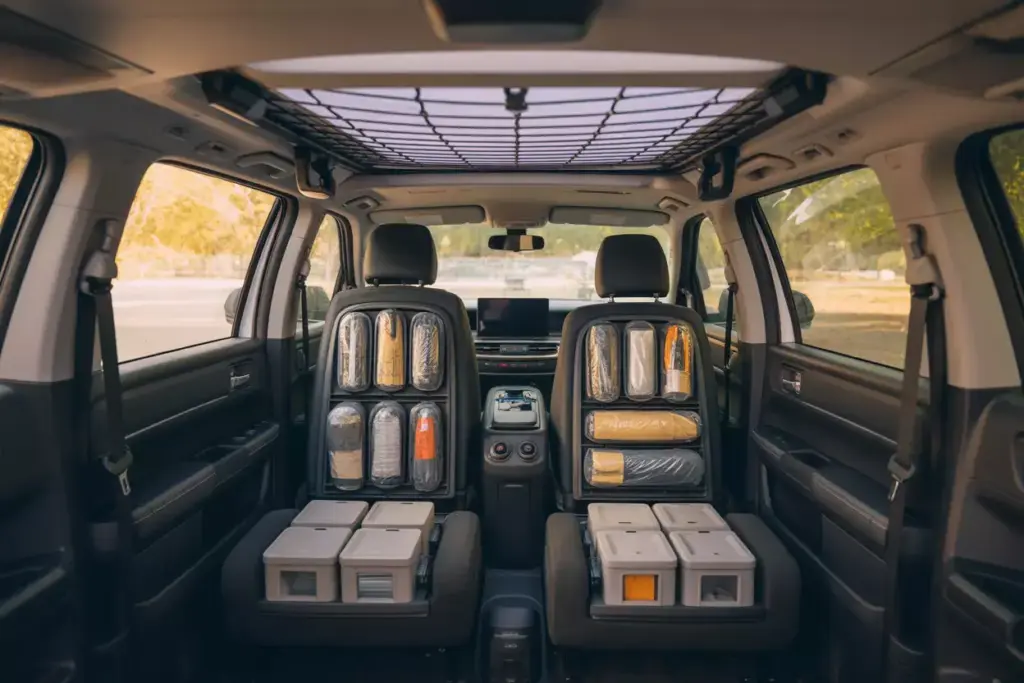
Modern vehicles offer numerous opportunities for secure food storage when properly utilized. Understanding how to maximize vehicle storage while maintaining food safety creates a mobile fortress against wildlife intrusion.
Interior storage optimization:
- Dashboard storage – Utilize heat for drying foods during day
- Seat-back organizers – Easy access to frequently used items
- Floor space containers – Low-profile boxes that fit under seats
- Overhead storage – Nets or hammocks for lightweight items
Exterior vehicle storage:
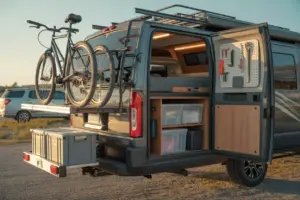
- Roof cargo boxes – Lockable, weatherproof, high capacity
- Hitch-mounted cargo carriers – Easy loading, secure attachment
- Running board storage – Custom boxes for frequently accessed items
- Spare tire mounts – Hidden storage for emergency supplies
Security enhancements:
- Window tinting – Reduces visibility of stored items
- Locking mechanisms – Secure latches on all storage compartments
- Alarm systems – Motion sensors for overnight protection
- Decoy storage – Empty containers to mislead potential raiders
Temperature management:
- Park in shade during hot weather
- Use reflective window covers to reduce interior heat
- Ventilate storage areas to prevent condensation
- Monitor temperatures with digital thermometers
Vehicle storage works best when combined with other methods, providing a secure base while using additional techniques for daily food access and preparation.
Advanced Protection Strategies: Beyond Basic Storage
7. Scent Management and Elimination Protocols
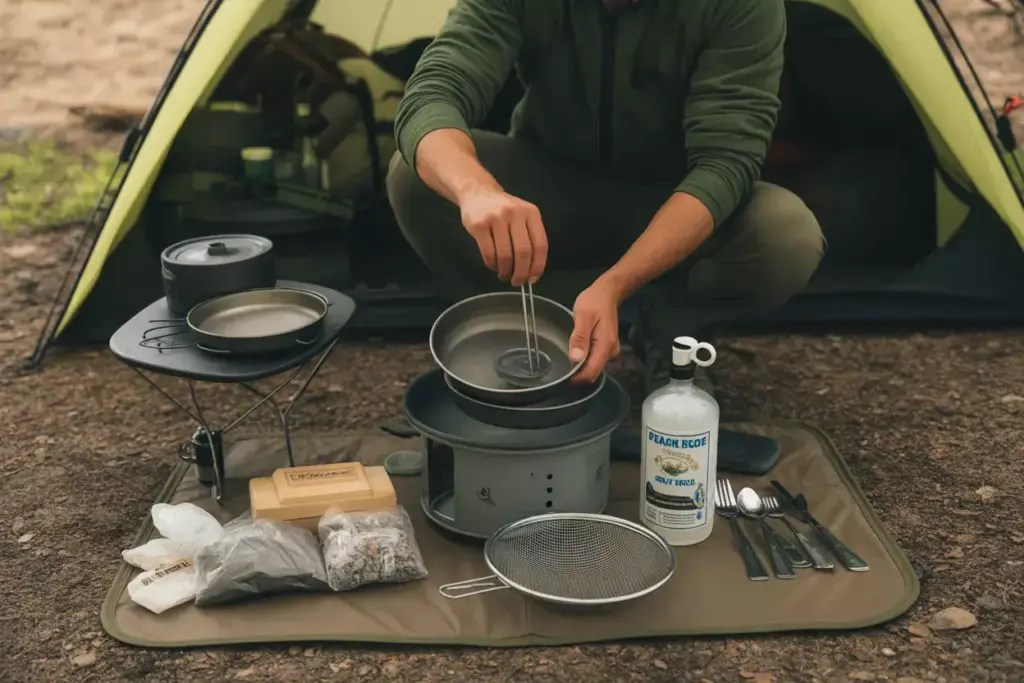
Even the most secure storage becomes ineffective if strong odors attract wildlife to your campsite. Comprehensive scent management addresses the root cause of animal interest while supporting your physical storage barriers.
Cooking area management:
- Designated cooking zones – Establish areas 100+ yards from sleeping areas
- Immediate cleanup – Wash dishes and utensils immediately after use
- Grease disposal – Strain and pack out all cooking oils and fats
- Surface sanitization – Clean all food preparation surfaces with bleach solution
Personal hygiene considerations:
- Scented products – Avoid perfumed soaps, deodorants, and toiletries
- Food handling – Wash hands thoroughly after meal preparation
- Clothing management – Change clothes after cooking, store cooking clothes with food
- Dental hygiene – Use unscented toothpaste, dispose of waste properly
Waste management protocols:
- Pack it out – All food waste leaves with you
- Gray water disposal – Strain and scatter 200 feet from water sources
- Trash security – Store all waste with same precautions as food
- Compost considerations – Never leave organic waste in wilderness areas
Natural scent maskers:
- Smoke treatment – Expose storage containers to wood smoke
- Pine needle storage – Layer containers with fresh pine needles
- Charcoal absorption – Activated charcoal packets reduce odors
- Essential oil deterrents – Peppermint or citrus oils repel some animals
8. Multi-Barrier Defense Systems
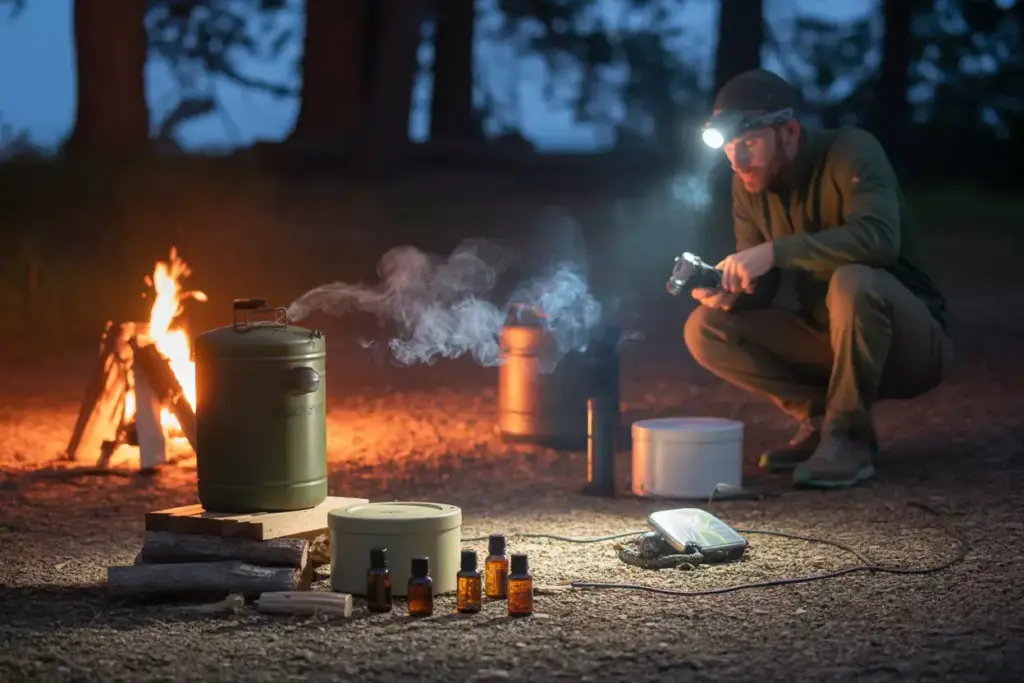
The most effective food protection combines multiple storage methods, creating redundant barriers that prevent wildlife access even if one system fails. This approach acknowledges that determined animals often overcome single-point protection methods.
Primary barrier selection:
Choose your strongest storage method as the foundation:
- Bear canisters for maximum security in high-risk areas
- Vehicle storage for car camping convenience
- Elevated platforms for group camping efficiency
- Underground caches for extended wilderness trips
Secondary barrier integration:
Add complementary protection methods:
- Scent masking reduces initial animal attraction
- Perimeter deterrents create psychological barriers
- Backup storage protects emergency food supplies
- Early warning systems alert to animal presence
Redundancy planning:
- Multiple storage locations prevent total food loss
- Emergency food reserves stored separately from main supplies
- Backup equipment includes extra rope, containers, and tools
- Alternative methods prepared for equipment failure
System monitoring and adjustment:
- Daily inspections check all storage points for signs of tampering
- Method rotation prevents animals from learning specific systems
- Continuous improvement based on observed wildlife behavior
- Documentation records successful and failed approaches
Seasonal considerations:
- Spring adaptations account for hungry animals after winter
- Summer modifications address increased wildlife activity
- Fall preparations consider pre-hibernation feeding behaviors
- Winter adjustments protect against desperate, food-stressed animals
Troubleshooting Common Food Storage Problems
Even well-planned storage systems encounter challenges. Understanding common problems and their solutions prevents minor issues from becoming major camping disasters.
Condensation and moisture control:
- Ventilation gaps – Allow air circulation in sealed containers
- Desiccant packets – Absorb excess moisture in storage areas
- Temperature monitoring – Prevent rapid temperature changes
- Material selection – Choose breathable fabrics for food bags
Equipment failure scenarios:
- Rope breakage – Carry backup cordage and repair materials
- Container damage – Pack duct tape and emergency patches
- Lock malfunctions – Include backup keys and cutting tools
- Weather damage – Prepare emergency shelter for storage areas
Wildlife adaptation responses:
- Method variation – Change storage techniques regularly
- Location rotation – Use different storage sites each night
- Timing adjustments – Alter food storage and retrieval schedules
- Deterrent escalation – Increase protection measures as needed
Conclusion: Implementing Your Food Storage Strategy
The 8 DIY camping food storage hacks to keep critters out and food fresh presented in this guide provide comprehensive protection against wildlife while maintaining food quality throughout your outdoor adventures. Success depends on selecting appropriate methods for your specific camping style, local wildlife threats, and available resources.
Immediate action steps:
- Assess your camping style – Choose 2-3 primary methods that match your typical camping scenarios
- Gather materials – Purchase or assemble necessary equipment before your next trip
- Practice techniques – Master rope hanging and container systems at home
- Create backup plans – Prepare alternative methods for equipment failure scenarios
Long-term development:
- Build experience gradually by testing methods on shorter trips first
- Refine techniques based on real-world results and wildlife encounters
- Share knowledge with fellow campers to improve overall camping safety
- Stay informed about local wildlife patterns and regulation changes
Remember that effective food storage protects both your camping experience and local wildlife. Animals that successfully raid human food often become problematic and may require relocation or removal by wildlife authorities. By implementing these proven storage methods, you contribute to conservation efforts while ensuring your outdoor adventures remain safe, enjoyable, and well-fed.
The investment in proper food storage techniques pays dividends in peace of mind, successful camping trips, and the preservation of wilderness areas for future generations. Start with the methods that best match your current camping style, then gradually incorporate additional techniques as your outdoor skills and confidence grow.