8 Ways to Achieve the Perfect Camper Van Life Aesthetic
Picture this: you’re parked beside a pristine alpine lake, your perfectly curated camper van glowing warmly in the golden hour light, every design element working in harmony to create an Instagram-worthy sanctuary on wheels. The dream of van life isn’t just about freedom and adventure—it’s about crafting a mobile home that reflects your personality while maximizing every square inch of space. Whether you’re a weekend warrior or full-time nomad, achieving the perfect camper van aesthetic requires thoughtful planning, creative solutions, and an eye for design that transforms a simple vehicle into a stunning home away from home.
Disclosure: This post contains affiliate links. As an Amazon Associate, we earn from qualifying purchases, and at no extra cost to you.
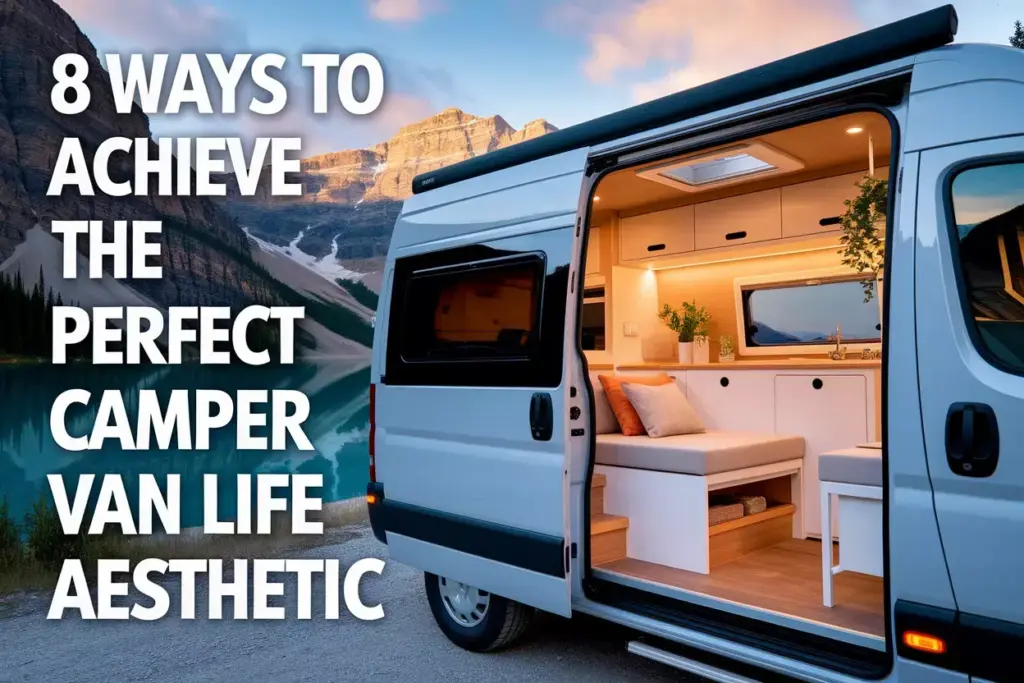
The 8 ways to achieve the perfect camper van life aesthetic encompass everything from strategic space planning to lighting design, color coordination to storage solutions. These proven methods will help you create a van that’s not only functional but also visually stunning, ensuring your mobile lifestyle is as beautiful as it is adventurous.
Key Takeaways
- Maximize vertical space with clever storage solutions and multi-functional furniture to create an open, airy feel
- Choose a cohesive color palette with 2-3 main colors to create visual harmony throughout your van
- Invest in quality lighting including warm LED strips and ambient lighting to create mood and atmosphere
- Prioritize natural materials like wood and stone to bring warmth and texture to your mobile home
- Create designated zones for sleeping, cooking, and relaxing to maximize functionality in a small space
1. Master the Art of Space Planning and Layout Design
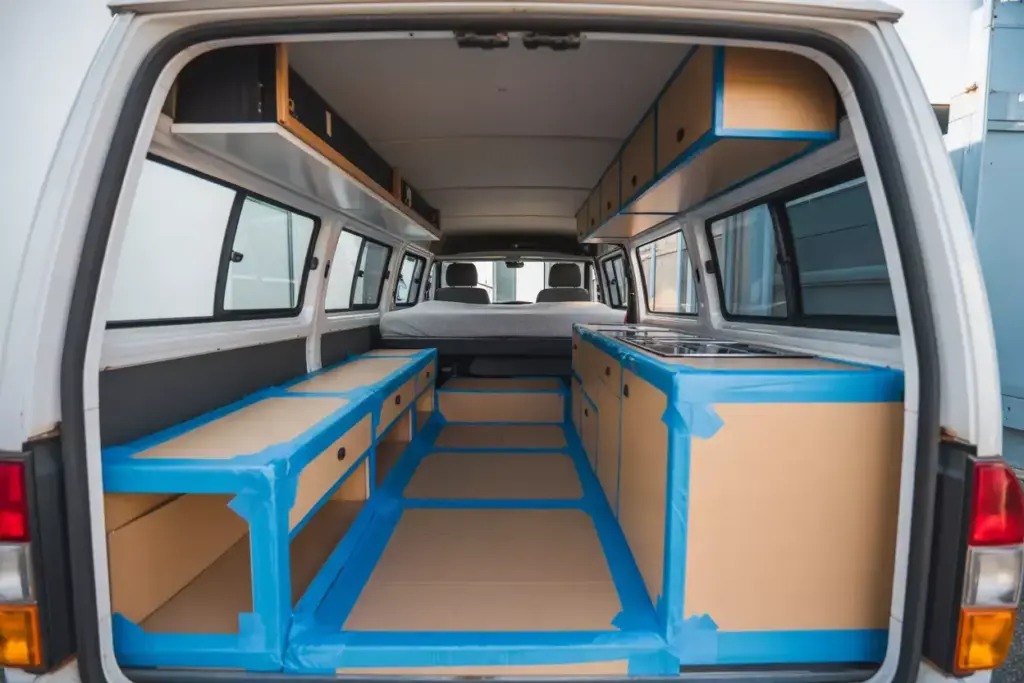
Creating the perfect camper van aesthetic starts with intelligent space planning that maximizes every inch while maintaining visual flow. Strategic layout design forms the foundation of any successful van conversion, determining how all other aesthetic elements will come together.
The key to effective space planning lies in understanding the triangle principle—positioning your sleeping, cooking, and storage areas in a way that creates natural movement patterns. Consider placing your bed at the rear for privacy, kitchen along one side for plumbing efficiency, and storage throughout vertical spaces.
Essential space planning strategies include:
- Vertical zoning: Utilize ceiling height for overhead storage and hanging solutions
- Multi-level thinking: Create platforms and raised areas for hidden storage
- Flow optimization: Ensure clear pathways between functional areas
- Flexibility integration: Design spaces that can serve multiple purposes
When planning your layout, measure twice and cut once. Create cardboard mockups of furniture pieces to test different arrangements before committing to permanent installations. This approach prevents costly mistakes and ensures your camper van life aesthetic flows naturally from one area to the next.
Consider the 80/20 rule: 80% of your time will be spent in 20% of your van’s space. Identify these high-use areas and prioritize comfort and aesthetics in these zones. This might mean investing in a premium seating area or creating an extra-cozy sleeping nook.
Professional tip: Use painter’s tape to outline furniture placement on your van floor before building. Live with this layout for a few days, walking through your daily routines to identify any flow issues or space conflicts.
2. Choose a Cohesive Color Palette That Reflects Your Style
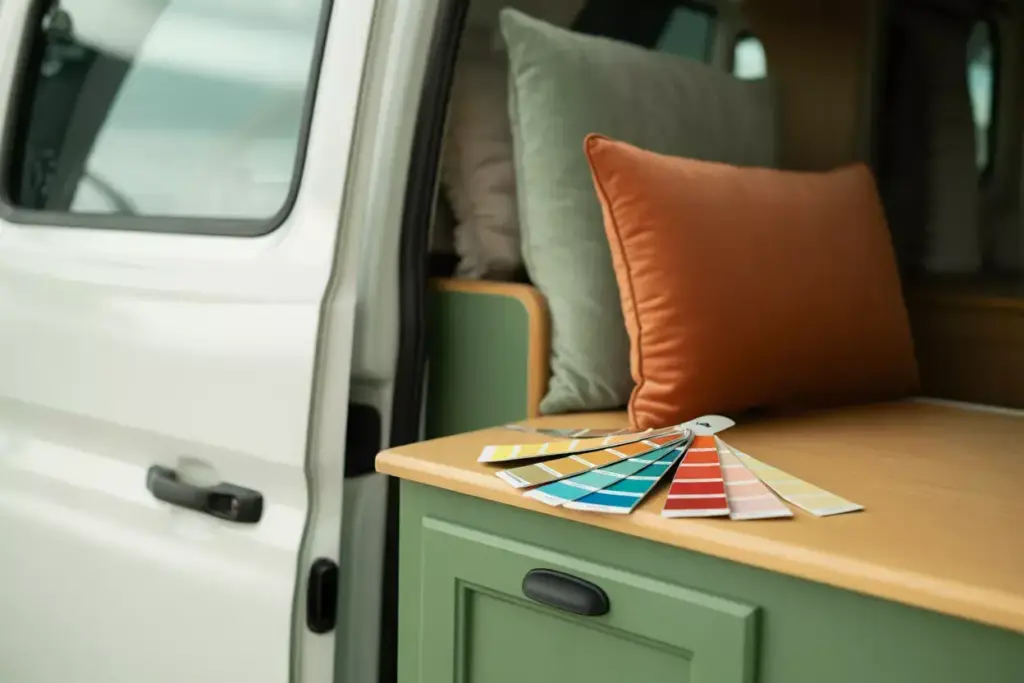
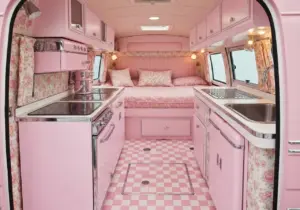
Color psychology plays a crucial role in creating the perfect camper van aesthetic, with the right palette making your small space feel larger, brighter, and more inviting. Strategic color selection can transform a cramped van into an airy sanctuary that reflects your personal style while maximizing the perception of space.
Start with a base neutral color that will serve as your foundation—whites, creams, and light grays are popular choices because they reflect light and create an open feeling. From there, add 1-2 accent colors that speak to your personality and the mood you want to create.
Popular van life color schemes include:
| Aesthetic Style | Base Color | Accent Colors | Mood Created |
|---|---|---|---|
| Scandinavian Minimalist | Pure White | Sage Green, Natural Wood | Clean, Peaceful |
| Bohemian Wanderer | Cream | Terracotta, Deep Blue | Warm, Adventurous |
| Modern Industrial | Light Gray | Black, Copper | Sleek, Contemporary |
| Coastal Vibes | Off-White | Navy Blue, Driftwood | Fresh, Relaxed |
Color application strategies that enhance your camper van aesthetic:
- 60-30-10 rule: 60% base color, 30% secondary color, 10% accent color
- Natural light consideration: Test colors in different lighting conditions
- Texture variation: Use the same color in different textures for depth
- Ceiling treatment: Paint ceilings slightly lighter than walls to add height
Remember that colors appear different in small spaces versus large rooms. What looks perfect in a paint store might feel overwhelming in a van. Always test paint samples in your actual space and observe them throughout different times of day.
Bold accent walls can create visual interest without overwhelming the space. Consider using removable wallpaper, wood planking, or tile on one feature wall to add personality while keeping the rest of the space neutral.
3. Incorporate Natural Materials for Warmth and Texture
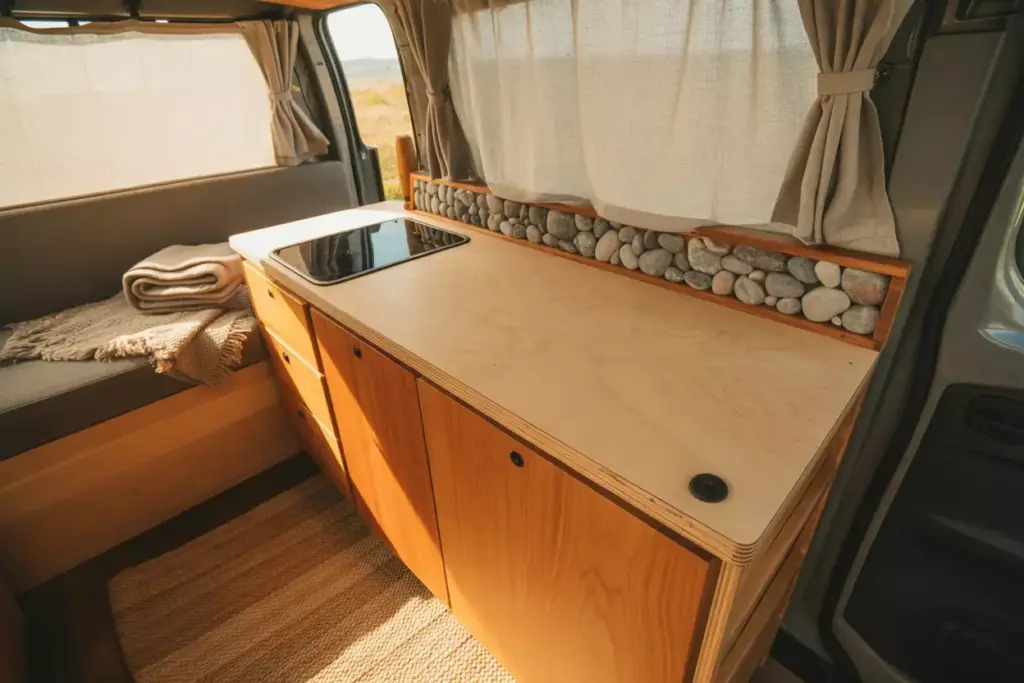
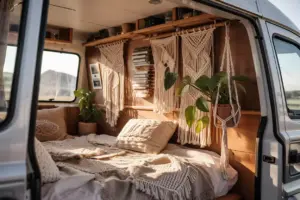
Nothing elevates a camper van aesthetic quite like the inclusion of natural materials that bring warmth, texture, and organic beauty to your mobile home. These elements create a connection to nature that perfectly complements the outdoor lifestyle van life represents.
Wood remains the most popular natural material in van conversions, and for good reason. It’s versatile, relatively lightweight, and adds instant warmth to any space. Choose wood species that can handle humidity and temperature fluctuations common in van life.
Top wood choices for van conversions:
- Pine: Affordable, lightweight, easy to work with
- Cedar: Naturally moisture-resistant, beautiful grain
- Birch plywood: Strong, smooth finish, takes stain well
- Reclaimed wood: Unique character, environmentally friendly
- Bamboo: Sustainable, moisture-resistant, modern look
Beyond wood, consider incorporating stone elements like river rock backsplashes, slate countertops, or decorative stone accents. These materials add visual weight and grounding energy to your space while being practically maintenance-free.
Natural fiber textiles complete the organic aesthetic:
- Jute rugs for durability and texture
- Linen curtains for soft, flowing window treatments
- Wool blankets for warmth and natural temperature regulation
- Cotton canvas for upholstery that’s both durable and breathable
Integration techniques for natural materials:
- Mix textures: Combine smooth and rough surfaces for visual interest
- Vary scales: Use large wood planks with smaller stone tiles
- Consider maintenance: Choose materials you can realistically care for on the road
- Think weight: Natural materials can be heavy—factor this into your van’s weight capacity
The goal is creating a space that feels grounded and connected to nature while remaining practical for mobile living. Natural materials in your camper van aesthetic should enhance both the visual appeal and the lived experience of your space.
4. Optimize Storage Solutions Without Compromising Style
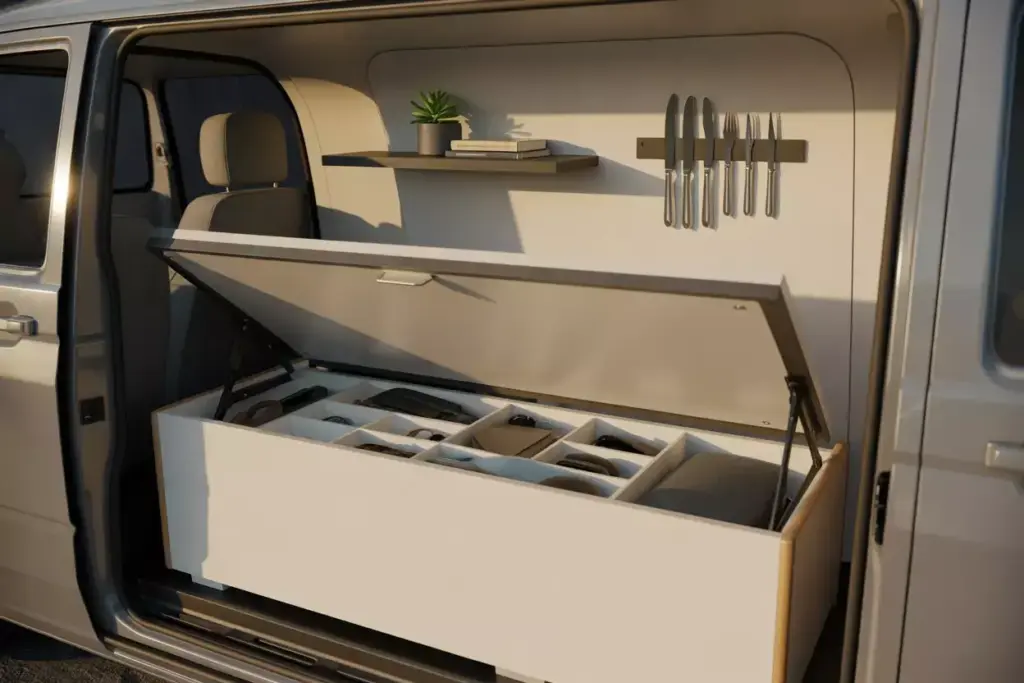
Achieving the perfect camper van life aesthetic requires mastering the delicate balance between maximum storage capacity and visual appeal. Clever storage solutions can actually enhance your van’s aesthetic when designed thoughtfully, turning functional necessities into beautiful design elements.
Hidden storage is your best friend in van life. Every surface should serve multiple purposes, from ottoman storage seats to bed platforms with built-in drawers. The key is making these storage solutions so seamlessly integrated that they enhance rather than clutter your space.
Stylish storage strategies include:
- Built-in bench seating with lift-up tops for gear storage
- Overhead cabinets with push-to-open mechanisms for clean lines
- Under-stair storage in raised bed platforms
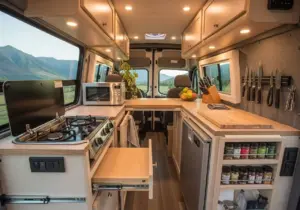
- Magnetic strips for knives and tools that double as wall art
- Hanging organizers that fold flat when not in use
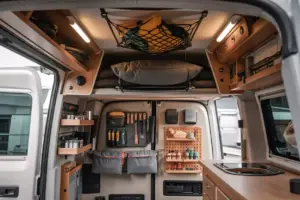
Vertical storage solutions maximize your van’s height while creating visual interest. Install floating shelves at varying heights to display books, plants, and decorative objects. Use the space between wall studs for recessed storage that doesn’t protrude into your living area.
Organization systems that maintain aesthetic appeal:
- Uniform containers: Choose storage bins in matching colors/materials
- Label systems: Use attractive labels or no labels for clean minimalism
- Open vs. closed: Balance visible storage with hidden storage
- Accessibility: Frequently used items should be easily reachable
- Weight distribution: Heavy items low and centered for driving stability
Multi-functional furniture serves double duty while maintaining style. A dining table that converts to a work desk, storage ottoman that becomes extra seating, or a murphy bed that reveals a living area all contribute to both function and aesthetic appeal.
Consider modular storage systems that can be reconfigured as your needs change. Removable shelving units, adjustable hanging systems, and stackable containers provide flexibility while maintaining a cohesive look throughout your van conversion.
5. Design Strategic Lighting for Ambiance and Functionality
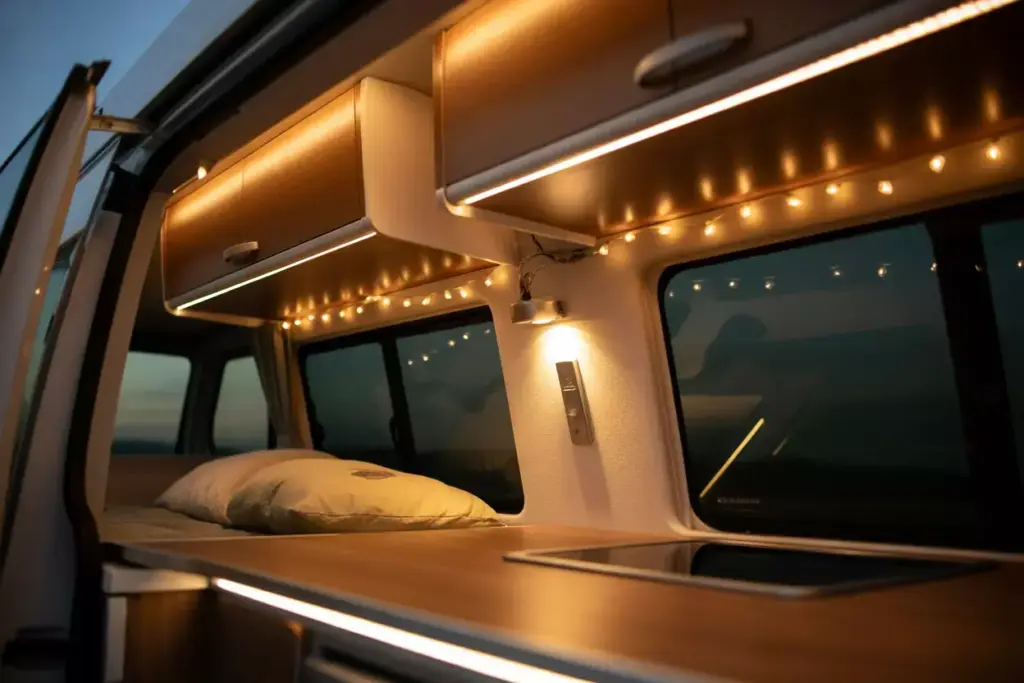
Lighting design can make or break your camper van aesthetic, transforming a cramped space into a warm, inviting sanctuary or leaving it feeling cold and institutional. The 8 ways to achieve the perfect camper van life aesthetic wouldn’t be complete without mastering the art of illumination that serves both practical needs and mood creation.
Layered lighting is essential in small spaces. Combine ambient lighting for general illumination, task lighting for specific activities, and accent lighting for atmosphere and visual interest. This approach allows you to adjust the mood and functionality of your space throughout the day.
Essential lighting elements for van life:
- LED strip lights: Energy-efficient, customizable, perfect for under-cabinet installation
- Pendant lights: Create visual interest and define spaces
- Reading lights: Focused task lighting for bedtime or work
- String lights: Instant ambiance and Instagram-worthy atmosphere
- Solar-powered options: Sustainable lighting for outdoor areas
Warm vs. cool lighting dramatically affects your van’s aesthetic. Warm white LEDs (2700K-3000K) create a cozy, homey feeling perfect for evening relaxation. Cool white lights (4000K-5000K) work better for task lighting and daytime activities. Many modern LED systems allow you to adjust color temperature throughout the day.
Strategic placement techniques:
- Indirect lighting: Bounce light off walls and ceilings to avoid harsh shadows
- Multiple sources: Use several smaller lights instead of one bright overhead fixture
- Dimmer controls: Essential for adjusting mood and conserving battery power
- Natural light enhancement: Position artificial lights to complement windows and skylights
Outdoor lighting extends your living space beyond the van walls. Awning lights, portable lanterns, and string lights create an outdoor room that’s perfect for dining, socializing, or simply enjoying nature. These elements are crucial for the complete camper van life aesthetic experience.
Power considerations are crucial for van life lighting. Calculate your daily power consumption and ensure your electrical system can handle your lighting needs. LED technology has revolutionized van lighting by providing beautiful illumination with minimal power draw, making elaborate lighting schemes possible even with basic electrical setups.
6. Create Defined Living Zones Within Your Compact Space
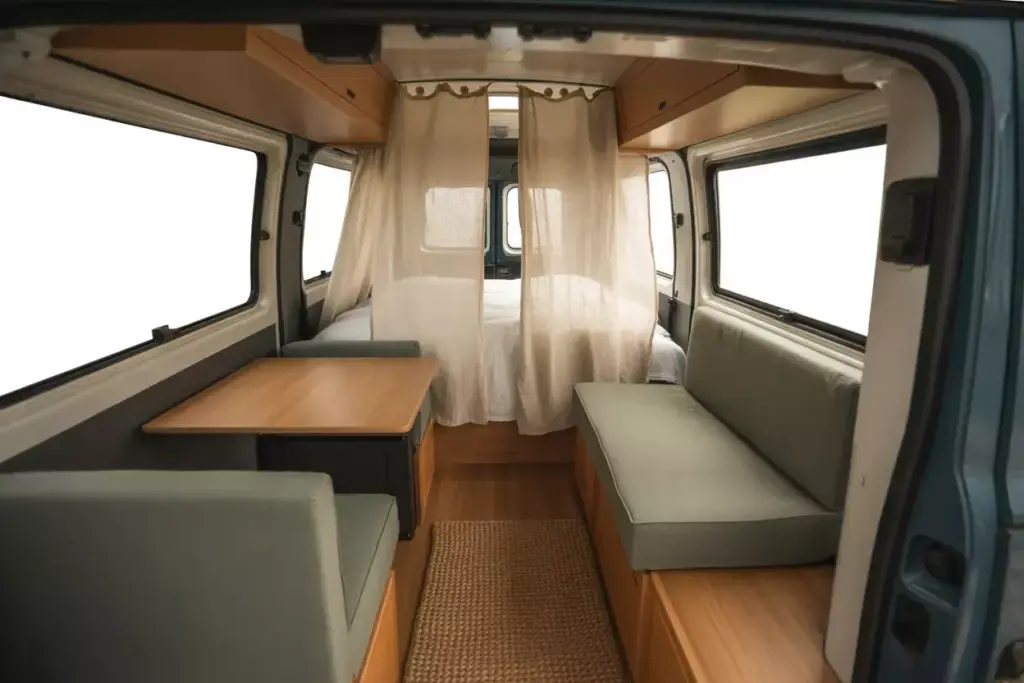
Zone definition is crucial for achieving the perfect camper van life aesthetic because it creates the illusion of separate rooms within your compact space. Strategic zoning helps your van feel larger and more organized while ensuring each area serves its intended purpose effectively.
Visual separation techniques don’t require physical walls that would make your van feel cramped. Instead, use design elements like color changes, different flooring materials, hanging curtains, or furniture placement to define distinct areas for sleeping, cooking, dining, and relaxing.
Essential zones for van life:
- Sleep zone: Private, comfortable, with blackout capabilities
- Kitchen zone: Efficient workflow, adequate ventilation, easy cleanup
- Dining zone: Comfortable seating, good lighting, convertible space
- Storage zone: Organized, accessible, visually appealing
- Work zone: Good lighting, comfortable seating, minimal distractions
Flexible zone design allows your van to transform throughout the day. A dining table that folds away to create a yoga space, or a bed that converts to a couch for daytime lounging maximizes the utility of every square foot while maintaining aesthetic appeal.
Transition elements help zones flow naturally into each other:
- Consistent color palette throughout all zones
- Repeated materials that create visual continuity
- Strategic lighting that can highlight different zones
- Furniture scale that’s proportional throughout the space
- Traffic flow that doesn’t require stepping through one zone to reach another
Ceiling treatment can reinforce zone definition without taking up floor space. Hanging plants, different light fixtures, or fabric panels suspended from the ceiling create visual boundaries while maintaining the open feeling essential to small space living.
Outdoor zones extend your living space beyond the van’s walls. Create an outdoor kitchen with a portable camp stove setup, an outdoor living room with camping chairs and a portable table, or an outdoor bedroom with a rooftop tent or ground tent setup. These zones are integral to the complete camper van life aesthetic.
7. Add Personal Touches and Decorative Elements Thoughtfully
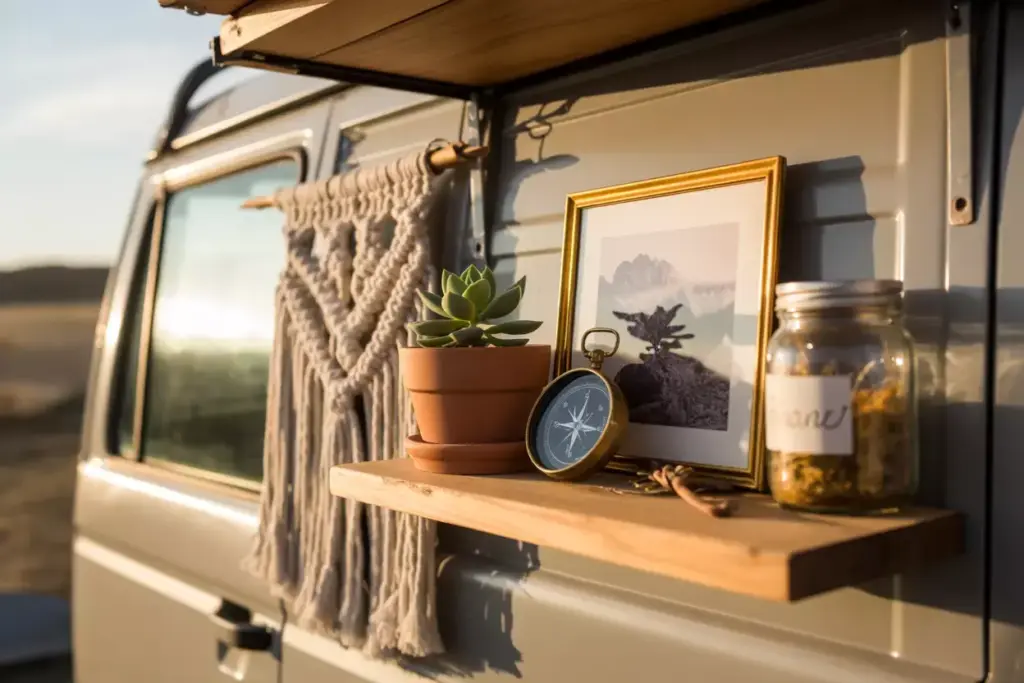
Personal touches transform a generic van conversion into a home that reflects your unique personality and style. However, in the confined space of a camper van, every decorative element must earn its place by being both beautiful and functional, contributing to your overall camper van life aesthetic without creating clutter.
Curated collections work better than scattered decorative items. Choose a theme—vintage maps, succulents, handmade pottery, or travel photography—and display these items thoughtfully throughout your van. This creates visual cohesion while telling your personal story.
Wall art strategies for van life:
- Removable options: Peel-and-stick wallpaper, removable decals, magnetic frames
- Functional art: Beautiful maps of your travel routes, vintage camping gear displays
- Personal photography: Your own travel photos in matching frames
- Textile art: Woven wall hangings, macramé, or fabric panels
- Natural elements: Pressed flowers, driftwood arrangements, rock collections
Plant life brings immediate warmth and life to your van while improving air quality. Choose low-maintenance varieties that can handle the movement and varying conditions of van life. Succulents, pothos, snake plants, and air plants are excellent choices for mobile living.
Textile layers add comfort and personality without permanent installation:
- Throw pillows in your accent colors
- Cozy blankets for warmth and visual softness
- Window treatments that provide privacy and style
- Area rugs to define spaces and add warmth underfoot
- Curtains or fabric panels for zone separation
Meaningful objects should be chosen carefully. That vintage compass, handmade mug from a local artisan, or family photo adds personal meaning while serving a practical purpose or bringing joy every time you see it.
Seasonal decoration keeps your van feeling fresh and connected to the changing world outside. Simple swaps like changing throw pillow covers, adding seasonal plants, or rotating artwork can refresh your space without major overhauls.
Display techniques that work in moving vehicles:
- Secure mounting: Everything must be secured for travel safety
- Flexible arrangements: Items that can be easily moved or stored while driving
- Magnetic solutions: Utilize your van’s metal walls for changeable displays
- Built-in niches: Create dedicated display spaces in your van’s design
8. Maintain Your Aesthetic Through Organization and Cleanliness
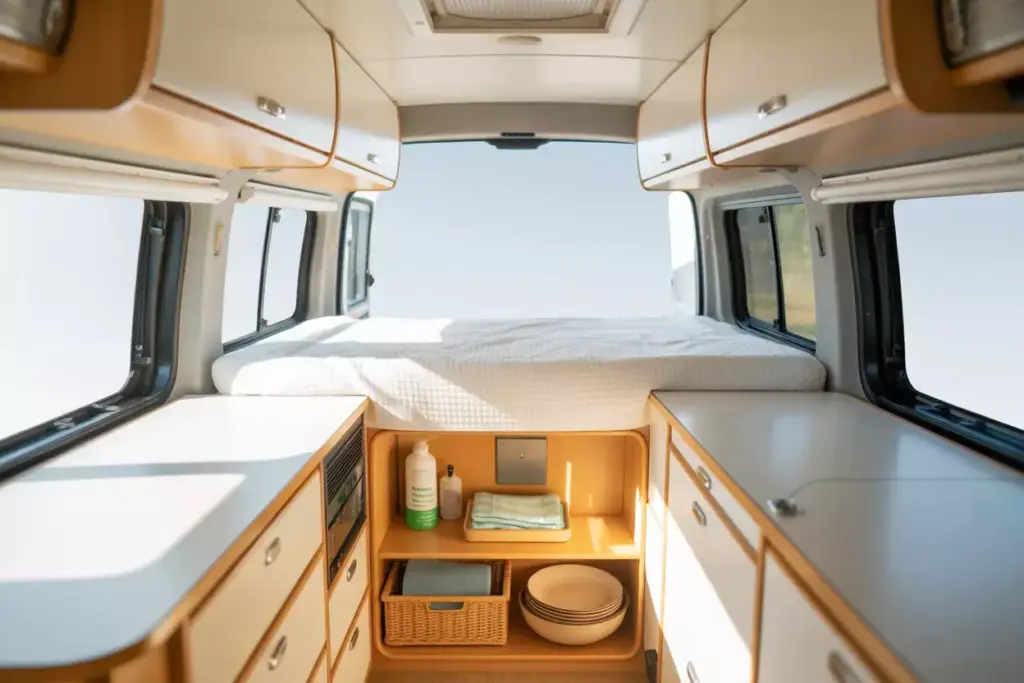
The final element in achieving the perfect camper van life aesthetic is maintaining that beauty through consistent organization and cleanliness routines. Visual appeal diminishes quickly when clutter accumulates or surfaces become grimy, making maintenance systems crucial for long-term aesthetic success.
Daily routines prevent small messes from becoming overwhelming problems. Establish 10-minute tidying sessions each morning and evening to reset your space. This includes making the bed, clearing surfaces, washing dishes, and returning items to their designated homes.
Organization maintenance strategies:
- One in, one out rule: For every new item, remove something else
- Weekly deep clean: Thorough cleaning of all surfaces and systems
- Monthly declutter: Honest assessment of what’s truly needed
- Seasonal overhaul: Major organization and deep cleaning sessions
- Travel day prep: Secure all items and clean surfaces before moving
Cleaning supplies should be chosen for effectiveness in small spaces and environmental responsibility. Multi-purpose cleaners, microfiber cloths, and natural cleaning solutions handle most van cleaning needs without taking up excessive storage space.
System maintenance keeps your van’s infrastructure supporting your aesthetic vision:
- Electrical system checks: Ensure lighting and appliances function properly
- Plumbing maintenance: Prevent leaks that could damage beautiful finishes
- Ventilation cleaning: Keep air fresh and prevent moisture problems
- Exterior care: Maintain your van’s outside appearance as part of the total aesthetic
- Preventive repairs: Address small issues before they become major problems
Seasonal maintenance adapts your van to changing conditions while preserving your aesthetic. Winterization might involve adding cozy textiles and ensuring heating systems work efficiently. Summer preparation could include installing additional ventilation or sun protection.
Guest-ready standards mean your van is always presentable for unexpected visitors or spontaneous social media posts. This doesn’t mean perfection, but rather a consistent standard of organization and cleanliness that showcases your camper van life aesthetic at its best.
Long-term preservation of your van’s beauty requires protecting finishes, maintaining systems, and adapting your aesthetic as needs change. Quality materials and thoughtful design choices made during your initial conversion will pay dividends in easier maintenance and lasting beauty.
Documentation of your systems and routines helps maintain consistency. Create cleaning schedules, maintenance checklists, and organization guides that can be followed even when you’re tired from long travel days or busy with adventures.
Conclusion
Achieving the perfect camper van life aesthetic is a journey that combines thoughtful design, practical functionality, and personal expression. These 8 ways to achieve the perfect camper van life aesthetic provide a comprehensive framework for creating a mobile home that’s not only beautiful but also livable, sustainable, and uniquely yours.
The key to success lies in understanding that aesthetic appeal and practical functionality aren’t opposing forces—they’re complementary elements that, when properly balanced, create a van life experience that’s both visually stunning and genuinely enjoyable to live in. From strategic space planning and cohesive color choices to thoughtful lighting design and personal touches, each element builds upon the others to create a harmonious whole.
Remember that your camper van aesthetic should evolve with your needs and experiences. What works for weekend adventures might need adjustment for full-time living. Stay flexible, be willing to adapt, and don’t be afraid to make changes as you learn what truly works for your lifestyle.
Your next steps:
- Assess your current van or conversion plans against these eight principles
- Prioritize improvements based on your budget and timeline
- Start with one zone and perfect it before moving to the next
- Document your progress to track what works and what doesn’t
- Connect with the van life community for inspiration and practical advice
The perfect camper van life aesthetic isn’t about creating a magazine-worthy space that’s impractical for real living—it’s about crafting a mobile sanctuary that supports your adventures while reflecting your personal style. Whether you’re just beginning your van life journey or looking to refresh an existing conversion, these principles will guide you toward a space that’s both beautiful and functional, ready for whatever adventures await on the open road.
Start with small changes, be patient with the process, and remember that the most beautiful van is one that enables you to live your best life on the road. Your perfect camper van life aesthetic is waiting to be discovered—now you have the roadmap to find it.