7 Stunning Van Living Aesthetic Interior Themes to Copy
The open road calls, but creating a beautiful home on wheels requires more than just wanderlust—it demands thoughtful design that maximizes every square inch while reflecting personal style. Whether you’re planning your first van conversion or dreaming of upgrading your current mobile sanctuary, discovering the perfect aesthetic can transform cramped quarters into a stunning retreat that rivals any traditional home.
Disclosure: This post contains affiliate links. As an Amazon Associate, we earn from qualifying purchases, and at no extra cost to you.
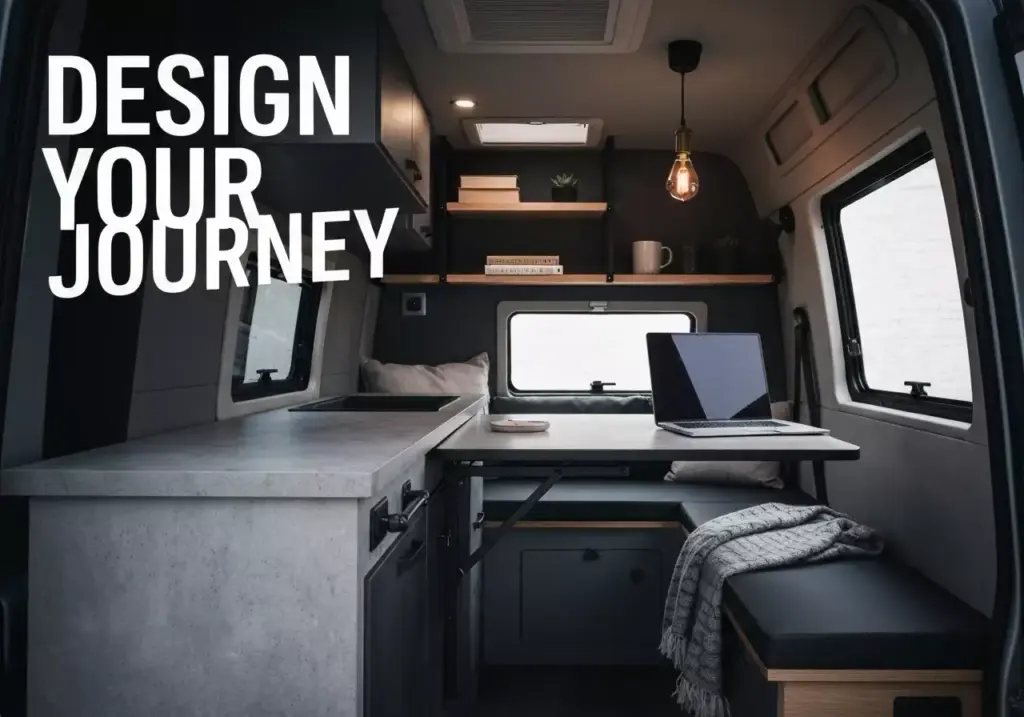
Van life has evolved far beyond basic functionality, embracing sophisticated design principles that prove small spaces can deliver big style. From minimalist Scandinavian influences to rich bohemian textures, today’s van conversions showcase incredible creativity and attention to detail. These 7 stunning van living aesthetic interior themes to copy represent the most inspiring and practical approaches to mobile home design, each offering unique solutions for creating comfort, beauty, and functionality within the constraints of life on wheels.
Key Takeaways
- Scandinavian minimalism creates spacious feelings through light colors, natural materials, and clutter-free design principles
- Bohemian aesthetics add personality through rich textures, warm colors, and eclectic decorative elements
- Industrial modern combines raw materials like metal and exposed wood with sleek, contemporary finishes
- Rustic farmhouse brings cozy comfort through reclaimed wood, vintage accessories, and warm, earthy color palettes
- Proper lighting, storage solutions, and multi-functional furniture are essential elements across all successful van interior themes
Understanding Van Interior Design Fundamentals
Before diving into specific aesthetic themes, understanding the unique challenges and opportunities of van interior design sets the foundation for success. Unlike traditional homes, van interiors must balance mobility requirements with livability, creating spaces that function seamlessly whether parked at a remote campsite or navigating mountain roads.
Space optimization becomes paramount in van conversions, where every cubic inch serves multiple purposes. Successful designs incorporate vertical storage, convertible furniture, and clever hidden compartments that maintain clean lines while maximizing functionality. The key lies in selecting pieces that serve double or triple duty—ottoman storage boxes, fold-down tables, and murphy beds exemplify this principle.
Weight distribution affects both driving safety and fuel efficiency, making material choices critical. Lightweight alternatives to traditional building materials, such as aluminum cabinetry instead of solid wood or composite countertops instead of stone, help maintain vehicle performance without sacrificing style.
Climate control considerations influence everything from insulation choices to window placement. Proper ventilation prevents condensation buildup, while strategic insulation keeps interiors comfortable across varying weather conditions. These practical elements must integrate seamlessly with chosen aesthetic themes.
The Psychology of Small Space Living
Living in confined spaces affects mental well-being, making thoughtful design choices essential for long-term happiness on the road. Color psychology plays a significant role in how spaces feel—light, neutral tones create expansive feelings, while darker colors can make already small spaces feel cramped.
Natural light maximization improves mood and creates illusions of spaciousness. Strategic mirror placement, reflective surfaces, and window treatments that allow maximum light penetration become crucial design elements. Skylights and additional windows, when feasible, dramatically improve interior ambiance.
Personal space definition helps maintain sanity when sharing small quarters. Even in compact vans, creating distinct zones for sleeping, cooking, working, and relaxing provides psychological separation that prevents spaces from feeling overwhelming.
Essential Elements Across All Van Aesthetic Themes
Regardless of chosen aesthetic direction, certain elements remain consistent across successful van conversions. Multi-functional furniture forms the backbone of effective van design, with pieces like convertible dinettes, storage ottomans, and fold-away desks maximizing utility while maintaining style.
Quality lighting systems transform van interiors from functional to fabulous. Layered lighting approaches combine ambient, task, and accent lighting to create mood and functionality. LED strip lights, pendant fixtures, and strategically placed reading lights work together to illuminate different activities throughout the day.
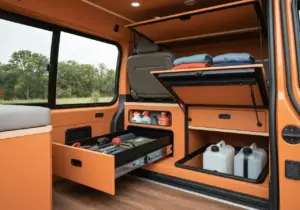
Smart storage solutions keep belongings organized and accessible while maintaining clean aesthetic lines. Built-in cabinetry, under-bed storage, and overhead compartments must integrate seamlessly with chosen design themes while providing adequate space for extended travel needs.
1. Scandinavian Minimalist Paradise
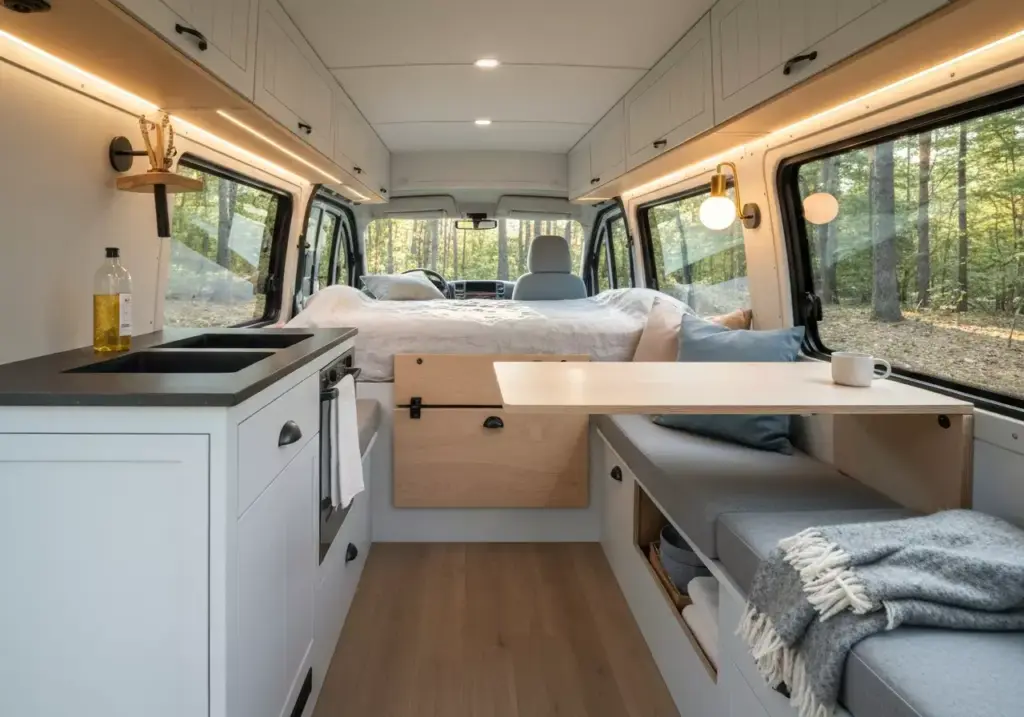
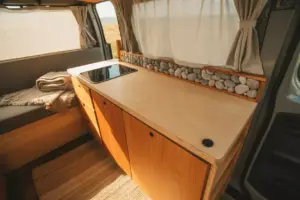
The Scandinavian aesthetic dominates van conversion inspiration boards for good reason—its emphasis on light colors, natural materials, and clutter-free living translates perfectly to mobile homes. This design philosophy creates serene, spacious-feeling interiors that maximize both natural light and storage efficiency.
Color palettes in Scandinavian van designs center around whites, light grays, and natural wood tones. These neutral foundations create cohesive, calming environments while making small spaces feel significantly larger. Accent colors, when used, typically include muted blues, soft greens, or warm terracotta tones that complement rather than overwhelm the space.
Material choices emphasize natural textures and sustainable options. Light-colored woods like birch, pine, or maple feature prominently in cabinetry and furniture, while linen textiles, wool throws, and cotton cushions add softness without visual weight. Metal hardware in brushed brass or matte black provides subtle contrast against lighter backgrounds.
Furniture selection follows the “less is more” principle, with each piece serving multiple functions. A simple wooden dining table doubles as a workspace, while built-in benches provide seating and storage. Murphy beds or convertible sofas maintain open floor space during daytime hours, essential for preventing claustrophobic feelings.
Lighting design in Scandinavian vans emphasizes natural illumination supplemented by warm, ambient artificial sources. Large windows remain unobstructed by heavy treatments, while pendant lights and wall sconces provide evening ambiance. String lights, when used sparingly, add cozy hygge elements without cluttering visual space.
Storage solutions remain hidden behind clean cabinet faces, maintaining the minimalist aesthetic while providing ample organization. Pull-out drawers, hidden compartments, and overhead storage keep belongings accessible but invisible, crucial for maintaining the serene, uncluttered appearance that defines this style.
2. Bohemian Wanderer Retreat
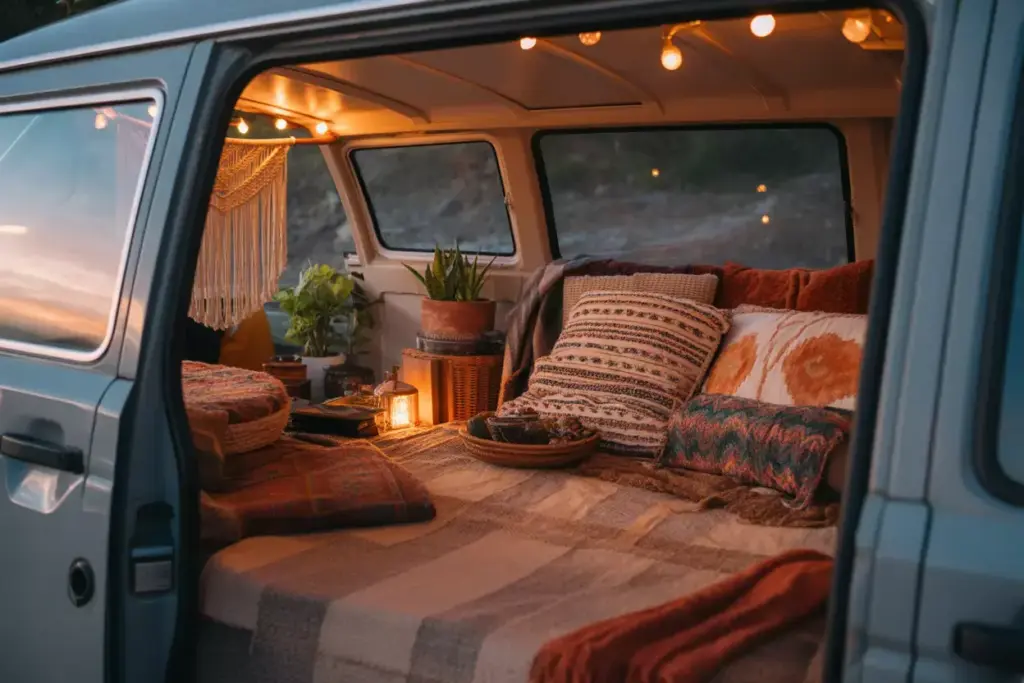
Bohemian van aesthetics celebrate creativity, comfort, and personal expression through rich textures, warm colors, and eclectic decorative elements. This style transforms van interiors into cozy sanctuaries that feel like traveling art galleries, perfect for free spirits who view their mobile homes as extensions of their creative personalities.
Color schemes in bohemian vans embrace warmth and richness, featuring deep jewel tones, earthy oranges, and warm reds balanced by natural wood and cream accents. These saturated colors create intimate, cocoon-like environments that feel dramatically different from minimalist approaches while still maintaining functionality.
Textile layering becomes central to bohemian van design, with multiple rugs, throw pillows, blankets, and tapestries creating visual and physical comfort. Moroccan-inspired patterns, Indian block prints, and vintage textiles add personality while serving practical purposes like insulation and sound dampening.
Decorative elements include macrame wall hangings, vintage mirrors, plants in woven baskets, and collected treasures from travels. These personal touches transform sterile van interiors into homes that reflect individual journeys and experiences, though careful curation prevents overwhelming small spaces.
Lighting approaches emphasize warm, ambient sources that enhance the cozy atmosphere. String lights, lanterns, and candles (or battery-operated alternatives) create magical evening environments, while natural light filters through patterned curtains or beaded window treatments during daytime hours.
Furniture choices often include floor cushions, low tables, and vintage finds that add character while maintaining functionality. Ottomans serve as seating, storage, and tables, while hanging chairs or hammocks provide unique relaxation spots when space permits.
Plant integration brings life and color into bohemian van designs, with hanging planters, window herb gardens, and carefully chosen low-maintenance species adding natural elements that complement the earthy, organic aesthetic central to this style.
3. Industrial Modern Edge
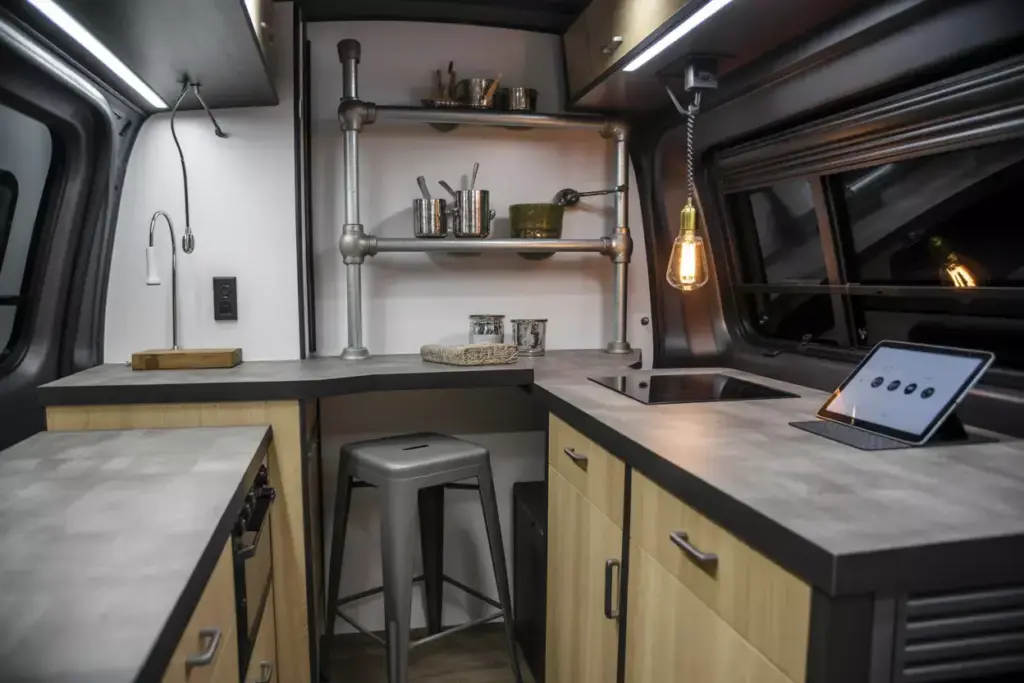
Industrial modern van aesthetics combine raw materials with sleek contemporary design, creating sophisticated interiors that feel urban and cutting-edge. This style appeals to those who appreciate clean lines and modern functionality while embracing the honest beauty of exposed materials and utilitarian elements.
Material palettes feature combinations of metal, concrete, reclaimed wood, and leather that create sophisticated contrast and visual interest. Exposed steel framing, concrete countertops, and weathered wood accents provide authentic industrial character while maintaining the refined sensibility of modern design.
Color schemes typically revolve around neutral foundations—grays, blacks, whites, and natural wood tones—with occasional bold accent colors like deep blues or burnt oranges. These restrained palettes allow material textures to take center stage while creating cohesive, sophisticated environments.
Hardware and fixtures showcase industrial influences through exposed bolts, metal pipe shelving, and utilitarian lighting fixtures. Edison bulb pendants, metal track lighting, and exposed electrical conduits become decorative elements that enhance rather than hide the mechanical aspects of van life.
Furniture design emphasizes clean lines and multi-functionality, often featuring custom-built pieces that integrate seamlessly with van infrastructure. Steel-framed seating, concrete-topped tables, and metal storage units provide durability while maintaining the industrial aesthetic.
Storage solutions often remain visible, becoming part of the design rather than hidden elements. Open metal shelving, wire baskets, and industrial-style cabinetry with exposed hardware create organized displays that showcase belongings as decorative elements.
Technology integration feels natural within industrial modern designs, with charging stations, entertainment systems, and smart home features blending seamlessly into the overall aesthetic rather than appearing as afterthoughts.
4. Rustic Farmhouse Comfort
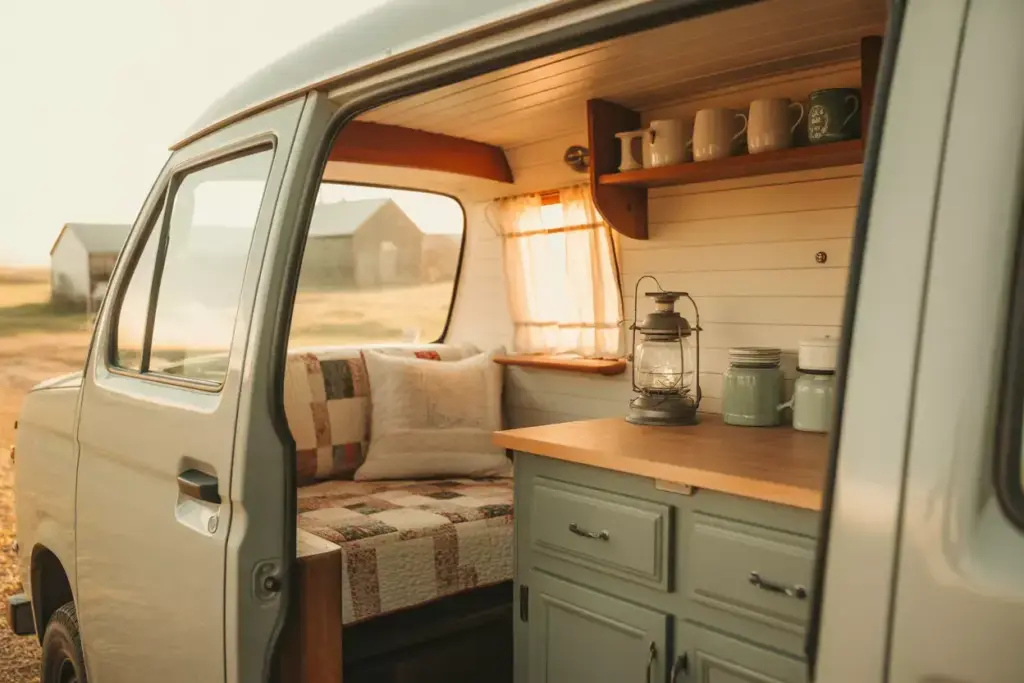
Rustic farmhouse aesthetics bring warmth, comfort, and nostalgic charm to van interiors through reclaimed materials, vintage accessories, and cozy design elements that evoke countryside living. This style creates homes on wheels that feel established and welcoming, perfect for those who value comfort and traditional craftsmanship.
Wood treatments dominate farmhouse van designs, with reclaimed barn wood, shiplap paneling, and distressed finishes creating authentic rustic character. These materials provide excellent insulation while adding visual warmth and texture that makes small spaces feel incredibly welcoming.
Color palettes center around warm, earthy tones—creams, sage greens, muted blues, and natural wood stains—that create cohesive, calming environments. These colors work together to establish the peaceful, countryside atmosphere central to farmhouse aesthetics.
Vintage elements include antique hardware, mason jar lighting, vintage signage, and repurposed furniture that adds character and tells stories. These carefully chosen pieces transform new van conversions into spaces that feel like they’ve been loved for generations.
Textile choices emphasize comfort and practicality through quilts, gingham patterns, burlap accents, and natural fibers that add softness while maintaining durability necessary for road life. These elements create cozy environments perfect for relaxation after long travel days.
Kitchen design often features farmhouse sinks, open shelving displaying vintage dishware, and butcher block countertops that combine functionality with rustic charm. These elements create cooking spaces that feel like country kitchens despite their compact size.
Lighting solutions include lantern-style fixtures, Edison bulbs, and warm LED strips that enhance the cozy atmosphere while providing adequate illumination for daily activities. Natural light filters through cafe curtains or simple window treatments that maintain privacy without blocking illumination.
5. Coastal Surf Sanctuary
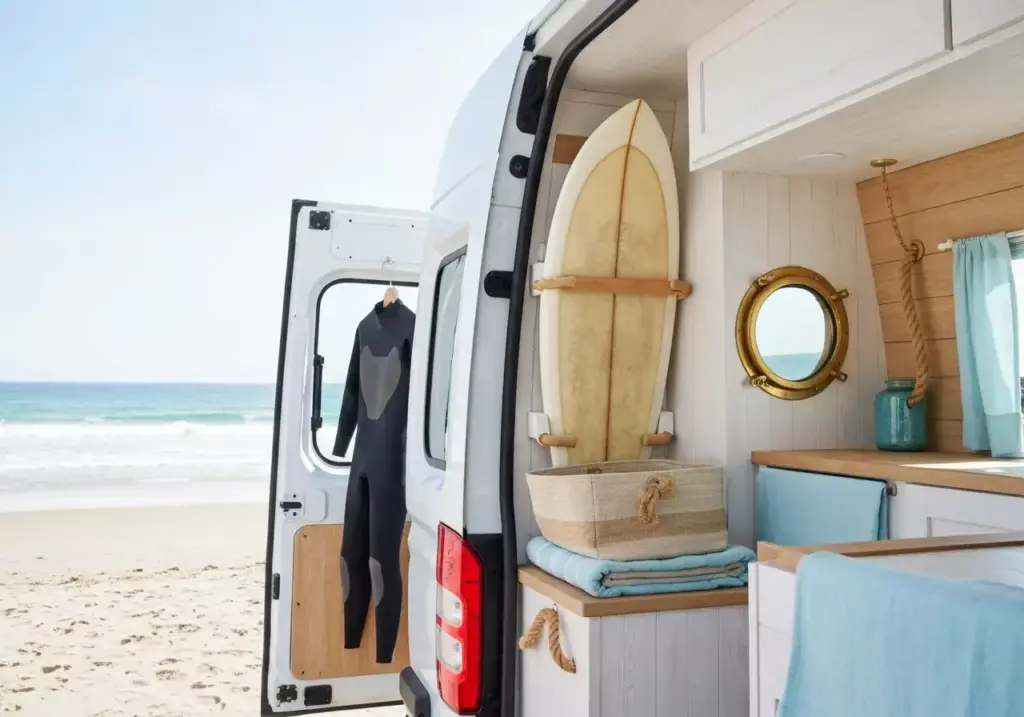
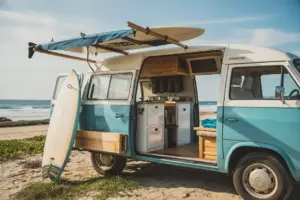
Coastal surf aesthetics capture the relaxed, sun-bleached beauty of beachside living through light colors, natural textures, and nautical-inspired elements. This style creates van interiors that feel like permanent vacation retreats, perfect for ocean lovers and those who find peace in coastal environments.
Color schemes revolve around ocean-inspired palettes featuring whites, soft blues, sandy beiges, and driftwood grays that evoke seaside tranquility. These colors create bright, airy environments that feel spacious and refreshing, essential for maintaining comfort during extended beach camping.
Material selections emphasize weathered, natural textures through whitewashed woods, rope accents, and sea glass-inspired decorative elements. These materials create authentic coastal character while providing durability necessary for sandy, salty environments.
Nautical elements include rope details, porthole-style windows or mirrors, and maritime hardware that adds authentic seafaring character without becoming theme-park kitsch. These elements should feel organic and functional rather than forced or overly decorative.
Surf gear integration becomes part of the design through custom storage solutions for boards, wetsuits, and beach equipment. Wall-mounted racks, gear cubbies, and outdoor shower setups maintain organization while keeping sandy items separate from living spaces.
Outdoor living extensions include awnings, outdoor kitchens, and deck areas that expand usable space when parked at beach locations. These elements acknowledge that coastal van life often centers around outdoor activities and al fresco dining.
Ventilation considerations become crucial in coastal environments, with multiple fans, windows, and air circulation systems preventing humidity buildup and salt air damage while maintaining comfort in varying weather conditions.
6. Urban Loft Sophistication
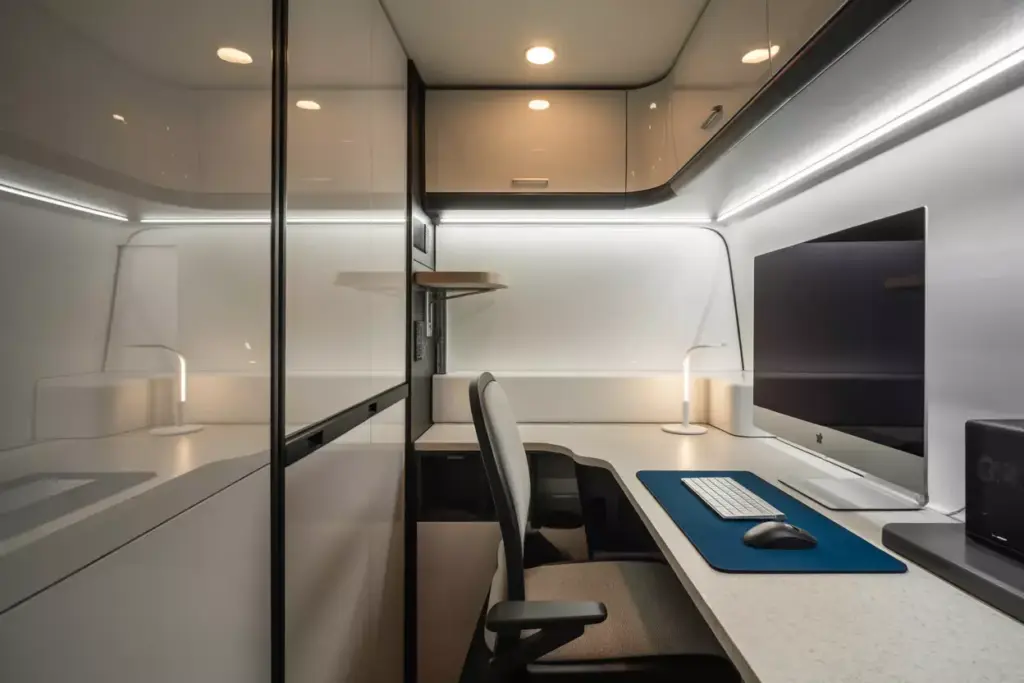
Urban loft aesthetics bring city sophistication to van interiors through sleek design elements, contemporary materials, and metropolitan sensibilities. This style creates mobile homes that feel like downtown apartments, perfect for digital nomads and urban explorers who want luxury and style on the road.
Design elements emphasize clean lines, geometric patterns, and sophisticated color palettes that create refined, gallery-like environments. These spaces feel curated and intentional, with every element chosen for both beauty and functionality.
Material choices include high-end finishes like quartz countertops, stainless steel appliances, and premium cabinetry hardware that elevate van interiors to luxury apartment standards. These investments create lasting value while providing daily enjoyment.
Technology integration becomes seamless and sophisticated, with hidden wiring, smart home systems, and high-end entertainment setups that maintain clean aesthetics while providing modern conveniences essential for remote work and urban living.
Lighting design emphasizes architectural elements through recessed lighting, under-cabinet illumination, and statement fixtures that create dramatic ambiance while providing excellent task lighting for work and daily activities.
Storage solutions remain completely hidden behind sleek cabinet faces, maintaining the clean, uncluttered appearance essential to urban loft aesthetics while providing ample organization for extended travel needs.
Workspace design receives special attention in urban loft vans, with dedicated office areas featuring ergonomic seating, adequate lighting, and technology infrastructure necessary for remote work and digital nomad lifestyles.
7. Desert Modern Zen
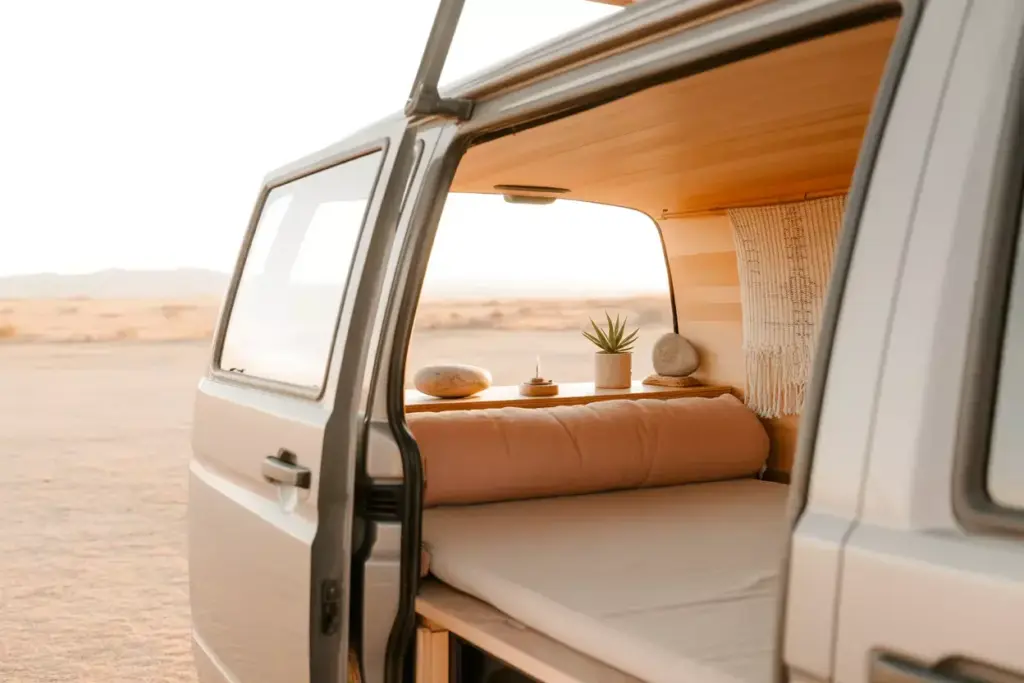
Desert modern aesthetics combine minimalist principles with warm, earthy elements inspired by southwestern landscapes. This style creates serene, spa-like environments that emphasize natural beauty, mindful living, and connection to the dramatic landscapes often explored during van life adventures.
Color palettes draw inspiration from desert sunsets and canyon walls, featuring warm terracotta, sage greens, cream, and natural stone tones that create calming, grounded environments. These colors work together to establish peaceful retreats perfect for meditation and relaxation.
Natural material emphasis includes stone accents, raw wood elements, and organic textures that bring outdoor beauty inside while maintaining sophisticated, refined sensibilities. These materials create authentic connections to natural environments without sacrificing comfort or style.
Plant integration focuses on low-maintenance succulents and desert species that thrive in van environments while adding living beauty and air purification benefits. These plants complement the desert aesthetic while providing practical benefits for extended travel.
Meditation spaces receive special consideration in desert modern designs, with dedicated areas for yoga, meditation, or quiet reflection that acknowledge the spiritual aspects of van life and solo travel experiences.
Outdoor integration emphasizes seamless transitions between interior and exterior spaces through large windows, outdoor living areas, and design elements that celebrate rather than hide the mobile nature of van life.
Minimalist storage keeps belongings organized and hidden while maintaining the clean, uncluttered aesthetic essential to zen-inspired living. Built-in solutions provide ample organization without visual distraction from the peaceful, meditative environment.
Practical Implementation Tips for Your Van Aesthetic
Choosing and implementing aesthetic themes requires careful planning and realistic budgeting to achieve desired results without overspending or creating impractical living situations. Budget allocation should prioritize structural elements and essential systems before focusing on decorative details, ensuring safety and functionality remain paramount throughout the conversion process.
Phased implementation allows for gradual aesthetic development over time, starting with basic functionality and adding decorative elements as budget and experience allow. This approach prevents overwhelming initial costs while providing opportunities to live in the space and understand needs before making permanent design decisions.
Quality investment priorities should focus on items used daily—mattresses, seating, lighting, and storage solutions—while decorative elements can often be sourced affordably through thrift stores, online marketplaces, and DIY projects that add personality without breaking budgets.
Seasonal considerations affect both material choices and design elements, with successful van aesthetics adapting to varying climates and weather conditions encountered during extended travel. Removable elements, adjustable systems, and weather-resistant materials ensure designs remain beautiful and functional year-round.
Customizing Themes to Personal Preferences
While these seven aesthetic themes provide excellent starting points, the most successful van conversions blend elements from multiple styles to create unique, personalized environments that reflect individual tastes and travel styles. Hybrid approaches often produce the most satisfying results, combining practical elements from one style with decorative elements from another.
Personal collection integration allows travelers to incorporate meaningful items, artwork, and mementos that transform generic aesthetic themes into deeply personal spaces. These elements should be secured properly for travel while adding character and emotional connection to mobile homes.
Lifestyle adaptation ensures chosen aesthetics support rather than hinder daily activities and travel goals. Work-from-road nomads need different design priorities than weekend warriors, while full-time travelers require more comprehensive storage and comfort solutions than occasional users.
Evolution planning acknowledges that aesthetic preferences and practical needs change over time, making flexible design choices that allow for updates and modifications without requiring complete overhauls of existing conversions.
Conclusion
Creating beautiful, functional van interiors requires balancing aesthetic vision with practical necessities, resulting in mobile homes that inspire daily joy while supporting life on the road. These 7 stunning van living aesthetic interior themes to copy provide proven frameworks for transforming basic van shells into sophisticated living spaces that rival traditional homes in comfort and style.
Success lies not in perfectly replicating any single aesthetic but in understanding the principles behind each style and adapting them to personal needs, budgets, and travel goals. Whether drawn to Scandinavian minimalism’s serene simplicity or bohemian warmth’s creative expression, the key involves thoughtful planning, quality material choices, and implementation that prioritizes both beauty and functionality.
Take action today by identifying which aesthetic themes resonate most strongly with personal style preferences and travel goals. Create mood boards, gather inspiration photos, and begin planning conversion projects that will transform van life dreams into beautiful reality. Remember that the most stunning van interiors evolve over time, growing more personal and refined through lived experience and gradual improvements.
The road awaits, and with thoughtful design choices inspired by these proven aesthetic themes, every mile traveled becomes an opportunity to enjoy the beauty and comfort of a truly stunning mobile home.