9 Travel Essentials for Your Hawaii Camping and Hiking Vacation
Imagine standing at the trailhead of the Kalalau Trail on Kauai’s Na Pali Coast — the ocean glittering below, jungle pressing in on both sides, and the sun already blazing overhead at 8 a.m. You’re excited, but are you prepared? Hawaii is one of the most breathtaking destinations on Earth, but its trails can punish the unprepared hiker fast. That’s why knowing the 9 Travel Essentials for Your Hawaii Camping and Hiking Vacation before you leave home can be the difference between a dream trip and a miserable one. Whether you’re planning a multi-day camping adventure on the Big Island or a day hike through Maui’s Haleakalā crater, this guide covers everything you need to pack smart, stay safe, and make the most of every trail.

Key Takeaways
- 🌞 Sun protection is non-negotiable — Hawaii’s UV index is among the highest in the U.S., and exposed ridgeline trails offer zero shade.
- 💧 Hydration gear matters — An insulated water bottle keeps drinks cold for hours in tropical heat.
- 👟 Skip the heavy boots — Lightweight, breathable footwear outperforms traditional hiking boots on Hawaii’s varied terrain.
- 🦟 Bug spray is often forgotten — Dense vegetation on many trails means mosquitoes and other insects are a real concern.
- 🔦 Always carry a headlamp — Trails can turn dark quickly, especially if you underestimate hike time.
Why Packing Right Makes or Breaks Your Hawaii Adventure
Hawaii isn’t your average hiking destination. The islands offer an extraordinary mix of terrain — volcanic rock fields, rainforest canopies, coastal cliffs, and alpine summits — sometimes all within a single day’s hike. The climate shifts dramatically depending on elevation and island side, ranging from humid and rainy on windward coasts to hot and dry on leeward slopes.
Because of this variety, your gear needs to be versatile, lightweight, and purpose-built for tropical conditions. Heavy winter hiking gear will leave you drenched in sweat. Cotton clothing will stay wet and cause chafing. And forgetting sunscreen on an exposed ridgeline trail? That’s a recipe for a painful sunburn that ruins the rest of your trip.
The good news: you don’t need to overpack. The 9 Travel Essentials for Your Hawaii Camping and Hiking Vacation outlined in this guide are carefully curated to cover every major challenge Hawaii’s trails throw at you — without weighing down your luggage.
💬 “The best gear is the gear you barely notice you’re wearing — until you need it.”
The Complete 9 Travel Essentials for Your Hawaii Camping and Hiking Vacation
1. Lightweight, Breathable Hiking Shoes

Your feet are your most important tool on any trail, and in Hawaii, footwear choice can make or break your entire experience. Unlike alpine environments where stiff, heavy boots provide ankle support on snow and ice, Hawaii’s trails call for something different.
Most experienced Hawaii hikers opt for lightweight, ventilated trail shoes rather than traditional hiking boots. A popular choice is the Merrell Moab 2 Vent — a shoe that balances durability, grip, and breathability exceptionally well. The ventilated mesh upper allows airflow to keep feet cool in tropical heat, while the Vibram outsole grips volcanic rock and muddy trail surfaces with confidence.
What to look for in Hawaii hiking shoes:
- Mesh or ventilated upper for airflow
- Grippy rubber outsole (Vibram or equivalent)
- Low-to-mid cut profile for flexibility
- Quick-drying materials for stream crossings
- Snug heel fit to prevent slipping on steep descents
Avoid waterproof-membrane shoes like Gore-Tex in Hawaii’s humid climate. They trap heat and moisture inside the shoe rather than letting it escape, which can lead to blisters faster than a breathable alternative would.
2. High-Performance Moisture-Wicking Socks
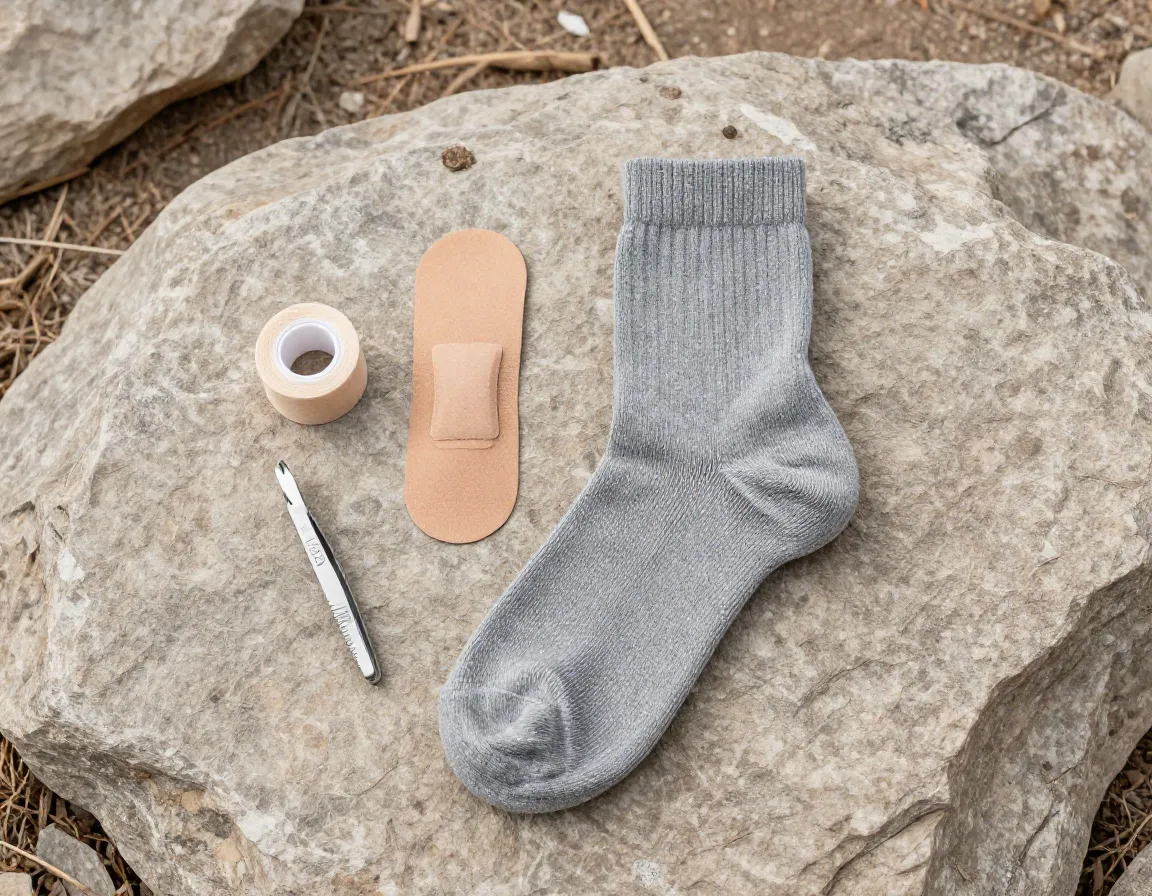
Great shoes mean nothing without the right socks underneath them. Moisture-wicking socks are one of the most underrated items on any Hawaii packing list, yet they play a huge role in blister prevention and overall foot comfort.
Darn Tough Socks (made with merino wool) are a top recommendation among experienced hikers. Despite being wool, they remain breathable, wick moisture away from skin efficiently, and dry faster than cotton alternatives. They also resist odor naturally — a bonus on multi-day camping trips.
| Sock Type | Moisture Wicking | Blister Protection | Drying Speed |
|---|---|---|---|
| Cotton | ❌ Poor | ❌ Poor | ❌ Slow |
| Synthetic | ✅ Good | ✅ Good | ✅ Fast |
| Merino Wool | ✅ Excellent | ✅ Excellent | ✅ Moderate |
Pack at least two pairs per day of hiking if you’re on a multi-day camping trip. Wet socks are a leading cause of trail blisters, and in Hawaii’s humid conditions, your feet will sweat more than you expect.
3. Reef-Safe Sunscreen (SPF 50+)
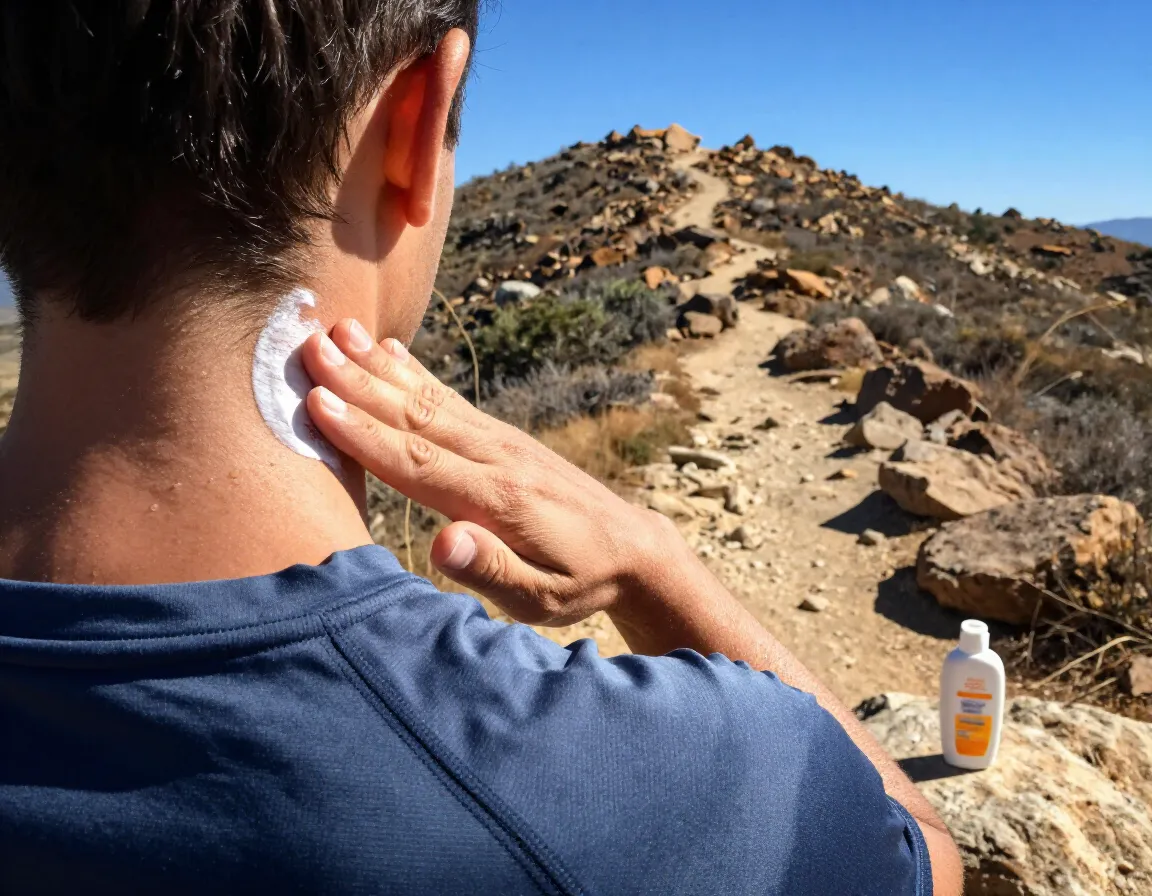
🌞 This one surprises many first-time Hawaii hikers. Sunscreen is frequently left at the hotel because people associate it with beach days — not hiking. But Hawaii’s trails are often exposed ridgelines, open lava fields, and coastal paths with zero shade, where the UV index regularly hits 10 or above.
Hawaii’s sun is intense at any elevation, and the reflection off volcanic rock and ocean water amplifies UV exposure significantly. A bad sunburn on day two of a seven-day trip is more than uncomfortable — it can sideline you entirely.
Important note for 2026 travelers: Hawaii state law requires reef-safe sunscreen — meaning products free of oxybenzone and octinoxate. These chemicals harm coral reefs and are banned for sale in Hawaii. Make sure to bring compliant sunscreen from home or purchase reef-safe options on the islands.
Recommended application strategy:
- Apply 20–30 minutes before hitting the trail
- Reapply every 90 minutes, especially after sweating
- Don’t forget ears, back of neck, and tops of hands
- Use SPF 50+ for full-day exposed hikes
4. Ventilated Daypack
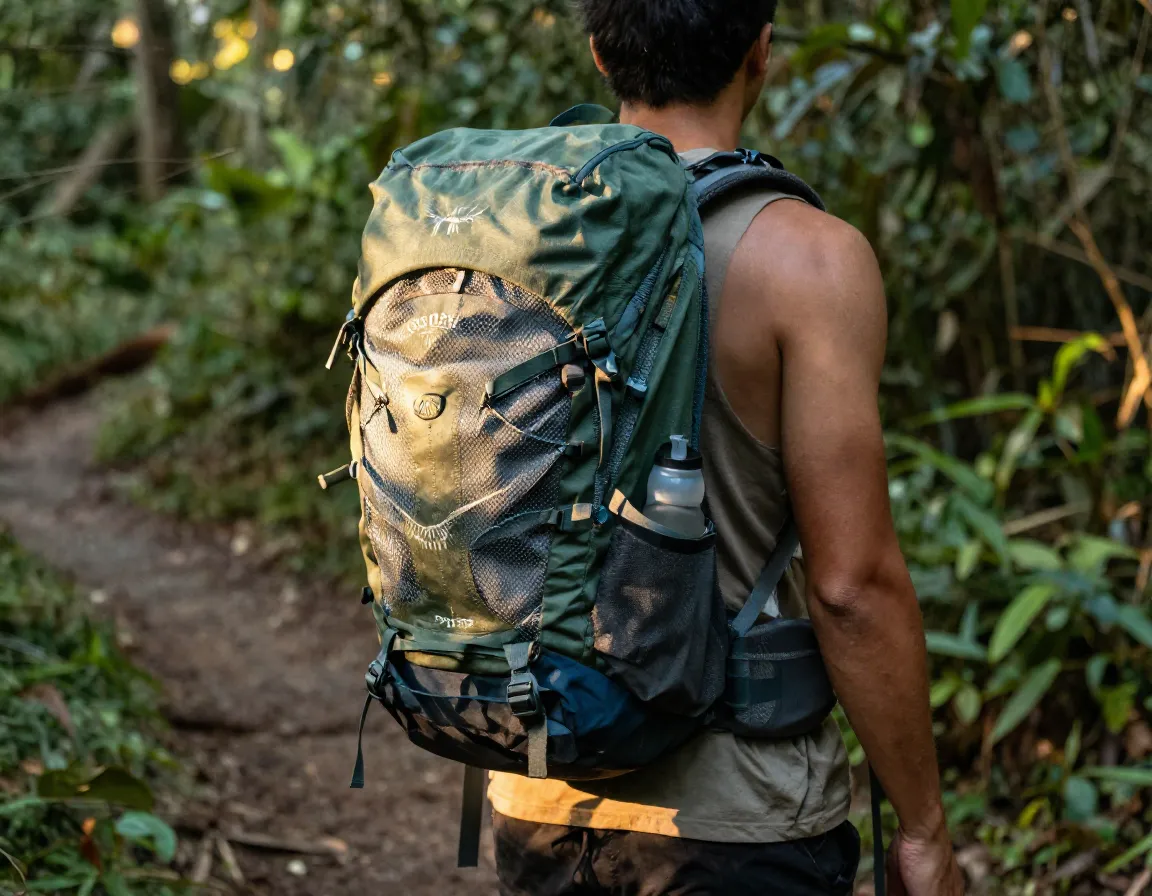
Carrying your gear comfortably is just as important as what you carry. A well-designed daypack with mesh back ventilation keeps air flowing between the pack and your back, reducing sweat buildup significantly in Hawaii’s humid climate.
The Osprey Daylite Plus is a frequently recommended option — it features a suspended mesh back panel, padded shoulder straps, and enough volume (20L) to carry water, snacks, a first aid kit, sunscreen, and a rain layer comfortably. It’s also lightweight enough not to add unnecessary burden on longer day hikes.
What your daypack should include:
- Hydration reservoir compatibility or external water bottle pockets
- Hip belt for weight distribution on longer hikes
- Chest strap for stability on technical terrain
- Rain cover or water-resistant material
- Ventilated back panel
For multi-day camping trips, you’ll want a larger pack (50–65L), but for day hikes, keep it compact and light. Every extra pound matters after mile six on a ridge trail.
5. Insulated Water Bottle
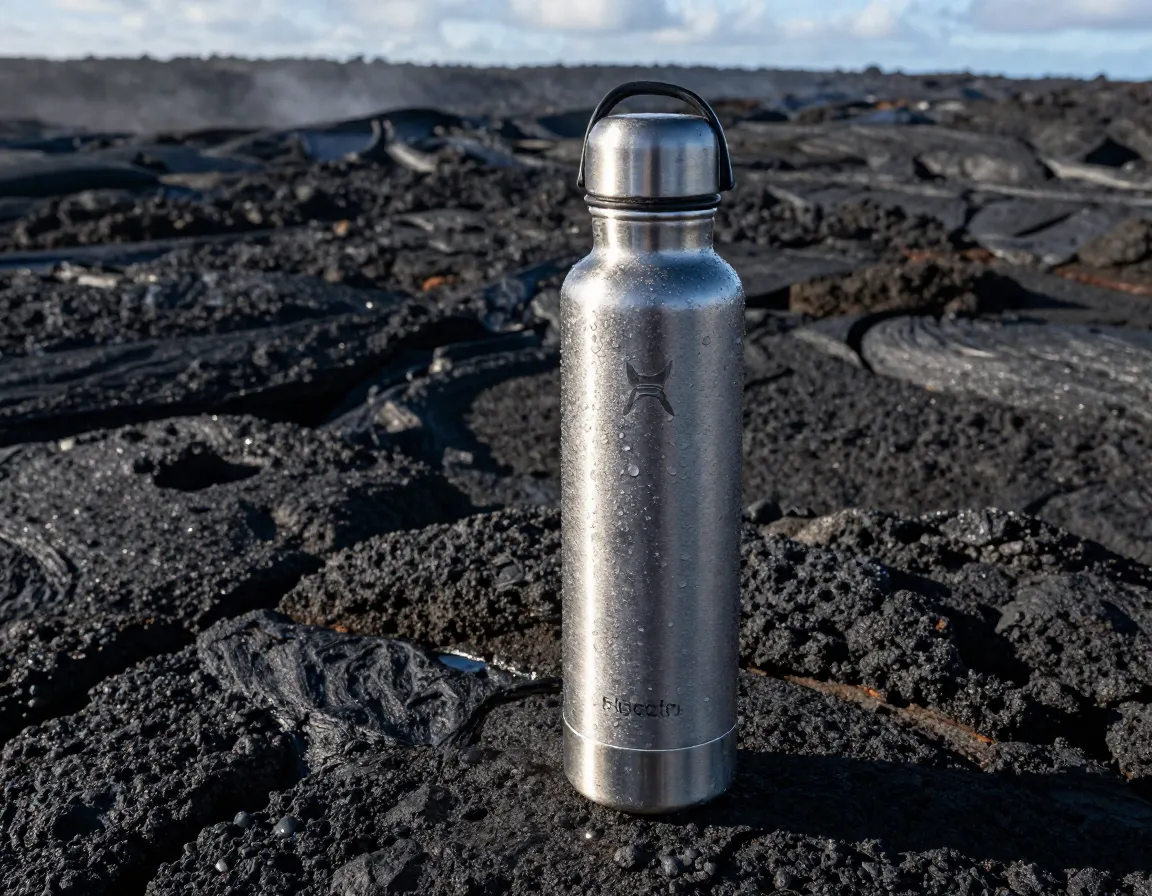
💧 Staying hydrated in Hawaii isn’t optional — it’s survival. Heat, humidity, and physical exertion combine to accelerate dehydration faster than most hikers realize. The 32 oz HydroFlask has become a go-to recommendation for Hawaii hikers for good reason.
Its double-wall vacuum insulation keeps cold water cold for up to 24 hours, even when the bottle sits in direct sunlight inside your pack. On a hot lava field hike on the Big Island, that cold water at mile four feels like a reward worth every dollar the bottle costs.
Hydration tips for Hawaii hiking:
- Drink at least 500ml of water per hour of hiking in warm conditions
- Hawaii’s tap water is safe and potable on all major islands — refill at trailhead stations when available
- Carry at least 2 liters for any hike longer than 3 miles
- Add electrolyte tablets to replace sodium and minerals lost through sweat
- Never rely solely on finding natural water sources on the trail
💬 “Dehydration sneaks up on you in Hawaii. By the time you feel thirsty, you’re already behind.”
6. Insect Repellent and Bug Spray
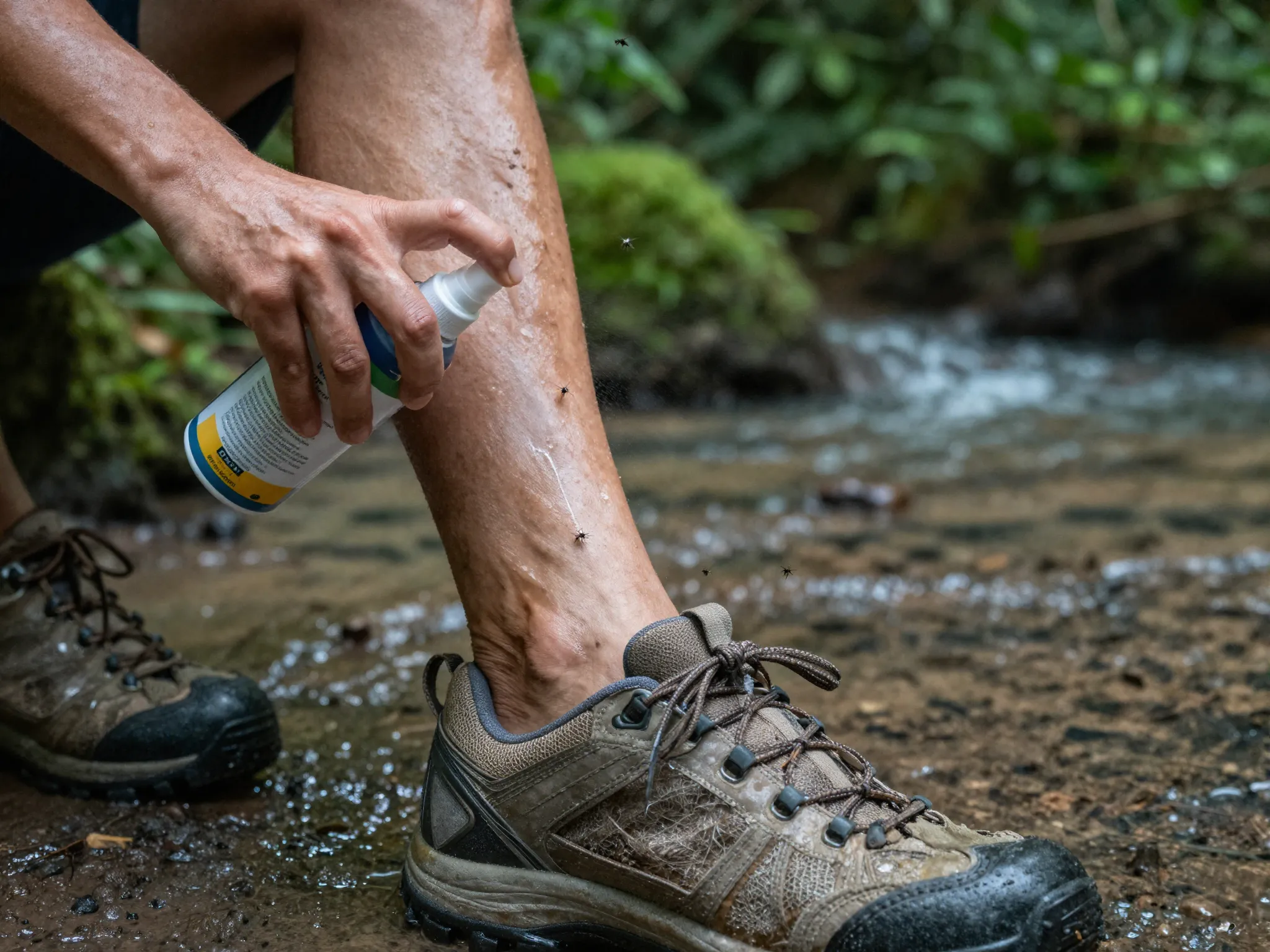
🦟 Many first-time Hawaii hikers are surprised to discover that mosquitoes are a real problem on the islands, particularly in rainforest areas, near streams, and anywhere with dense vegetation. If your itinerary includes any trail that passes through jungle or requires bushwhacking through overgrowth, bug spray is non-negotiable.
Beyond mosquitoes, some trails have issues with other biting insects. The good news is that Hawaii has no venomous snakes or dangerous spiders to worry about — but insect bites can still cause irritation, allergic reactions, and in rare cases, disease transmission.
Choosing the right insect repellent:
- DEET-based sprays (20–30% DEET) offer reliable, long-lasting protection
- Picaridin-based options are effective and less harsh on skin and gear
- Plant-based alternatives (citronella, eucalyptus) offer lighter protection for low-bug environments
- Avoid applying repellent to open wounds or directly around eyes
Apply bug spray to exposed skin and the cuffs of pants and sleeves before entering vegetated trail sections. Reapply after heavy sweating or rain.
7. Headlamp or Compact Flashlight
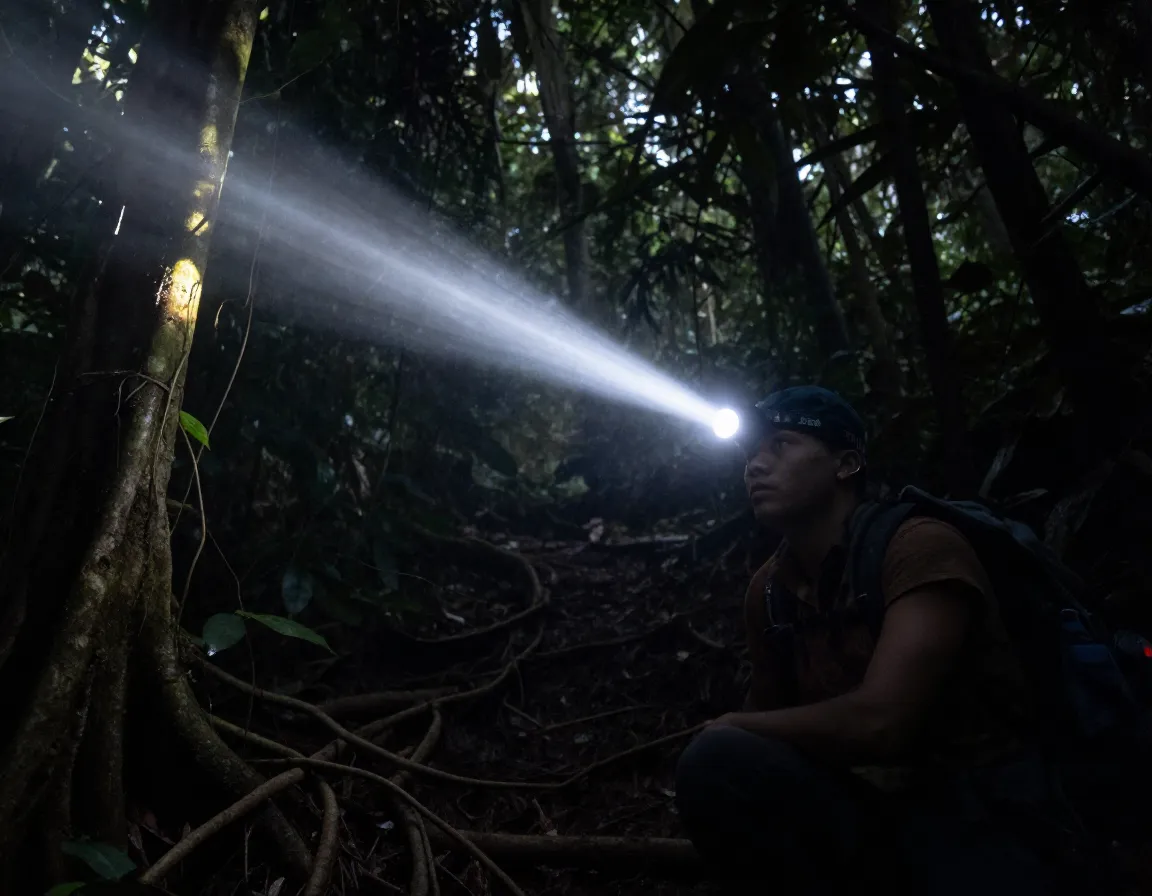
🔦 Here’s a scenario that happens more often than you’d think: you start a hike at 2 p.m., confident you’ll be back before sunset. But the trail takes longer than expected, you stop to take photos, and suddenly it’s getting dark — and you’re still a mile from the trailhead.
In Hawaii, sunset comes fast and jungle trails go pitch black almost immediately after. A headlamp is far superior to a handheld flashlight because it keeps both hands free for navigating rocky terrain, grabbing trail ropes, or catching yourself on a steep descent.
Features to look for in a trail headlamp:
- Minimum 200 lumens output for adequate trail visibility
- Red light mode to preserve night vision
- Water-resistant or waterproof rating (IPX4 or higher)
- Adjustable beam angle
- Lightweight design (under 100g)
- Long battery life or USB-rechargeable
The Black Diamond Spot 400 and Petzl Actik Core are both excellent options that cover all these bases. Pack extra batteries or ensure your rechargeable headlamp is fully charged the night before each hike.
8. High-Nylon Hiking Pants
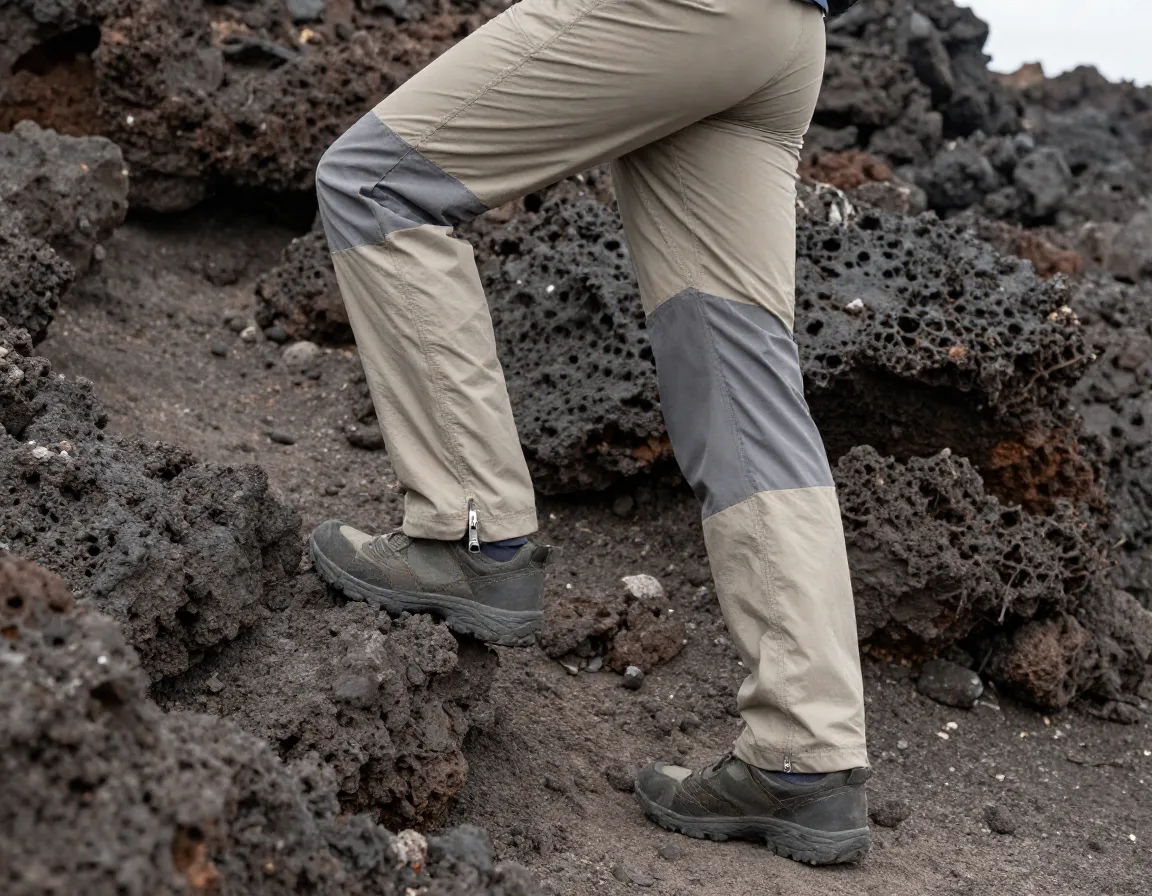
Shorts might seem like the obvious choice for Hawaii’s warm climate, but experienced hikers know that nylon hiking pants offer protection that shorts simply can’t match — especially on trails with dense overgrowth, sharp volcanic rock, or heavy insect presence.
Look for pants that are at or near 100% nylon construction. Nylon resists tearing against sharp vegetation and rock edges far better than cotton or polyester blends. It also dries quickly after rain or stream crossings and offers a degree of UV protection for your legs on exposed trail sections.
Benefits of nylon hiking pants in Hawaii:
- Tear-resistant against volcanic rock and thorny vegetation
- Quick-drying after rain or stream crossings
- Lightweight and packable
- Provides UV protection (look for UPF 30+ rated options)
- Reduces insect bite exposure on vegetated trails
Many hikers opt for convertible pants that zip off into shorts — offering the flexibility to switch based on trail conditions. This is an especially smart choice for Hawaii where you might start in a shaded rainforest and finish on a sunny coastal section.
9. Basic First Aid Kit and Emergency Essentials

No list of the 9 Travel Essentials for Your Hawaii Camping and Hiking Vacation would be complete without addressing safety gear. Hawaii’s trails range from well-maintained and heavily trafficked to remote, rugged, and rarely patrolled. Cell service is unreliable or nonexistent on many trails, and rescue operations can be slow and expensive.
A compact first aid kit tailored for hiking should include:
- Adhesive bandages in multiple sizes
- Moleskin or blister pads (critical for foot care)
- Antiseptic wipes and antibiotic ointment
- Elastic bandage for sprains
- Medical tape
- Pain relievers (ibuprofen or acetaminophen)
- Tweezers (for splinters or thorns)
- Emergency whistle
- Mylar emergency blanket
Beyond the first aid kit, consider these emergency essentials:
- Trail map or downloaded offline GPS (apps like AllTrails work offline)
- Personal locator beacon (PLB) for remote multi-day hikes
- Rain jacket or packable windbreaker — Hawaii’s weather changes rapidly, especially at elevation
- Snacks with high caloric density — trail mix, energy bars, or jerky
💬 “The trail doesn’t care about your schedule. Always carry more than you think you need.”
Quick reference: Hawaii hiking safety rules
- Always tell someone your planned route and expected return time.
- Check weather forecasts for your specific trailhead location — not just the nearest town.
- Never hike past posted warning signs or barriers.
- Respect trail closures — many exist due to dangerous erosion or flash flood risk.
- Leave No Trace: pack out all waste, including food scraps.
Bonus Tips for Hawaii Camping and Hiking in 2026
Before you hit the trail, a few additional considerations can make your trip smoother:
Permits and reservations: Many of Hawaii’s most popular trails and campgrounds now require advance permits. The Kalalau Trail on Kauai, Haleakalā National Park on Maui, and backcountry camping on the Big Island all have permit systems. Book as early as possible — popular dates fill up months in advance.
Layering strategy: Even in tropical Hawaii, temperatures at elevation (especially on Haleakalā at 10,000 feet) can drop below 40°F. Pack a lightweight insulating layer and a wind/rain shell for any hike above 5,000 feet.
Footwear for lava fields: If you plan to hike across active or recent lava flows, consider bringing a second pair of older trail shoes. Sharp lava can destroy shoe soles quickly and permanently.
Trekking poles: While not on the core essentials list, collapsible trekking poles are highly recommended for steep descents on muddy trails — a common condition on Kauai and the Big Island’s rainforest hikes.
Conclusion
Hawaii’s trails are among the most rewarding — and demanding — in the world. The right preparation transforms a potentially miserable experience into an unforgettable adventure. By packing the 9 Travel Essentials for Your Hawaii Camping and Hiking Vacation outlined in this guide, you’re setting yourself up for success on every trail, whether you’re chasing sunrise on Haleakalā or navigating the lush valleys of the Na Pali Coast.
Your actionable next steps:
- Audit your current gear against this list and identify what you need to purchase or upgrade.
- Book permits early for your target trails — many require reservations months in advance.
- Break in new shoes before your trip — never hike Hawaii’s trails in brand-new footwear.
- Download offline trail maps on AllTrails or Gaia GPS before you lose cell service.
- Pack reef-safe sunscreen from home to ensure compliance with Hawaii’s environmental laws.
The islands are waiting. Pack smart, hike safely, and enjoy every breathtaking step. 🌺
References
- Hawaii Hiking Gear Guide — Recommended footwear, socks, and sun protection for island trails. Outdoor Hawaii, 2022.
- Insect Repellent Use on Hawaii Trails — Practical advice for managing insects in tropical hiking environments. Hawaii Trail Users Coalition, 2021.
- Osprey Daylite Plus and HydroFlask Reviews — Gear testing and recommendations for Hawaii day hiking. Switchback Travel, 2023.
- Hawaii State Sunscreen Law — Oxybenzone and octinoxate ban for reef protection. Hawaii Department of Health, 2021.
- Nylon Hiking Pants for Tropical Environments — Fabric performance testing in high-humidity conditions. Outdoor Gear Lab, 2022.