8 Travel Essentials for Long Flights to Your Next Hiking Destination
Imagine stepping off a 14-hour flight, stiff and exhausted, only to face a trailhead the very next morning. I’ve been there — and trust me, what you pack on the plane matters just as much as what’s in your hiking pack. Whether you’re heading to Patagonia, the Himalayas, or the Scottish Highlands, the right gear can mean the difference between arriving energized and arriving wrecked.
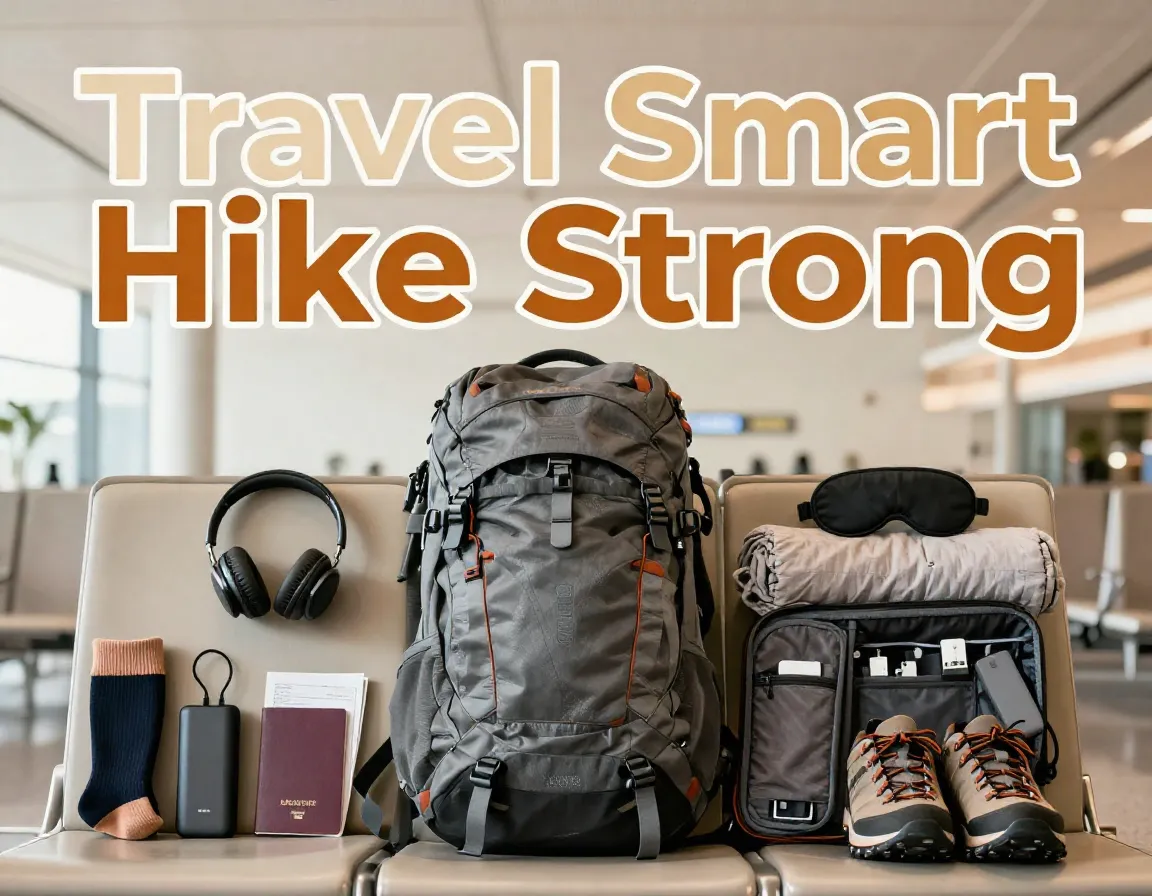
This guide covers the 8 Travel Essentials for Long Flights to Your Next Hiking Destination — carefully chosen items that protect your body, keep your devices charged, and set you up for trail success from the moment you land. These aren’t just comfort luxuries; they’re strategic tools for serious hikers who take their travel days as seriously as their summit days.
Key Takeaways
- 🎧 Noise-canceling headphones and sleep masks dramatically improve in-flight rest, helping you arrive refreshed for physical activity.
- 🧦 Compression socks and travel pillows protect circulation and reduce swelling during prolonged sitting — critical before strenuous hikes.
- 🔋 Portable power banks and USB-C adapters keep all your devices charged across long travel days and layovers.
- 🎒 Packing cubes and tech organizers maximize carry-on space and keep hiking gear separate from flight essentials.
- 💧 Post-flight items like water purifying bottles and sun protection bridge the gap between the cabin and the trailhead.
Why Your In-Flight Prep Matters as Much as Your Trail Prep
Most hikers obsess over gear lists for the trail but give little thought to the 10–20 hours they spend getting there. That’s a mistake. Long-haul flights cause muscle stiffness, dehydration, jet lag, and swollen feet — all of which directly impact your first days on the trail.
💬 “The best hikers I know treat the travel day as part of the expedition. They arrive ready, not recovering.”
When you’re flying to a remote hiking destination, you often can’t afford a full rest day. Flights are expensive, permits are time-limited, and guides don’t wait. That’s why packing the right essentials for your long flight isn’t optional — it’s part of your hiking strategy.
Let’s break down each essential in detail.
The Complete Guide to 8 Travel Essentials for Long Flights to Your Next Hiking Destination
1. Noise-Canceling Headphones or Earbuds
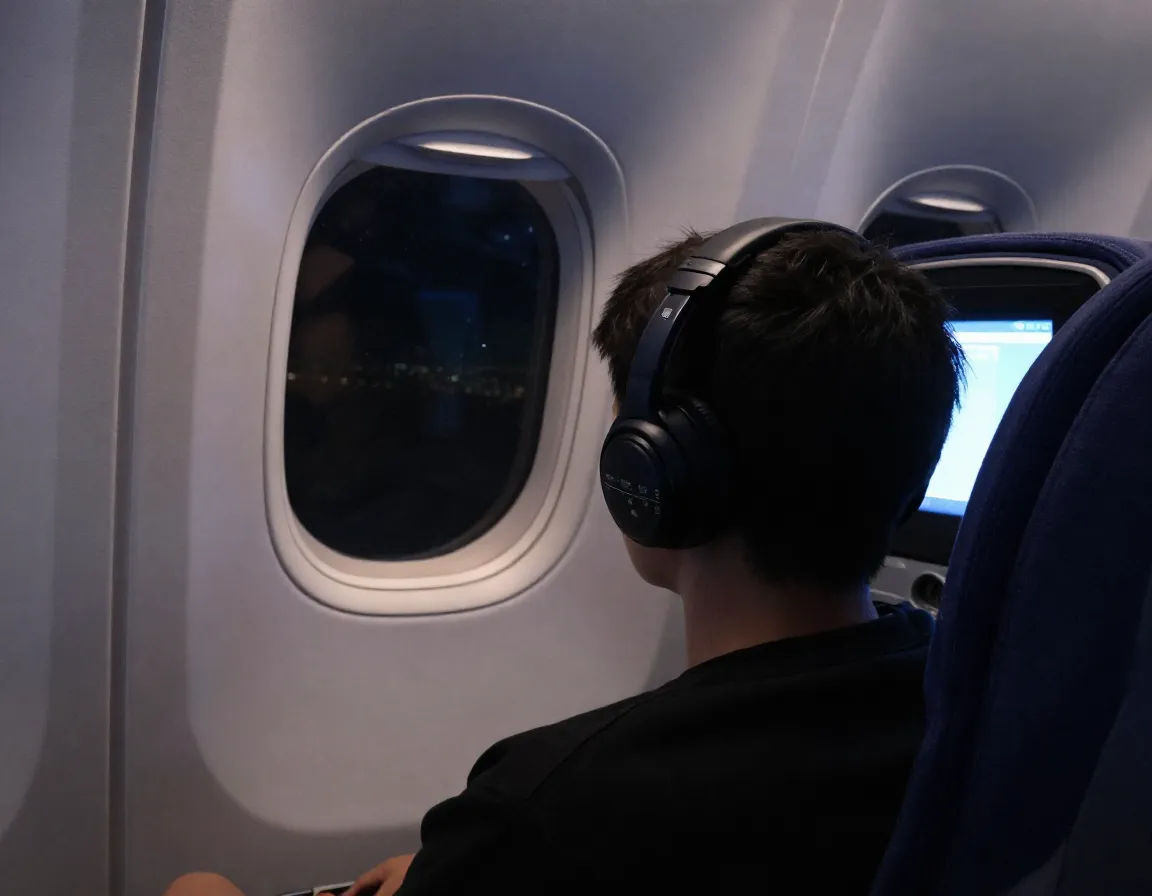
Why it’s essential: Cabin noise on a long-haul flight averages around 85 decibels — roughly equivalent to heavy traffic. That constant drone makes it nearly impossible to sleep or relax, leaving you fatigued before you even reach the trailhead.
Noise-canceling headphones are one of the single biggest game-changers for long-haul travel. They block engine roar, crying babies, and chatty neighbors so you can actually rest. Apple AirPods Pro and Sony WH-1000XM5 are two top picks in 2026, with the AirPods Pro offering a quick-charge case that gives you an hour of listening from just five minutes of charging — perfect when you’re rushing between gates.
What to look for:
- Active noise cancellation (ANC), not just passive
- At least 6–8 hours of battery life
- Comfortable fit for extended wear
- Transparency mode for when you need to hear announcements
| Feature | AirPods Pro | Sony WH-1000XM5 |
|---|---|---|
| ANC Quality | Excellent | Best-in-class |
| Battery Life | 6 hrs (30 with case) | 30 hrs |
| Quick Charge | ✅ 5 min = 1 hr | ✅ 3 min = 3 hrs |
| Form Factor | In-ear | Over-ear |
| Best For | Lightweight travel | Deep sleep sessions |
Pro tip: Download your podcasts, audiobooks, or sleep playlists before you board. In-flight Wi-Fi is unreliable and expensive.
2. Portable Power Bank (10,000mAh Minimum)

Why it’s essential: A dead phone at a foreign airport is a hiker’s nightmare. Navigation apps, translation tools, trail maps, and emergency contacts all live on your devices. Running out of battery mid-journey is not just inconvenient — it can be genuinely dangerous.
A 10,000mAh power bank is the minimum I recommend for a long-haul flight. It can fully charge most smartphones twice and give your noise-canceling headphones multiple top-ups. If you’re carrying a tablet or laptop, consider stepping up to 20,000mAh.
Top features to prioritize:
- USB-C Power Delivery (PD) for fast charging
- Dual or triple output ports
- Compact, airline-approved size (under 100Wh)
- LED charge indicator
💡 Important: Airlines restrict power banks to carry-on luggage only. Never pack them in checked bags — lithium batteries are a fire risk and will be confiscated.
Recommended picks for 2026:
- Anker 737 Power Bank – 24,000mAh, fast charge, display screen
- Zendure SuperMini – Ultra-compact 10,000mAh, great for minimalists
- Baseus Blade – Slim profile, 20,000mAh, USB-C PD
3. USB-C Adapter and Compact Travel Power Strip
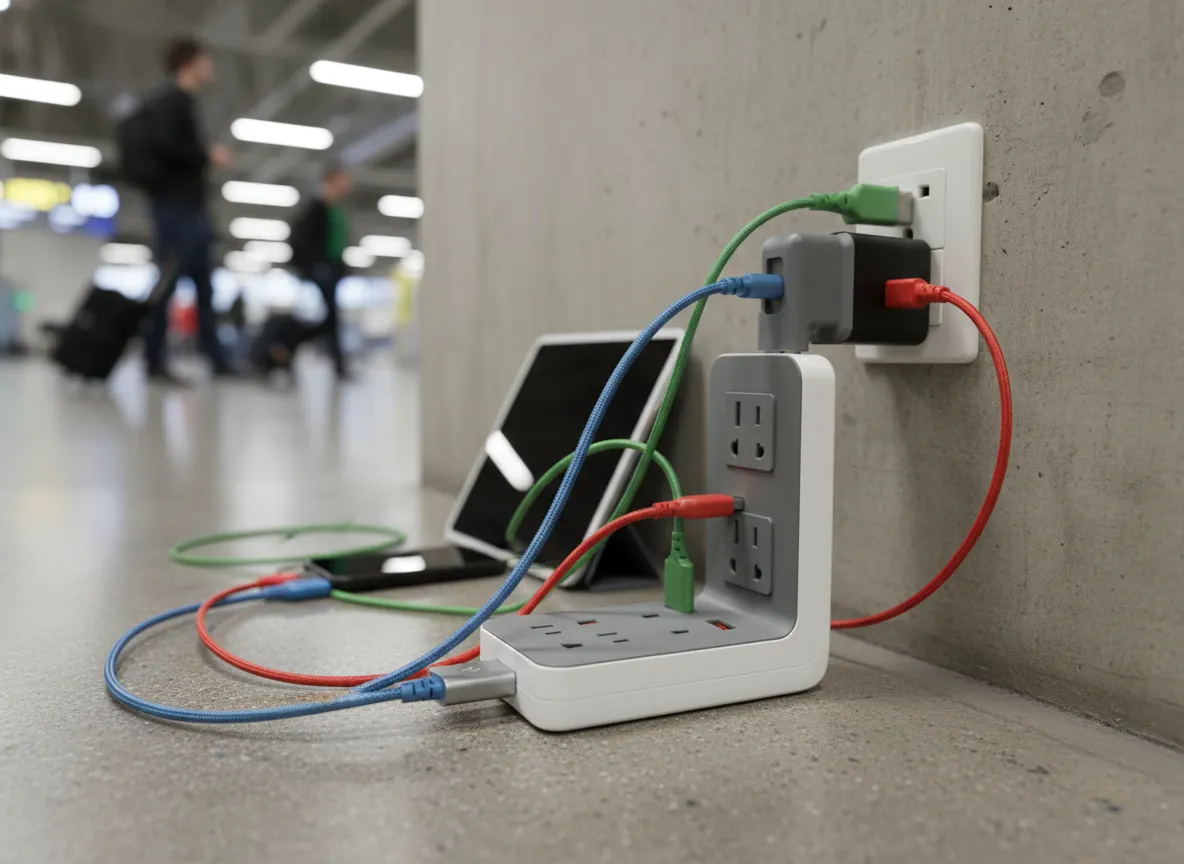
Why it’s essential: Modern hikers carry a lot of tech — phones, headphones, GPS watches, cameras, and e-readers. Managing five different chargers is a cable nightmare. A USB-C multi-port adapter or a compact travel power strip solves this instantly.
A good travel power strip with built-in USB-A and USB-C ports lets you charge multiple devices from a single outlet — a lifesaver in airports where power points are scarce and shared. Look for models with surge protection and a flat, foldable plug design.
What to pack:
- 1x USB-C to USB-A adapter (for older cables)
- 1x multi-port USB-C hub or travel power strip
- 1x universal travel adapter (if flying internationally)
Bonus tip: Many hikers overlook the universal travel adapter. Plug types vary dramatically between countries. A universal adapter with USB ports built in reduces your total plug count significantly.
4. Eye Mask and Earplugs
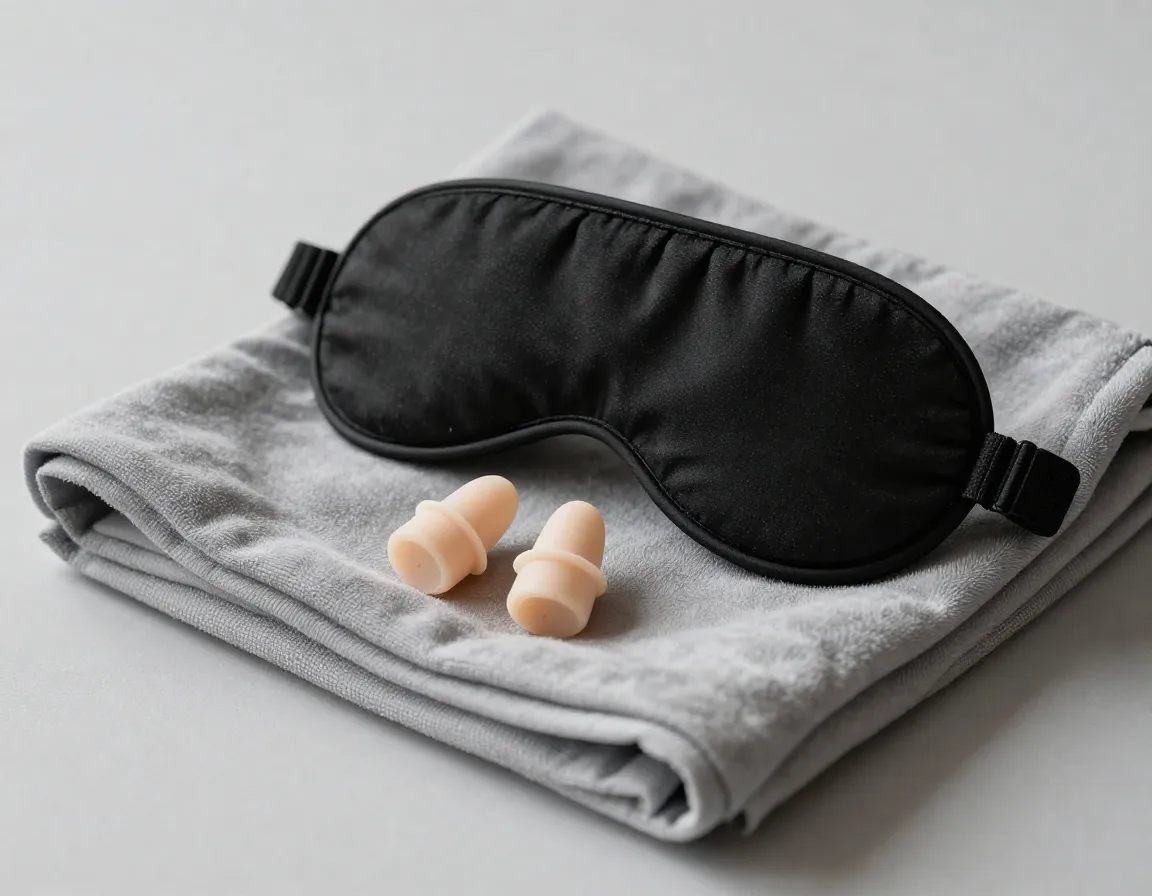
Why it’s essential: Sleep is your most powerful recovery tool. For hikers facing demanding physical days immediately after landing, getting even 4–6 hours of quality sleep on a long flight can make a massive difference.
Eye masks block out cabin lighting, screen glare from neighboring passengers, and the harsh overhead lights that flight crews love to turn on at 3 a.m. Earplugs provide a passive, battery-free backup to your noise-canceling headphones — or a complement to them for maximum sound blocking.
💬 “A $12 sleep mask and a pair of foam earplugs might be the highest ROI items in your entire travel kit.”
What to look for in a sleep mask:
- Contoured design that doesn’t press on your eyelids
- Soft, breathable fabric (silk or memory foam)
- Adjustable strap that doesn’t snag hair
- Lightweight enough to forget you’re wearing it
For earplugs:
- Foam plugs with a Noise Reduction Rating (NRR) of 30+ are ideal
- Reusable silicone options are more eco-friendly
- Pack 2–3 pairs in case one gets lost
Recommended combo: Pair a Manta Sleep Mask (contoured, blackout design) with Mack’s Pillow Soft Silicone Earplugs for a near-total sensory blackout experience.
5. Travel Pillow and Compression Socks
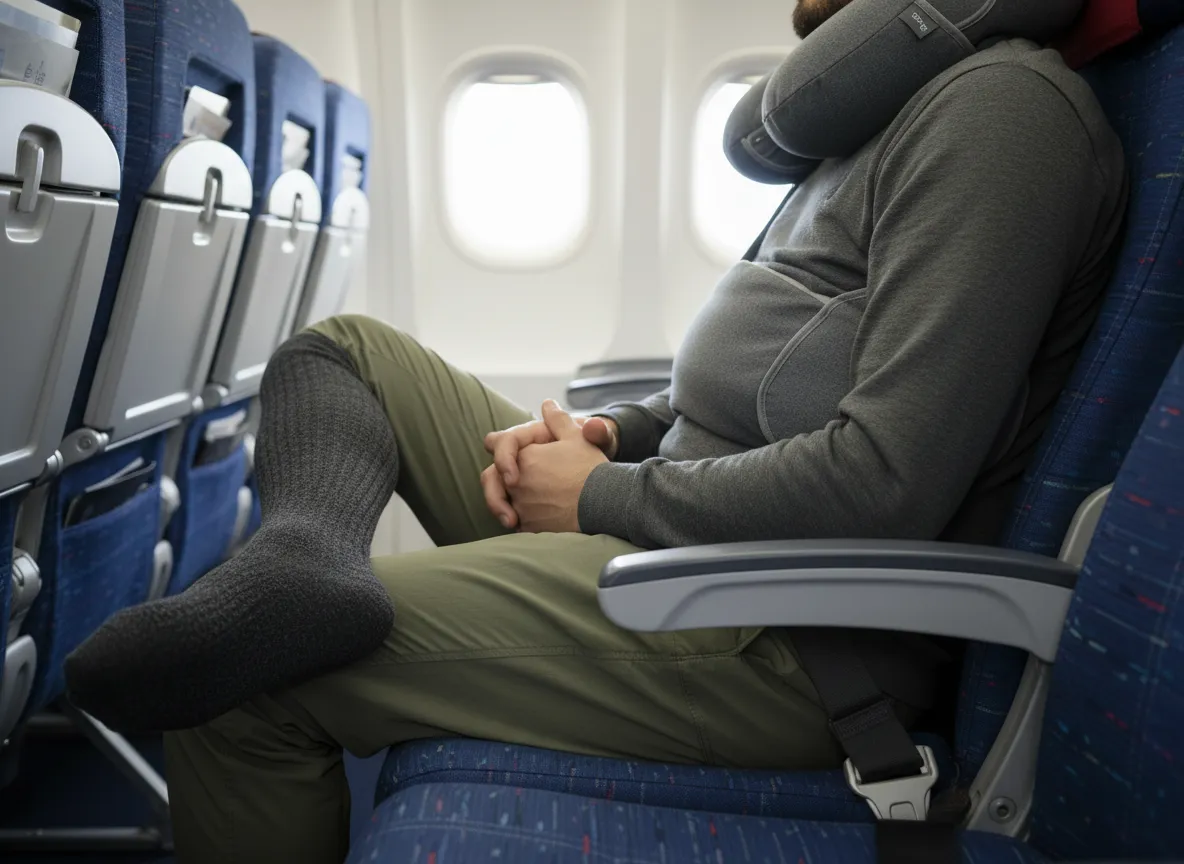
Why it’s essential: Two items. One critical mission: protecting your body during prolonged sitting so you can actually hike when you land.
Travel Pillow
Economy seats are not designed for sleep. A quality travel pillow supports your neck and prevents the painful “head-drop” that jolts you awake every 20 minutes. The best options in 2026 go beyond the classic U-shape:
- Trtl Pillow – Wraps around the neck like a scarf; compact and supportive
- Cabeau Evolution S3 – Memory foam U-shape with adjustable side support
- Ostrich Pillow Mini – Hand pillow that doubles as a neck rest
Compression Socks
This one is non-negotiable for hikers. Sitting for 10+ hours slows blood circulation in your legs, causing swelling and increasing the risk of deep vein thrombosis (DVT). Compression socks apply gentle pressure to keep blood moving — and they significantly reduce the puffy, heavy-leg feeling that plagues long-haul travelers.
Brands worth trusting:
- Bombas – Excellent compression, comfortable for all-day wear
- CEP – Medical-grade compression, popular with endurance athletes
- Sockwell – Merino wool option, naturally odor-resistant (great for hiking too)
| Compression Level | Best For |
|---|---|
| 15–20 mmHg | Light travel, mild swelling |
| 20–30 mmHg | Long-haul flights, active hikers |
| 30–40 mmHg | Medical use only (consult a doctor) |
Pro tip: Put your compression socks on before you board, not after you’re already swollen. They work best as prevention, not cure.
6. Travel Blanket or Cashmere Wrap

Why it’s essential: Airplane cabins are notoriously cold — temperatures are often kept between 64°F and 70°F (18°C–21°C) to reduce the risk of passengers fainting. Airline blankets, when available, are thin and often scratchy. A personal travel blanket solves this while pulling double duty as lightweight camp gear.
A packable travel blanket or cashmere wrap is one of those items that earns its weight many times over. On the flight, it keeps you warm and comfortable. At camp, it serves as an extra insulation layer around the fire or in a tent.
What to look for:
- Packable into its own pouch or stuff sack
- Machine washable
- Lightweight (under 400g / 14oz)
- Large enough to cover your shoulders and lap
Top picks:
- Rumpl NanoLoft Travel Blanket – Synthetic insulation, water-resistant, packs small
- Patagonia Nano Puff Blanket – Recycled materials, excellent warmth-to-weight ratio
- Everlane Cashmere Wrap – Elegant, doubles as a scarf or shawl
🏕️ A packable blanket is one of the few items that genuinely earns its place in both your flight bag and your hiking pack.
7. Comfortable Hiking Shoes or Trail Runners (Worn on Travel Day)

Why it’s essential: Packing space on hiking trips is precious. Boots and trail runners are bulky, heavy, and eat up luggage room fast. The smartest move? Wear them on travel day.
Walking through airports in your hiking footwear serves multiple purposes:
- It frees up critical pack space for other gear
- It breaks in new boots before the trail (airports involve a lot of walking)
- You arrive at your destination ready to hike without digging through luggage
Choosing the right footwear for travel days:
- Trail runners (like Salomon Speedcross or Hoka Speedgoat) are ideal — they look reasonably normal in airports and are comfortable for hours of walking
- Lightweight hiking boots work well if you need ankle support on the trail
- Avoid heavy mountaineering boots — they’re uncomfortable for airport transit and may trigger extra security screening
What to wear with them: Pair your hiking shoes with moisture-wicking socks (your compression socks count!) and layered, breathable clothing suitable for both cabin temperatures and trail conditions.
8. Passport Holder, Tech Organizer, and Hygiene Essentials

Why it’s essential: The final category bundles three must-haves that keep you organized, healthy, and stress-free throughout your journey. Think of this as your travel command center.
Passport Holder and Document Organizer
Losing your passport in a foreign country is a hiker’s worst nightmare. A dedicated RFID-blocking passport holder keeps your documents safe from electronic theft and gives them a permanent, findable home in your bag.
What to store inside:
- Passport
- Travel insurance documents
- Printed trail permits or reservations
- Emergency contact card
- Local currency
Tech Organizer
A tech organizer or cable roll keeps your USB-C cables, adapters, earbuds, and power bank tidy and accessible. No more digging through your bag at the gate. Look for organizers with elastic loops, zippered pockets, and a flat profile.
Top picks: Bellroy Tech Kit, Peak Design Tech Pouch, Cocoon GRID-IT
Hygiene Essentials (TSA-Approved Sizes)
Long flights are breeding grounds for germs. Keeping a small hygiene kit in your personal item bag is both a comfort and a health measure — especially important before days of physical exertion outdoors.
Your carry-on hygiene kit should include:
- Hand sanitizer (under 3.4oz / 100ml)
- Facial wet wipes or cleansing cloths
- Travel-size moisturizer (cabin air is extremely drying)
- Lip balm with SPF (for post-flight sun exposure on the trail)
- Any essential medications (antihistamines, pain relievers, altitude sickness pills)
- Water purifying bottle or tablets — transition directly from flight to trail hydration
💊 Health note: If you’re hiking at altitude, speak to your doctor before travel about medications like acetazolamide (Diamox). Pack any prescriptions in your carry-on, never in checked luggage.
Packing Smarter: Cubes, Compression, and Carry-On Strategy
Before we wrap up, let’s talk about how to pack these 8 essentials efficiently. The goal is to keep your flight essentials accessible without unpacking your entire hiking kit.
The two-zone system:
| Zone | Location | Contents |
|---|---|---|
| Flight Zone | Personal item / top of carry-on | Headphones, power bank, pillow, eye mask, blanket, hygiene kit |
| Hiking Zone | Main carry-on / checked bag | Trail gear, extra clothing, water purifier, sun protection |
Packing cubes and compression bags are the backbone of this system. Use one cube for flight essentials, one for hiking layers, and one for footwear accessories. Compression bags work especially well for bulky items like fleece jackets or sleeping bag liners.
Quick packing checklist for your flight bag:
- [ ] Noise-canceling headphones or earbuds
- [ ] Portable power bank (10,000mAh+)
- [ ] USB-C adapter and travel power strip
- [ ] Eye mask and earplugs
- [ ] Travel pillow
- [ ] Compression socks (worn on body)
- [ ] Travel blanket or wrap
- [ ] Hiking shoes (worn on body)
- [ ] Passport holder with documents
- [ ] Tech organizer with cables
- [ ] Hygiene kit (TSA-approved)
- [ ] Water purifying bottle or tablets
Frequently Asked Questions
Q: Can I bring a power bank on a plane?
Yes — but only in your carry-on or personal item. Power banks are prohibited in checked luggage due to lithium battery fire risk. Most airlines allow up to 100Wh (roughly 27,000mAh at 3.7V) without special approval.
Q: Are compression socks worth it for short flights?
For flights under 4 hours, they’re optional. For anything over 6 hours — especially before physical activity — they’re strongly recommended.
Q: What’s the best way to stay hydrated on a long flight?
Drink water consistently throughout the flight (aim for 250ml per hour). Avoid alcohol and excessive caffeine, both of which accelerate dehydration. Bring an empty reusable water bottle to fill after security.
Q: Should I wear my hiking boots through airport security?
Yes, but be prepared to remove them at security. Slip-on trail runners are faster to get through screening. Avoid steel-toed boots, which can trigger metal detectors.
Conclusion: Arrive Ready, Hike Strong
The 8 Travel Essentials for Long Flights to Your Next Hiking Destination aren’t just comfort items — they’re performance tools. Every choice you make on the plane either supports or undermines your first steps on the trail.
Here’s your action plan:
- Order your power bank and compression socks first — these have the biggest impact on comfort and health.
- Test your sleep setup at home before your flight — wear your eye mask and earplugs together to make sure they’re comfortable.
- Wear your hiking shoes on travel day — break them in and save pack space simultaneously.
- Build your tech organizer before you pack — lay out every cable and adapter you need, then find a single organizer that fits them all.
- Pre-download everything — maps, playlists, trail guides, and emergency contacts should be accessible offline.
The mountains will be there when you land. Make sure you’re ready for them. Pack smart, fly well, and hike strong. 🏔️
References
- Wirecutter. (2023). The best travel accessories for long flights. The New York Times.
- REI Co-op. (2022). How to pack for a hiking trip: Gear checklist and tips. REI Expert Advice.
- Condé Nast Traveler. (2023). The best travel essentials frequent flyers swear by. Condé Nast.
- Outside Magazine. (2022). What to pack for adventure travel: From the plane to the trail. Outside Online.