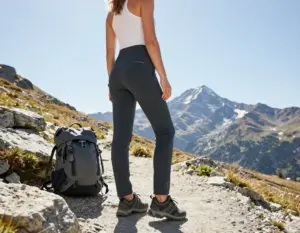
8 Best Camping Attire for Women: Layering Tips and Gear Essentials
Picture this: you wake up at 6 a.m. at your campsite, frost on the tent fly, but by noon you’re sweating under a blazing sun. What you’re wearing makes or breaks that entire experience. Knowing the 8 Best Camping Attire for Women: Layering Tips and Gear Essentials isn’t just about looking good on the trail — it’s about staying safe, comfortable, and ready for whatever the weather throws at you. In this guide, I’ll walk you through every piece you need, how to layer it, and why it matters.
Key Takeaways
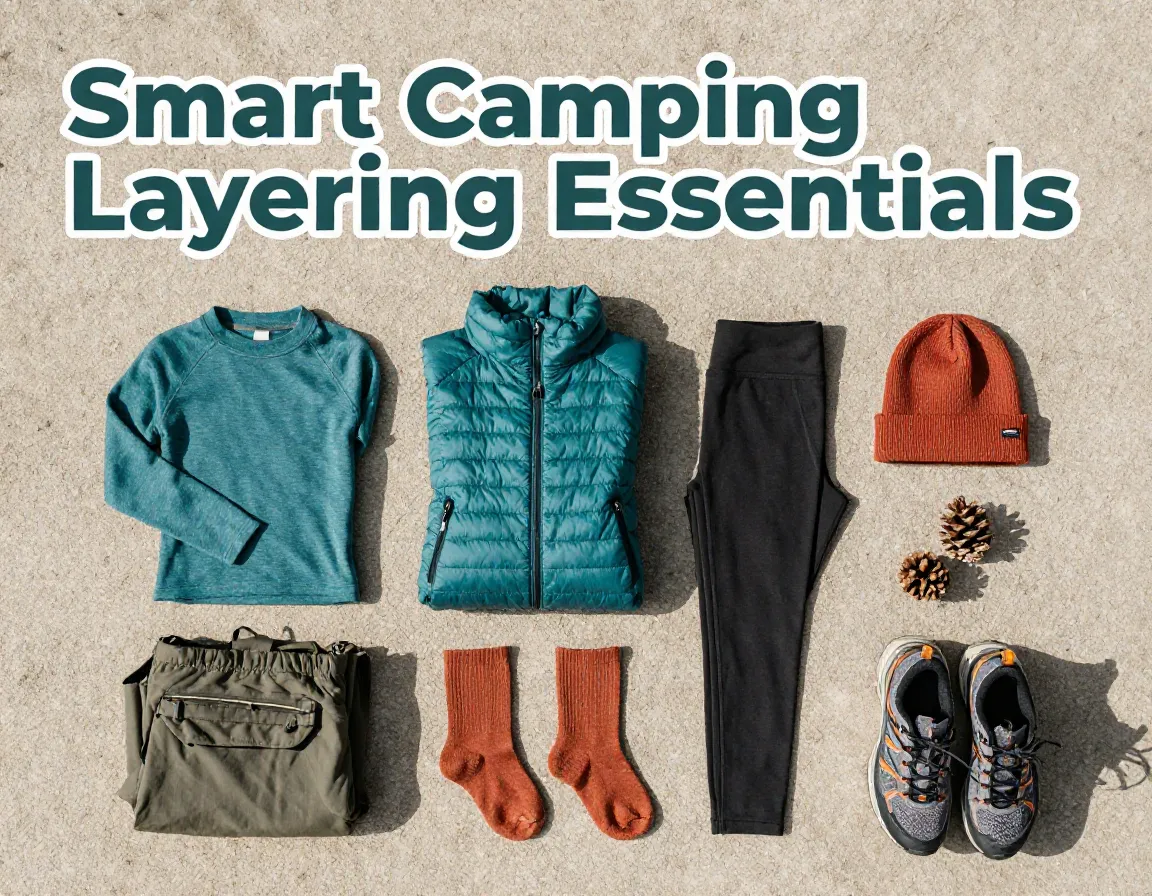
- ✅ A 3-layer system (base, mid, shell) is the foundation of smart camping attire for women.
- ✅ Fabric choice matters — moisture-wicking and quick-dry materials keep you warmer and safer.
- ✅ Convertible clothing (like roll-up pants) gives you more versatility with less pack weight.
- ✅ Layer adjustments should happen on the move, not just when you stop.
- ✅ In 2026, colorblocking and oversized button-downs make functional layering stylish too.
Why the Right Camping Attire for Women Changes Everything
Before diving into the list, let’s talk about why gear selection is so critical. A well-planned 3-season layering system should be lightweight, dry quickly, breathe well, and handle conditions ranging from rain and sleet to temperatures as low as the mid-20s Fahrenheit. That’s a wide range — and your clothing has to cover it all.
💡 “The best camping outfit isn’t the most expensive one — it’s the one you’ve thought through layer by layer.”
Women’s bodies also regulate temperature differently than men’s, which is why women-specific cuts, fits, and fabric weights matter. Generic advice often misses the mark. This list doesn’t.
The 8 Best Camping Attire for Women: Layering Tips and Gear Essentials
1. Moisture-Wicking Base Layer Top
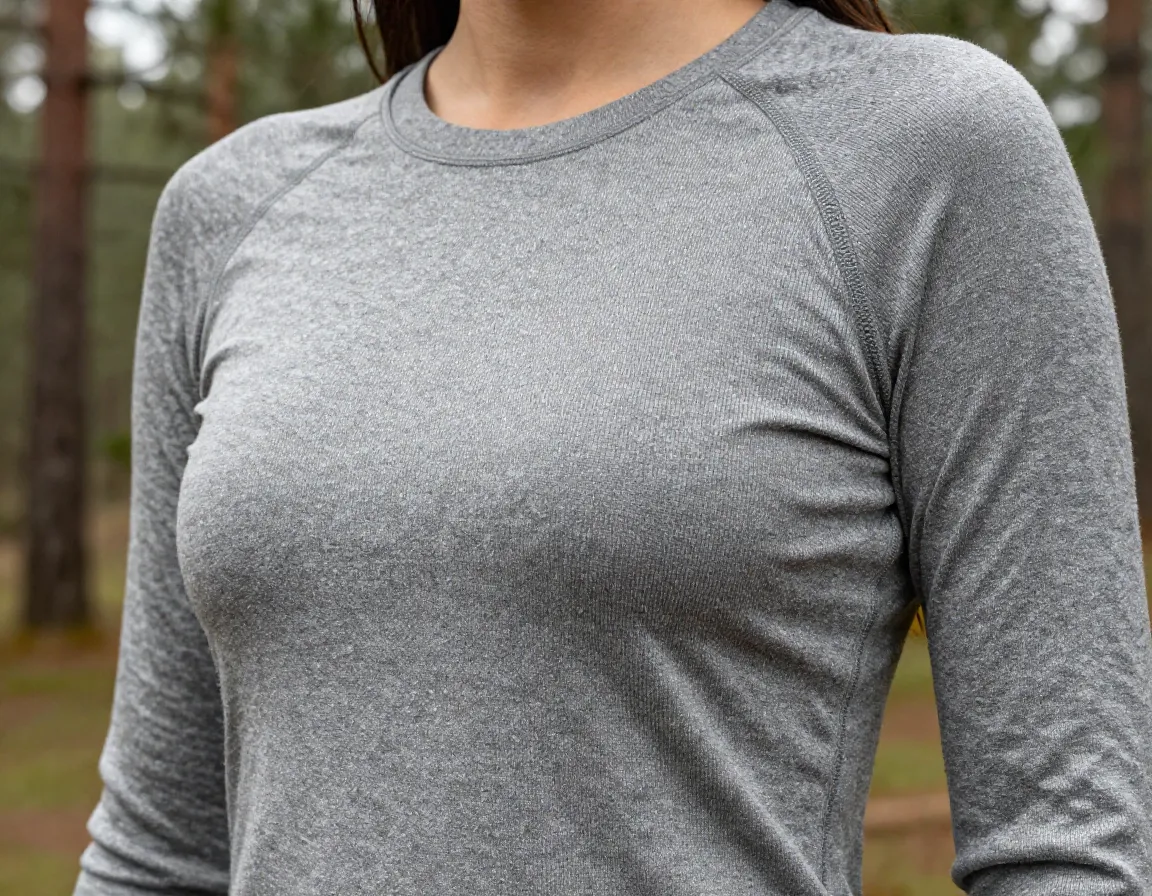
Your base layer is the most important piece in your entire system. It sits directly against your skin, so it must move sweat away fast.
Top pick: Look for a merino wool or synthetic mesh base layer. The Brynje Super Thermo Mesh design, for example, creates small air pockets that trap warmth while transporting moisture outward as vapor — keeping you drier and warmer than traditional cotton undershirts ever could.
| Feature | Merino Wool | Synthetic Mesh | Cotton ❌ |
|---|---|---|---|
| Moisture-wicking | ✅ Excellent | ✅ Excellent | ❌ Poor |
| Odor resistance | ✅ High | ⚠️ Moderate | ❌ Low |
| Dry time | ⚠️ Moderate | ✅ Fast | ❌ Slow |
| Weight | ✅ Light | ✅ Light | ⚠️ Heavy |
Pro tip: Never wear cotton as a base layer in cold or wet conditions. It holds moisture and can lead to dangerous chilling.
2. Insulating Mid-Layer Fleece or Down Jacket
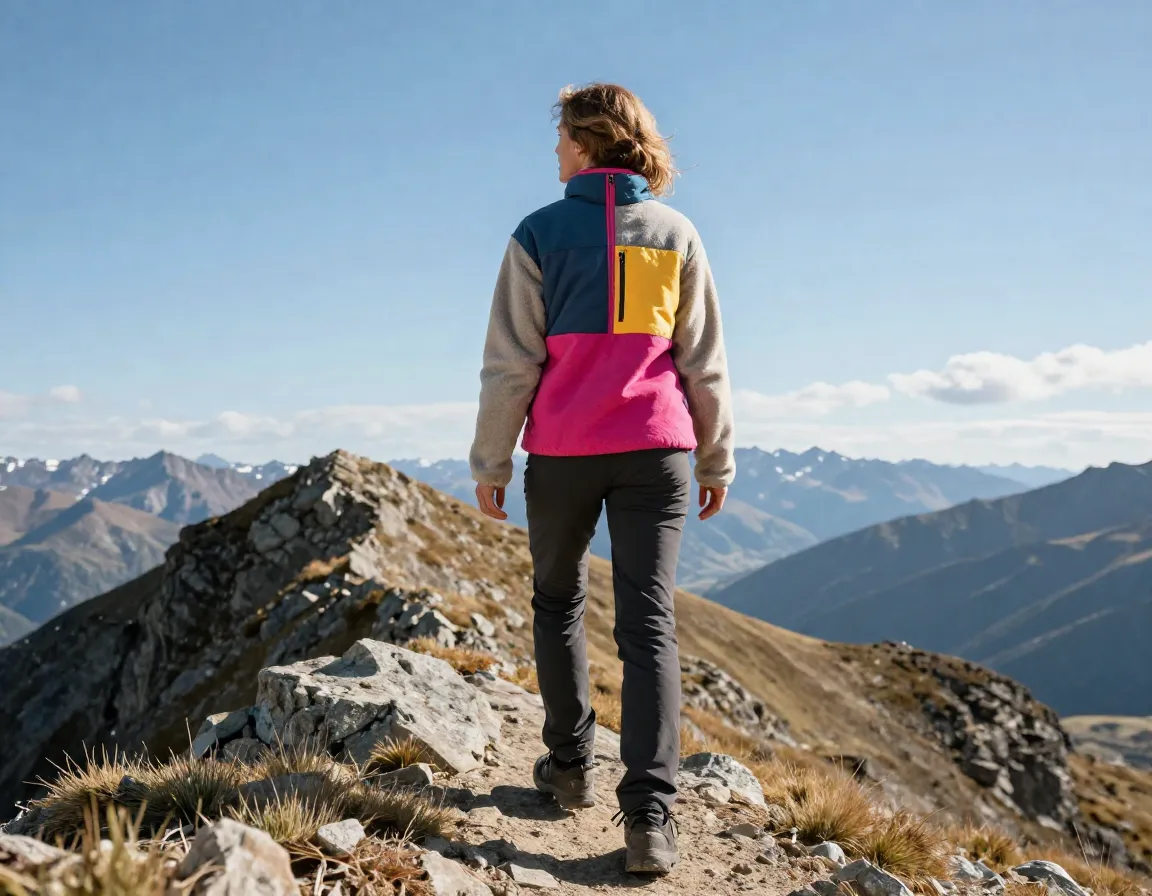
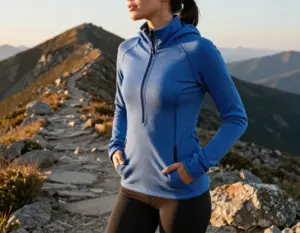
Once your base layer is sorted, your mid-layer does the heavy lifting for warmth. A fleece pullover or lightweight down jacket traps body heat without adding bulk.
What to look for:
- Weight under 12 oz for backpacking
- Packable design (fits in its own pocket)
- Zippered chest pocket for quick access
- Women-specific fit (shorter torso, shaped waist)
In spring 2026, colorblocking trends have made mid-layers more fun — think primary color panels mixed with neutral sleeves. You don’t have to sacrifice style for function.
3. Women’s Convertible Hiking Pants
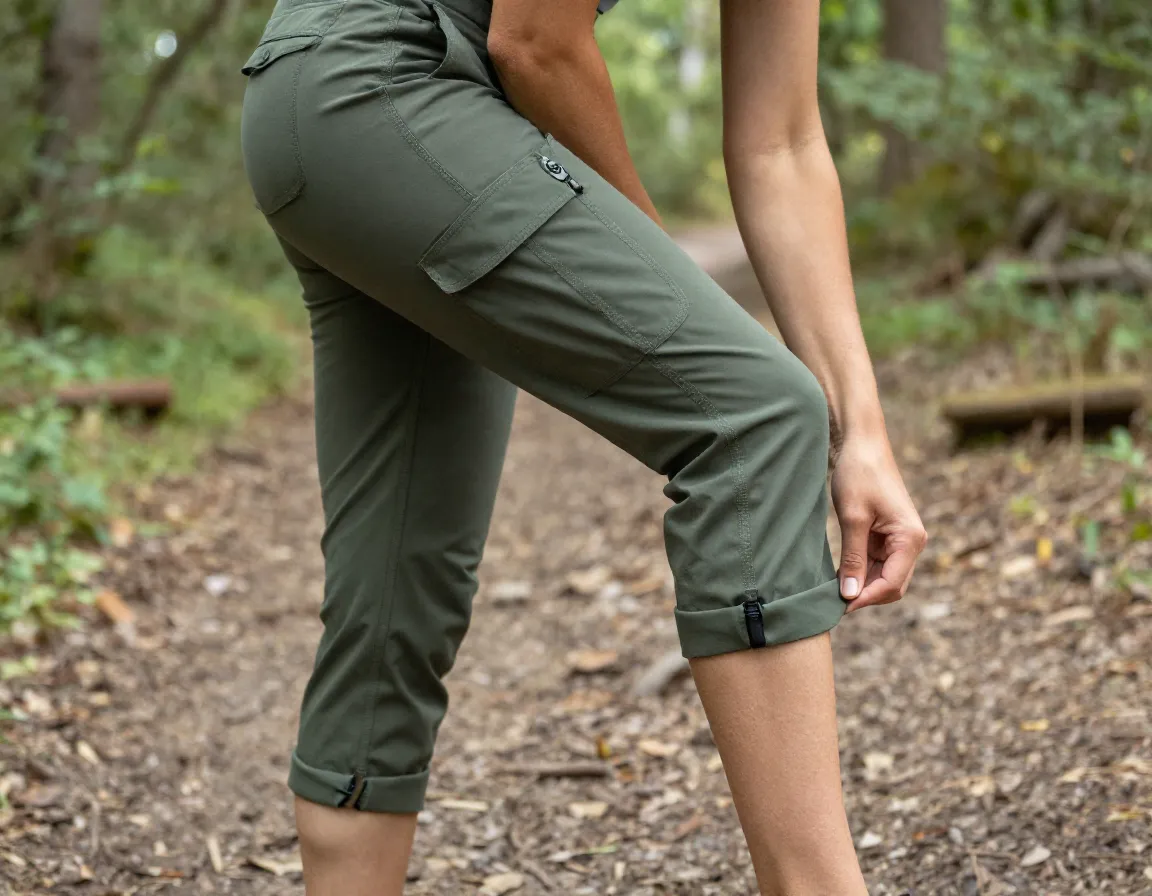
Pants are where most women make their biggest packing mistake — bringing too many pairs or the wrong fabric entirely.
Top pick: The Women’s KUHL Freeflex Roll-Up Pants (14 oz, $99) are a standout choice. They feature spandex-free stretch fabric, dual cargo pockets on the thighs, and mid-calf snaps that convert them into capris. They’ve earned rave reviews from backpackers and car campers alike.
Why convertible pants win:
- One pair replaces two (pants + shorts)
- Save weight and pack space
- Adapt to temperature changes without a full outfit swap
4. Waterproof Shell Jacket

Rain doesn’t care about your plans. A waterproof, breathable shell jacket is non-negotiable for any camping trip lasting more than a day.
Key specs to check:
- Waterproof rating: 10,000mm+ for reliable rain protection
- Breathability: 10,000g/m²/24hr or higher
- Seam-sealed construction
- Adjustable hood that fits over a helmet or hat
Pack your shell in an easy-access spot — top of your bag or a hip belt pocket. You’ll need it fast when weather turns.
5. Thermal Base Layer Bottoms
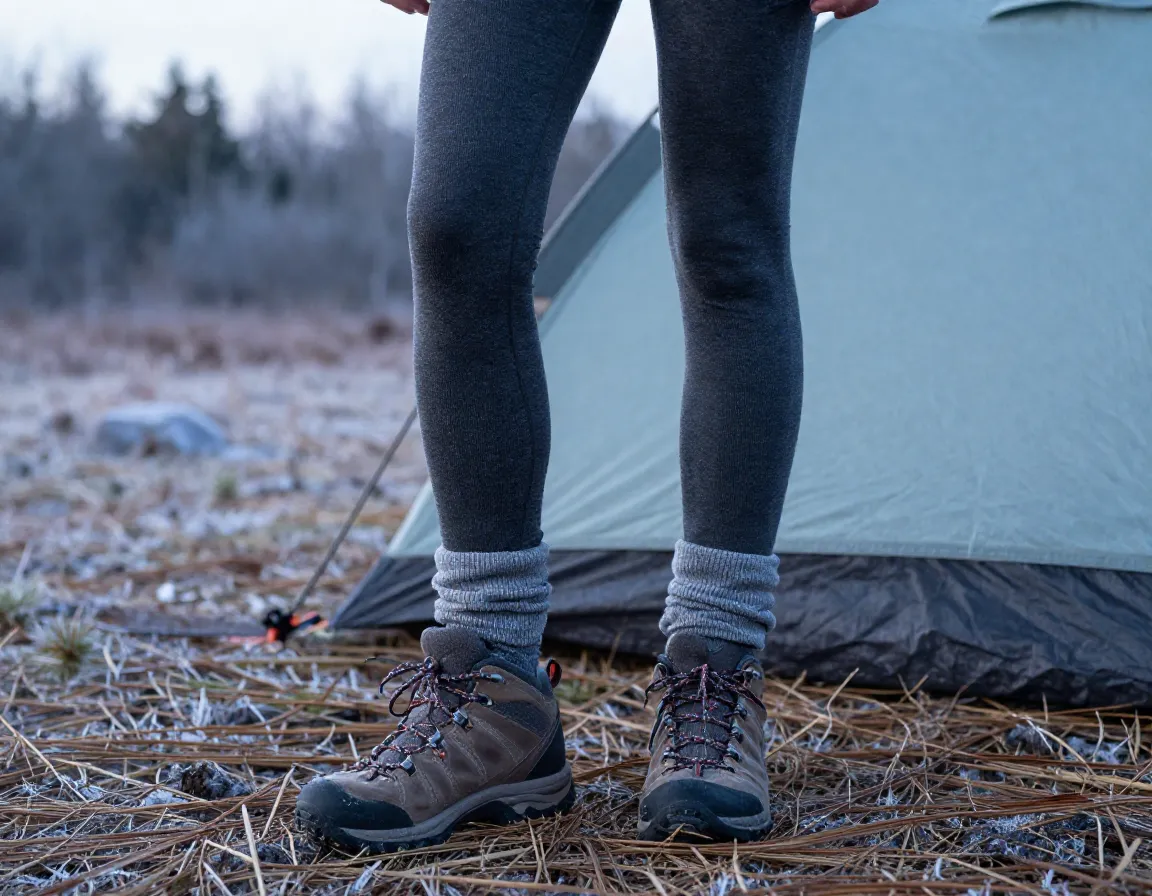
Your legs need insulation too, especially on cold mornings or high-elevation campsites. Thermal leggings or base layer bottoms worn under your hiking pants add significant warmth without bulk.
Best uses:
- Sleeping in cold conditions
- Early morning camp chores
- High-altitude or late-season trips
Look for mid-weight merino or synthetic thermal leggings with a 4-way stretch. They double as camp pajama bottoms, saving you from packing separate sleepwear.
6. Moisture-Wicking Hiking Socks (Multiple Pairs)
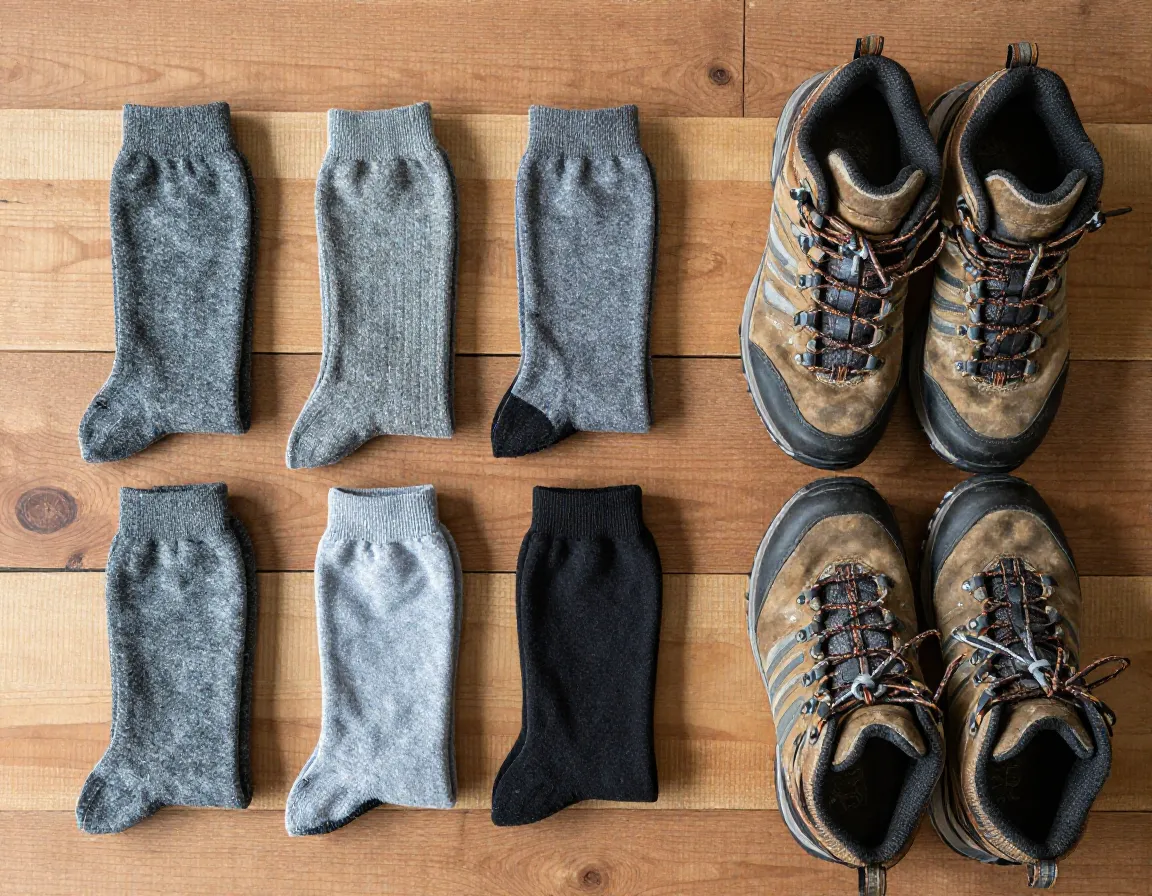
Feet are often the most neglected part of a camping kit — and the first to cause misery. Wet, blistered feet can end a trip early.
Sock layering system:
- Liner socks (thin, synthetic) worn under thicker hiking socks reduce friction
- Mid-weight merino hiking socks for all-day comfort
- Pack at least 3 pairs even for a weekend trip
🧦 Bring one more pair of socks than you think you need. You’ll thank yourself on day two.
Bonus: Cozy camp socks (thicker, cushioned) for wearing around the campfire in the evening make a huge quality-of-life difference.
7. Insulated Beanie and Glove Liners

Heat loss through your head and hands is significant — and these two items are the easiest way to manage your body temperature on the go.
Smart layering tip: You don’t need to stop to regulate temperature. Remove your hat and gloves when you feel too warm while walking. Unzip your mid-layer. Only add warmer layers when you genuinely cannot stay warm while moving at a comfortable pace. This on-the-go adjustment strategy prevents overheating and sweat buildup.
What to pack:
- Lightweight merino or fleece beanie (doubles as camp hat)
- Glove liners (thin, touchscreen-compatible)
- Optional: waterproof shell mittens for rain or snow
8. Camp Shoes or Trail Runners
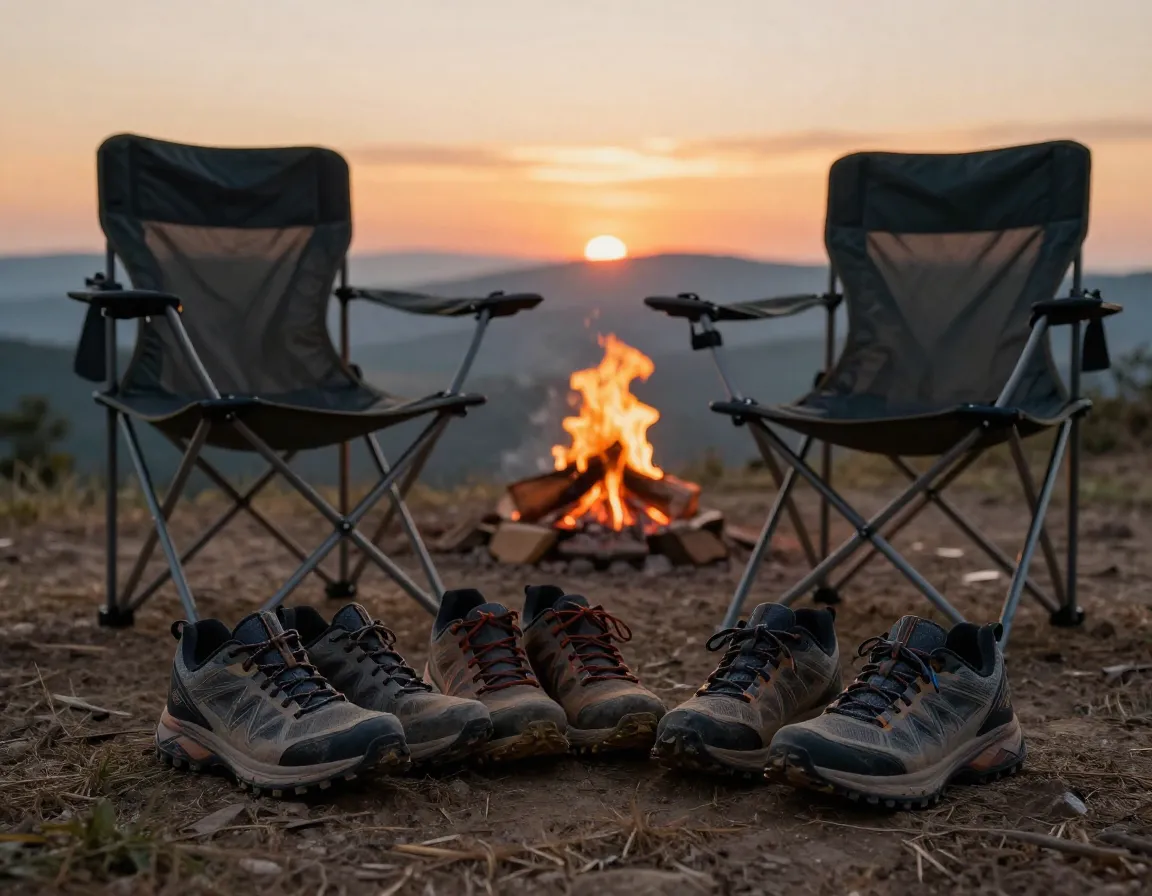
Your feet deserve a break after a long day of hiking. Camp shoes or lightweight trail runners are the final essential piece of the 8 Best Camping Attire for Women: Layering Tips and Gear Essentials system.
Two-shoe strategy:
- Trail runners or hiking boots for the trail
- Lightweight sandals or slip-on shoes for camp
This separation keeps your hiking footwear dry overnight and gives your feet the recovery they need. Look for sandals with arch support — flat flip-flops don’t cut it after a 10-mile day.
Bonus: Building a Camping Capsule Wardrobe for Women
Beyond the core 8 items, a smart camping capsule wardrobe rounds out your kit without overpacking. Think of it as a curated collection where every piece works with every other piece.
Capsule essentials to add:
- Jersey layering tops (neutral colors that mix and match)
- Oversized button-down shirt — a 2026 trend that doubles as a sun layer, wind block, and camp layer over a tank top
- Toasty camp pajamas (a dedicated sleep set keeps your sleeping bag cleaner)
- Comfortable bralette or sports bra with moisture-wicking fabric
Packing tip: Use the colorblocking approach trending in spring 2026 — choose a palette of 2-3 colors (say, teal, cream, and rust) so everything coordinates. You’ll look put-together even on day three without a shower.
Quick Reference: 8 Best Camping Attire for Women at a Glance
| # | Item | Key Feature | Weight Range |
|---|---|---|---|
| 1 | Base Layer Top | Moisture-wicking, air-pocket insulation | 4–8 oz |
| 2 | Mid-Layer Fleece/Down | Packable warmth | 8–14 oz |
| 3 | Convertible Pants | Roll-up, cargo pockets | 12–16 oz |
| 4 | Waterproof Shell | 10,000mm+ waterproof rating | 10–18 oz |
| 5 | Thermal Base Bottoms | 4-way stretch, doubles as PJ | 5–9 oz |
| 6 | Hiking Socks (3 pairs) | Merino, liner system | 2–4 oz each |
| 7 | Beanie + Glove Liners | On-the-go temp regulation | 2–5 oz total |
| 8 | Camp Shoes/Trail Runners | Recovery footwear | 8–16 oz |
Conclusion: Your Next Steps for Smarter Camping Attire
Getting your camping wardrobe right doesn’t have to be overwhelming. Start with the 3-layer foundation — base, mid, shell — and build outward from there. Invest in convertible pieces that pull double duty, choose moisture-wicking fabrics over cotton every time, and remember that on-the-go layer adjustments are the mark of an experienced camper.
In 2026, you don’t have to choose between function and style. The gear available today is lighter, more breathable, and honestly more attractive than ever before.
Your action plan:
- Audit your current camping clothes against this list.
- Identify the 1-2 biggest gaps (most women are missing a proper base layer or shell).
- Invest in those gaps first before adding anything else.
- Test your full layering system on a short overnight trip before a longer adventure.
Pack smart, layer well, and enjoy every mile. 🏕️
References
- Jardine, R. (2009). Beyond Backpacking: Ray Jardine’s Guide to Lightweight Hiking. AdventureLore Press.
- Outdoor Retailer Style Report. (2025). Spring 2026 Layering Trends in Outdoor Apparel. Outdoor Retailer.
- REI Co-op Staff. (2023). How to Pack for a Camping Trip. REI Expert Advice. https://www.rei.com/learn/expert-advice/camping-checklist.html