7 Ways to Find and Capture the Perfect Mountain Nature Aesthetic
The crisp mountain air fills your lungs as you stand before a breathtaking vista, camera in hand, wondering how to translate the overwhelming beauty before you into a single frame. Mountain photography represents one of nature’s most challenging yet rewarding subjects, where dramatic landscapes meet ever-changing weather conditions and technical demands. Whether you’re a seasoned photographer or an enthusiastic beginner, mastering these 7 ways to find and capture the perfect mountain nature aesthetic will transform your outdoor adventures into a portfolio of stunning visual memories that truly capture the essence of alpine majesty.
Key Takeaways
- Golden hour timing provides the most dramatic lighting for mountain photography, creating warm tones and enhanced texture on rocky surfaces
- Proper gear preparation including weather protection, sturdy tripods, and multiple lenses ensures you’re ready for changing mountain conditions
- Composition techniques like foreground framing and leading lines help create depth and guide viewers through your mountain scenes
- Weather awareness and safety planning are essential for both capturing dynamic shots and ensuring photographer safety in mountain environments
- Post-processing skills can enhance the natural beauty of mountain scenes while maintaining authentic color representation
1. Master the Art of Timing and Light for Mountain Photography
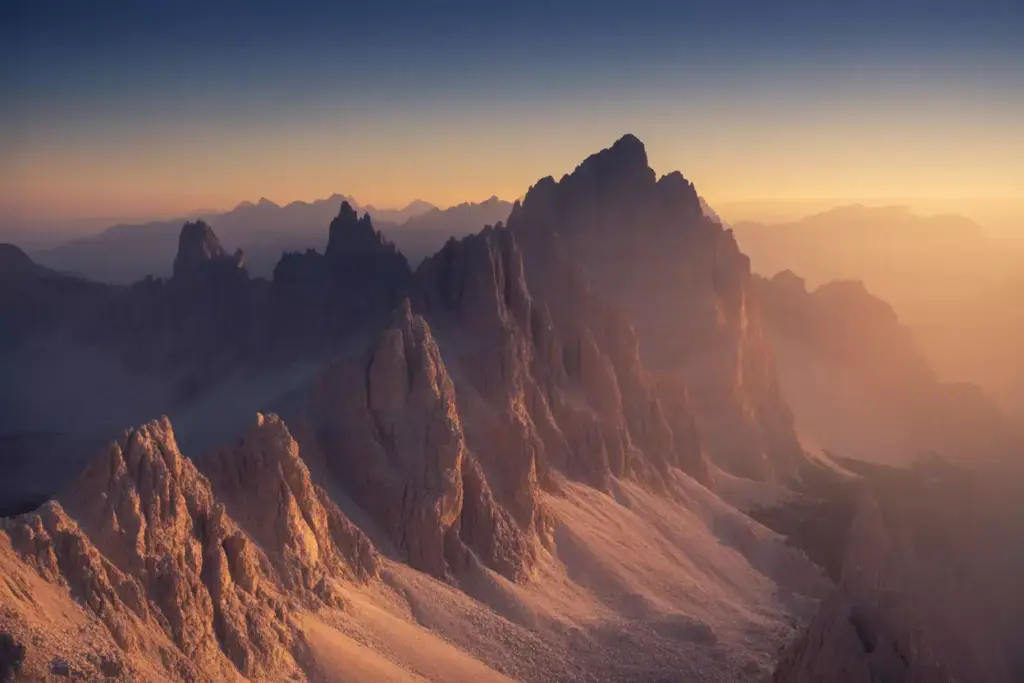
Understanding natural lighting patterns forms the foundation of capturing exceptional mountain aesthetics. The quality of light in mountainous regions changes dramatically throughout the day, creating distinct opportunities for different photographic moods and styles.
Golden Hour Magic in Alpine Settings
The golden hour – occurring during the first hour after sunrise and the last hour before sunset – provides the most coveted lighting conditions for mountain photography. During these periods, the sun sits low on the horizon, casting warm, diffused light across mountain faces and creating dramatic shadows that emphasize texture and depth.
Benefits of golden hour mountain photography:
- Warm color temperature (2500K-3500K) enhances natural rock tones
- Side lighting creates dimensional shadows on cliff faces
- Reduced contrast makes exposure easier to manage
- Enhanced atmospheric haze adds depth to distant peaks
Blue Hour Opportunities
The blue hour extends the photographic window beyond traditional golden hour timing. This period, occurring 20-30 minutes after sunset or before sunrise, offers:
- Deep blue sky tones that complement snow-covered peaks
- Balanced exposure between sky and landscape
- Opportunity for long exposures with moving clouds
- Unique color palette of blues, purples, and remaining warm tones
Weather Pattern Recognition
Successful mountain photographers develop skills in reading weather patterns to predict optimal shooting conditions. Key indicators include:
| Weather Condition | Photography Opportunity | Best Timing |
|---|---|---|
| Clearing storms | Dramatic cloud formations | Immediately after storm passage |
| High pressure systems | Crystal clear visibility | Early morning |
| Partial cloud cover | Dynamic sky textures | Golden hour |
| Fresh snowfall | Enhanced contrast and texture | Within 24 hours of snowfall |
2. Essential Gear and Equipment for Mountain Nature Photography
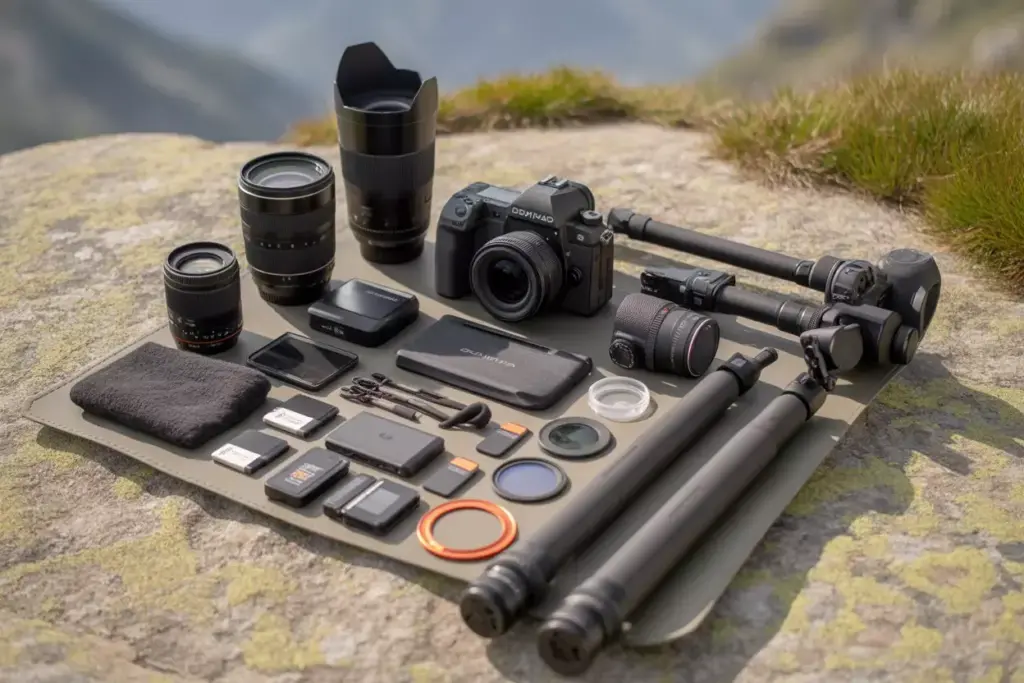
Mountain photography demands specialized equipment that can withstand harsh conditions while delivering professional results. The challenging environment requires careful gear selection that balances image quality, durability, and portability.
Camera Body Selection
Choose camera bodies with weather sealing and excellent low-light performance. Full-frame sensors provide advantages in mountain environments:
- Better low-light sensitivity for dawn and dusk shooting
- Wider dynamic range to capture detail in shadows and highlights
- Superior image quality for large prints of mountain vistas
Lens Considerations for Mountain Aesthetics
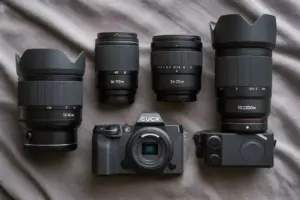
Wide-angle lenses (14-35mm) serve as the primary tools for capturing expansive mountain vistas, while telephoto lenses (70-200mm+) compress distant peaks and isolate specific mountain features.
Essential lens focal lengths:
- Ultra-wide (14-24mm): Dramatic foreground inclusion with sweeping vistas
- Standard wide (24-70mm): Versatile range for varied compositions
- Telephoto (70-200mm): Peak isolation and atmospheric compression
- Super-telephoto (200mm+): Wildlife and distant peak detail
Stability and Support Systems
Sturdy tripods become essential in mountain photography for several reasons:
- Long exposures during blue hour and night photography
- Sharp images in windy conditions common at elevation
- Consistent framing for HDR bracketing sequences
- Self-timer photography for including yourself in mountain scenes
Choose carbon fiber tripods for the optimal balance of stability and weight reduction during mountain hiking.
Weather Protection and Backup Systems
Mountain weather changes rapidly, requiring comprehensive gear protection strategies:
Essential protection items:
- Waterproof camera covers for sudden precipitation
- Lens cleaning cloths for condensation management
- Extra batteries (cold weather drains power quickly)
- Memory card backups for extended shooting sessions
- Protective filters to shield expensive lenses
3. Location Scouting and Research Techniques
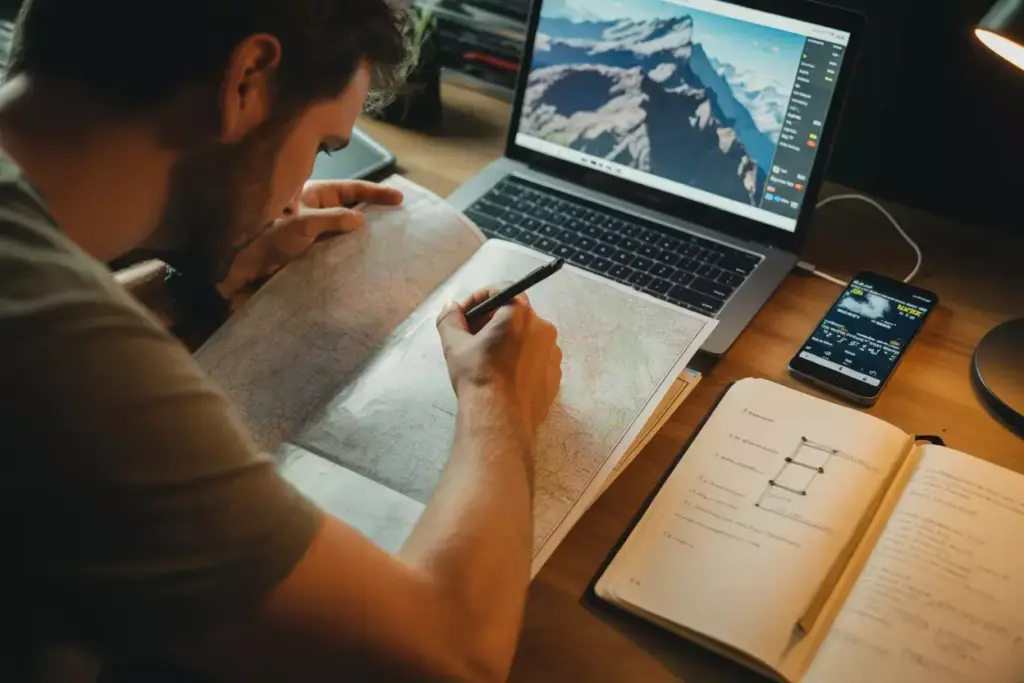
Effective location scouting separates exceptional mountain photography from random snapshots. Professional-level results require systematic research and preparation that goes far beyond simply arriving at popular viewpoints.
Digital Scouting Tools and Resources
Modern technology provides powerful pre-visit scouting capabilities that help photographers maximize their time in mountain environments:
Essential digital scouting tools:
- Google Earth Pro: 3D terrain visualization and sun angle calculation
- PhotoPills: Precise sunrise/sunset timing and moon phase planning
- Mountain-forecast.com: Detailed elevation-specific weather predictions
- AllTrails: Hiking route difficulty and access information
- Instagram and Flickr: Location-tagged images for inspiration and access routes
Topographic Map Analysis
Understanding topographic features through map study reveals photographic opportunities that casual visitors miss:
- Elevation contours indicate dramatic cliff faces and gentle slopes
- Water features like alpine lakes and waterfalls create foreground interest
- Ridge lines suggest potential sunrise/sunset illumination patterns
- Access trails help plan timing for reaching optimal viewpoints
Seasonal Considerations and Access Planning
Mountain environments undergo dramatic seasonal transformations that create distinct photographic opportunities:
| Season | Photographic Advantages | Access Considerations |
|---|---|---|
| Spring | Wildflower blooms, flowing waterfalls | Muddy trails, unpredictable weather |
| Summer | Full access, long daylight hours | Crowded locations, hazy conditions |
| Fall | Autumn colors, crisp air | Short weather windows, early snow |
| Winter | Snow-covered peaks, minimal crowds | Limited access, extreme conditions |
Local Knowledge and Community Resources
Connecting with local photography communities and mountain guides provides invaluable insider knowledge:
- Photography meetup groups share location-specific tips
- Mountain guide services offer access to remote locations
- Local camera shops provide current condition updates
- Park ranger stations supply safety and access information
4. Composition Strategies for Capturing Mountain Nature Aesthetics
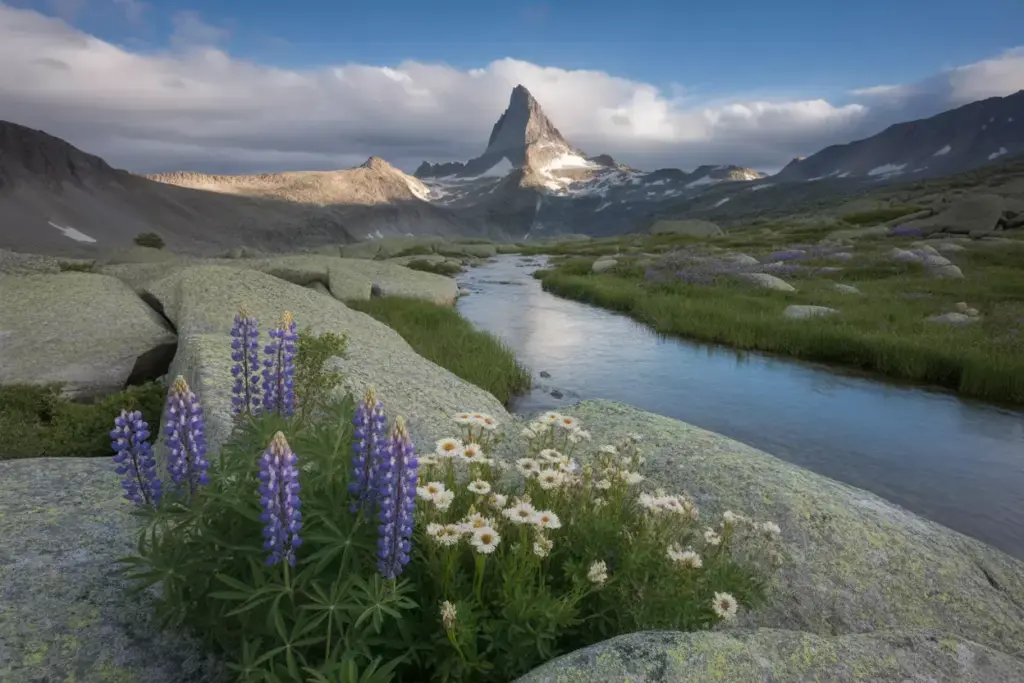
Compelling composition transforms ordinary mountain snapshots into powerful visual narratives that draw viewers into the alpine experience. These 7 ways to find and capture the perfect mountain nature aesthetic rely heavily on understanding how compositional elements work together in mountain environments.
Foreground, Middle Ground, and Background Balance
Creating visual depth in mountain photography requires careful attention to layered composition:
Foreground elements that enhance mountain scenes:
- Alpine wildflowers during spring and summer months
- Interesting rock formations and boulder fields
- Flowing streams and reflective alpine lakes
- Fallen logs or weathered tree stumps
Middle ground considerations:
- Rolling hills that lead the eye toward main peaks
- Tree lines that provide scale reference
- Secondary mountain ridges that add complexity
- Valley floors that create breathing space in compositions
Background management:
- Primary mountain peaks as anchor points
- Sky treatment that complements rather than competes
- Distant ranges that add atmospheric perspective
- Cloud formations that enhance rather than distract
Leading Lines and Natural Flow
Mountain landscapes offer abundant natural leading lines that guide viewer attention through the frame:
- Ridge lines that sweep toward prominent peaks
- Stream courses that wind through alpine meadows
- Rock striations that emphasize geological drama
- Tree lines that follow elevation contours
- Trail systems that add human scale and accessibility
Scale and Perspective Techniques
Conveying the massive scale of mountain environments requires deliberate inclusion of scale references:
- Human figures positioned strategically within the landscape
- Recognizable objects like tents, vehicles, or buildings
- Vegetation patterns that show elevation transitions
- Wildlife that provides organic scale reference
Rule of Thirds Application in Mountain Settings
While the rule of thirds serves as a foundational guideline, mountain photography often benefits from modified applications:
Horizon placement strategies:
- Lower third positioning emphasizes dramatic sky conditions
- Upper third placement highlights foreground detail and texture
- Central horizon works when perfect symmetry enhances the composition
5. Understanding Weather Patterns and Safety for Mountain Photography
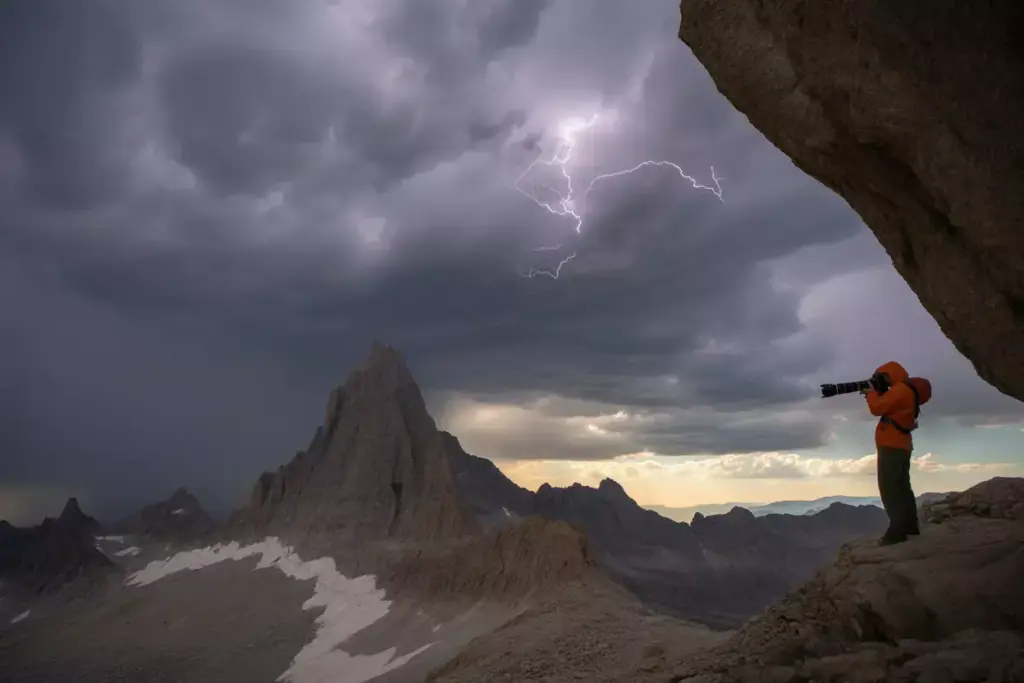
Weather awareness represents both a creative opportunity and a critical safety consideration when implementing these 7 ways to find and capture the perfect mountain nature aesthetic. Mountain weather systems create some of the most dramatic photographic conditions while simultaneously presenting significant risks to unprepared photographers.
Reading Mountain Weather Systems
Mountain meteorology differs significantly from lowland weather patterns due to orographic effects and elevation-induced temperature variations:
Key weather indicators for photographers:
- Lenticular clouds: Indicate strong wind currents and potential dramatic sky conditions
- Cap clouds: Suggest moisture-laden air and possible precipitation
- Temperature inversions: Create fog layers and unique lighting opportunities
- Pressure changes: Rapid drops often precede storm systems with dramatic lighting
Storm Photography Opportunities and Risks
Approaching storm systems provide some of the most dramatic mountain photography opportunities, but require careful risk assessment:
Safe storm photography practices:
- Monitor weather radar and lightning detection apps
- Maintain escape route awareness at all times
- Use telephoto lenses to maintain safe distances
- Seek shelter in vehicles or substantial buildings when lightning threatens
- Never photograph from exposed ridges or peaks during electrical activity
Altitude Considerations and Acclimatization
High-altitude photography presents unique challenges that affect both photographer performance and equipment function:
Physiological considerations:
- Reduced oxygen levels affect decision-making and physical endurance
- Increased UV exposure requires enhanced sun protection
- Rapid weather changes demand layered clothing systems
- Dehydration occurs more rapidly at elevation
Equipment considerations:
- Battery life decreases significantly in cold, high-altitude conditions
- Condensation forms when moving equipment between temperature zones
- LCD screens may respond slowly in extreme cold
- Lens fogging occurs during rapid temperature transitions
Emergency Preparedness and Communication
Mountain photography expeditions require comprehensive emergency planning:
Essential safety equipment:
- GPS devices with offline mapping capabilities
- Emergency shelter and first aid supplies
- Satellite communication devices for remote areas
- Weather radio for current condition updates
- Headlamps and backup lighting systems
6. Post-Processing Techniques for Mountain Nature Aesthetics
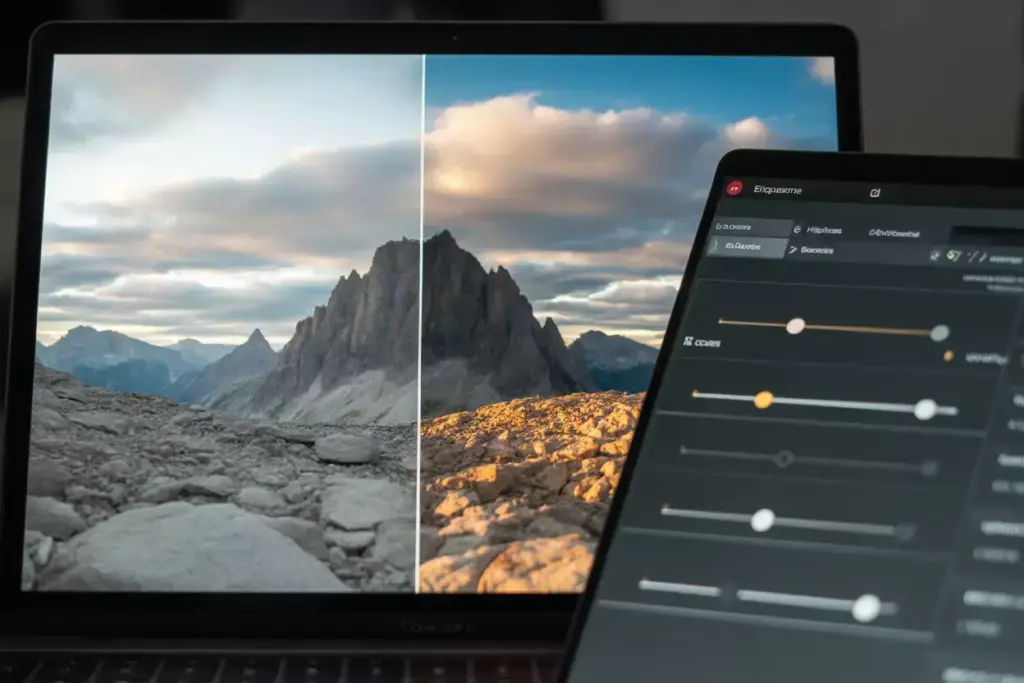
Digital post-processing serves as the final step in realizing the full potential of mountain photography, allowing photographers to enhance the natural drama captured in-camera while maintaining authentic representation of the alpine experience.
RAW File Processing Fundamentals
RAW format shooting becomes essential in mountain environments due to the extreme dynamic range often encountered between bright skies and shadowed valleys:
Primary RAW adjustments for mountain photography:
- Exposure correction to recover shadow and highlight detail
- Highlight recovery to retain cloud texture and snow detail
- Shadow lifting to reveal foreground rock and vegetation detail
- Vibrance adjustment to enhance natural color saturation
- Clarity enhancement to emphasize rock texture and atmospheric detail
Color Grading for Natural Mountain Tones
Authentic color representation requires understanding the natural color palette of mountain environments across different lighting conditions:
Golden hour color enhancement:
- Warm highlight tones (oranges and yellows)
- Cool shadow tones (blues and purples)
- Enhanced contrast between warm and cool areas
- Subtle saturation increases in sky tones
Blue hour processing:
- Deep blue sky enhancement without over-saturation
- Balanced white balance for natural snow tones
- Subtle luminosity masking for selective adjustments
- Gradient filters for sky-to-land transitions
Selective Adjustment Techniques
Luminosity masking and color range selections allow precise adjustments to specific tonal ranges without affecting the entire image:
Common selective adjustments:
- Sky enhancement without affecting foreground exposure
- Snow brightening while maintaining natural texture
- Rock face contrast enhancement for geological detail
- Vegetation color correction for natural appearance
HDR Processing for Extreme Dynamic Range
High Dynamic Range (HDR) techniques help manage the extreme contrast often found in mountain scenes:
Natural HDR processing guidelines:
- Subtle tone mapping that avoids artificial appearance
- Ghost removal for moving elements like clouds or water
- Alignment correction for handheld bracketed sequences
- Natural color preservation throughout the tonal range
7. Building a Portfolio and Sharing Your Mountain Photography

Developing a cohesive portfolio represents the culmination of mastering these 7 ways to find and capture the perfect mountain nature aesthetic. A strong portfolio showcases technical proficiency while telling compelling visual stories about mountain environments and experiences.
Portfolio Curation and Selection Criteria
Effective portfolio curation requires critical evaluation of images based on both technical excellence and emotional impact:
Selection criteria for mountain photography portfolios:
- Technical quality: Sharp focus, proper exposure, and clean post-processing
- Compositional strength: Effective use of leading lines, balance, and visual flow
- Emotional impact: Images that evoke the feeling of being in mountain environments
- Variety demonstration: Range of conditions, seasons, and compositional approaches
- Cohesive style: Consistent processing and aesthetic approach across images
Digital Platform Optimization
Online presentation requires understanding platform-specific requirements and audience expectations:
Platform-specific considerations:
| Platform | Image Specs | Audience Focus | Optimization Tips |
|---|---|---|---|
| 1080×1080 or 1080×1350 | Visual discovery | Consistent hashtag strategy | |
| 500px | High resolution | Photography community | Technical excellence focus |
| Personal website | Variable sizes | Professional clients | Fast loading, mobile-optimized |
| Print sales | 300 DPI minimum | Art buyers | Color accuracy critical |
Storytelling Through Mountain Photography
Compelling mountain photography goes beyond technical excellence to communicate experiences and emotional connections with alpine environments:
Storytelling elements:
- Journey documentation showing approach, summit, and descent
- Weather progression capturing changing conditions
- Scale relationships between humans and mountain environments
- Seasonal cycles demonstrating location changes over time
- Wildlife interactions showing ecosystem relationships
Professional Development and Networking
Building a career in mountain photography requires strategic networking and continuous skill development:
Professional growth strategies:
- Workshop participation with established mountain photographers
- Photography competition entry for recognition and feedback
- Social media engagement with mountain photography communities
- Print exhibition participation in galleries and outdoor shows
- Commercial client development for outdoor brands and tourism
Ethical Considerations and Leave No Trace Principles
Responsible mountain photography requires commitment to environmental stewardship and ethical practices:
Leave No Trace photography principles:
- Minimal impact camping and hiking practices
- Wildlife respect through appropriate distance maintenance
- Vegetation protection by staying on established trails
- Location discretion for sensitive or easily damaged areas
- Weather awareness to avoid contributing to rescue situations
Conclusion
Mastering these 7 ways to find and capture the perfect mountain nature aesthetic requires dedication, preparation, and respect for the alpine environment. From understanding optimal lighting conditions and weather patterns to developing technical skills in both capture and post-processing, each element contributes to creating compelling mountain photography that truly captures the majesty and drama of high-altitude landscapes.
Success in mountain photography depends on combining technical proficiency with artistic vision while maintaining unwavering attention to safety considerations. The investment in proper equipment, location research, and skill development pays dividends in the form of a portfolio that not only showcases photographic ability but also preserves memories of extraordinary mountain experiences.
Take action today by selecting one mountain location within driving distance and applying these techniques during your next outdoor adventure. Start with basic equipment and gradually build your gear collection as your skills and passion develop. Remember that the most important element in mountain photography is spending time in mountain environments, observing how light interacts with the landscape, and developing an intuitive understanding of these dynamic natural systems.
The mountains offer endless opportunities for photographers willing to invest the time and effort required to capture their beauty safely and responsibly. Each sunrise, storm system, and seasonal change presents new possibilities for creating images that inspire others to appreciate and protect these remarkable landscapes for future generations.